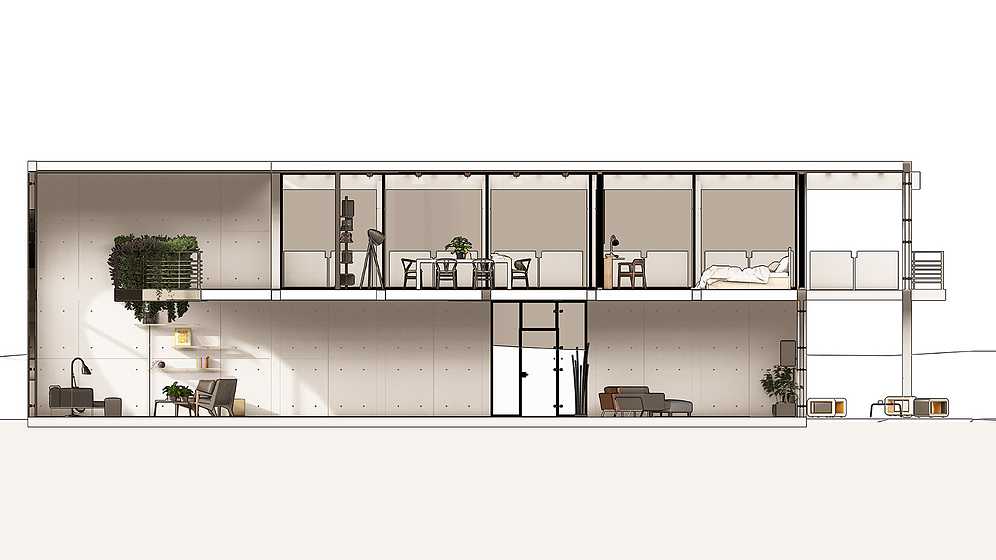
Produce personalized presentation boards that distill complex concepts into simple visual representations with a few helpful tools and effects.


Produce personalized presentation boards that distill complex concepts into simple visual representations with a few helpful tools and effects.
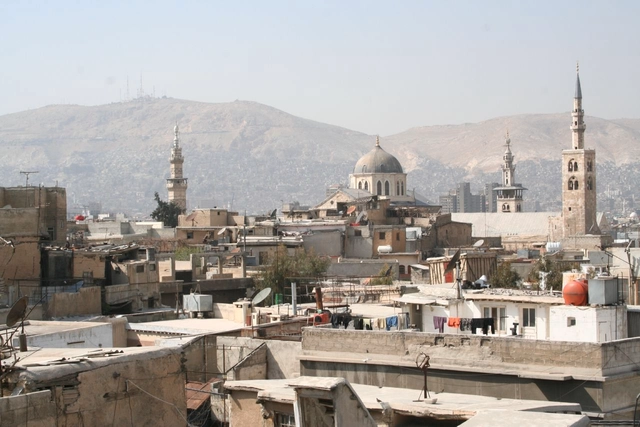
In the 20th century, urban planning went through some big changes, creating much of our current urban environment in a mold that is now widely seen as anti-human. Fortunately, in recent decades urban planning has changed again - partly revising and partly reverting the theories espoused by the 20th century. In this article, originally published on Autodesk’s Redshift publication as "What the Future of Cities Can Learn From Ancient Cities," James A Moore looks at why old models for creating cities have proved so timeless, and the role that they will play in creating 21st century cities.
As legend has it, upon leaving Carnegie Hall after a dissatisfying rehearsal, violinist Mischa Elman ran into two tourists looking for the hall’s entrance. They asked, “How do you get to Carnegie Hall?”
Without missing a beat, Elman said, “Practice.”
It’s an old and simple joke, but it points to an important reason why people are drawn to cities. Why do people move to Hollywood? They want to be in movies. Why do they move to Wall Street? They want to be in finance. In the best cases, cities enable citizens to pursue their aspirations.


In 1885, with only $3,000 in the bank, the "American Committee" in charge of building a pedestal for the Statue of Liberty ceased work, after both president Grover Cleveland and the US Congress declined to provide funds for the project. The project was saved by a certain Joseph Pulitzer, publisher of the New York World, who used his newspaper to spark a $100,000 fundraising campaign with the promise that everyone who donated would have their name printed the paper.
The base of the Statue of Liberty is perhaps the first ever example of crowdfunding in architecture as we might recognize it today, with a popular media campaign and some form of minor reward. But in recent years, crowdfunding has taken on a whole new complexion. Last week, we asked our readers to tell us their thoughts about a specific example of crowdfunding in architecture: BIG's attempt to raise funds for the prototyping of the steam ring generator on their waste-to-energy plant in Copenhagen. But there are many more examples of fundraising in architecture, and each of them deserves attention.
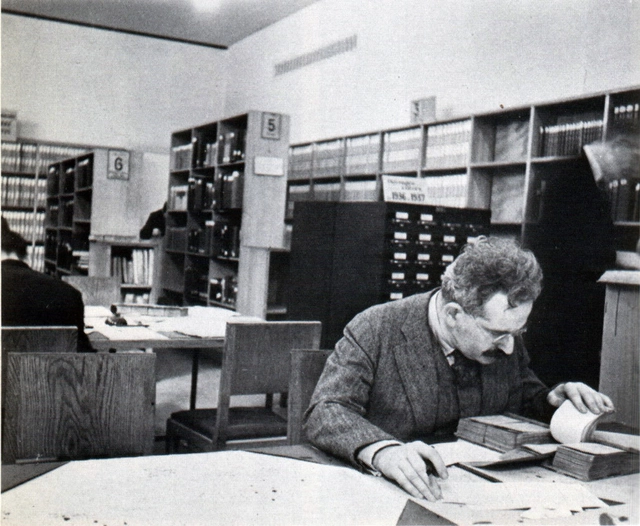
Welcome to The Long(ish) Read: a new AD feature which uncovers texts written by notable essayists which resonate with contemporary architecture, interior architecture, urbanism or landscape design. In this essay, written in 1931, Walter Benjamin narrates the process of unpacking his library. All in boxes, he takes the reader through elements of his book collection: the memories attached to them, the importance he placed on the act of 'collecting' and the process of accumulation, and how objects like books inhabit a space.
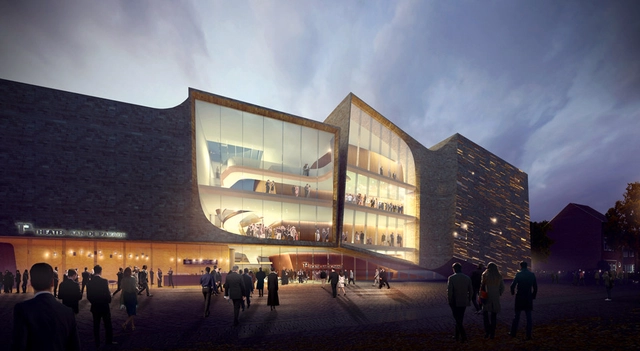
Recently, staff at ArchDaily spotted an interesting trend: thanks to the opportunities afforded by the internet, the results of many architectural competitions and other proposals have been opened up to public opinion like never before. Whether via competitions that post all of their entries online for public viewing such as the Guggenheim Helsinki or Battersea Bridge competitions, designer Karim Rashid's informal poll of his Facebook followers to pick their favorite facade for his design, or a competition that is actually decided by public vote such as Den Bosch's city center theater, it has never been easier for members of the public to make their opinions known about the future of their cities. Even this morning, the US World War I Centennial Commission published the finalists in the competition for the redesign of the National World War I Memorial, actively soliciting public feedback on the proposals.
With that in mind, we asked our readers to share their thoughts on this empowerment of the public. Does allowing ordinary people to vote on such matters represent a radical new architectural democracy, or does it undermine the expertise of the architect? The responses we got were interesting and very varied - find out what people had to say after the break.
Update: The Kickstarter campaign launched by BIG to fund the development of their steam ring generator reached its goal of $15,000 in less than a week after it was launched. As of today (24th August) the campaign total stands just short of $25,000, with 19 days still to go.
BIG has launched a Kickstarter campaign, aiming to fund the ongoing research and prototyping of the "steam ring generator" designed to crown the firm's Waste-to-Energy power plant in Copenhagen. The campaign was announced on Friday and picked up a lot of steam (pun intended) in the design press - but at ArchDaily we were hesitant to publish news of the campaign because, in short, it led us into a minefield of questions about the role of invention, public engagement, and money in architecture.
Of course, BIG are far from the first to attempt to crowdfund an architectural project. Previous projects however have generally focused on otherwise-unfundable proposals for the public good, barely-sane moonshots or complex investment structures which depending on your viewpoint may or may not even count as crowdfunding. BIG are perhaps the first example of an established architectural firm attempting to crowdfund the design of a project that is already half-built, causing some people - ArchDaily staff included - to ask: "Why wasn't this money included in the project's budget?"
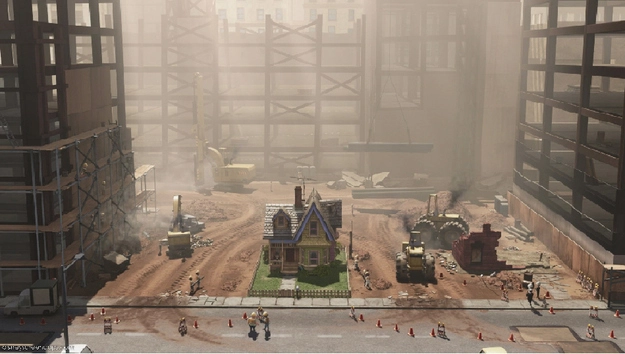
Over the past 20 years, Pixar’s films have attracted vast audiences around the globe. In worldwide box office sales its first film, Toy Story (1995) boasted $362 million, followed by A Bug’s Life (1998) $363 million, Toy Story 2 (1999) $485 million, Monsters, Inc. (2001) $525 million, and Finding Nemo (2003) a whopping $865 million.[1] Factoring in additional home theater movie rentals and purchases, along with cable, theme parks, and consumer products, the influence of Pixar on generations of children and their parents around the world has been enormous. In terms of global impact, no educator, no author, and no architect even come close.
While Pixar’s pioneering role in the world of cinema, storytelling, and digital rendering is already well documented, its links with architecture have yet to be fully explored. One of Pixar’s greatest, and perhaps overlooked, talents is its ability to create convincing architectural worlds adjacent to and within the human world we inhabit every day. Pixar worlds could become a new tool to encourage critical thinking about our environment.

"The Rendering View," is a new monthly column on ArchDaily by PiXate Creative founder Jonn Kutyla which will focus on hints, tips, and wider discussions about architectural rendering.
As an architect you have spent countless hours designing, modifying, and refining what you believe to be the very best possible layout for a building. The numerous projects you have imagined, designed, and then seen as a finished building have given you the ability to visualize it with incredible accuracy. Unfortunately, your clients often lack the ability to visualize a space before it is built.
3D rendering seeks to solve that problem by accurately depicting what a building will look like with photo-realistic quality long before it exists – but there is a huge difference between showing your building and selling the concept of your building. Showing your building does just what the name implies: generally the camera is pulled back and the focus is on the entire building. When you want to sell the concept of a building you want to focus on a very small aspect of the building that is incredibly interesting to look at.

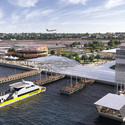
Two weeks ago, New York Governer Andrew Cuomo and Vice President Joe Biden unveiled a plan to transform LaGuardia airport into "a globally-renowned, 21st century airport that is worthy of the city and state of New York." However the redesign is not universally popular. In this article originally titled "The New LaGuardia Airport: Not Functional, Not Inspiring, Not an Icon," - the first of his regular column over at 6sqft - architecture critic Carter B. Horsley explains why "Queens deserves better."
The recent announcement by Governor Cuomo and Vice President Joe Biden of plans to “rebuild” La Guardia Airport at a cost of $4 billion was described in a Page One caption in The Post as “the end of an error,” a reference to the airport’s reputation that became tarnished over the years. Last October, Biden remarked that if someone had taken him to LaGuardia, he’d think he was in “some Third World country.”
Since its opening in 1939, when it accommodated “flying boats” at its Marine Air Terminal, the airport has not kept up with the growth of jumbo jets and air travel in general, but in the days of the Super Constellation passenger planes with their triple-tails and sloping noses, it was a very nice Art Deco place.
The published renderings that accompanied the announcement were not terribly reassuring, as they depicted a very long curved terminal with gangly tentacles raised over plane taxiways that hinted at torsos of praying mantises: an awkward rather than a graceful vault.

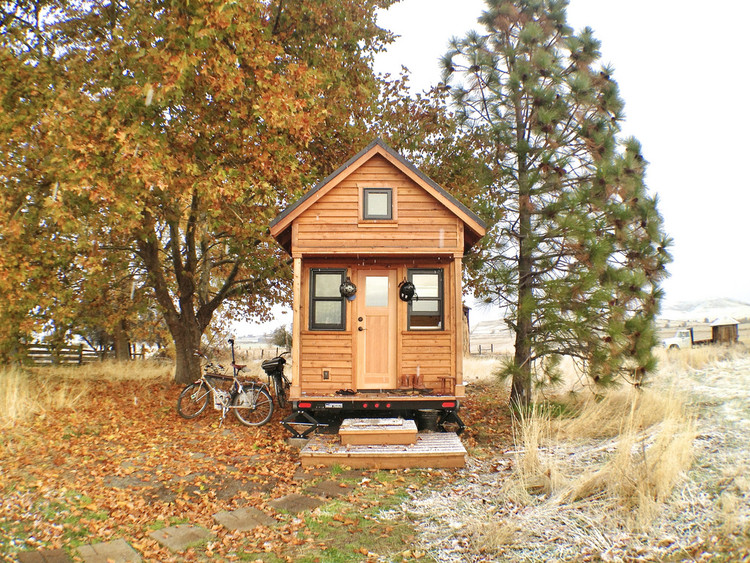
One of the many problems with being deeply engaged in a niche subject such as architecture is that you can easily lose sight of what a "normal" person's perspective is on a topic. Through experience, we often assume that a rising trend that we notice on a daily basis has passed completely unnoticed by the general populace, and it's usually difficult to see when a topic has reached the critical mass to become a genuine social phenomenon. So imagine my surprise when I saw a joke about an architectural trend on a popular webcomic. Two months ago, Toothpaste For Dinner published an image of a character smugly telling his friend "that's cool... my Tiny House is a lot smaller, of course" as they tower over a comically small abode. Suddenly it became clear to me that the Tiny House movement was not just a curiosity for architects.
This realization leads to a number of questions: why are Tiny Houses such a big deal? What promise do they hold for society? And is there anything the movement is failing to address? These questions led me to conclude that, for better or worse, the Tiny House movement might just be the closest thing we have right now to a utopian housing solution - and if that's true, then the movement has a big task on its hands.

When it comes to applying for a new job, in any field, often the most difficult part is standing out from the crowd at the first stage. Fortunately for architects, in our field we have a tool that can help you to do just this: the portfolio. Unfortunately, according to Brandon Hubbard, many architects are getting it wrong when it comes to application portfolios. In this article, originally published on his blog at The Architect's Guide, Hubbard outlines six tips on how to create and submit a two-page portfolio that will increase your chances of getting a callback.
When applying to any architecture job I advise applicants to use the shortest portfolio possible. I have successfully applied to the top firms in the world with only a resume and a TWO PAGE portfolio. Most people are surprised by this, since the typical portfolios I see are in the 20-40 page range. To be clear I am only talking about the initial introduction to a firm, not the in person interview. For that I recommend a full length traditional portfolio.
For the first contact architecture application I recommend a “sample portfolio”, usually two to five pages long. Just like the resume, it is only a snapshot of your greatest work and experience.
Getting into a portfolio discussion is difficult because a lot of the final product is creativity based. Yet, I will cover several general guidelines to follow below when preparing and submitting a sample portfolio.


World Photo Day, to be celebrated on August 19th, is fast approaching. Last year we celebrated the occasion with a day of posts dedicated to the photographers who make ArchDaily - and indeed the architecture industry as we know it - possible, and this year we'd like to do something equally special with the help of our ArchDaily readers.
Using data from our My ArchDaily platform, we want to find out which photos are most popular among our readers, and then learn more about these images from the photographers who took them. To do this, we will take a selection of the images that have been bookmarked the most and then reach out to their photographers, asking them to share the story of how each image came together. So make sure to cast your "vote" for your favorite architectural image by bookmarking it in My ArchDaily!
Don't know how to bookmark photos in My ArchDaily? Find out after the break!
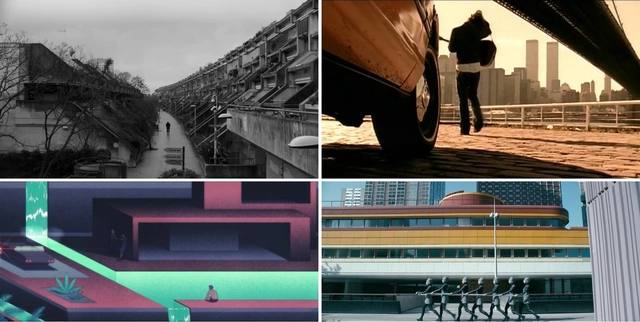
When it comes to the confluence of music and architecture, maybe the first thing that comes to mind is Goethe's claim that "music is liquid architecture." Goethe, however, was writing before the advent of MTV: music videos have become miniature films, attempting to capture all the tone, undercurrents and context of a particular song and translate them visually. Even better, the way music videos use architecture isn't the same as any documentary or film location; the camera attempts to mimic the way people listen to music by cutting and weaving around, designed for listeners as much as they are designed for viewers. Hence we see protagonists turning to the side, important elements placed away from the center and shots that both explore and disguise spaces in an attempt to fit the songs' acoustics to the setting.
What this means for us is that music videos can relate to architecture and capture its underlying tones in a way that a film might struggle to. For an architect wondering how the public truly understand and interact with a piece of architecture or remember a style, music videos are an untapped goldmine, since every setting location and filming choice show off how our wider culture relates to a building. Read on after the break for seven music videos that tell us a surprising amount about the architecture they feature.
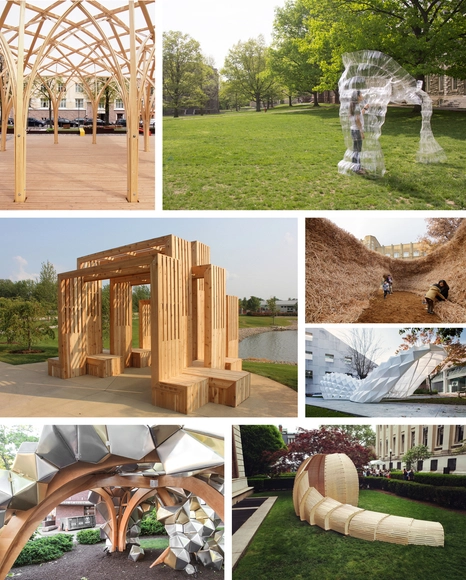
Almost two months ago we put a request out to all of our readers who were completing the academic year to send us any built work that they may have completed as part of their studies. Our hope was to display the fantastic diversity of ideas and styles that is emerging from institutions across the globe, and the response that we got was fantastic. With almost 100 submissions, we received projects from countries as far afield as Chile, the United States, Norway and Japan. We also received everything from pragmatic projects such as a chapel for a disadvantaged community in Mexico or a low-budget sidewalk parklet, to wondrously bizarre constructions such as a steel worm that connects spaces through sound and an inhabitable haystack.
With the help of our colleagues at ArchDaily Brasil and all of ArchDaily en Español, we've compiled a selection of 26 of the most interesting, elegant or unusual projects from around the world - join us after the break to see what your international peers have been up to.

As an architect, whether you’re storing large design files, sharing them with colleagues, syncing files to your tablet to show clients in meetings, or filing away confidential patent documentation, the benefits of the cloud are increasingly on your side. Because the architecture industry relies so heavily on collaboration throughout the course of a project, it seems like a natural fit for using the cloud but nonetheless, many architecture firms generally dissuade cloud adoption, largely due to concerns about security and the necessity of protecting intellectual property.
To be fair, these concerns are not entirely unfounded: After all, nearly a quarter of cybercriminals are intellectual property spies, hoping to sell your designs to a competitor or release confidential plans to the public. So when you work in an industry where intellectual property is your bread and butter, it’s essential to regularly address security concerns and maintain strong contingency plans.
Photographer Nikhilesh Haval of nikreations has shared with us this virtual tour of the 2015 Serpentine Pavilion. Taking viewers through a series of 360-degree panoramas shot on a mercifully sunny day, the tour shows off the pavilion's striking colors to good effect and gives some indication of the complex and dynamic arrangement of the design's double skin.
For those won't get the opportunity to visit for themselves, Haval's virtual tour is a great way to experience SelgasCano's psychedelic space as it gives a reasonable impression of what it feels like to actually be there. I can say that with some authority because, since I last wrote about the pavilion, I got the chance to visit it myself - and what I found was completely different to the pavilion I might have expected had I been taking cues from our comments section. I'd like to talk to our readers about that directly, if I may.
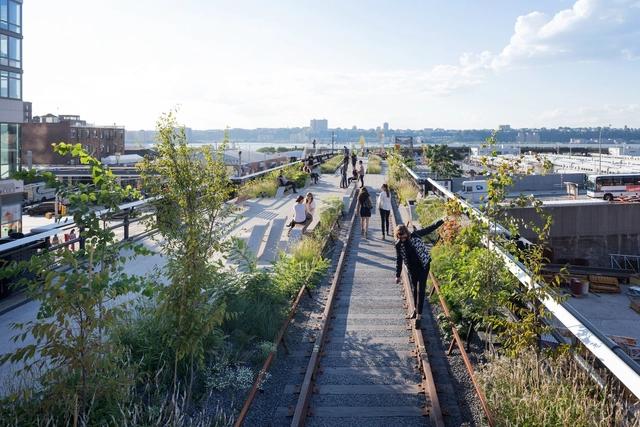
For most people, spending time outdoors in well-designed public spaces is one of the highlights to city life. Why, then, do we spend comparatively little time and money on designing them? In this article, originally posted on Metropolis magazine as "Designing Outdoor Public Spaces is Vital to the Future of our Cities" Kirt Martin, the vice-president of design and marketing at outdoor furniture designer Landscape Forms, makes the case that landscape architects and industrial designers working in the public realm are key for our cities' health and happiness.
All of us treasure our time in outdoor spaces. So why do we devote so little of our attention to their design?
As a designer in the site-furniture industry, I am always curious about the value people place on the outdoors. I like to ask people I meet to describe a great city like New York, Chicago, or Paris and what they most remember about being there. Or I ask them, if they won $25,000 to spend on a dream vacation, where they would go and what they would do. Their fond memories of a celebrated city or an escape into the wild often have little in common, except for one thing: Their most memorable and meaningful experiences almost always revolve around the outdoors.


It's that time of year when many graduates across the Northern Hemisphere are searching for jobs or internships - the time of year when many realize that there's a lot more to landing a solid position at a good firm than simply being a great designer. One of the largest hurdles they will encounter is the job interview, and while there is plenty of advice out there about job interviews in general, little of it is aimed directly at architects. In this post originally published on The Architect's Guide, Brandon Hubbard tackles the top five most common questions in an architecture job interview - and how to ace the answers.
The architecture profession has been steadily recovering since the downturn of 2009. The National Council of Architectural Registration Boards (NCARB) has released “NCARB by the Numbers,” their annual report featuring a positive trend for the architecture profession. This means more jobs for architects - assuming you can get through the interview of course...

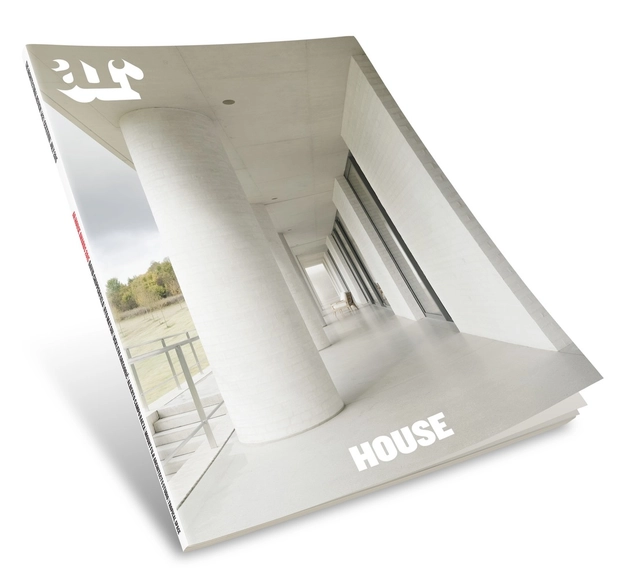
ArchDaily is continuing our partnership with The Architectural Review, bringing you short introductions to the themes of the magazine’s monthly editions. In this introduction to the July 2015 issue, AR editor Christine Murray takes on "the most pressing issue of our time," the global housing crisis, asking "why don’t we shelter the homeless in empty housing? This crisis seems nonsensical when the postwar housing crisis was solved so efficiently."
The architect-designed home is a desirable commodity, that Modernist minimalist bungalow, all steel and glass with a large sofa, the Case Study House complete with swimming pool, MacBook Air and stunning view.
But there was once a different kind of architect-designed home, for people in need of shelter, not investments – and it’s sorely required now. Housing is the most pressing issue of our time, with one in every 122 people in the world either a refugee, internally displaced or seeking asylum – a record high, according to a UN report. Yet cash-strapped states do nothing, build nothing. They stand eyes averted, hands in their pockets.


Farnsworth House, the temple of domestic modernism designed by Mies van der Rohe as a weekend retreat for a Chicago doctor, is one of the most paradoxical houses of the 20th century. A perfectionist mirage, it floats like a pavilion in a park, but its history has been beset by plagues, floods and feuds. As the second installment of a series of three modernist classics presented by Archilogic, we’ve modeled the Farnsworth house so that you can see if—in spite of its austere reputation—it can be lived in after all. In this model you can explore the spatial arrangement of the house, and refurnish it with Eames chairs, deck it out with your IKEA favorites, or booby-trap it with children’s toys.
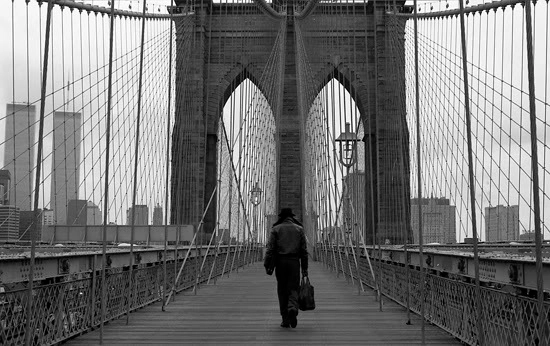
Grégoire Alessandrini’s blog “New York City 1990’s” contains an enormous collection of images taken between 1991 and 1998 that artfully depict New York. The website is a snapshot of New York in the 1990s, capturing the spirit of the era with photographs of New York’s architecture that could only exist at that time. As politics and public sentiment have changed, the city has changed with it, and much of the New York Alessandrini captured no longer exists.
To document just how much New York has changed in the past 25 years, we have curated a selection of Alessandrini’s images and set each photograph next to a Google Street View window corresponding to the photographer’s location at the time. In the photographs where Alessandrini observes from an elevated vantage point, the Street View images are as close as possible to the photographer’s location.
Read on after the break to see the images of New York’s dynamic change from the 1990s to 2015.

Ahead of the 125th anniversary of the birth of Russian architect Konstantin Melnikov, Photographer Denis Esakov provides a recent look at 12 of Melnikov’s projects—all of which have been standing for over 70 years. Enjoy this selection of photographs that show how some projects have aged, deteriorated or been adapted, and note Melnikov’s persistent fascination with the meeting of curvature and rectangularity.

ArchDaily is continuing our partnership with The Architectural Review, bringing you short introductions to the themes of the magazine’s monthly editions. In this introduction to the June 2015 issue, The AR's editor Christine Murray addresses the question:"has architecture lost its social conscience?" According to Murray, "the question has become an arthritis; a dull ache that improves or worsens depending on the weather."
For some, the social purpose of architecture is associated with the idealism of youth, to be shed like a snakeskin as the responsibilities of age take over. But there is still plenty of teeth gnashing and hand wringing. Even if architects are powerless to shape the economic and political context of their work, a building is still a place where people gather. A social purpose, whether for a school or an office tower, is still the driver of its design. And yet, when the paperwork and construction are done, the bureaucracy surmounted, the fees paid (or not), and a building is finally complete, it’s the people we strip away. When architecture is published and the critic’s verdict given, it’s the messiness of life we edit out.
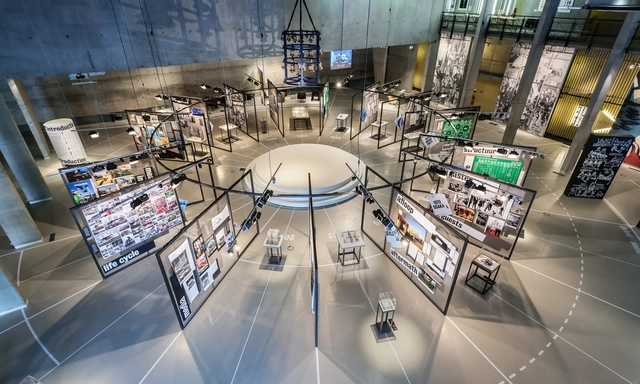
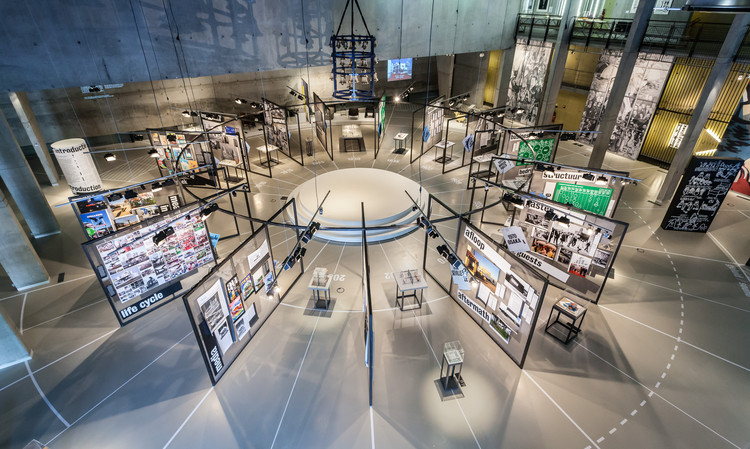
Now at the halfway point of the six month long World Expo in Milan, in which 145 countries are participating in a concentration of national spectacle surrounding the theme of "feeding the planet," Rotterdam's Nieuwe Instituut (HNI)—the centre for architecture in the Netherlands—is exhibiting an altogether more reflective display of national civic pride.
Rotterdam, which was blitzed and decimated during the Second World War, is a place well suited to host an exhibition whose underlying theme centres on the fragile, often precarious notion of national self-image. Following the war Rotterdam was forced to rebuild itself, carving out a new place on the world stage and reestablishing its importance as an international port. Now, seventy years later, Rotterdam is a very different place. In demonstrating just how delicate the construction of a tangible national identity can be this latest exhibition at the HNI offers up a sincere speculative base for self-reflection.

This article is part of ArchDaily Essentials, a series of articles which give you an overview of architecture's most important topics by connecting together some of our best articles from the past. To find out more about ArchDaily Essentials, click here; or discover all of our articles in the series here.