Le Corbusier once stated that “Light creates ambiance and feel of a place, as well as the expression of a structure.” Despite other external technicalities and design choices made within public spaces, such as the way the space is constructed and the use of color and materiality, these elements would essentially be rendered useless without the proper use of lighting.
Many architects’ design choices and decisions cater toward the general illumination of a given environment, and the intended feeling and mood that architects want individuals of the public to experience whilst occupying the space. The lighting, therefore, must be integrated into the furnishings and architecture as lighting plays a decisive role in creating the right atmosphere. Low lighting creates an intimate, upscale atmosphere, especially within restaurants, bars, and lounge areas, where individuals are more apt to lean close together.
This week's curated selection of Best Unbuilt Architecture highlights different competition-winning designs and honorable mentions submitted by the ArchDaily Community. From large scale urban developments to small interventions and installations, this article highlights a selection of projects that have taken part of international and/or national competitions, and have received recognition from their juries.
From a metro station refurbishment that highlights the colors of Belgrade, to a memorial park on the coast of Miami, the award-winning entries are designed by young architects who have reimagined cultural, commercial, and urban projects, and provided innovative solutions that cater to the city and community. This round up also includes projects in Pakistan, Czech Republic, Germany, Vietnam, and Turkey.
Before the pandemic, there was a concerted effort from world leaders to curb the effects of global warming, with nations from around the world trying to unite in this endeavor. There was an increased emphasis on policies and action plans to reduce greenhouse gas emissions by 2030 through the rapid introduction of new energy saving technologies and innovative carbon dioxide removal techniques, with the purpose of meeting the Paris Agreement goal of carbon neutrality and limiting global warming to 1.5ºC.
If today technologies are emerging for different forms of representation and interaction with drawing, understanding how architects communicate through hand-drawn strokes can be essential to delve into the topic of architectural visualization. Through the simplicity of gestures, small texts or a collage of references, it is possible to translate ideas in an innovative way, unlike the ways that a render can present. For this reason, we highlight here the work of great names such as Lina Bo Bardi, Renzo Piano, Pezo von Ellrichshausen and Mikkel Frost, who, using different techniques, reveal different ways of representing a project.
There’s something magical about seeing a city from the very top. To have a new vantage point, and look across a skyline instead of looking up at it is one of the most powerful and awe-inspiring feelings. Observation decks are not just architectural marvels, but also a sort of civic icon and sense of pride for a city. In the present day, it’s not just their height that draws people in, but the additional programming of sky-high bars, rides, and bungee jumping as well.
What looks like a residential paradise, where the indoor and outdoor space seamlessly merge, will, in fact, be a site for professionals to indulge, reflect and create. Image Courtesy of NOA
At a prime location in the middle of Belgium, an original concept has taken form, as NOA Outdoor Living invites professionals to experience outdoor design in an entirely different way.
The architecture of governments has long been tied to shared ideals. Built to reflect regional aspirations and communal organizations, parliaments are a unique type of design for legislative bodies. Generally speaking, they include various kinds of deliberative, consultative, and judicial assemblies. Exploring new ideas on the design of government buildings, parliaments are being reimagined to reflect contemporary life.
Design Justice is a branch of architecture and design focused on redesigning cities, products, services and environments with historic reparations in mind.
The term emerged about 7 years ago when debates and dialogues about inclusion and diversity in spaces started to get stronger, creating movements that fought for the rights of people who had their roots and choices denied in society.
Now that the effects of climate change are visible and indisputable, consumers are more environmentally conscious than ever. In fact, as a United Nations 2021 study suggests, 85% of them reveal that sustainability plays a key role when making their purchase decisions, motivating businesses and manufacturers to respond accordingly. This explains the rising demand for electric vehicles and products made of renewable or recyclable materials. However, architecture – and especially traditional housing – seems to be several steps behind compared to other industries. Although there are numerous efforts to move towards a greener built environment, the way most buildings are made today continues to be outdated, creating tremendous amounts of waste and significantly contributing to the global carbon footprint.
Videos
Installation of 1070 pieces of frosted Soap Mini. Image Courtesy of BOMMA
A starry blend of vision, talent, craft and technical know-how aligns for BOMMA. The glass-lighting producer, based in the Czech Republic, fuses centuries of glassmaking tradition as hand-blown, monumental-sized designs take shape and form through the use of unconventional materials, daring colours and modern technological advancements. These combinations characterise each of BOMMA’s seventeen collections, five of which can be arranged into otherworldly constellations. To expand the artistry further, designers and architects are invited to project their boldest creative visions of space through several of the brand’s collections.
Far beyond basic training, reading is a leisure activity that is part of modern society. Whether outdoors, in squares and parks, at home or even at work, this habit, which improves reasoning ability and mental health, already had large spaces dedicated to books in palaces and mansions. We selected 15 projects that demonstrate the different ways of integrating reading at different scales and architectural programs.
On the 5th of May, the first edition of Model. Festival of Architecture of Barcelona was inaugurated. An event organised jointly by Barcelona City Council and the Architects' Association of Catalonia (COAC) that brings us closer to experimental architecture and helps us to rethink how we want to live together through new city models and new imaginaries.
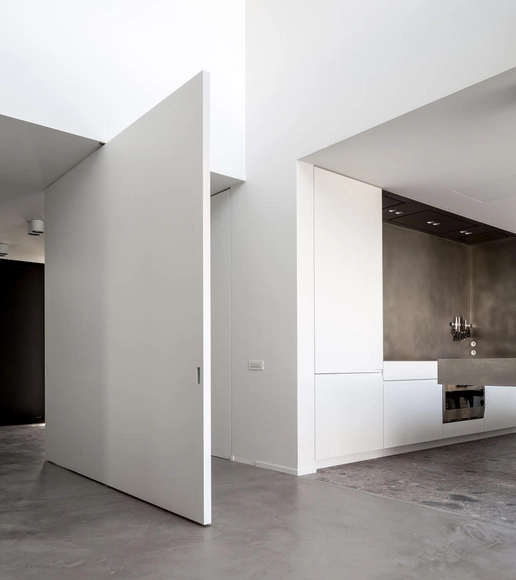
Big White Pivot Door / FritsJurgens. Image Courtesy of FritsJurgens
Interior doors serve multiple purposes in homes, such as providing security and privacy, separating spaces and buffering noise. But besides these obvious functions, they can also set the tone and enhance a room’s aesthetics with their beauty, becoming powerful design features by themselves. They certainly should not be taken lightly when designing any interior space. Considering this impact, architects must take every factor into account when choosing a door, including color, material, style and swinging motion. Dimensions are also important, but tend to be standard as they are limited by the size of the door frame. Usually, they don’t exceed 80 inches (or 203 cm) in height and range from 24 to 36 inches (70 to 90 cm) in width. Recently, however, this has taken a turn in modern design.
Since the emergence of the design profession, boosted in the Industrial Revolution with the increasing production of objects and the desire of a middle class eager to consume; designers, interior decorators and architects are known as professionals who create spaces and products to beautify the world.
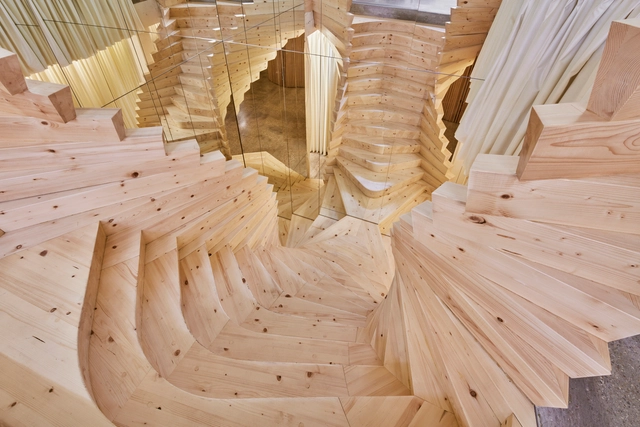
Stairs in architecture are oftentimes a design focal point- the heavyhandedness in creating something that moves us from one level to the next, up and down repeatedly, something so simple and familiar with a twist is what makes the experience of traversing a stair so unique. Our obsession with stairs and the level of illusion that they create in architecture perhaps stems from the way that they’re able to twist the optics and perceptions of space. We understand that they transport us in one direction or another, but can stairs ever be circular? Is it possible to go up and down for eternity?
Challenging social spaces to properly reflect our modern existence should be an important quest for all designers – the power of progressive interiors should not be underestimated, and can even contribute to a change in the course of history. Danish design brand MENU is driven by a human-centric approach rooted in social agency – with the end result of each product design being to forge a sense of community and belonging in the real world.
BEYOME, led by Project Consortium together with the architects of Enorme Studio, seeks to transform traditional dwellings by providing a greater degree of flexibility in their spaces, so that they can adapt to contemporary lifestyles, taking into account the different uses that their inhabitants give to them. But how can we make the same space capable of adapting to different uses? What strategies could be developed to double the surface area of our homes and make better use of them?
Years ago, architects made the move from hand-drawn plans to CAD. The time they saved and efficiencies they gained transformed the industry. Today, you’ll be hard-pressed to find an architect that solely works using the traditional pen-and-paper methods. That digital shift has continued to develop.
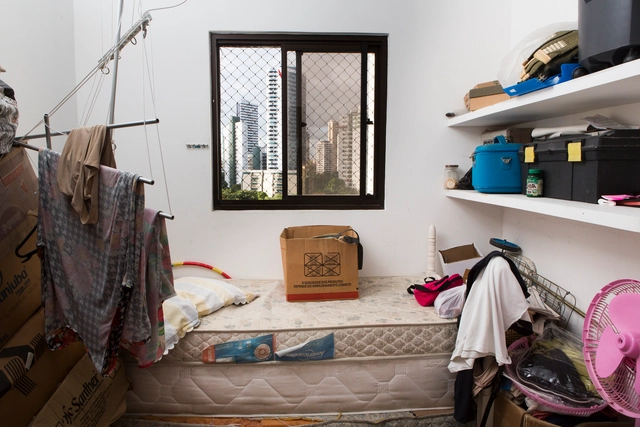
The maid's quarters are "with their days numbered", although they still find a place in the new luxury apartments. The information is from a report published in Folha de S. Paulo in March of this year, which says that in 2018 less than 1% of domestic workers, mostly black women, lived on the premises of their employers - a low number when compared to the 12% of 1995. With the decrease in the number of professionals residing in the employers' homes, the "maid's room" would gradually be no longer part of the architectural plans of Brazilian housing buildings.
Almost seven kilometers from the green of Uhuru Park in central Nairobi, lies the informal settlement of Kibera. It is an area whose urban character consists of corrugated iron roofs, mud walls, and a complicated network of utility poles. Kibera, at this point in time, is a well-known place. Much has been written and researched on this “city within a city,” from its infrastructural issues to its navigation of the COVID-19 pandemic.
There’s nothing unusual about an architect extending their artistic vision beyond the bones of a building, and into the detail of its content – iconic pieces of 20th century furniture design are often attached to a specific building. Among those practising such gesamtkunstwerke, or the art of synthesising all aesthetic aspects of a site, were often the authors of architectural movements; the artist and crafter William Morris, the Bauhausian lead Walter Gropius or the Secessionists Joseph Maria Olbrich and Josef Hoffmann.
https://www.archdaily.com/981521/a-reimagined-icon-for-the-21st-century-the-ton-822-chairEmma Moore
Futuristic shopping center. Image via The Jetsons, 1962 / Hanna-Barbera Productions
The dawn of nuclear power, dramatic advances in rocketry, and the desire to be the first to put men into space and on the moon, kick-started an era known as the ‘Space Age’. Upon the closure of WW2, both the Soviets and the Allies found themselves in a state of antagonism, as they both began to struggle to make advancements in space exploration before the other, a race for space. The era would give way to rapid advancements in technology and huge accomplishments including the moon landing in 1969. The Space Age aesthetic completely changed the way designers visualized the new world and left a dramatic impression on architecture and interiors. A new vision of futurism and prosperity.
The Second Studio (formerly The Midnight Charette) is an explicit podcast about design, architecture, and the everyday. Hosted by Architects David Lee and Marina Bourderonnet, it features different creative professionals in unscripted conversations that allow for thoughtful takes and personal discussions.
A variety of subjects are covered with honesty and humor: some episodes are interviews, while others are tips for fellow designers, reviews of buildings and other projects, or casual explorations of everyday life and design. The Second Studio is also available on iTunes, Spotify, and YouTube.
This week David and Marina are joined by Scott Mitchell, Founder and Chief Executive Officer of Scott Mitchell Studio, to discuss his designs; his early interests in architecture; his office; influential people in his life; the power of thoughtful architecture; and much more.
One of the elements of most affinity between architecture and cinema is the scenographic project. The set designer, like the architect, starts from a concept to create spaces with a purpose. The architect designs spaces for living and the set designer designs spaces for storytelling. Many architects work with scenography because of the affinity between the activities.


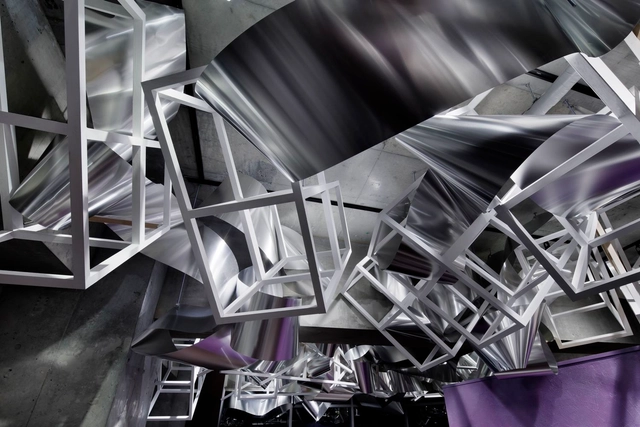


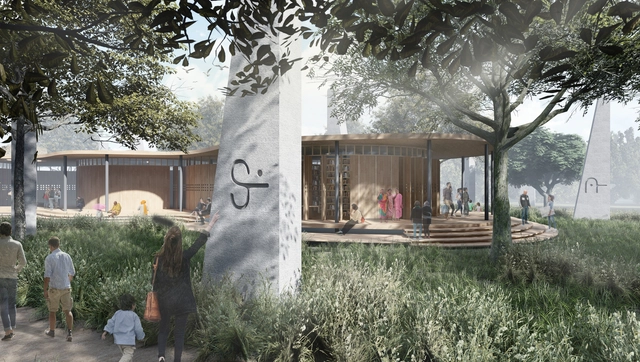

.jpg?1652355731 "Memorial Park by Tatiana Ivanova, Mikhail Skisov. Image Courtesy of Tatiana Ivanova, Mikhail Skisov")


_Credit_Santiago_Calatrava.jpg?1652412911&format=webp&width=640&height=580)










 .
.


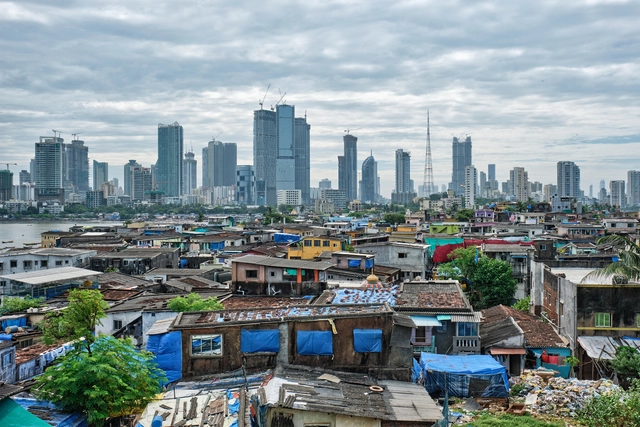


.jpg?1651830269 "Khayelitsha Township - Cape Town. Image © Olga Ernst under the Creative Commons Attribution-Share Alike 4.0 International license.")