Women's studies officially began in China in the early 1980s. Women awoke and started to take bigger roles in society as it grew. Women had been working as architects for a century, but Lin Huiyin was not recognized as the country's first female architect until the 1920s due to the profession's tardy development in China. But nowadays, more and more female architects are filling crucial positions.
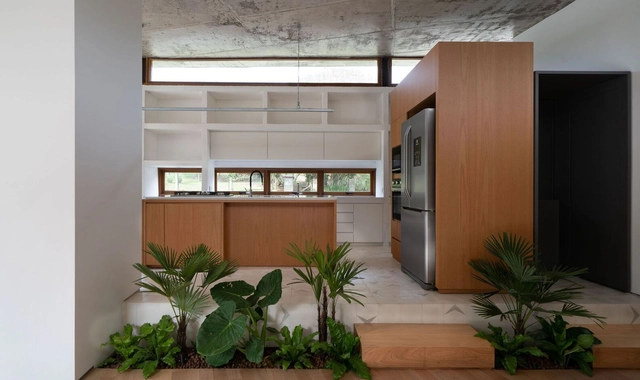
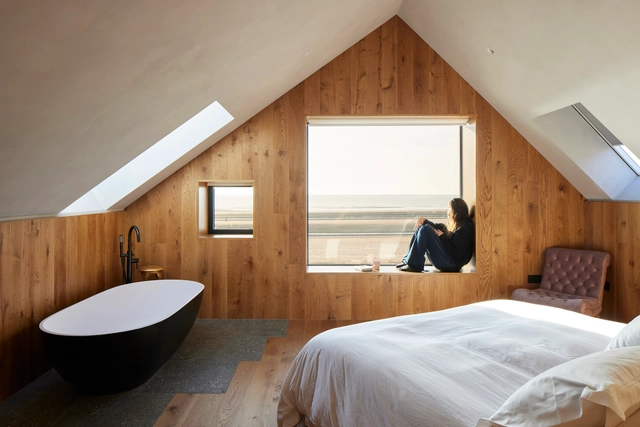
An indispensable item, windows are fundamental to bringing more comfort to a room. Besides the desired connection between the interior and exterior, it is through their openings that it is possible to provide natural lighting and ventilation to the rooms.
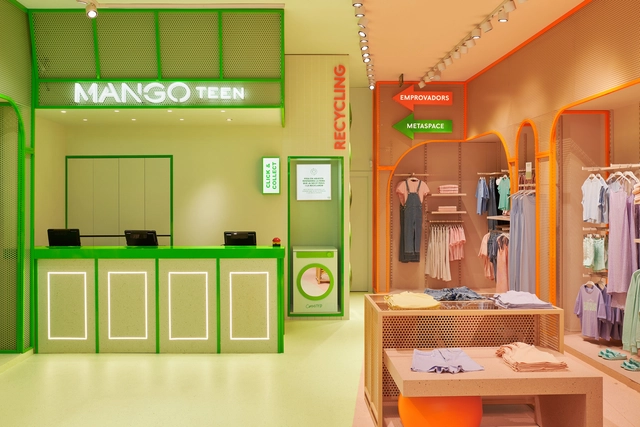
When one steps into a Starbucks, they almost instantly know they are in the famed coffeehouse, and not at a McDonald's. Apart from the uniformed staff and a giant sign at the door, there are countless other factors that make a Starbucks look like a Starbucks. Textures, materials, shapes, colors, layouts, furniture, and lighting all contribute to the experience of being in a branded environment. These elements are replicated globally to create an identifiable image. As economic patterns change, brands are looking at extending their identities into spatial experiences in order to better engage with their customers in their daily lives.
Videos
Courtesy of The School of the Art Institute of Chicago
The most recent season of ByDesign –a television series that explores design, featuring the designers who bring ideas to life– returns with its sights set on the architecture of the United States. America ByDesign: Architecture will feature six of the US’s most significant architectural accomplishments, competing toward a finale to determine the ultimate winning design. Past ByDesign seasons have focused on New York, California, and Australia—and now, the series will zoom in on the Windy City and the School of the Art Institute of Chicago (SAIC).
When children first learn to draw a house, there are four basic components they illustrate: a wall, a pitched roof, a door and one or more windows. Along with the common structural elements, windows have always been considered to be indispensable architectural features for their multiple functions. While providing views, daylight and natural ventilation, these insulate from cold and heat, protect from external threats and enhance a facade’s appearance. They are also associated with a strong poetic or symbolic value; it is through them that we are able to connect with and enjoy our surroundings, be it a beautiful natural landscape or a dense urban environment. An expressive part of any building, windows serve as a visual bridge between the inside and outside, acting somewhat as a refreshing escape from our everyday routine.
Videos
The interior designers for the Chengdu Hotel leveraged a true life-cycle BIM workflow across design teams and contractors to reduce construction time by 50%. Image Courtesy of SketchUp
Most architects are looking to win more work; not just higher-paying projects but those that allow them to unleash their creativity and passion. These opportunities can be won or lost on a professional's ability to communicate their design vision — so the proposal has to be on point. These tips from leaders in the design field can help architects win bids and create their dream projects.
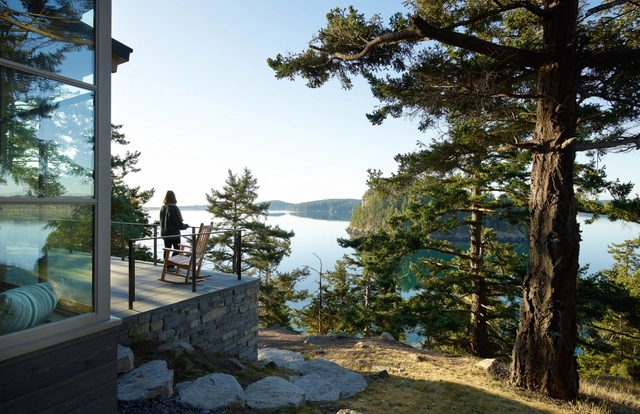
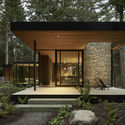
The Pacific Northwest is synonymous with rainy mountains, expansive coastlines and dense forests. Known for its majestic landscapes, the region has innate connections to the waterfront. Over time, these channels were referred to as the Salish Sea. Encompassing the Strait of Georgia, the Strait of Juan de Fuca, and Puget Sound, the intricate network of bays and inlets is bounded by British Columbia and Washington. Dotted with a number of major port cities, including Bellingham, Vancouver, and Seattle, the Salish Sea has also been home to many indigenous peoples.
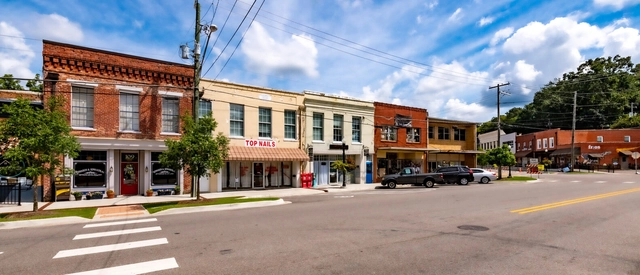
There are countless good bones in American downtowns across the country, but they’re seldom connected to enough good tissue to be filled with life. This post is on the 10 things needed to make downtowns thrive. And none are the usual suspects. I’ve omitted stuff everyone else talks about because many of you already know those things.
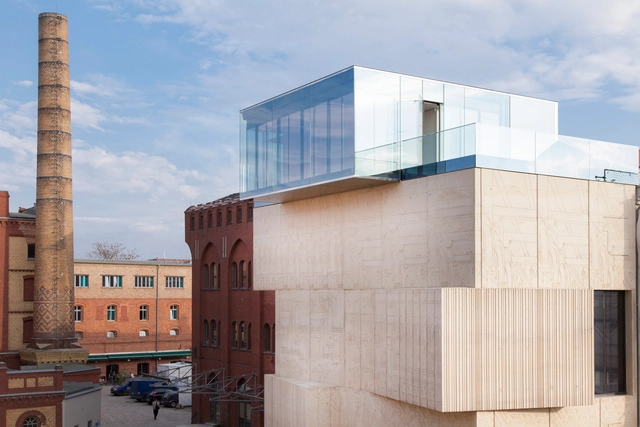
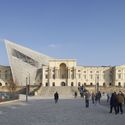
Museums reveal local and shared heritage. As cultural institutions embedded in the fabric of modern life, each museum serves as a window into history and human exchange. Made to promote understanding and provoke new ideas, these monumental buildings are inspired by spatial exploration. With some of the most influential museum projects in the world, Germany is home to a range of diverse institutions showcasing unique approaches to curating, taxonomy and spatial organization.
Everyone who has ever built anything—a model, a birdhouse, or small pieces of furniture—has a clear sense of the amount of things that can go wrong during the construction process. A screw that is impossible to tighten fully, a warped wooden board, an inattention or a miscalculation that can frustrate plans instantly. When we transport these small inconveniences to a building scale, with countless processes and many different people involved, we know how complex a work can become and how many things can get out of control, taking more and more time and requiring more and more resources to finish. And when we talk about a building that needs to float, be completely self-sufficient, and, after fulfilling its useful life, be completely reused—could you imagine the technical challenges of building something like this?
Videos
The self-explanatory simplicity and combination-friendliness of boards motivate to joint activity. Image Courtesy of Brunner
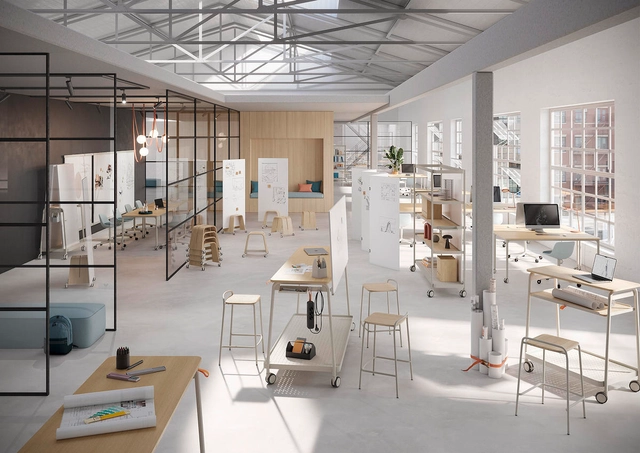
The last two years have turned society and its habits upside down. The working world, too, where hardly anything is the way it used to be. But this new start is proving to be a wonderful opportunity to rethink content and work processes and to reinvent oneself. Since last fall at the latest, it has been clear where this journey is headed. In October, the internationally active contract furniture manufacturer Brunner presented innovative design news that offers a solution to the issues and the changed situation.
“Color is life; for a world without color appears to us dead.” Distinguished painter Johannes Itten described with these words the exceptional power of color in our perception of the world. As a sensory event, color not only defines what we see, but also how we feel and think; it has been shown to alter productivity, inspire decision-making, shape our perspective, and influence our well-being. Especially in architecture, these effects materialize and reach their maximum splendor. Design is, after all, a visual form of communication, and color palettes –coupled with light, shadow, texture and sheen– play a critical role in conveying a building’s message. They create the ambiance that supports the function of a space, completely transforming user experience. Even the greats have recognized this power: “Polychromy is as powerful an architectural tool as the plan and section,” Le Corbusier once said.
According to the UN, more than 7000 extreme weather events have been recorded since 2000. Just this year, wildfires raged across Australia and the west coast of the U.S.; Siberia charted record high temperatures, reaching 100 degrees Fahrenheit before Dallas or Houston; and globally, this September was the world’s hottest September on record. As the effects of the climate crisis manifest in these increasingly dire ways, it is the prerogative of the building industry – currently responsible for 39% of global greenhouse gas emissions – to do its part by committing to genuine and sweeping change in its approach to sustainability.
One of the most challenging aspects of this change will be to meet mounting cooling demands in an eco-friendly way. Cooling is innately more difficult than heating: any form of energy can become heat, and our bodies and machines naturally generate heat even in the absence of active heating systems. Cooling does not benefit equally from spontaneous generation, making it often more difficult, more costly, or less efficient to implement. Global warming and its very tangible heating effects only exacerbate this reality, intensifying an already accelerating demand for artificial cooling systems. As it stands, many of these systems require large amounts of electricity and rely heavily on fossil fuels to function. The buildings sector must find ways to meet mounting demand for cooling that simultaneously elides these unsustainable effects.
https://www.archdaily.com/949585/cooling-interiors-will-be-the-architectural-challenge-of-the-futureLilly Cao
If the last pandemic year was a perfect occasion to reflect and debate on wellness and digitalization, this 2022 was a tremendous opportunity to deepen and comment on some other of the most pressing issues in architecture: from carbon neutral construction to the democratization of design. Along this line, with each of the different topics that ArchDaily develops each month, we asked an open question for you -our dear readers- to actively join in with the contribution of your experiences and knowledge.
After reading and compiling a huge number of messages received, from construction professionals, students, and architecture enthusiasts, it is time to present a summary of the main positions on each topic. Thank you very much for your opinions and we look forward to your comments for 2023!
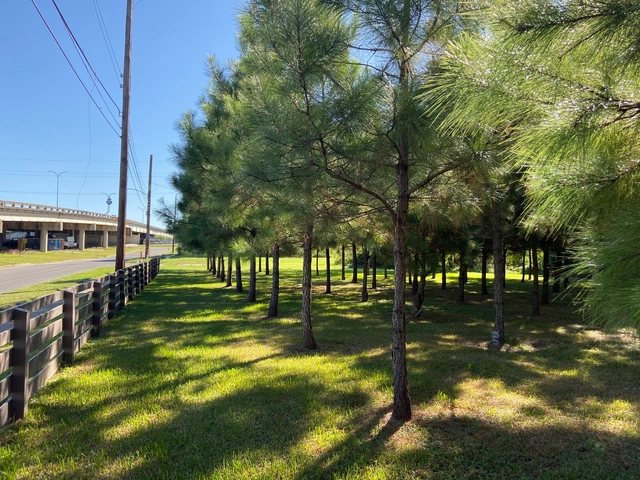
New Orleans experiences the worst urban heat island effect in the country, with temperatures nearly 9 F° higher than nearby natural areas. The city also lost more than 200,000 trees from Hurricane Katrina, dropping its overall tree canopy to just 18.5 percent.
The non-profit organization Sustaining Our Urban Landscape (SOUL) partnered with landscape architects at Spackman Mossop Michaels (SMM) to create a highly accessible, equity-focused reforestation plan for the city that provides a roadmap for achieving a tree canopy of 24 percent by 2040. But more importantly, the plan also seeks to equalize the canopy, so at least 10 percent of all 72 neighborhoods are covered in trees. Currently, more than half of neighborhoods are under the 10 percent goal.
The 14th edition of the ArchDaily Building of the Year Awards is here and once again we reach out to you, our community, to evaluate the projects and select the winners.
This year, we have over 4,500 projects nominated across 15 different categories. From Residential, to Commercial or Public, each category showcases the very best in innovation, sustainability, design and functionality. The projects curated by our team have made a significant impact on the built environment and deserve recognition for their excellence.
As a member of our community, we would like to first invite you to take part in the selection process by casting your vote for the building that you believe deserves to be named the winner in each category.
Don't miss this opportunity to have your say in the architecture world, and help us celebrate the best and most innovative in the industry. Cast your vote today and together let's recognize the best buildings of the year.
As we dive into 2023 and start the Year of the Rabbit, we share with you a few thoughts of what the past year brought to us, and how we prepare for this new season.
During the past year we expanded our network as part of DAAily platforms, and with the future of the built environment as our mission, we became more aware on how to bring it to our daily content, considering how most of the challenges we are facing are converging into it. From the housing and energy crisis, to inequality, migration and war, everything is converging into the built environment, and we cannot abstract ourselves from it.
As architecture becomes a wider issue and more people not only become interested, but want to engage with it in an active way, we took the responsibility to open its black box and build bridges through knowledge by answering the challenging question of What is Good Architecture? in our first book, “The ArchDaily Guide to Good Architecture” together with gestalten.
A widely discussed topic lately, the circular economy encompasses a whole production and consumption system which pursues the reuse of existing materials as long as possible. However, how does this ongoing concept involve architecture, design and its aesthetics? Joining the shift towards a circular future, architecture is discovering how circular operations and the reuse of materials can result in new aesthetics, as well as in an overall improvement of its environmental impact.
Learning how circularity (and material reuse) creates distinctive aesthetics, the following article analyzes the way projects are reinterpreting their design process throughout three strategies: detachable, rustic and malleable architecture.
1 De Haro / Perkins&Will. Image Courtesy of Quebec Wood Export Bureau
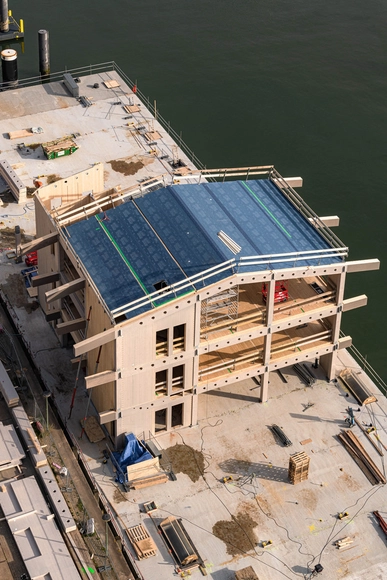
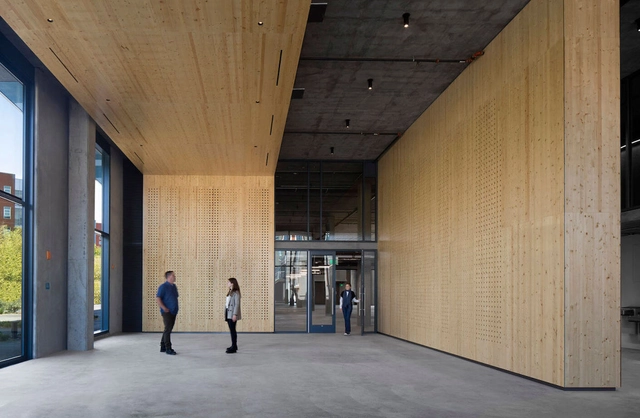
Mass timber is emerging all across North America. Beyond the benefits of natural materials and visible structures, the capabilities of industrialized offsite construction are beginning to change the model of delivery for an increasing range of buildings. When a California owner-developer proposed the first mass timber building in the state, they chose the experience, scope, and qualifications carefully, and the entire mass timber package was delivered on a train from Quebec, Canada.
Plataforma de Mergulho ICEBERG / Bulot+Collins. Image Cortesia de Bulot+Collins
The aquatic environment has always fascinated dreamers and researchers. Around 1960, in the midst of the fierce space race of the Cold War, French explorer Jacques Cousteau developed equipment such as the Aqualung to unravel the depths of the sea, which remained as unexplored as outer space itself. He even stated that in 10 years we could occupy the seabed as “aquanauts” or “oceanautas,” where it would be possible to spend long periods extracting mineral resources and even growing food. Sixty years later, the seabed is still reserved for few, and mankind has been more concerned with plastic in the oceans and rising sea levels than colonizing the ocean floor. But being close to a body of water continues to attract most people. Whether out of interest or in response to risks of flooding and over-population, some have turned to utopian proposals and floating architecture, examples of which have been featured in the ArchDaily project archive. But what are the fundamental differences between building houses on land versus on water, and how do these buildings remain on the surface rather than sinking?
One plant makes all the difference with its color, texture, movements, and the celebration of its flowering. The green inside the homes offers several benefits. However, besides knowing which species are easier to grow, looking for more effective ways to blend the plants with the room can enhance the spatial experience. That is why we've selected some tips for placing the vases and planters around the house (or not).
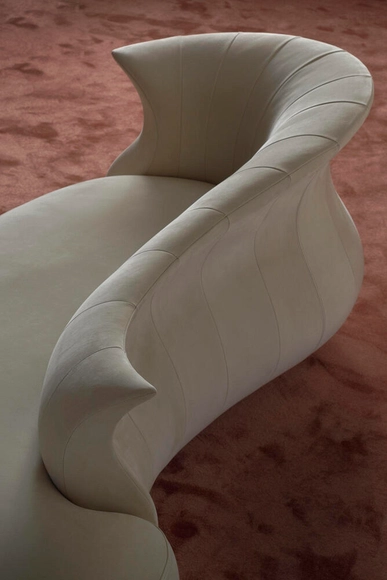
Set in open space, Desforma’s sinuous shifting designs are furniture as landscape. Image Courtesy of Desforma
The Desforma range is quite unique in the design world. It doesn't do reheated mid-century modern or strict straight lines or no-nonsense functionalism in powdered steel. Desforma does swooping, fluid lines and organic curves, sofas composed of sine waves that seem shaped by natural forces and summon up swaying sea life, chairs that might have blossomed into being.
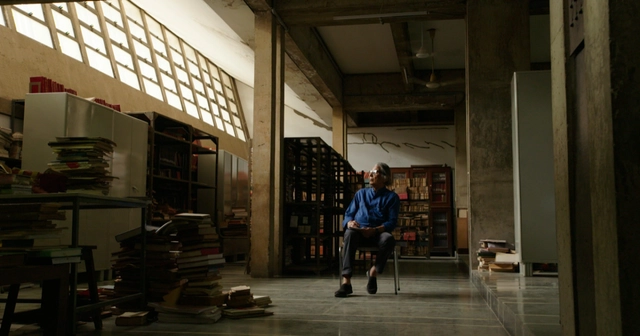
“I am not an architect,” he says with a sparkle in his eyes, “I am merely a person seeking out their destiny.” To the late pioneer of Indian modernism, Balkrishna Vithaldas Doshi, architecture was a practice of self-discovery. The veteran’s stellar works of poetic functionality resulted from a humanist philosophy bearing the influence of modernist principles, Mahatma Gandhi, and Indian spiritual texts. Doshi believed that architecture was synonymous with life - a vehicle for constant celebration; a medium for heightened experiences. His greatest contribution to the architecture community was his powerful words of wisdom that echo the timelessness of his structures.
In a new series entitled "Opening Up", Dutch manufacturer of pivot door hinges FritsJurgens embarks on a series of video stories that explore the world’s most captivating pivot door projects. Every last Monday of the month, FritsJurgens releases a new episode in which architects, door manufacturers, and pivot door owners talk about their pivot door projects.