Google's Map of Boston. Screenshot via Google Maps
For most of history, mapmaking has been an incredibly specialized pursuit, the domain of either intrepid explorers or highly skilled cartographers, and the resulting maps were some of society's most important repositories of information. In the 21st century, internet-age services such as Google and Wikipedia have made this system largely obsolete - but that doesn't necessarily mean that mapmaking is dead. In this article from Architecture Boston's Summer 2015 issue, originally titled "Redrawing the Map," William Rankin argues that our age of information has instead sparked a new age of cartography; one that is different, but just as important as what came before.
Given the proliferation of GPS devices and interactive mapping online, it’s easy to declare the traditional map obsolete. Intuitive turn-by-turn directions have replaced road atlases, Google has upgraded the static map with everything from real-time traffic to restaurant reviews, and Wikipedia has taken the place of the hefty geography textbook. Is there any hope for a cartophile? Will the stand-alone map, lovingly produced and custom designed, be only a niche product for rich collectors and Luddites?
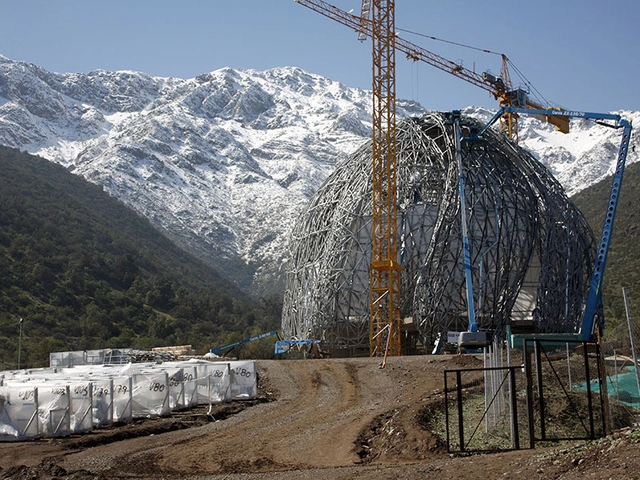
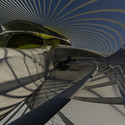
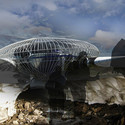
Now nearing completion just outside Santiago, Hariri Pontarini Architects' Bahá'í Temple of South America is currently one of the most significant religious construction projects in the world. In this article, originally published by Metropolis Magazine as "Sacred Structure," Guy Horton relates how - despite being in progress for almost a decade already - the design has changed remarkably little from the initial design sketch, using the latest technology to create a spiritual and emotional space.
For the last few years, in the Andean foothills just outside Santiago, Chile, a mysterious orb-like structure has been slowly rising under construction cranes. The new Bahá’i Temple of South America will be the first of its kind on the continent when it opens in 2016. It has been a historic journey for the Bahá’i faith in this part of the world—Bahá’i first arrived in Chile in 1919—and a patient journey for the architects, engineers, and builders who have brought the temple to life through a decade-long process of innovation.
With the ability to manipulate every interaction players have in a game, video game designers have boundless opportunity to shape the way players experience space. Because of this, game designers often look to architecture to enhance gameplay and provide inspiration for the appearances of their virtual worlds.
In the video above, Jamin Warren of YouTube show PBS Game/Show calls Halo the “most creative architectural game,” remarking that the brutalist-inspired architecture of the series exerted a strong influence on the way players move through levels and makes the battles in the game more immersive. Warren notes that several members of Halo’s development team had backgrounds in architecture; this observation suggests that the video gaming industry views architectural design as an essential element in its creative endeavors.
Warren makes an interesting point with his remarks on Halo: while people that inhabit virtual buildings cannot experience them physically, video game buildings can still be incredibly innovative and interesting. Which other video games feature innovative architectural approaches? Check out our list of six of the most architectural video games after the break.
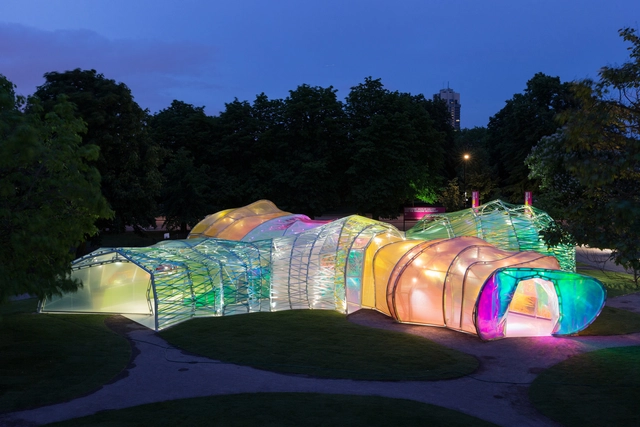
We're just three days into the four-month display of SelgasCano's 2015 Serpentine Gallery Pavilion and the comments it has generated from ArchDaily readers have already been as colorful as the pavilion itself - with criticisms ranging from "worst Serpentine Gallery Pavilion ever" to "trash bag monster" and a few other comparisons that I'd rather not even repeat. This may surprise some people, but at ArchDaily we do actually read the comments section, and we get it: unless you're the brave and persistent soul who comments as "notyourproblem," who thinks "it must be exciting getting inside those tunnels," there's a good chance that you hate this pavilion - and I don't use the word "hate" lightly.
But is this violent dismissal warranted? In short, is SelgasCano's pavilion as bad as you probably think it is? Fortunately, we're not the only publication giving the pavilion extensive coverage: as usual the Serpentine Gallery has attracted a number of the UK's most well-known critics. Find out what they thought of the pavilion after the break.
Thanks to the increasing availability of giant LED screens, the Golden Age of Neon has quietly faded in Las Vegas. For decades casinos defined their visual identity with colorful neon signs and competed for the most innovative signage. But with casinos closing, being refurbished and the arrival of new lighting technology a lot of neon signs were replaced, and for many years the Young Electric Sign Company kept the old neon signs in their "boneyard" for storage and recycling. Fortunately historic preservation groups rescued these signs. With support of the arts council The Neon Museum was born to save neon treasures and to educate the public.
Read on to explore Las Vegas' luminous landmarks and The Neon Museum.
In a world where architects can use computers to produce representations of designs with new levels of accuracy and artistry, software fluency is becoming increasingly necessary. With that in mind, last month we asked our readers to help us develop a comprehensive list of tutorials. After studying the comments and scouring the internet for more sources, we have developed this improved list, which we hope will help you to discover new work techniques and better ways to apply different programs.
Of course, it's unlikely that any list of internet resources will ever be complete, so we're hoping to continually update this list with the web's best learning resources. If there are any tutorials sites we've missed which you found helpful, let us know in the comments!
In March of this year, two of the world’s great architects died in the same week. The coincidence was unusual not because of the similarities between these two men - the advanced stage of their careers, their age and relative success - but because of the marked differences. In the few days between their mutual passing, one of the two was awarded architecture’s highest medal, the Pritzker Prize. This year’s winner, Frei Otto, had been notified of his triumph in the months prior to his death. Someone you might call his alter ego – stylistically that is – the late, great Michael Graves, died shortly after the prize was awarded to Otto.
Otto was a leading light of a particular strain of European modernism, whose most lauded works were mainly completed in his youth; on the other side of the pond, Michael Graves ran a busy commercial practice with more than 350 completed buildings, but was reviled by some for his revisionist, classical style.
After exiting bankruptcy at the end of last year, Detroit has suddenly become something of a boomtown in the eyes of the media. Discourse now talks about Detroit Rising, the "Post-Post-Apocalyptic Detroit". Rents are rising, private investment is flowing into the city, and institutions that left the city for the affluent suburbs are now relocating back into Detroit proper. Too long used only as a cautionary tale, the new focus on the reality of Detroit and free flowing money opens the door for architects and urban planners, not to mention the wider community, to begin thinking about how they want to rebuild Detroit, and who they want to rebuild it for.
It’s the perfect opportunity to formulate plans that will genuinely aid Detroit, involve the community and create a revival that really achieves something. But as it stands, the "revival" forming in Detroit, aided and abetted by media coverage, will not improve conditions for the vast majority of Detroiters and will not create a sustainable platform for future growth, instead benefiting only the private investors and those rich enough to benefit from what is currently classic, by-the-book gentrification.
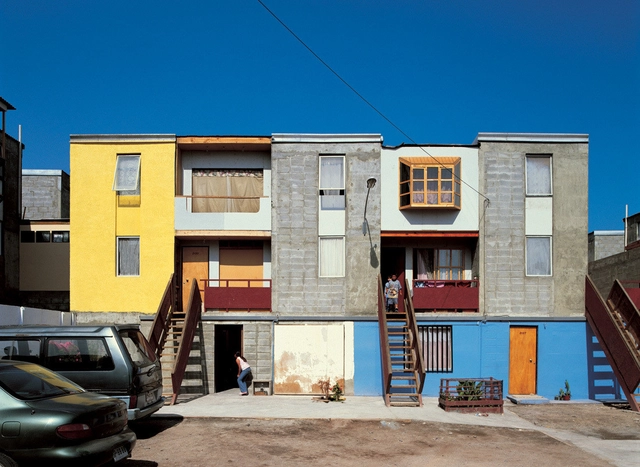
ELEMENTAL's Quinta Monroy Housing. Image Courtesy of ELEMENTAL
In recent years, the architecture world has seen a significant surge of interest in socially-conscious design; from sustainability to social housing, and from public space to disaster relief, architecture is beginning to take on some of the biggest humanitarian challenges of our era. But despite its popularity, public-interest design is still only a fringe activity in architecture, either bolted on to existing design or only practiced by a select group of people. In this short article originally published by Metropolis Magazine, Metropolis Editor-in-Chief Susan Szenasy makes the case that rather than working on the periphery, "the drive to improve living conditions for all life should be at the center of contemporary architecture and design."
On a bright April weekend, a group of committed, passionate, accomplished designers and their collaborators from the Americas and elsewhere gathered in downtown Detroit to speak about socially responsible design. It was the 15th annual Structures for Inclusion conference. The convener, Bryan Bell, is the architect behind the nonprofit organization Design Corps, and the spirit behind the SEED (Social Economic Environmental Design) rating program.
The monograph is a popular platform for dissemination and debate in the art and design world, yet architectural monographs are often treated with suspicion – viewed more as a self-serving PR exercise. But do monographs actually have a more substantive role within the practice of architecture? This was the backdrop for a discussion entitled ‘Why a Monograph?’ held at Waterstones Piccadilly as part of this year’s London Festival of Architecture. The participants included Jay Merrick, architecture correspondent of The Independent; Simon Henley of Henley Halebrown Rorrison (HHbR); David Grandorge, architectural photographer and Senior Lecturer at London’s CASS; and Ros Diamond of Diamond Architects. The session was chaired by ArchDaily Editor James Taylor-Foster.
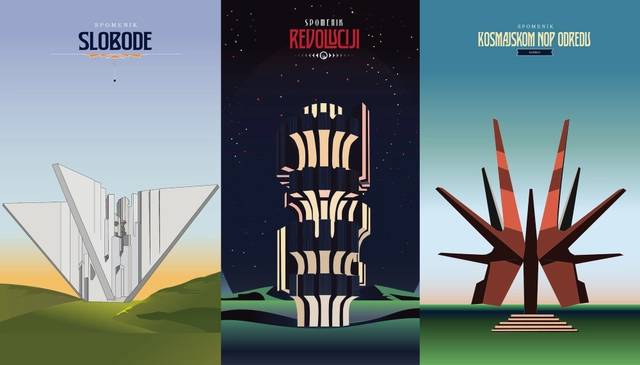
The act of remembering looms large in national cultures. Shared national memories act as a foundation for national identity, a unifying collective interpretation of history that can define what it means to belong in a certain place. Monuments loom even larger - define a national memory in concrete and stone, and you can help define your vision of the nation. That's why Nevena Katalina, a graphic design masters student at the University of Novi Sad in Serbia, has taken the famous abstract war memorials in the former Yugoslavia and translated them into posters, attempting to reconcile the imposing concrete forms with the impact they've had on culture and memory in countries around the former Yugoslavia.
We have been publishing Nikos Salingaros’ book, Unified Architectural Theory, in a series of installments, making it digitally, freely available for students and architects around the world. In Chapter 14, the final chapter of the online version of the book, Salingaros concludes by recounting the effect that the teachings included in his book had on students in a class he taught at the University of Texas at San Antonio, during the Fall Semester of 2012. If you missed them, make sure to read the previous installments here.
Conclusion
At the conclusion of this course, the students told me that they had learned a great many things that are crucial to an understanding of architecture, but which are hardly ever taught in other architecture courses. To be precise, students had previously been told about the importance of various factors to the success of a design—site, surrounding architecture, regional adaptation, ornament (or rather excluding it), the relationship among distinct structural scales, proportions, trees and green areas—but were never taught exactly how to manage them. Now, those factors were taken into account by learning why they arise out of our own biology and natural processes.
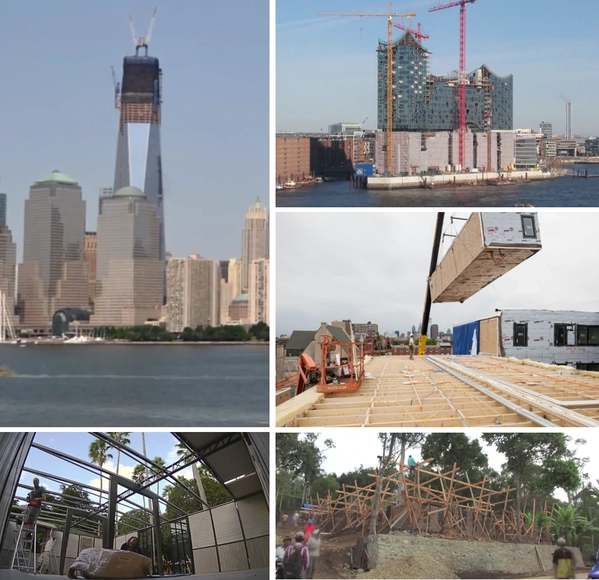
Designers are trained to consider the context for a finished building, but often neglect to consider the construction phase. When architecture is primarily judged based on the impacts it has on their surroundings once they are built, what can be learned from the process of building? The time-lapse is a method that can help architects to do just that, as it can capture years of complex development in a matter of minutes. This can uncover patterns of impact on social and economic levels, as months to years are played back over several minutes.
What is shown by time-lapse videos, though, can be as disturbing as it is interesting; when uncovered, the construction process is a revealing process, and the ramifications in regard to energy consumption can be as monumental as the buildings themselves. The time-lapse allows the viewer to get a better understanding of the types and amounts of materials being put into the construction of buildings, and the impact construction has on its immediate surroundings. By comparing time-lapse videos of different projects, what insight can we gain about how the physically generative process of architecture affects people and place?
Nothing is more iconic of progress than the skyscraper - but as developers continue to build up, it begs the question: what effect does higher living have on our mental health? Taking opinions from authors, architects, engineers and residences of high-rise apartments, Fast Company reports on the pros and cons of the vertical obsession of the 21st century. Comparing the liberation offered by the Hancock building and the failure of the Pruitt-Igoe project, the article looks at how living at high altitudes may change the way that we socialize and perceive space. Read the full article, “The Psychology of Skyscrapers,” and decide for yourself whether this trend of growing buildings is a good or bad thing.
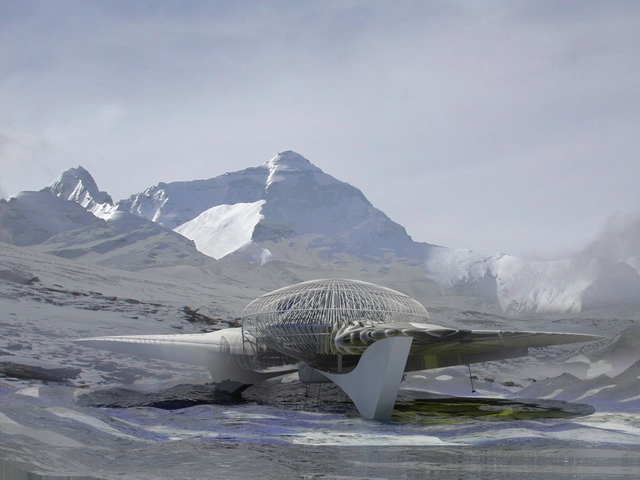
The question "what is the point of all this?" has dogged architecture for as long as anyone cares to look, but since the millenniumthe purely theoretical yet theoretically possible designs of Margot Krasojevic have taken this question as a challenge. Her latest proposal, a mesh shelter that takes the concept of snow caves and applies it to an artificial structure, is built for an eminently practical purpose: a built emergency shelter for climbers and others caught in extreme conditions. Yet the elaborate, high tech and naturally contoured structure is as much a thought experiment as it is a serious architectural proposal.
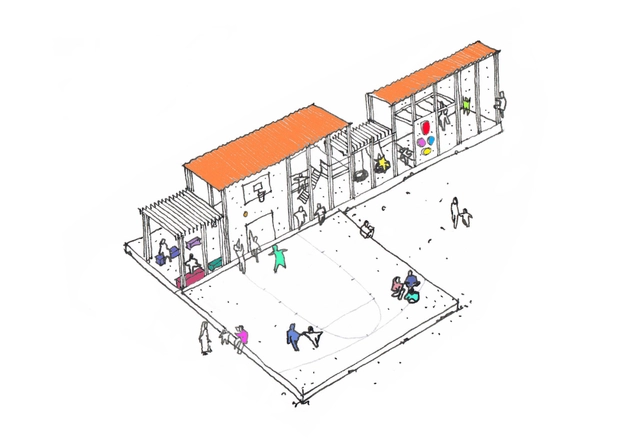
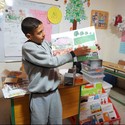
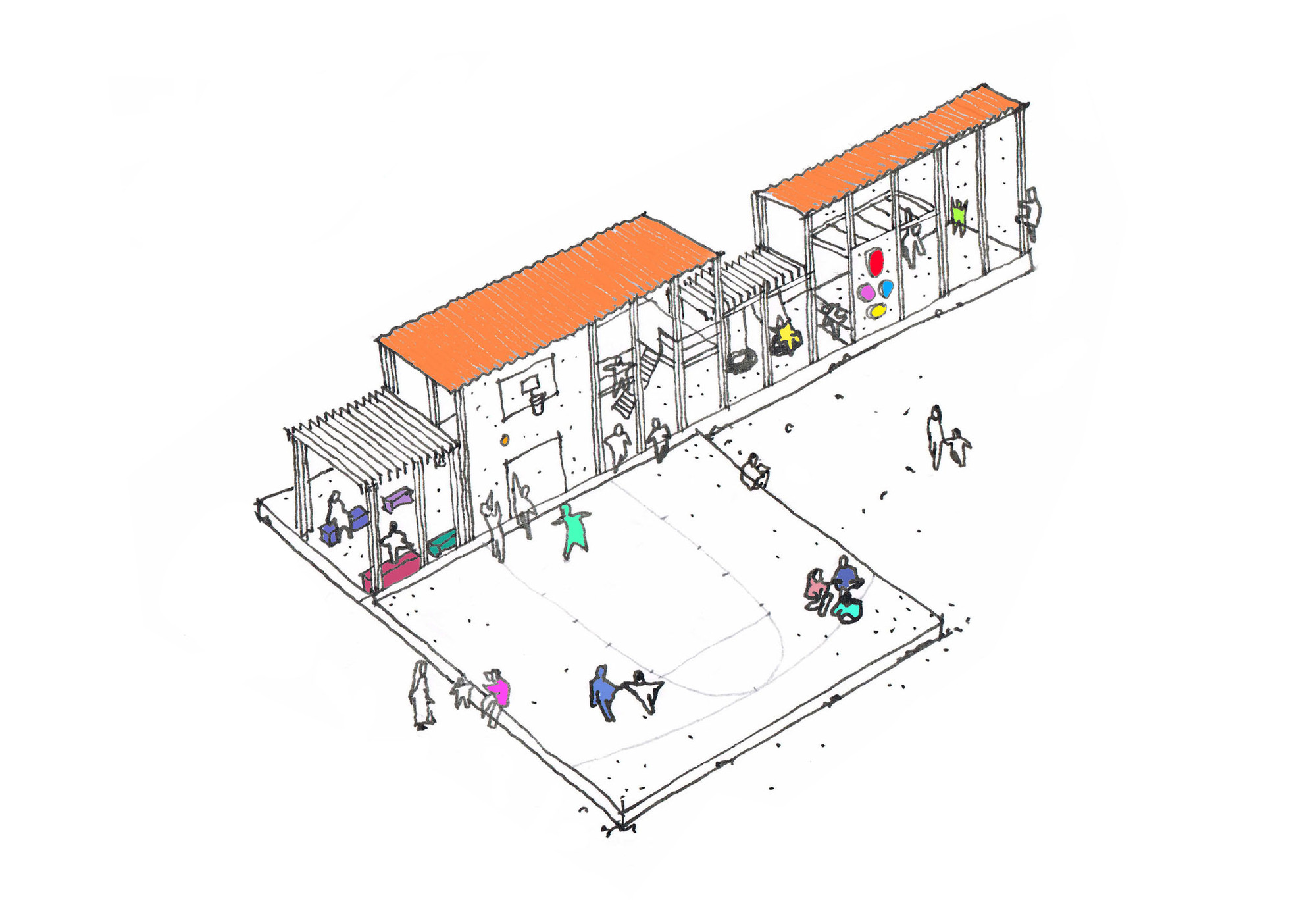
The international response to the Syrian War has often struggled to deal with the sheer scale of the disaster; huge numbers of refugees find it difficult even to source the barest essentials for life in the enormous refugee camps that have sprung up in Jordan, Lebanon, and elsewhere. Alongside the overwhelming need for basics, longer term care for displaced Syrian citizens is also proving difficult, but CatalyticAction, a not-for-profit design studio who are in their own words "a group of young graduates who believe that small changes can realize a big impact," believe that this long-term provision is equally important, especially for children.
Providing a sense of normal life for children in the refugee camps is absolutely essential to helping them, and their families, to recover and cope with life as refugees, which this why CatalyticAction have begun crowdfunding the construction of a playground - designed with the help of refugee children - in the Lebanese town of Bar Elias. The playground would allow children to learn through play, provide a sense of normality and, importantly, should create a space that they feel safe in.
Architecture is a unique component of a country's culture just as much as its language, music, art, literature or food. Architecture is also the most visual of those cultural components; the pyramids in Egypt, skyscrapers in New York, a temple in Japan, and onion domes in Russia all convey a unique image. This is called “genius loci,” the “spirit of a place”. Every country has its own genius loci, its own uniqueness. Vernacular architecture is composed of local materials and derived from local customs, techniques that have been passed on from generation to generation. But vernacular architecture in most (if not all) African countries is disappearing, being abandoned for western materials and techniques.
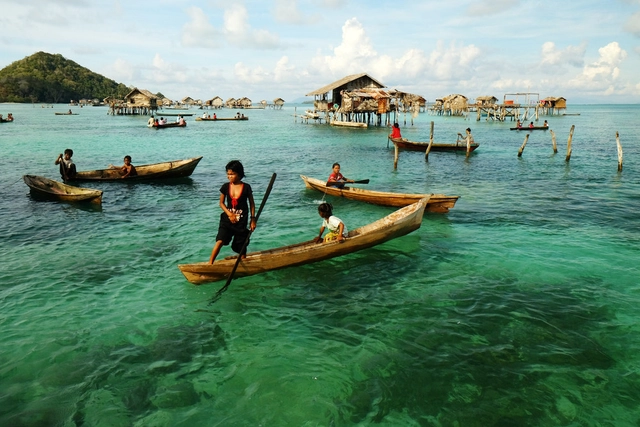
Thousands of years ago, a small civilization of hunter gatherers migrated to the coastal regions of Southeast Asia. These people progressed into a widespread tribe of travelling sea dwellers. To this day, they remain a stateless people with no nationality and no consistent infrastructure, sometimes living miles away from land. Yet these people are one of the few civilizations whose collective life practices have survived so long through human history. They are called the Badjao, and they have a surprising amount to teach us about architecture.












.jpg?1435226672 "© Laurian Ghinitoiu")
.jpg?1435226660 "© Laurian Ghinitoiu")

.jpg?1435226627 "© Laurian Ghinitoiu")







.jpg?1434891617&format=webp&width=640&height=580)
.jpg?1434891896 "Michael Graves' Denver Central Library. Image © Michael Graves")
.jpg?1434891627 "Michael Graves' St. Coletta School. Image © Michael Graves")


.jpg?1434891617)



















_of_one_of_the_big_families_of_Niongono_(submitted_by_Daniel_Schumann).jpg?1433337453&format=webp&width=640&height=580)
.jpg?1433337502 "Rwanda - Kings Hut interior. Image © Larsen Payá")
.jpg?1433337430 "Ethiopia - chicken coop constructed with woven reeds. Image © Abby Morris")
.jpg?1433337423 "Benin - a Tata Somba. Image © Lafia Yarou")
.jpg?1433337546 "Zambia - thatch stored in bundles being applied to roof. Image © Jon Sojkowski via Zambia Architecture")
_of_one_of_the_big_families_of_Niongono_(submitted_by_Daniel_Schumann).jpg?1433337453)