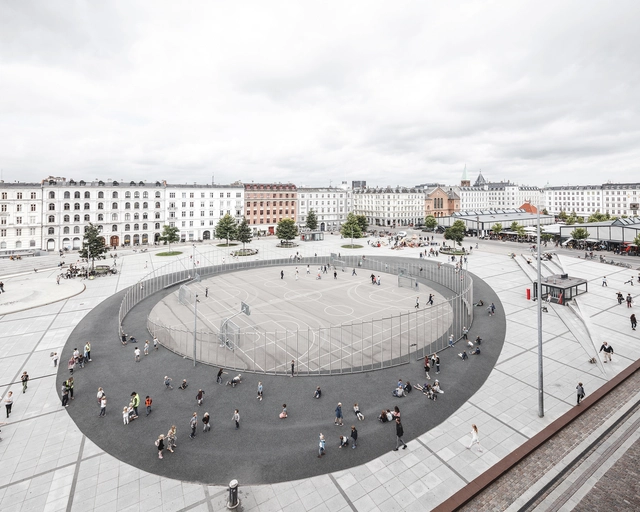
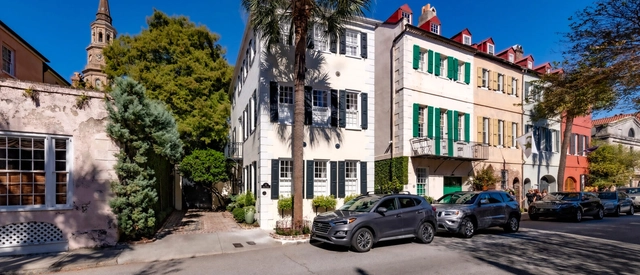
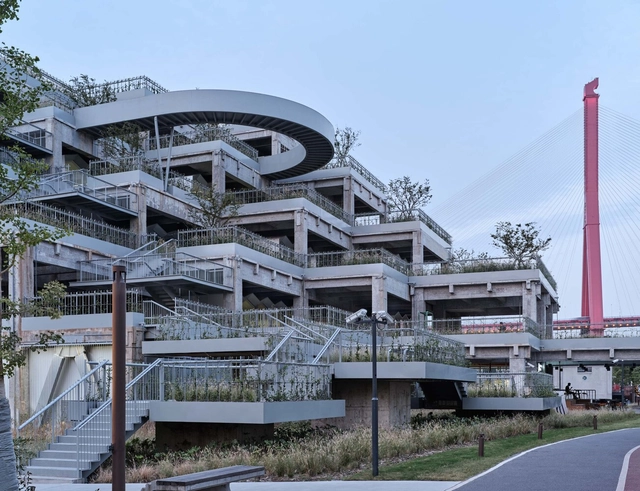
"Life, space, buildings - in that order". This phrase, from the Danish urban architect Jan Gehl, sums up the changes that Copenhagen has undergone in the last 50 years. Currently known as one of the cities with the highest levels of quality of life satisfaction, the way its public spaces and buildings were and are designed have inspired architects, government authorities and urban planners around the world. What we see today, however, is the result of courageous decision-making, much observation and, above all, designs that put people first. Copenhagen will be the UNESCO-UIA World Capital of Architecture in 2023 as well as host of the UIA World Congress of Architects due to its strong legacy in innovative architecture and urban development, along with its concerted efforts in matters of climate, sustainability solutions and livability.
In recent years hair salons and barbershops have begun to incorporate different activities - a programmatic hybridization almost necessary in today's service economy.
Several architects have been commissioned to propose alternatives to the standard beauty salon/barbershop to not only address an efficient configuration but stunning interior aesthetics.
Take a look at 10 barbershops and beauty salons with their plan and section.
Authenticity seems impossible today, with places and the buildings in them assembled with products from the Industrial Development Complex that could be assembled almost anywhere else on Earth in a debauchery of placelessness, disharmony with nature, and meaninglessness that doesn’t age well. So how is authenticity in the built environment achieved?
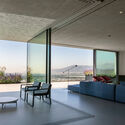
Windows serve multiple essential functions in any project, from framing views to providing daylight and natural ventilation. As human needs have shifted and technology has advanced significantly throughout the years, these have evolved in character, shape, and use of materials. What began as small arrow loops used for defense in medieval fortifications later transformed into wider openings that exemplified status and wealth. The Romans were the first to use glass, but it was considered a precious commodity for centuries. Intricate stained-glass panels adorned countless of medieval churches and cathedrals, while most home dwellers had to settle for covering their “windows” with wood, fur and other materials.
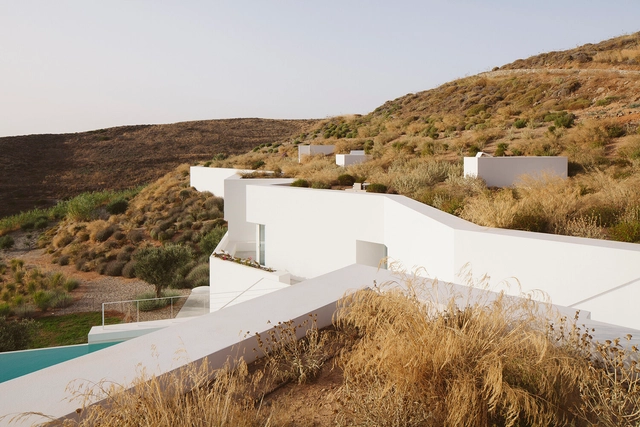
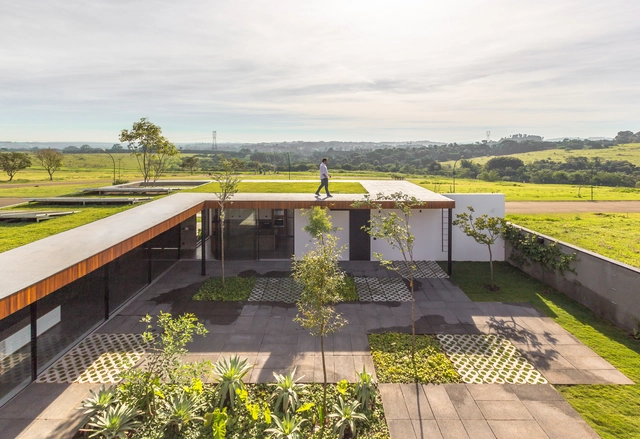
As a starting point for architectural projects, the terrain and its topography point out the directions that the distribution of the program can follow. Among them, one solution stands out for the continuity between topography and architecture: lowering the level of construction and advancing the land over the roof. From this roof garden created with the same characteristics as the surroundings, the result gives the impression of an almost non-existent intervention.
The incorporation of the land as an architectural element takes up, in a certain way, the concept of caves, reinforcing an idea of shelter and reception from a hybrid between the initial and natural configuration and the architectural intervention.
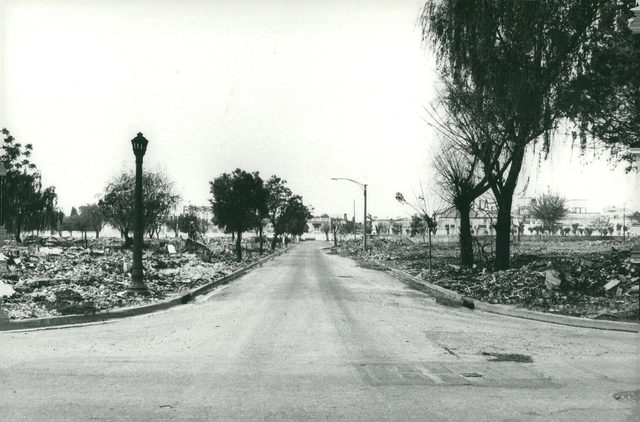
"History of the villas in the city of Buenos Aires. From the origins to the present day" is the book by Valeria Snitcofsky that reconstructs the historical background of the villas in the city of Buenos Aires based on research that began in 2003 and whose advances were expressed in a bachelor's and a doctoral thesis. It is framed within the objective of the Tejido Urbano Foundation, which is focused on promoting research and the generation of knowledge on the problems of habitat and housing.
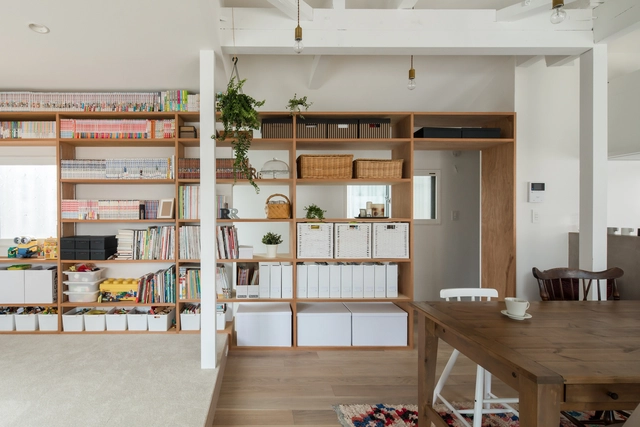
Shelves have a clear function: to organize, store and display. This simple, yet vital role has made them a must in every household, keeping the place neat and tidy by holding books, clothes, toys or any other items that would otherwise be scattered on the floor. Although usually found in closets, bedrooms, bathrooms and kitchens, shelves are useful wherever the extra storage is necessary. They are especially ideal for making the most out of small rooms, which will always benefit from having cleaner, clutter-free floor space. Responding to this crucial storage need and following a strict 'form follows function' approach, traditional shelves are often comprised of minimal, flat horizontal planes attached to a wall –a simple layout that is not particularly meant to draw attention. Hence, people don’t tend to think about shelving ideas beyond storage, and in that sense, the countless design possibilities they offer are often overlooked.
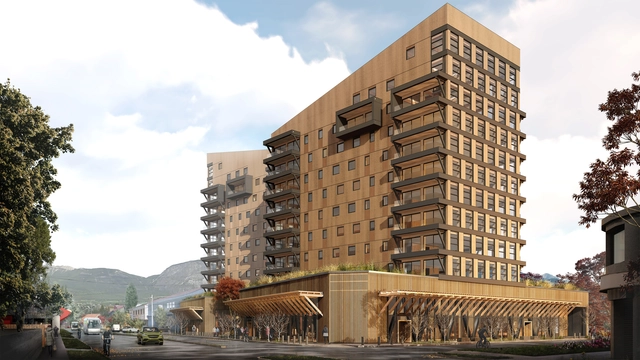
Urbanization and the evolution of modern cities have led to the development of high-rise building constructions, but what is the real environmental impact of these buildings? Traditionally designed with concrete as the main structural material, their construction implies an increase of CO2 emissions released into the atmosphere, air pollution and a rise in energy and water consumption. These consequences call for the development of new sustainable strategies outside of the industry’s comfort zone, such as the incorporation of wood as a structural element. Cross Laminated Timber (CLT) has emerged as a new structural strategy that Chilean architects have begun to incorporate into the country’s architecture, adapted to local conditions and norms.
The ‘Tamango Project’ by Tallwood architects is an example of the challenges and opportunities of wood construction in the country and the region, as it might potentially be the first 12-storey building with an engineered timber structure. Changing the traditional construction paradigms of the area, Tamango represents a step into sustainable solutions that follow an integrated design process through all the stages of an architectural project.
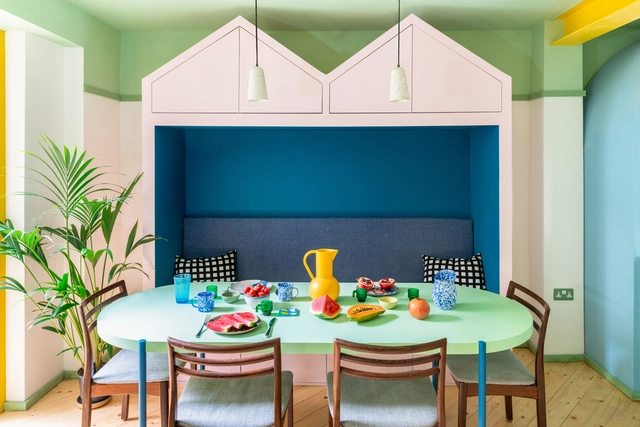
Playfulness is a concept often attributed to children and hardly connected with adult life. In architecture, projects dedicated to childhood propose a combination of objects, colors and solutions to encourage imagination and break the rigidity of spaces. In contrast, most conventional projects are limited to regularity and stamp the sobriety of adult life.
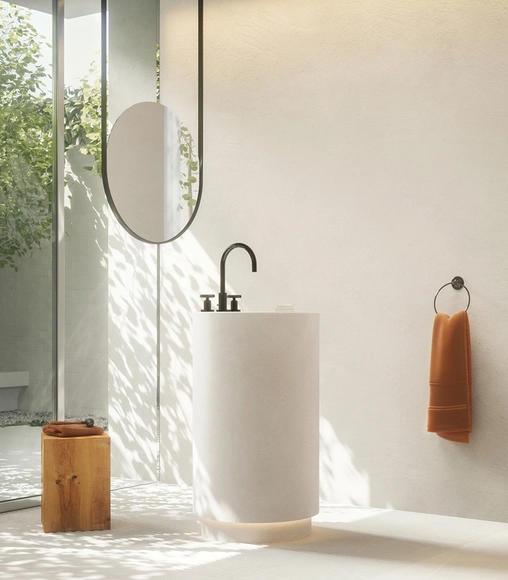
Within the different spaces of an architectural project, bathrooms tend to be a mix of both functional and relaxing areas. Their place inside a project’s design implies a proper selection of fittings, where architects and designers can play with different shapes, colors and textures to follow the style of the whole scheme. As a source of inspiration for countless bathroom fittings, Dornbracht’s TARA collection combines geometric shapes with timeless modernity, all through a clear formal language.
This year, TARA celebrates its 30th anniversary, for which designers Michael Sieger and his brother Christian Sieger commemorate the collection’s creation process and how it has developed into an icon through the years. Today, the designers are looking for serenity, simplicity and sustainability: “We don't want to define ourselves by extravagant design or by design at all”. Together with the innovations launched in 2022, the team designed a unique lead bath architecture for the collection.
In interior design – and many other design disciplines – it is much easier to be unsustainable. Buying or developing custom solutions for a room often requires less time and research than purchasing second-hand materials or concern for waste flow and the circular economy.
But the construction and decoration industry can no longer afford the luxury of ignoring the environmental impacts caused by their activities.
The standards for classifying good or terrible architecture are usefulness and beauty, or what we commonly refer to as practicality and aesthetics. However, practicality might quickly direct us toward functionalism, which is the only viable option, or toward the design of sculptural structures. The architect Le Corbusier once stated, "If you create a house with stone, wood, and concrete, that's just a building; if you touch my heart, that's architecture." However, perhaps the readability of architecture might serve as a criterion for good architecture: Reading architecture as a book with complete words and sentences that stand up to careful consideration.
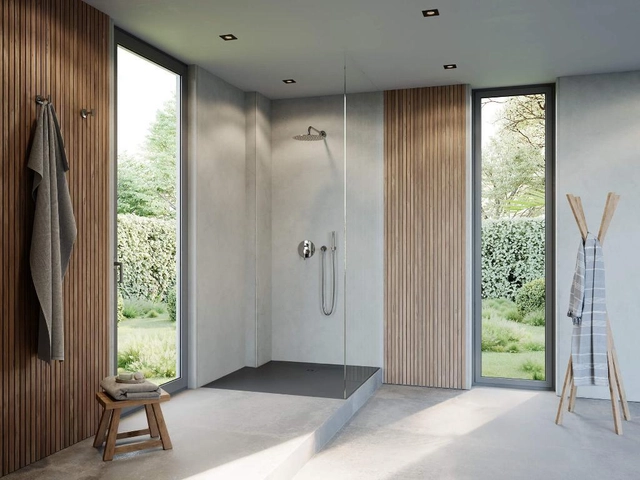
New perspectives: Duravit takes the topic of recyclability to the next level. With the Sustano shower tray, the bathroom specialist is presenting its first product made of the newly developed material DuraSolid Nature. Image Courtesy of Duravit
Innovative strength in industry is not only about developing new products, but also successfully establishing them on the market, because they make everyday life and the world a little bit better. As a full-range supplier of sanitary products, Duravit has a number of innovations in its range: the hygienic, easy-care ceramic surface HygieneGlaze, the efficient, water-saving HygieneFlush WC flushing technology or taps with the energy- and water-saving FreshStart or MinusFlow functions. Known for its acrylic bathtubs and shower trays, the Black Forest-based manufacturer continues to ask itself: How can we make it even better? Could a material be developed that has similarly positive properties to acrylic but can be completely recycled at the end of its life cycle? The answers can be found in its first product made of a new material called DuraSolid Nature: the Sustano shower tray range.
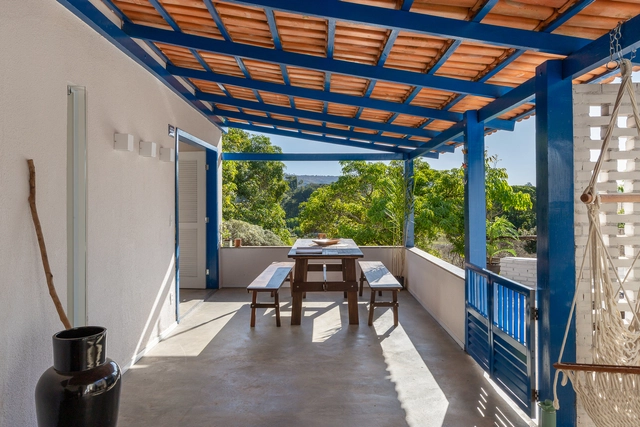
Brazil is one of the largest countries in the world, covering an area that goes from the Equator to beyond the Tropic of Capricorn, presenting a wide variety of climates and vegetation, which implies in the diverse natural landscape, flora and fauna for which the country is known. Residential architecture, when considered from its location, must adapt to the conditions of the surroundings, transforming its design according to the climate and morphology. We have gathered below a selection of Brazilian houses that respond to the natural environment in which they are located.
The advantages of a courtyard house are well known. In addition to bringing closer contact with the outside from the inside, it substantially improves comfort by providing more natural lighting and ventilation. This typology goes through time being reinvented from different ways of thinking not only its architecture, but also the landscaping of its external area. Therefore, we have gathered different ways of conceiving the garden and other elements that can make up that space.
The Second Studio (formerly The Midnight Charette) is an explicit podcast about design, architecture, and the everyday. Hosted by Architects David Bruce Lee and Marina Bourderonnet, it features different creative professionals in unscripted conversations that allow for thoughtful takes and personal discussions.
A variety of subjects are covered with honesty and humor: some episodes are interviews, while others are tips for fellow designers, reviews of buildings and other projects, or casual explorations of everyday life and design. The Second Studio is also available on iTunes, Spotify, and YouTube.
This week David and Marina answer two questions from listeners: How to cope with the feeling of failure in architecture school and whether or not architecture is hard and stressful. The two cover why freshmen often have false expectations of success, embracing failure, not seeking approval from teachers or clients, dealing with ‘dumb’ design assignments, overcoming paralysis, the main reasons why being an architect is challenging, and more!
https://www.archdaily.com/992767/the-second-studio-podcast-overcoming-failure-in-architecture-schoolThe Second Studio Podcast
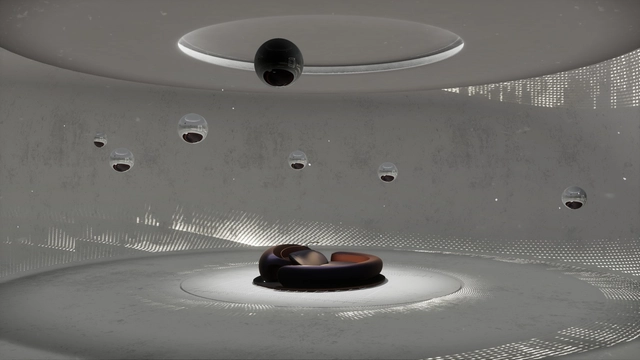
The undisputed protagonist of the last few years has been the Metaverse. The news is already flooding the world of video games and technology. Today, architects and designers are increasingly aware of the responsibility they have in leading this construction of the virtual environment. But what is the architecture of the Metaverse, how is it designed, how is it built?
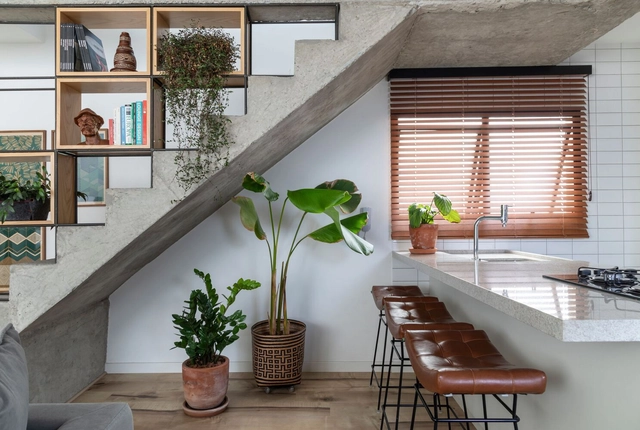
Vertical circulation may be just one of the functions of a ladder. Always occupying a reasonable area, this element can serve to bring some other uses when it is thought of in a more integrated way with the entire room, providing living spaces, storage and also a greater aesthetic appeal. That is why we have gathered some ideas on how to occupy the areas around a staircase in different projects: from home to industrial scale.