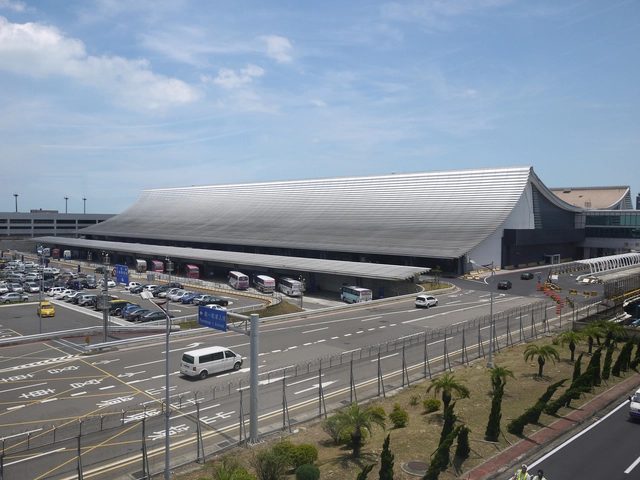
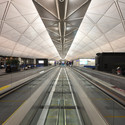
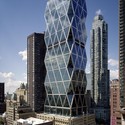
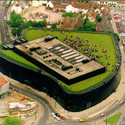
It is surprising then to find the man or his eponymous firm Foster + Partners absent from a list like Fast Company’s “The World's Top 10 Most Innovative Companies in Architecture,” organized into superlatives: MMA Architects, “for thinking outside the big box,” Heatherwick Studio, “for reimagining green space,” or C.F. Møller Architects, “for rethinking high-rise living.” This is not to say that Foster or his firm should be substituted for any of these deserved accolades, but rather that for five decades Foster and his firm have ceaselessly worked to enhance and expand on the human experience with architectural solutions that are both inventive and practical - a fact that is perhaps lost as a result of his position within the architectural establishment.
With that in mind, we thought it was worth highlighting the many occasions over the decades where Foster + Partners has shown themselves to be among the world's most innovative practices. Read on for more.
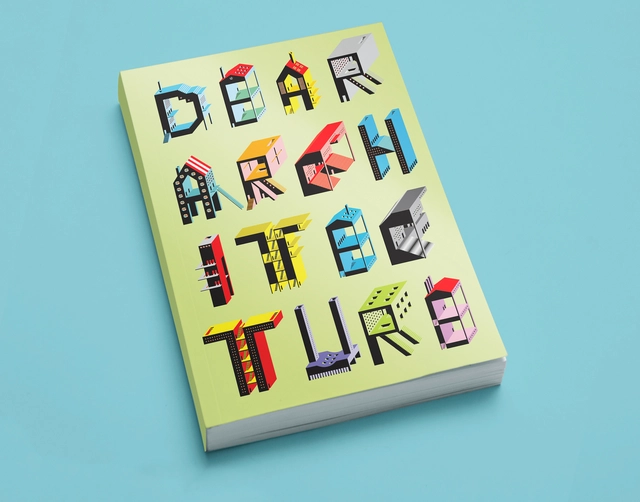
Blank Space has announced the winners of its “Dear Architecture” competition, which called designers and architects from around the world to address architecture, as a concept, in a letter of no more than 500 words and one image.
The contest was reviewed by a 17-person jury, including Fernando Romero, Diana Balmori, and ArchDaily’s co-founder David Basulto and executive editor Becky Quintal. The work of the three winners, who were awarded a total of $3,000, as well as 12 honorable mentions will be published in Blank Space’s third book, also called Dear Architecture.
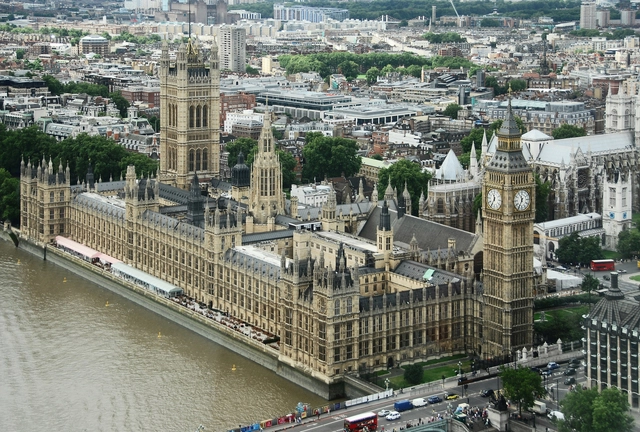
Empathetic historicism and romanticising older buildings has become an ever-common sentiment in modern Britain. In an article for the British daily The Telegraph, Stephen Bayley tackles this trend by questioning whether Victorian-era architecture is actually all worth saving? Victorian architecture, so called because it was implemented under the reign of Queen Victoria, was stylistically preoccupied by Gothic Revival — an attempt by architects and commissioners to impose a 'pure', chivalrous unifying aesthetic designed to instill a sense of civic importance and reaffirm a social hierarchy. Yet "their architecture," according to Bayley, "has an inclination to ugliness that defies explanation by the shifting tides of tastes."
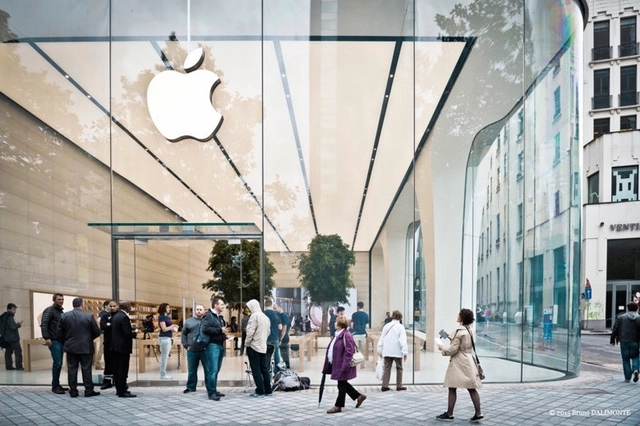
Jony Ive, Apple's Chief Design Officer, has celebrated the opening of his first store in Brussels, Belgium. Like The Verge reports, at first glance the store's design seems somewhat predictable - large panes of glass, a simplistic and open feel. However, under Ive's guidance, the new store (and future stores) now feature a grove of potted trees and a heightened focus on natural materials, in particular wood. Read on to take a closer look.
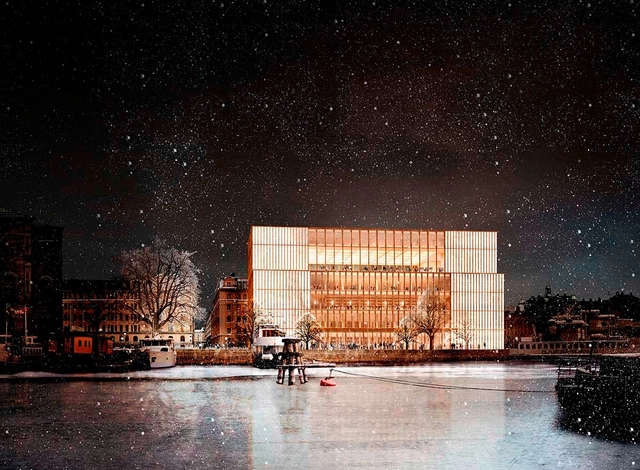
"While the fundamental concept of the ‘Nobelhuset’ remains the same, the building has been reduced significantly in size," says Chipperfield. "It now has a clearer division into a base, middle and top floor that relates to the surrounding structures on the Blasieholmen peninsula."
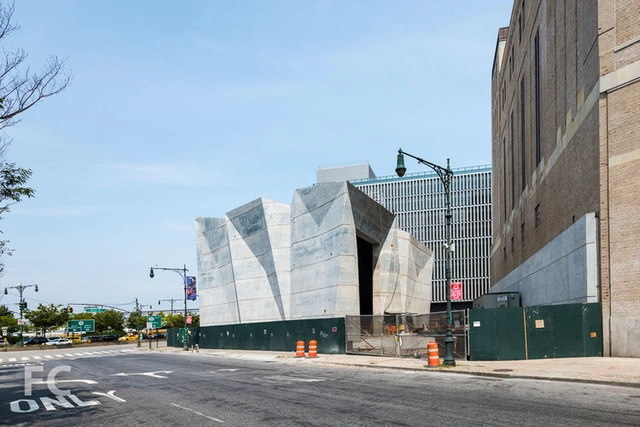
New York City is replacing one of its 40 salt sheds on the Gansevoort Peninsula with a new, origami-like structure by Dattner Architects at Canal St/West St, along the Hudson River. Once completed, the shed will rise almost 70 feet tall and hold over 4,000 tons of salt in its six-foot thick concrete walls. In response to the complaints leveled against the Sanitation Garage across Spring Street from the new salt shed, Dattner Architects deliberately created a monolithic, crystalline form to contrast the scrim-like façade of its neighbour.
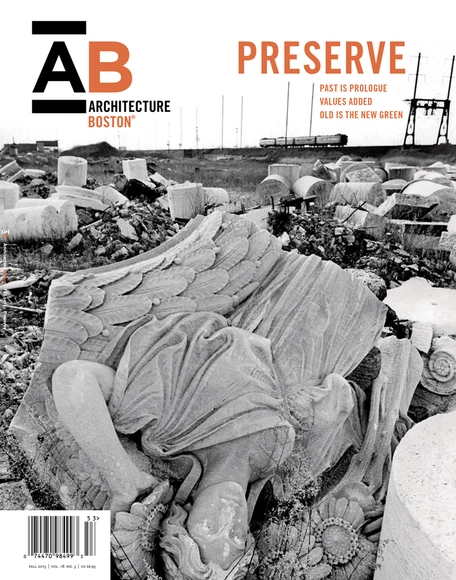
As the 50th Anniversary of the National Historic Preservation Act approaches, the fall issue of ArchitectureBoston hits hard with questions about one of the profession’s most heated topics today: preservation. With essays and articles from a dozen different perspectives, featuring a dozen different problems and solutions, the issue is a gateway for discourse for anyone interested in the role of the past, in the future of architecture. Read on for more information.
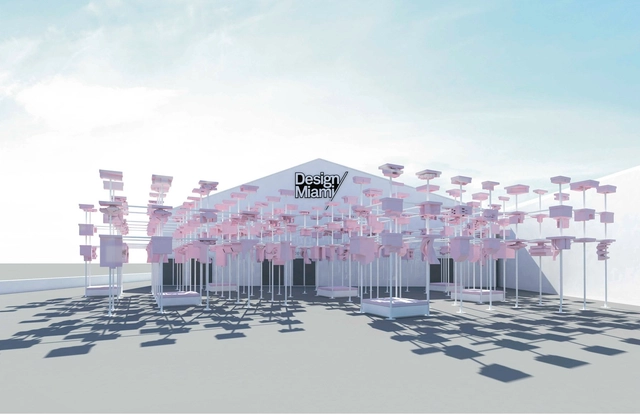
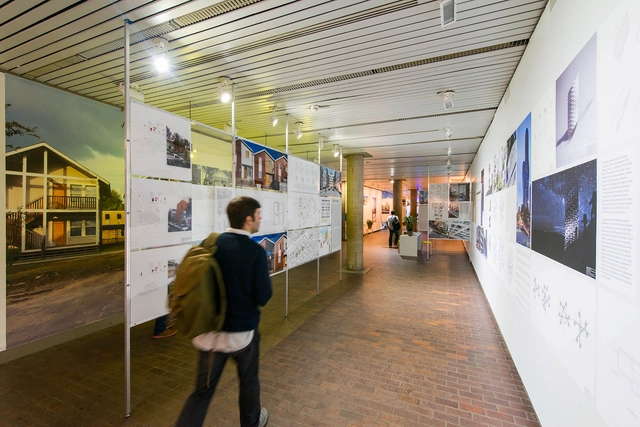
Uncountable hours, and piles of failed sketches and models to go with them – much of the architecture process is left unseen, held behind locked doors, but Harvard Graduate School of Design (GSD)’s Pavilion for Design Miami exposes this process for the first time. After a school-wide competition involving over 100 students in 32 teams, a judging panel of GSD faculty and representatives of Design Miami selected “UNBUILT” to represent the school at this year’s fair.
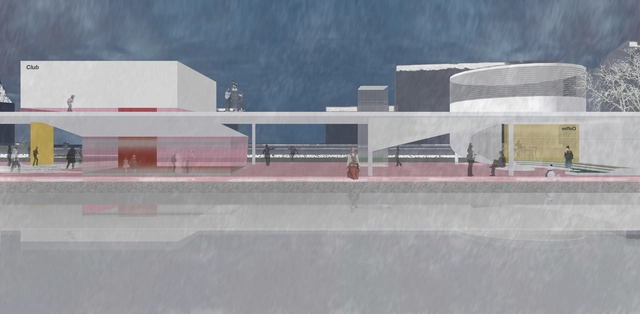
First Prize: Sun Yu and Zhao Xue. Image Courtesy of HMMD Competitions
HMMD Competitions has announced the winners of its Triple Bridge Waterfront design competition, which called for designs to transform the Liepaja Canal coastline into a leisure avenue in Liepaja, Latvia.
Divided into four individually functioning zones, the site in question connects the famous Fontaine Palace, Great Amer symphony concert hall, Libava Hotel, the former railway bridge, and the newly proposed park in Zirgu Sala. In their submissions, designers thus had to include a “restaurant/café, nightclub/bar, exhibition space/conference hall, and an unprescribed tourist attraction.”
Entrants were additionally asked to consider the relationship between modern and historic developments and influences, as well as sustainable growth.
“Successful entries to the competition were refined, yet nimble to accommodate a vast site flanked by historic building and exposure to a canal.”
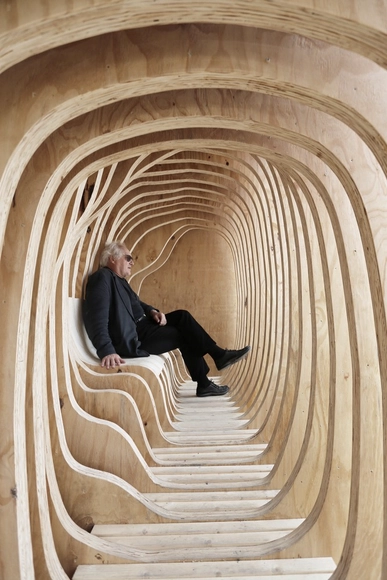
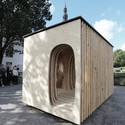
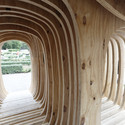
First-year architecture and urban planning students at the Estonian Academy of Arts have designed and created READER, a shelter based on the concept of removal from daily life, and focusing on oneself. Passers-by are invited to enter the shelter and “escape from the real world of problems into the fictional world of books.” And for those who don’t have a book on hand, the structure is meant to evoke the pages of a book through its ribbed wooden structure.
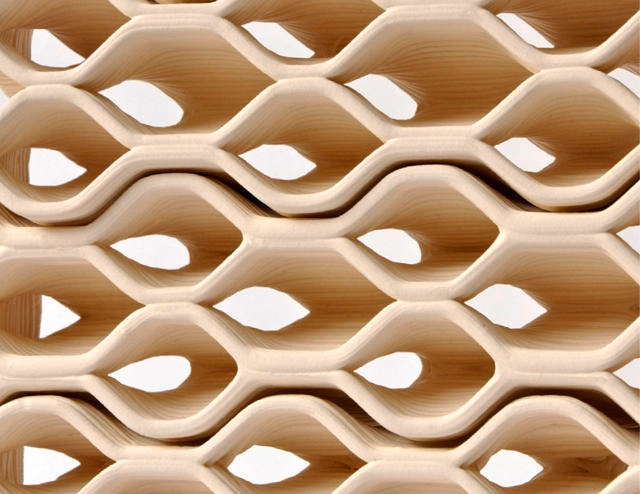
From interlocking 3D printed bricks to SOM's "All Aboard Florida" train station in West Palm Beach Fast Company has named 13 winners for their 2015 "Innovation By Design Awards." Each winner was selected from over 1,500 projects worldwide for being "big ideas" with "meticulously though out details" and a "clear viewpoint about how we live now—and how it could be better."
Just two weeks after the Japan Sport Council launched a second call for New National Stadium proposals, Zaha Hadid Architects and partner Nikken Sekkei have withdrawn from the competition. Although the duo promised to develop a "cost-effective" design that strictly adhered to the new competition's scaled down brief, they were unable to secure a contractor and therefore were forced to step down from the competition.
"It is disappointing that the two years of work and investment in the existing design for a new National Stadium for Japan cannot be further developed to meet the new brief through the new design competition," said ZHA in a press release.
Today citizens, artists and activists are "reclaiming their city" by transforming hundreds of metered parking spaces worldwide into temporary public parks and installations in an effort to call attention to the need for more open space. The yearly occurrence, known as PARK(ing) Day, has become an international phenomenon since its establishment in 2005 by the San Francisco art and design studio Rebar. Check out the official PARK(ing) Day Map to see if there are any pop-up parks happening in your area.
Harvard University’sGraduate School of Design (GSD) and John A. Paulson School of Engineering and Applied Sciences (SEAS) have announced a new, collaborative program: the Master in Design Engineering (MDE) degree. Beginning in Fall 2016, the program, lasting for four terms over two years, will offer students the resources of both GSD and SEAS, combining skills and knowledge across fields to solve multi-scale, complex, open-ended problems.
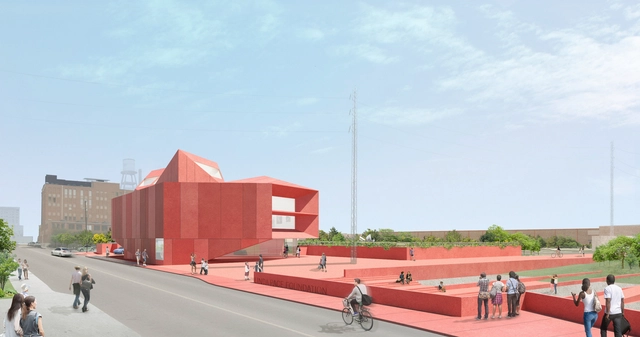
The Linda Pace Foundation has unveiled plans for a new building designed by Adjaye Associates. Planned to open in San Antonio, Texas in 2018, "Ruby City" will house the Foundation's growing collection of contemporary art. The two-story structure, clad in "crimson-hued panels of precast concrete with glass aggregate," will be distinct with its "dramatic rooftop of sloping angles and skylights that rise to varying heights and echo cut-away spaces at the building’s base."
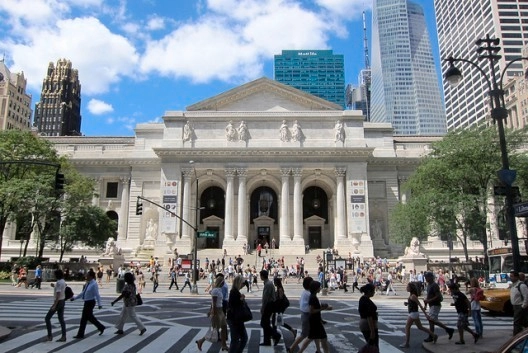
"The building should be about the journey of learning," Mecanoo's founding partner and creative director Francine Houben told the New York Times. "Maybe you come in for a book but also take lessons in English."
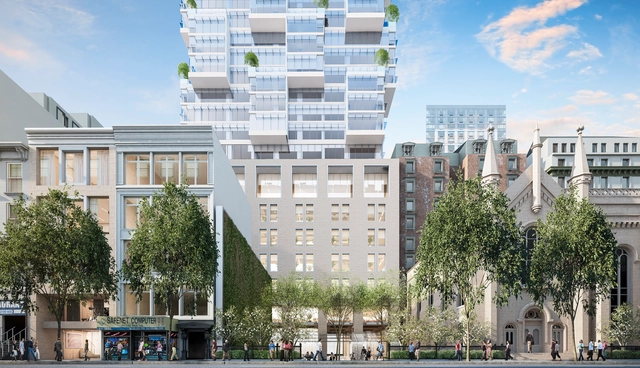
Images of Moshe Safdie's first New York project has been released. Planned to rise on a Manhattan site at West 30th Street, between Broadway and 5th Avenue, the 64-story mixed-use tower will feature a limestone base that compliments and serves its historic neighbor: the Marble Collegiate Church, one of the Collegiate Churches’ five ministries.
The building "will be distinguished by its vertical massing, which breaks down the scale of the tower into a series of three-story-high, offset projections," says Safdie Architects. "The offset projections also provide energy efficiency by self-shading the tower’s facade, further enhanced by additional sun shading at the south facade."