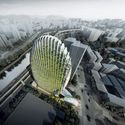
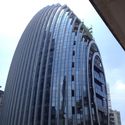
Aedas has released new renderings and photos of Lè Architecture as the 18-story building approaches completion. Inspired by the form and striations of river pebbles, the office building will provide a unique work environment along the Jilong River and will mark an important milestone in the revitalization of the Nangang District of Taipei.
Italian Prime Minister Matteo Renzi has asked architect Renzo Piano to lead in the reconstruction of the central Italian towns devastated by last week’s magnitude 6.2 earthquake that claimed the lives of at least 290 people. Renzi announced a national action plan for recovery and risk prevention on Monday after meeting with Piano to discuss strategies for housing the over 3,000 displaced survivors and rebuilding the historic towns in a manner that would mitigate damage caused by future seismic activity.
“We have to act quickly, with the utmost urgency,” said Piano in a telephone interview with The Guardian. “Anti-seismic requirements must be inserted in the laws of the country to make our homes safe, just as it’s compulsory for a car to have brakes that work.”
With recent streamlining and increased flexibility of architectural licensing programs, the time it takes to earn a license has decreased for the seventh year in a row, and the average age of licensure has concurrently dropped. On average, it takes just over 13 years to become an architect, from the time a student enrolls in school to the date they receive a license.
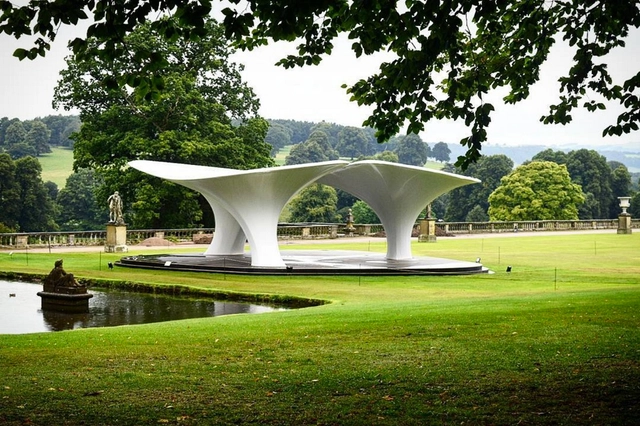
Lilas, Zaha Hadid Architects’ design for the 2007 Serpentine Gallery pavilion, has been reinstalled at a new location on the south lawn of Chatsworth House, the Derbyshire home of the Duke and Duchess of Devonshire. The mushroom-like pavilion has been put on display as part of Sotheby’s annual Beyond Limits sculpture exhibition, and is for sale through the international auction house.
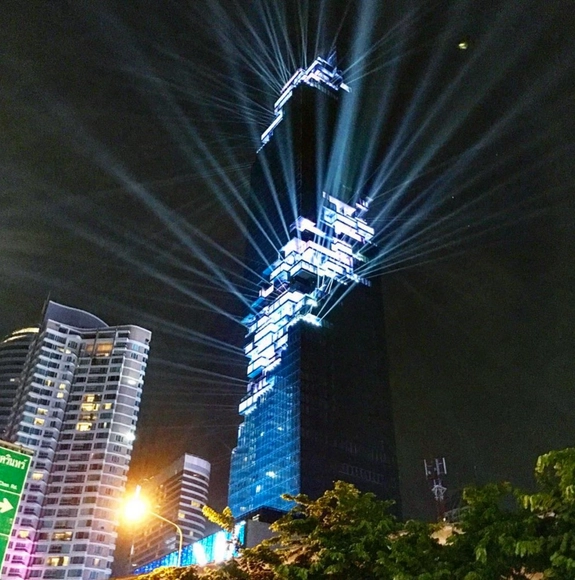
Thailand’s new tallest building, MahaNakhon, has opened to the public with a spectacular light show highlighting the pixelated-design of the 314 meter tall building. Designed by Büro Ole Scheeren, the 77-story mixed-use skyscraper contains space for a hotel, retail, bars, restaurants and an observation deck, as well as 200 condominium units managed by Ritz-Carlton Residences with unparalleled views out onto the Bangkok skyline and beyond. The building’s distinct appearance is created through carving a pixelated spiral up the building, creating “an architecture that encloses and protects its inhabitants while revealing the inner life of their city.”
Continue for more images of the completed building.
Wood has always been one of the essential materials used in construction, and with the ongoing trend of timber-framed tall buildings, it has become more important than ever to be conscious of the impacts on the environment from the types of wood we source.
Currently, there exist more than 50,000 tropical timber species in the world, yet only a small percentage of those are utilized in construction projects. This has led to the exploitation of the more well-known timber species, altering the diversity of the world’s tropical forests and putting those species in danger of disappearing completely. But what if we began building with the full range of species available to us?
From architectural lectures to coverage of local projects and events, The Architectural League of New York presents a wide range of topics through its video series to further its goal of advancing the art of architecture. Through this presentation of some of the world’s most interesting and influential architects, designers, and works, The Architectural League draws international audiences to help shape the future of the build environment by stimulating discussion and provoking design-based thinking.
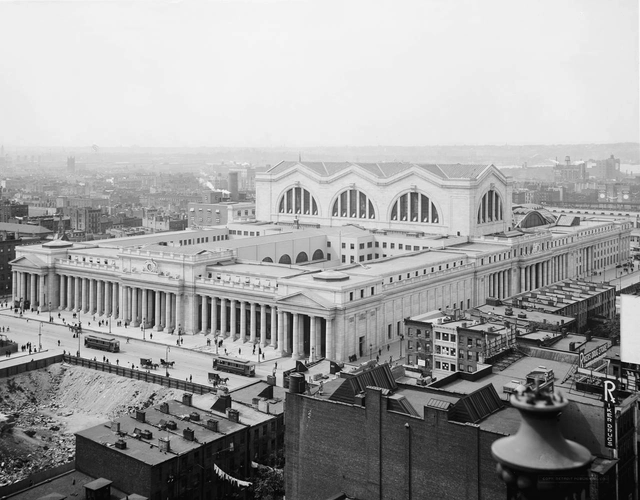
Courtesy of Detroit Publishing co. via US Library of Congress (Public Domain)
Architecture inherently appears to be at odds with our mobile world – while one is static, the other is in constant motion. That said, architecture has had, and continues to have, a significant role in facilitating the rapid growth and evolution of transportation: cars require bridges, ships require docks, and airplanes require airports.
In creating structures to support our transit infrastructure, architects and engineers have sought more than functionality alone. The architecture of motion creates monuments – to governmental power, human achievement, or the very spirit of movement itself. AD Classics are ArchDaily's continually updated collection of longer-form building studies of the world's most significant architectural projects. Here we've assembled seven projects which stand as enduring symbols of a civilization perpetually on the move.
Satellite Architects have designed a pixelated facade for Designjunction temporary exhibition space at Cubitt House in Kings Cross, London. The facade combines natural and artificial elements by wrapping a reflective, gridded screen on top of a second screen of trees and bushes, allowing the foliage to peek through.
Form4 Architecture has won first place at the International Design Awards for its project, Sea Song, which additionally was honored by the Green Good Design Awards presented by The European Centre for Architecture, Art, Design, and Urban Studies, in collaboration with The Chicago Athenaeum’s Museum for Architecture and Design.
The 2016 European Architecture Students Assembly (EASA) has concluded in Nida, Lithuania. Centering around its title theme of "Not Yet Decided," the two-week event included 35 workshops, with over half of the results still available to view around Nida. Among the most noticeable are "Highlight," a 10-meter tall observation tower close to Nida's lighthouse, a "nomadic theater" named "Atmosphere," a relaxation space known as "The Living Room" at the end of a pier, and a sculptural seating installation on the beach known as "Dream Dune." Read on to see images of all the completed installations.
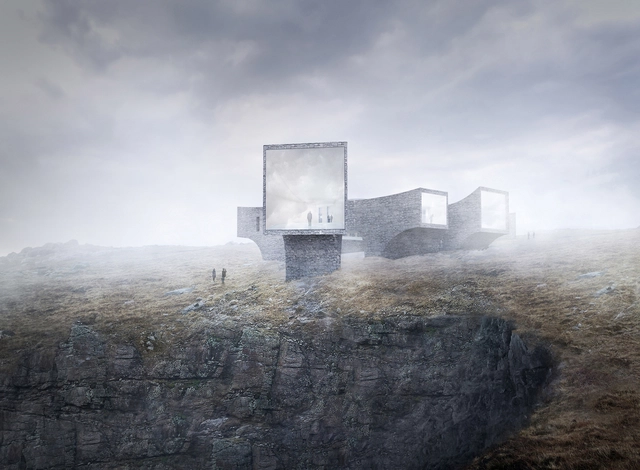
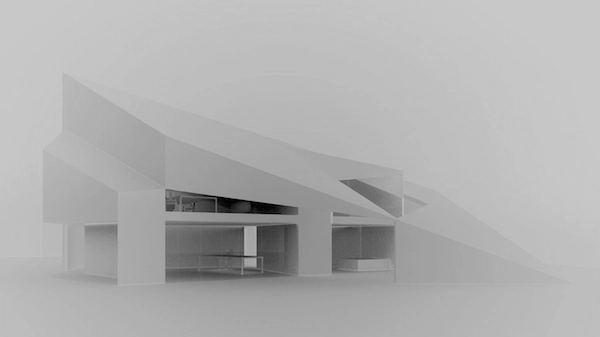
Reiulf Ramstad Arkitekter and Dualchas Architects have unveiled their plans for the St Kilda Visitor Center, which will be located on a cliff-top site at Geodha Sgoilt in the Uig area of the island of Lewis in the Outer Hebrides. Through the project, visitors will be able to experience the drama of St Kilda without physically visiting the famous archipelago, which lies over 50 miles to the southwest.
A triple world heritage site, St Kilda is famous not only for its sea cliffs and marine life but more for the story of how a community survived at the remote location before being evacuated in 1930.
By telling the story of this abandoned community, the current community of Uig hopes to catalyze economic development and reverse the population decline they have been suffering.
Visiting Wortham Fellow at the Rice School of ArchitectureMichelle Chang has created A,B 1:2, a twisted “half house” installation in the university’s jury room. Built at a half scale, the project superimposes and bisects two simple cubes, playing with light and shade through skewed windows in order to demonstrate how architects and artists think about space, as well as how drawings and renderings translate into physical constructions.
At just 1,310 feet (400 meters) across at its widest point, Fire Island, a barrier island to the south of Long Island in New York, may not seem like an ideal place to host a community. Nonetheless, the island is home to a number of small villages, whose seclusion and proximity to the ocean make them popular getaway locations. With its beach atmosphere (the community is only accessible by ferry) and its growing reputation from the 1960s onward as a safe space for the gay community, Fire Island Pines is one such popular summer destination. As the village grew in the post-war years, the care-free recreational lifestyle encouraged by Fire Island Pines' setting was an ideal proving ground for many of the ideals of mid-century modernist house design, with architects such as the prolific Horace Gifford—who designed 40 homes in Fire Island Pines alone—answering the call.
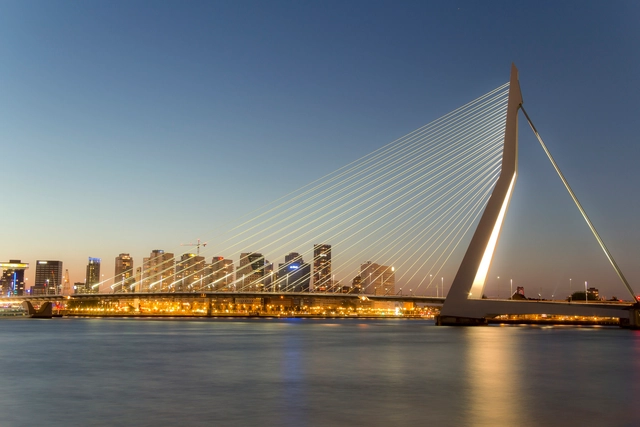
Marking the 20th anniversary of the opening of their iconic Erasmus Bridge in Rotterdam, UN Studio, along with the Kunsthal and Heerema Group, have organized an exhibition demonstrating “the many and varied ways that the bridge has been embraced by the public and become a symbol of the city of Rotterdam.”
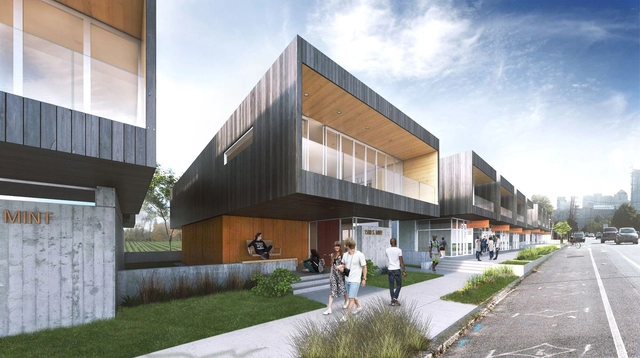
Clark Nexsen has won the international Activate Urban Housing Design Competition with its proposal for an urban dwelling on South Mint Street in downtown Charlotte, North Carolina. The design, entitled Mint, focuses on connectivity and neighborhood and includes residential, retail, and open green spaces.
Conceived as a catalyst for a culinary district, Mint aims to create a new urban living and working space, in which the connectivity of food-centered entrepreneurial enterprises fosters a sense of community.














.jpg?1472177596&format=webp&width=640&height=580)
_Alexandra_Kononchenko_(29).jpg?1472389338&format=webp&width=640&height=580)
_Alexandra_Kononchenko_(23).jpg?1472389191 "The Living Room. Image © Alexandra Kononchenko")
_Alexandra_Kononchenko_(33).jpg?1472389433 "© Alexandra Kononchenko")
_Alexandra_Kononchenko_(27).jpg?1472389297 "The Next Step. Image © Alexandra Kononchenko")
_Lucas_Bonnel_(1).jpg?1472388851 "Highlight. Image © Lucas Bonnel")
_Alexandra_Kononchenko_(29).jpg?1472389338)