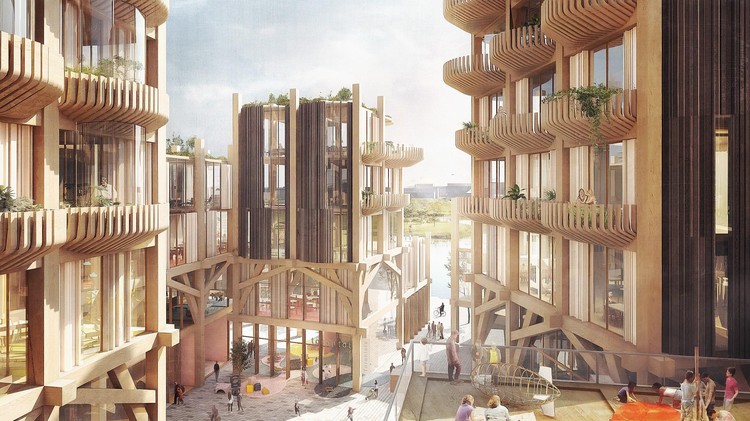
Concrete has long been considered particularly harmful to the environment. However, Architect Magazine recently published an article on Nature Geoscience, which may offer some concrete (pun intended) findings regarding the issue.
Concrete has long been considered particularly harmful to the environment. However, Architect Magazine recently published an article on Nature Geoscience, which may offer some concrete (pun intended) findings regarding the issue.

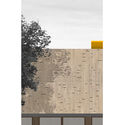
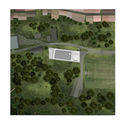
The winners of the Kunstsilo (Art Silo) competition to convert a 1935 harbor-side grain silo into an art museum in Kristiansand, Norway have been announced, with one overall winner and five runners up. MESTRES WÅGE ARQUITECTES and MX_SI ARCHITECTURAL STUDIO, a team from Barcelona, have won the competition, out of 101 proposals, with their concept, SILOSAMLINGEN (“The Silo Collection”), which, according to the jury, “demonstrates a crystal-clear combination of architectural self-assurance and humble respect for the silo building and its newly assigned task.”

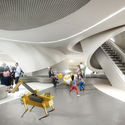
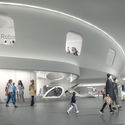
London-based Dutch architect Matthijs Ia Roi has won the Belgian Monument Competition with his proposal, Museum of Hospitality, which will be built in Amersfoort, Netherlands.
The museum will serve as a symbol of hospitality for refugees in the Netherlands and will compliment the neighboring World War I monument, which was a gift from Belgium in recognition of the Netherlands hosting Belgian soldiers during the war.

'Tis the season for offices from around the world to send us a bit of holiday cheer! See our favorites below (or check out our reader-submitted cards).
Here’s to a wonderful, architecture-filled 2017!
Happy Holidays from the ArchDaily team!

Narrative has a powerful place in architecture, and some of the most enduring narratives come in the form of fairy tales. A recent series by Places Journal brings the two directly together, exploring “the intimate relationship between the domestic structures of fairy tales and the imaginative realm of architecture.” The curation team reflects this duality, with the diverse collection put together by writer Kate Bernheimer and architect Andrew Bernheimer. Read on for a quick look at four new additions to the series released by Places Journal this week.

Architects and students of architecture stereotypically never stop making, and their creative talents continue to flow irrespective of the holiday season. Our annual challenge is an unashamed way to channel the inventiveness, originality and artistry of our readers from around the world into that most humble of gifts: the holiday card. Out of the 200 submissions, these are 43 of our favorites.
Featured gif by Rebecca Lou

The Pillars is a new monument in the heart of Copenhagen dedicated to informing the public through a combination of national data and artistic beauty. Inspired by other nationally recognized works such as the 10,000 Year Clock in Texas; Mount Rushmore in South Dakota; and the Fühlometer (Feel-o-Meter) in Lindau, Germany, The Pillars encourages both citizens and leaders to understand the facts of their national development.

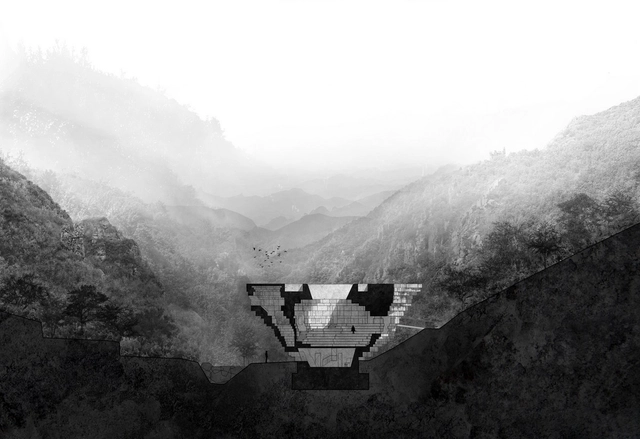
Amsterdam-based Rietveld-Architecture-Art-Affordances (RAAAF) and Atelier de Lyon have revealed designs to reimagine one of The Netherland's monumental "tribute[s] to the majesty, and seemingly indestructible power, of the Dutch Delta Works." The works themselves—a network of dams, sluices, locks, dykes, levees and storm surge barriers in South Holland—have collectively been described as one of the Seven Wonders of the Modern World. Deltawerk 1:1 is an intervention examining the practice of the preservation of cultural heritage by inserting a new structure within Waterloopbos, the former Dutch Hydrodynamics Laboratory.

Ennead Architects has broken ground on the construction of an addition to the Peabody Essex Museum (PEM) in Salem, Massachusetts, the country’s oldest continuously operating museum (since 1799).
The expansion project includes a new 40,000 square foot wing and 17,500 square feet of renovation to adjacent structures. Upon completion, total gallery space will be increased by 15% for a total of 100,000 square feet, making the Peabody Essex into one of the top 20 art museums in the country.

The European Commission and the Fundació Mies van der Rohe has announced the 355 projects from 36 countries which have been nominated for the 2017 European Union Prize for Contemporary Architecture – Mies van der Rohe Award. Among the countries included, France and Spain are represented the most among the selected projects, with each country featuring 28 times. Meanwhile, Georgia, Moldova and Ukraine appear in the prize for the first time, with Georgia offering a commendable 7 listed projects.
Among the building types included on the list, as in the 2015 Prize housing and cultural buildings dominated. However, the 2017 Prize sees an increase in the number of educational buildings and mixed use buildings compared to two years ago.
The European Union Prize for Contemporary Architecture – Mies van der Rohe Award was established in 1987 and is awarded every two years, with the winner receiving a €60,000 prize. Previous winners have included the Harpa Concert Hall and Conference Centre in Reykjavik, designed by the Danish architectural firm Henning Larsen in collaboration with the Islandic practice Batteríið and the artist Olafur Elíasson, and the Neues Museum in Berlin, designed by David Chipperfield Architects and Julian Harrap. The winner in 2015 was the Philharmonic Hall Szczecin in Poland by Barozzi / Veiga.
The list will be narrowed to a shortlist of 40 projects in late January, with the winner announced in April 2017. In addition to the main prize, the Fundació Mies van der Rohe is once again running a special mention award for emerging architects, with winners of this award receiving a €20,000 prize.
Read on for the full list of 355 selected projects.

The American Institute of Architects (AIA) has released its Home Design Trends Survey for the third quarter of 2016, which focuses on community and neighborhood design. According to the Survey, homeowners are generally expressing more interest in community development, as indicated by the popularity of thoughtful community design with access to amenities.
There is additionally, according to the Survey, a demand for walkable neighborhoods, access to public transportation, and multi-generational housing, as well as a demand for more and larger glass windows, driven by building technologies like smart glass windows.

In 2014, Snøhetta was announced as one of two winners in a competition to design new banknotes for the Norwegian Bank. Now, after 2 years of development, the first bills have been produced and are nearly ready to begin full circulation.
To coincide with the occasion, Norges Bank has released a series of videos explaining the design and production process. Check them out below.

Studio Libeskind and the Dutch Auschwitz Committee have revealed plans for the Holocaust Monument of Names, to be located in the heart of Amsterdam’s Jewish Cultural District. Incorporating the letters of the Hebrew word לזכר (meaning “In Memory of”), the memorial will be the first to memorialize the names of all 102,000 Dutch victims of the Holocaust.

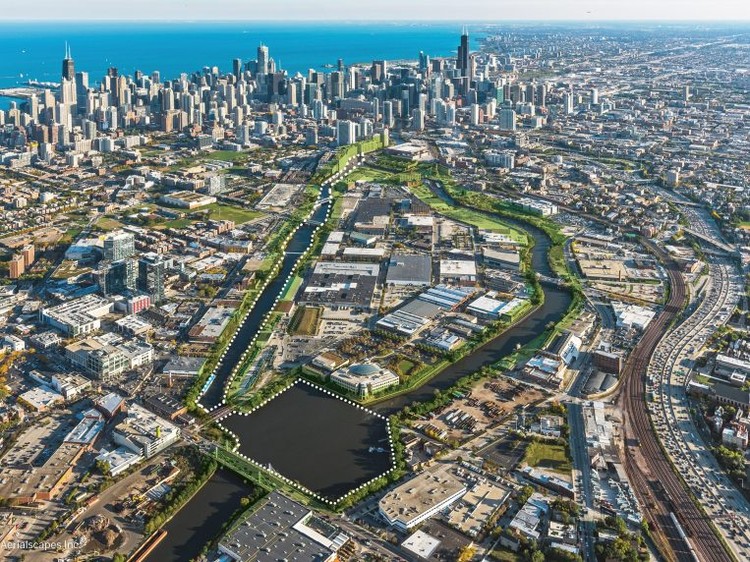
‘Green corridor,' ‘green connections,' and a ‘green program’ are coming to Vietnam's third largest city, Da Nang. Antwerp-based design company OMGEVING and partners was awarded a joint first place prize — out of 39 applicants —for the design competition for Da Nang's Han Riverfront master plan that has an estimated cost of 85 million euros.
In New York City, as in many cities worldwide, residents rely on the subway system to get around. But despite its importance, there are still plenty of locations throughout the city so difficult to get to, it’ll leave you cursing, “Who designed this thing anyway!?”
Now thanks to a new game from engineer Jason Wright, you have a chance to correct the design flaws of the current system – virtually, anyway.

Cox Architecture has been selected as the winners of an invited competition for the new North Queensland Stadium in Townsville, Australia, beating out finalist proposals from BVN Architecture, Hassell and Populous. With a roof design inspired by the native Pandanus tree, the new stadium will provide seating for 25,000 spectators as the new home to the National Rugby League’s North Queensland Cowboys.

Last week, Richard Murphy Architects’ ‘Murphy House’ in Edinburgh was named the Royal Institute of British Architects’ 2016 RIBA House of the Year. Built into a hillside lot, the unusual site presented the architects with the opportunity to play, loading the house with an assortment of clever architectural details and mechanics, including a hidden bath in the master bedroom, folding walls, sliding bookshelf ladders and operable clerestory panels.
To capture all these moving parts in their full effect, the architect himself created a video walkthrough of the house. Check it out below.
.jpg?1481110902)
UPDATE: Deadline extended to Wednesday, December 21st at 12:00 PM EST!
ArchDaily is looking for a motivated and highly-skilled architecture-lover to join our team of interns for 2017! An ArchDaily Content internship provides a unique opportunity to learn about our site and write engaging, witty and insightful posts.
Interested? Then check out the requirements below.