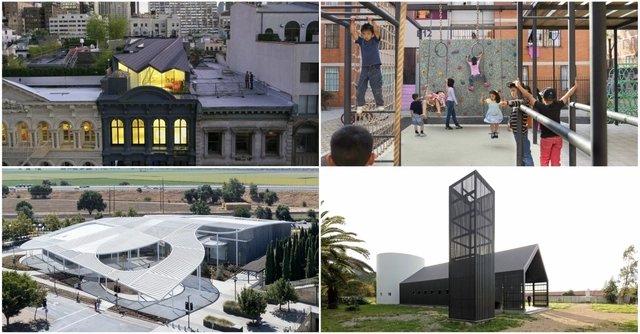
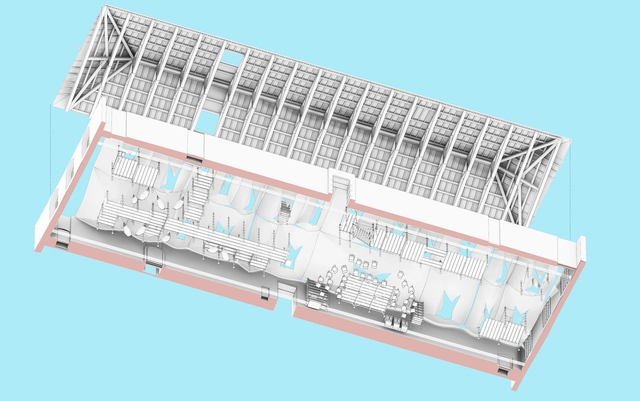
Following an open call, a selection committee coordinated by the Istanbul Foundation for Culture and Arts (İKSV) has revealed Vardiya (The Shift) as the theme of the Turkish Pavilion at the 2018 Venice Architecture Biennale. Curated by Kerem Piker, the exhibition will propose "a spatial organisation for meeting, encountering, and architectural production."
https://www.archdaily.com/881961/turkish-pavilion-at-the-2018-venice-biennale-to-host-a-series-of-student-workshopsAD Editorial Team
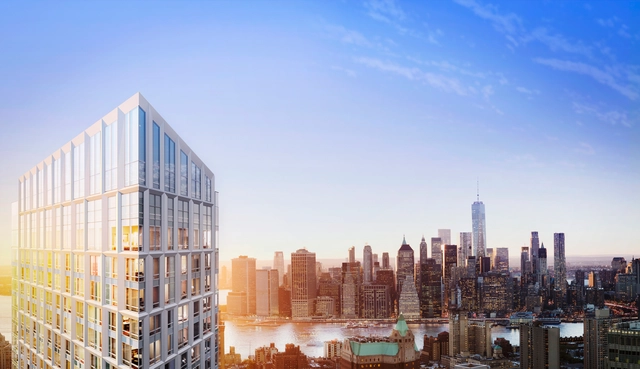
Brooklyn Point by Kohn Pederson Fox will hold the title of Brooklyn’s tallest building - although for a short while as the downtown developer craze competes for the next top spot. The mixed-use skyscraper is the final step in the City Point mega-development and is the first of Extell Development Company in the borough
After being in the design process for the past three years, construction of Brooklyn Point began this summer; it is only now that Extell is releasing the details of the tower in a new render that displays the extent of the façade.
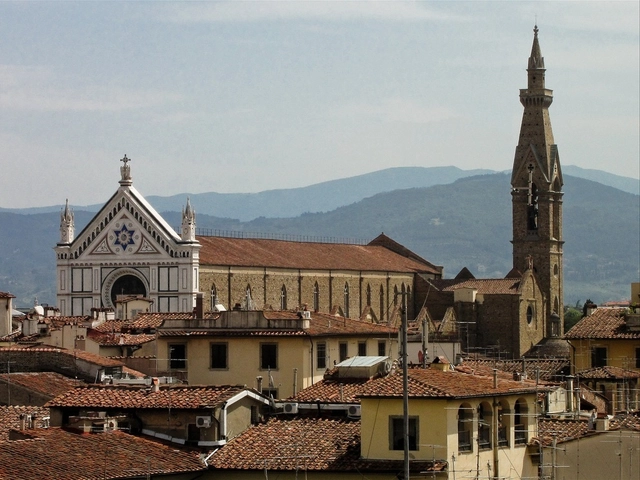
A Spanish tourist has been killed by a piece of falling masonry in the Basilica of Santa Croce in Florence, Italy. As reported by The Guardian, the 52-year old victim was hit by "a piece of decorative stone that fell from a height of 20 metres (66 ft) as he visited the religious building with his wife." Reports suggest that the fragment was around 15cm by 15cm (6 by 6 inches) in size; according to Yahoo, the fragment "had supported a beam in the right transept of the Basilica."
Following the incident, the attraction has been closed to visitors indefinitely.
https://www.archdaily.com/881997/falling-masonry-kills-tourist-in-florences-deteriorating-basilica-di-santa-croceAD Editorial Team
Zumtobel Group has announced the 2017 winners of its Zumtobel Group Awards for architecture, which rewards the year's innovations which best promote "sustainability and humanity in the built environment." Leading the awards is Los Angeles-based firm Michael Maltzan Architecture whose Star Apartments project, which provides 102 homes for previously homeless individuals in LA, was awarded the prize in Zumtobel Group's Buildings category. Also winning prizes were UNStudio, Atelier TeamMinus, and Arturo Vittori. Read on for more details and the full list of winners and honorable mentions.
The Department of State’s Bureau of Overseas Buildings Operations (OBO), whose mission is to provide safe, secure and functional facilities that represent the U.S. Government in U.S. foreign policy objectives, has shortlisted twenty-six design firms for the Indefinite Delivery/Indefinite Quantity (IDIQ) Worldwide Design Services solicitation. The IDIQ provides comprehensive Architecture/Engineering (A/E) services for both new construction and modernization projects at U.S. diplomatic facilities worldwide.
OBO received 136 submissions for this IDIQ solicitation. The selected firms presented portfolios demonstrating exemplary past performance, experience and capabilities of their Lead Designer(s), and a well-defined approach to the challenge of public architecture including a commitment to sustainability and integrated design.
The Israeli Ministry of Culture have revealed In Statu Quo: Architecture of Negotiation as the theme of the Israeli Pavilion at the 2018 Venice Architecture Biennale. In the exhibition architects Ifat Finkelman, Deborah Pinto Fdeda, Oren Sagiv, and curator Tania Coen-Uzzielli, will examine "the complex mechanism of the 'Status Quo' within shared holy places in Israel-Palestine, which functions as an informal—if controversial and fragile—system of coexistence between rivals."
https://www.archdaily.com/881960/israeli-pavilion-at-the-2018-venice-biennale-to-explore-the-idea-of-status-quo-within-shared-holy-placesAD Editorial Team
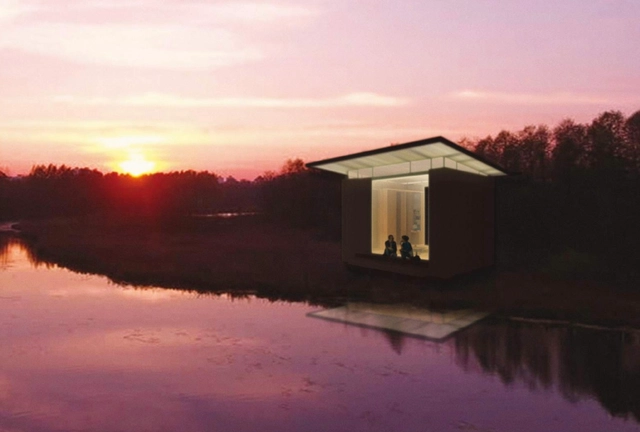
A design for a portable, sustainable 250 square foot house is no tall order. But back in June, online design magazine, Volzero, put $3200 USD on the line for designers to honor this request through their Tiny House Design Competition.
Interior program requirements included: Living Area | Sleeping Area for 2 | Cooking and Dining Area | Toilet | Workspace.
Around the world, creatives worked to conquer the puzzle of maximum usable space with a minimum footprint. Tiny houses were born. The jury consisted of five principals of different design firms: Abraham Cota Parades, Andrew Patterson, Didier Ryan, Md.Rafiq Azam and Sameep Padora. In addition to filling the basic needs of the competition, winning projects display a strong concept, and unique personality.
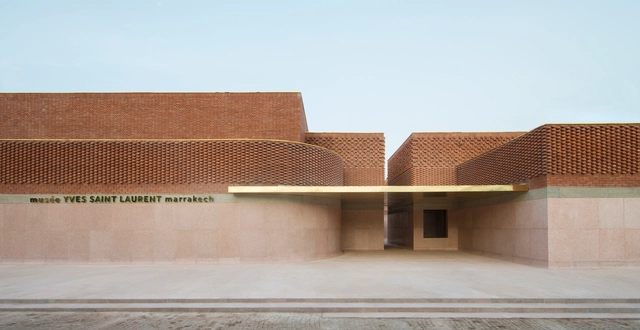
A new museum dedicated to the life and work of French fashion icon Yves Saint Laurent has opened in the Moroccan city of Marrakech. Designed by Studio KO, the building sits a short distance away from Jardin Majorelle – the home acquired by Saint Laurent and Pierre Bergé in 1980. With a large permanent exhibition space designed by scenographist Christophe Martin, showcasing the collections of it's namesake, the museum also features temporary exhibition spaces, a research library and archives, an auditorium, bookstore, and a terrace café.
https://www.archdaily.com/881893/studio-kos-yves-saint-laurent-museum-opens-in-marrakechAD Editorial Team
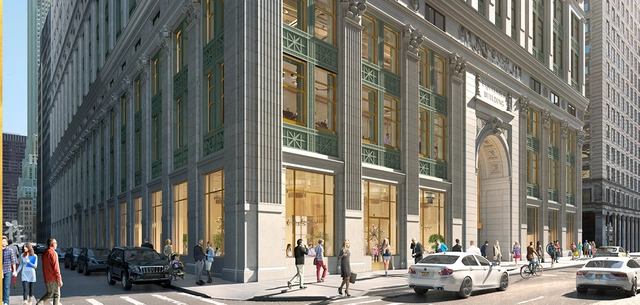
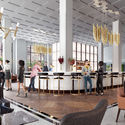
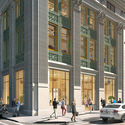
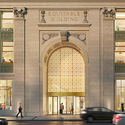
One of New York City’s original skyscrapers and the former largest office building in the world, the Equitable Building, is set to receive a $50 million renovation and restoration that will bring the historic structure up to 21st century standards.
Built in 1915 in New York’s Financial District by architect Ernest R. Graham, the 1.9-million-square-foot Equitable Building was a pioneer in the city’s skyscraper boom, spanning an entire Broadway block between Pine and Cedar Streets. A simple extrusion of the site footprint, the building was notorious for its overbearing relationship to the street – outcry over which eventually led to the creation of the city’s famous setback zoning laws.
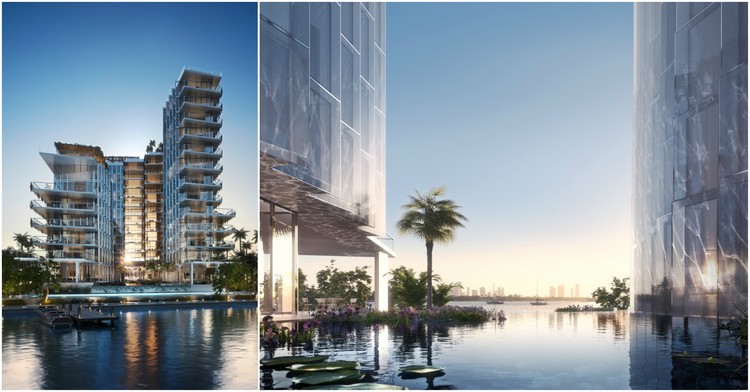
New renderings have been revealed of Jean Nouvel’s first Miami project, Monad Terrace, as construction begins on site. Designed by Ateliers Jean Nouvel in collaboration with Kobi Karp, the highrise project is set to rise on West Avenue in the premier South Beach district of Miami Beach, setting a new standard of building integrity and climate resilience for the city.
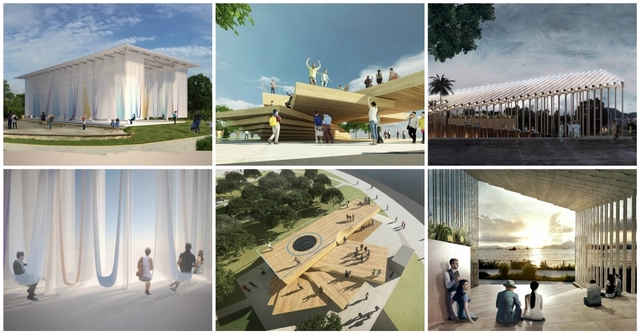
Pavilion designs by three emerging architecture practices have been chosen as finalists in the inaugural Hong Kong Young Architects & Designers Competition. Established by the West Kowloon Cultural District Authority (WKCDA), the competition is the first of its kind in Hong Kong, aimed at “showcasing the creativity and potential of local architects and designers still in the early stages of their careers.”
A total of 320 entries were received from Hong Kong residents who either have been practicing for fewer than 10 years or who are currently studying architecture at the university level. The competition asked designers to envision a temporary pavilion that will be built inside the Nursery Park at the West Kowloon Cultural District.
Three projects have been selected as the winners of The American Architecture Prize (AAP) 2017, which aims to recognize “creativity and innovation in architectural, interior and landscape design.”
An expert Jury judged thousands of entries from 68 countries and winners were selected from 41 categories. The jurors included Peggy Deamer, Professor of Architecture at Yale University; Troy C. Therrien, Curator of Architecture and Digital Initiatives at the Guggenheim Foundation and Museum; Ben Van Berkel, Principal of UNStudio and Professor at Harvard University Graduate School, and many more.
It has been a privilege to receive such exceptional entries competing for the AAP this year. Every submission is outstanding in its own way. All these entries from accomplished architects and architecture firms give us the opportunity to not only promote amazing designs but also to marvel together at the evolution of architecture, interior design and landscape architecture across the globe - AAP President Hossein Farmani.
The Naoshima Pavilion by Sou Fujimoto is one of the more recent additions to the world-renowned "Art Island," and is located only meters away from Naoshima's boat terminal (designed by SANAA). The lightweight, highly-transparent mesh-like steel structure was conceived and constructed for the 2016 Setouchi Triennial. Photographer Laurian Ghinitoiu has turned his lens to the project which, in spite of its modest size, casts a striking silhouette on the island's coastline.
Eastern Waterfront as it looks today. Image Courtesy of Sidewalk Labs
Sidewalk Labs and Waterfront Toronto have revealed plans for a brand new community on Toronto’s Eastern Waterfront that will bring together “forward-thinking urban design and new digital technology to create people-centred neighbourhoods that achieve precedent-setting levels of sustainability, affordability, mobility, and economic opportunity.”
Adjaye Associates has unveiled designs for SPYSCAPE, a new museum and interactive experience that illuminates the world of espionage from historical secret intelligence to modern day hacking through a collection of rare artifacts, exhilarating storytelling and immersive personalized experiences.
Located a stone’s throw from Times Square in New York City, the 60,000-square-foot space will use architecture as a key element of the museum experience. Inspired by the spaces occupied by the world’s most significant spy organizations, the building interiors will resemble a small town, with a variety of spaces unfolding beneath a vaulted canopy. Circulation will lead visitors through a wide range of vantage points and perspectives, playing with perceptions and drawing you into the individual pavilions.
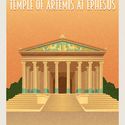
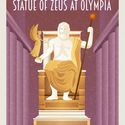
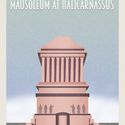
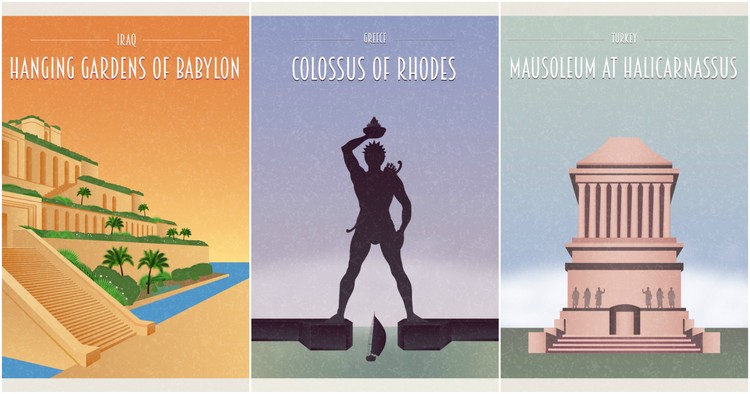
Architecture has been historically deployed as a tool to construct and concretize legacies. Whereas only a few built edifices have left a large enough impact on the world, or have been around long enough, to enter into the canon of architectural legend, the seven wonders of the ancient world have achieved both. With only one—the Great Pyramid of Giza—still standing, the others have all taken a unique position in the architectural imagination, with representations over the years of structures such as the Colossus of Rhodes and the Lighthouse of Alexandria changing according to the whims of artists of the time. Nevertheless, the spectacular stories behind each of these lost landmarks is worth revisiting – which is exactly what travel company Expedia has done in this series of illustrations.
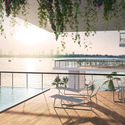
Hariri Pontarini Architects and Pinnacle International have unveiled the design of three glassy skyscrapers that will make up a new development on the Toronto waterfront.
Known as One Yonge, the complex will consist of over 4 million square feet of mixed-use space spread across five new buildings and a total renovation of the existing Toronto Star building.
ARCHMARATHON has announced the winners of their 2017 Awards Program as the event, which took place at Faena Forum in Miami from October 12-14, comes to a close. Now in its 4th edition, the Awards focus on architecture studios that have been actively practicing in USA, Canada, Central America and Latin America.
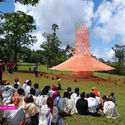
Winners were chosen by a jury consisting of Luca Molinari, Francisco Pardo, Sebastian Salvat, Alejandro Paredes Fontanals and ArchDaily’s David Basulto and David Assael in in 8 themed categories: MOVING, LIVING, DREAMING, WORKING, CHILLING OUT, CARING, VISIONING and RE-THINKING. This year’s overall winner was awarded to Rozana Montiel | Estudio de Arquitectura + Alin V. Wallach for their community space, Common Unit.






.jpg?1508428562)

.jpg?1508351746 "musée YVES SAINT LAURENT marrakech. Image © Nicolas Mathéus")








.jpg?1508252278&format=webp&width=640&height=580)
.jpg?1508252363 "© Laurian Ghinitoiu")
.jpg?1508252194 "© Laurian Ghinitoiu")
.jpg?1508252388 "© Laurian Ghinitoiu")
.jpg?1508252216 "© Laurian Ghinitoiu")
.jpg?1508252278)


.jpg?1508257249&format=webp&width=640&height=580)
.jpg?1508257213 "Courtesy of Adjaye Associates")
.jpg?1508257227 "Courtesy of Adjaye Associates")
.jpg?1508257249 "Courtesy of Adjaye Associates")
.jpg?1508257238 "Courtesy of Adjaye Associates")
.jpg?1508257249)