Zadie Smith recently suggested that libraries are “the only thing left on the high street that doesn’t want either your soul or your wallet." Michael Kimmelman has put forward the argument in the New York Times that local libraries could be far more important than we think in the aftermath of large storms, suggesting that "places that serve us well every day serve us best when disaster strikes" by fostering congregational activity and offering well-needed warmth, power and friendly faces. You can read the full article here.
As a result of its long experience of networking with leading architects, engineers and lighting designers, the Zumtobel Group knows that visionary solutions in architecture and urban planning can help reduce global energy consumption and at the same time improve the general quality of life. Against the backdrop of the finite nature of natural resources and in order to live up to its own high standards, the Zumtobel Group has announced the Zumtobel Group Award - Innovations for Sustainability and Humanity in the Built Environment for the fourth time. By doing so, the company is seeking to stimulate new developments and concepts in the built environment.
OfficeUS is seeking five fellows to take on the role of Principals during the 2014 Venice Biennale at the US Pavilion. From May 23, 2014 through November 23, 2014, the Principals will speculate on and project new futures of a history of American architectural exports on exhibit at the pavilion. The work of OfficeUS will be published as a book and exhibited at Storefront for Art and Architecture in the spring of 2015.
New York City Mayor Michael Bloomberg’s 12-year reign has left an undeniable impression on the built environment, which transformed “whole swaths of the city” but also made it “increasingly unaffordable to many.” According to architectural critic Michael Kimmelman, “The next mayor can keep architecture and planning front and center or risk taking the city backward.” Understanding that “the social welfare of all cities is inextricable from their physical fabric,” Kimmelman has laid out a comprehensive, mayoral “to-do list” to “building a better city.” Read it here on the New York Times.
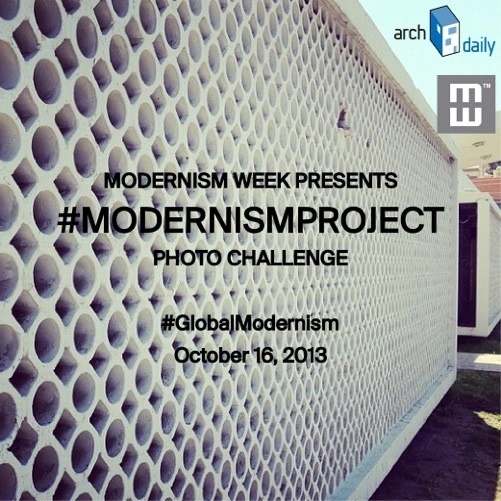
The #ModernismProject is back this year with new themes, new judges, and more chances to win tickets to Modernism Week! For those of you who are new around here, it’s a mobile initiative encouraging the Modernism Week community to get involved and capture modernism in everyday life through the photo lens. Starting in October through January, participants will have the opportunity every few weeks to win tickets to Modernism Week events or prizes by simply snapping a photo and showing their own personal perspective on modernism.
Construction is Booming in China - but do the salaries match the opportunities? Via Flickr CC. Used under Creative Commons
In today's globalized, Recession-reeling world, architects may just be better of changing location - but where is work to be found? And where are the best salaries? Last year, we asked ArchDaily readers where the best places in the world are to find work, and we got hundreds of responses that generated an important conversation. But we need to deepen the conversation - and we need your help.
Read after the break to find out how you can help...
Storefront for Art and Architecture announces a call for proposals for WorldWide Storefront (“WWSF”), a new initiative to provide a simultaneous, multi-locus of alternative spaces around the globe and a digital platform for the expression and exchange of latent desires within contemporary art and architecture practices.
WorldWide Storefront is a mode of action; its aim is to unveil, produce and discuss experimental cultural works on a global scale from local points of view. By using the ability of contemporary means of communication to join space, undo place and avoid time, Worldwide Storefront provides leadership in imagining future modes of cultural production.
Selected entries will be part of the full WorldWide Storefront program and will receive $1,000 in seed funding to start their project, as well as strategic outreach support and technical and logistical mentorship. From September 19 to November 21, 2014, all selected entries throughout the world will simultaneously open and have a two-month program of exhibitions and events.
All events will be recorded and broadcast through a Worldwide Storefront online platform and presented at the Storefront for Art and Architecture Gallery in New York, which will operate as the central situation room.
More on the application, selection and additional information after the break.
The Royal Institute of British Architects (RIBA) has announced Italian architect Benedetta Tagliabue as the 2013 recipient of the annual RIBA Jencks Award for her contributions internationally to both the theory and practice of architecture.
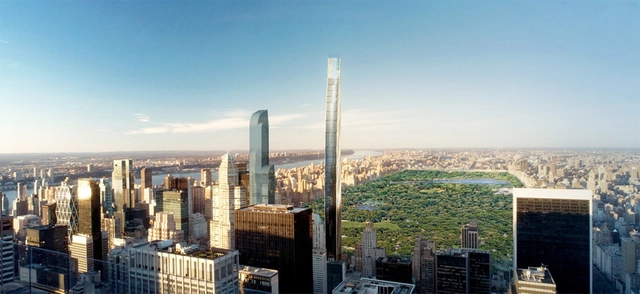
UPDATE: SHoP Architects' ultra-thin, 100-unit apartment tower has now won approval from the New York City Landmarks Commission. Once complete in 2016, the 1,350-foot structure will offer luxury apartments that peer down at the Empire State Building and rise just above the One World Trade Center’s roofline.
Renderings from the architecture firm show Manhattan's skyline will soon welcome its newest "super tall" building, a strikingly skinny residential tower rising 411 meters (1,350 feet) on a puny 13 meter (43 feet) wide site just two blocks south of Central Park.
https://www.archdaily.com/435956/luxury-housing-reaches-new-heights-and-even-higher-prices-in-nycJose Luis Gabriel Cruz
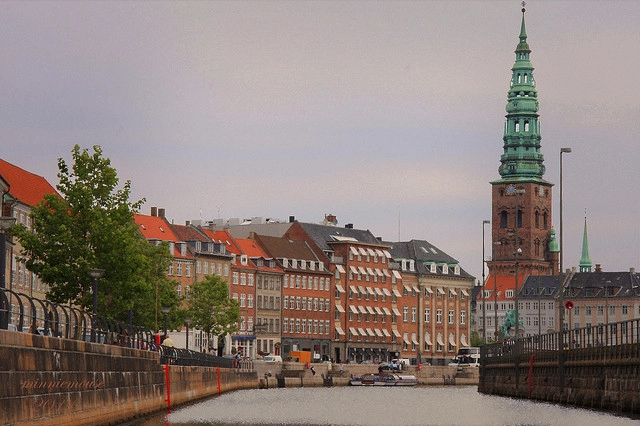
As explained by this article in the Guardian, planners in Copenhagen are thinking ahead - to the years 2050 and even 2100 - to propose plans that will cope with the storms and floods that will threaten the low-lying city due to climate change. From "percolating pavements," "pocket parks" and "cloudburst boulevards," read about some of the innovative measures they are proposing, many of which are now being adopted around the world, here.
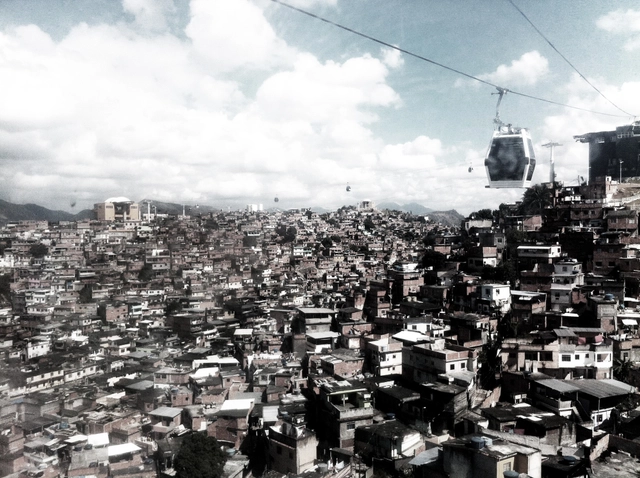
The Museum of Modern Art (MoMA) has collaborated with Vienna’s Museum of Applied Arts (MAK) to launch a 14-month initiative that will examine new architectural possibilities that address the rapid and uneven growth of six global metropolises: New York, Rio de Janeiro, Mumbai, Lagos, Hong Kong, and Istanbul.
Organized by Pedro Gadanho, Curator, Department of Architecture and Design, Uneven Growth: Tactical Urbanisms for Expanding Megacities enlists six interdisciplinary teams of international architecture and urbanism scholars, experts, and practitioners to participate in a series of workshops, with each team focusing on a specific city.
Eight candidates have been selected for the second phase of the international competition to design two national public art memorial sites to commemorate the 2011 terror attacks in Oslo and on the island of Utøya. Selected from over 300 artists and architects from 46 different countries, the Art Selection Committee have shortlisted the following candidates:
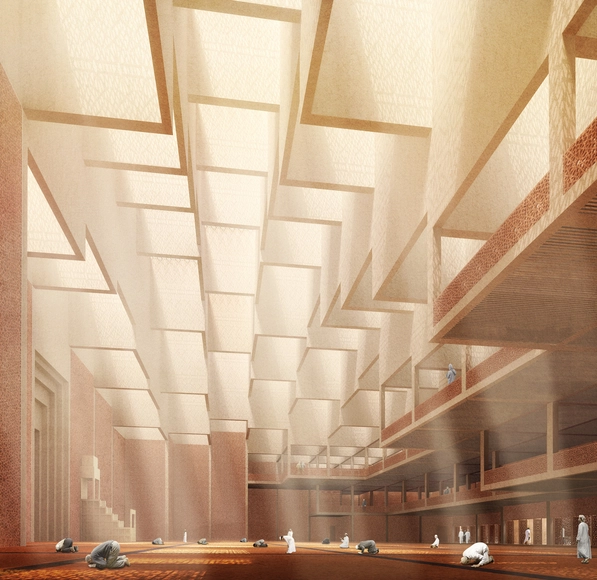
Another noteworthy proposal for the Central Mosque of Pristina in Kosovo; this time, from Zurich-based architecture firm, Dürig AG. They envision the new mosque as an interplay between the individual and the community. "Mosques are places of worship for the Islamic community where the single believer joins a larger body for the ceremonial act of worship and prayer." Singular elements combine to make a larger, more meaningful, whole. "Thus, [our proposal] stands as a materialized representation for the individual within the Islamic community of Kosovo."
Natural daylight softly descends through the modulated plenum, creating a uniform prayer hall. Perforations throughout the facade and interior wooden panels enable a visual transparency that, Dürig AG expects, should spawn a dialogue between individuals inside the mosque and pedestrians in the city.
https://www.archdaily.com/438642/central-mosque-of-pristina-competition-entry-durig-agJose Luis Gabriel Cruz
In an effort to reestablish Mid-Market as an arts district in San Francisco, developer Joy Ou has commissioned BIG to design a mixed-use arts, housing and hotel complex on 950 Market St. As the San Francisco Business Times reports, Group I is collaborating with the Thacher family and the nonprofit 950 Center for Art & Education to develop the project, which could potentially include a 250-room hotel, 316 residential units, a 75,000-square-foot arts complex, and 15,000 square feet of retail. The project will be BIG's first in the Bay Area.
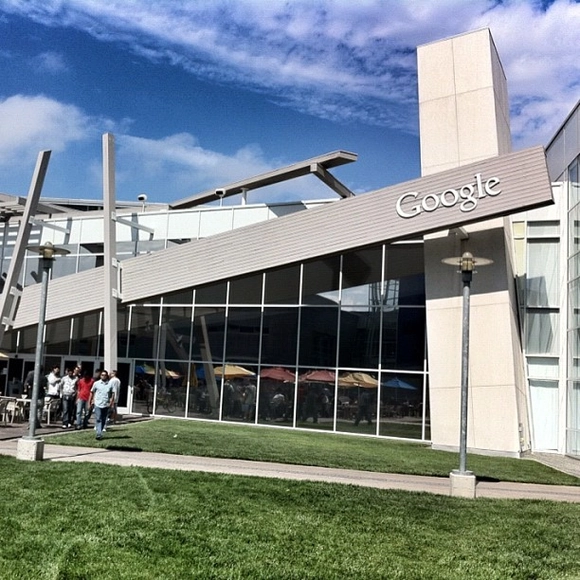
Google's secret development department, Google X (responsible for Google's very cool, although non-core initiatives, such as Google Glass and driverless cars) is reportedly working on a new technology that could transform the construction industry - as well as architecture itself. It goes by the name of "Genie."
According to Globes, a report from Genie's development team, addressed to Google co-founders Sergey Brin and Larry Page, describes the invention as a cloud-based collaboration platform with "planning applications to help architects and engineers in the design process, especially for skyscrapers and large buildings. The platform includes planning tools of expert architects and engineers and advance analytics and simulation tools."
The report also emphasized Genie's potential to transform the conservative construction industry, one of the most profitable and the most wasteful, by making it more efficient and environmentally friendly at the level of design, construction, and maintenance. The report suggests the invention could save 30-50% in construction costs and 30-50% of the time spent between planning and market; moreover, it could generate $120 billion a year.
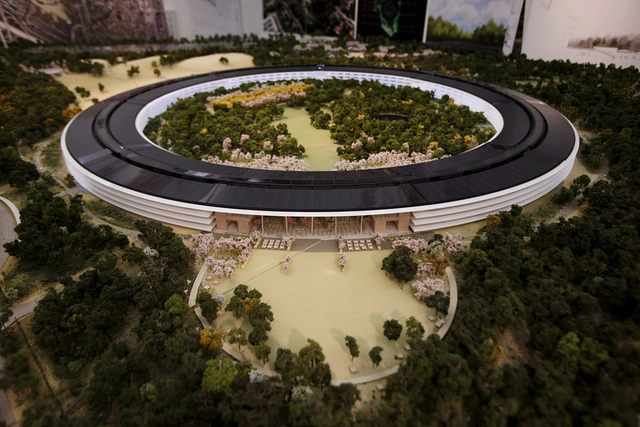
UPDATE: Although having already cleared a preliminary vote, the Apple HQ was given unanimous approval from the Cupertino council yesterday. One "largely perfunctory" vote remains for November 15th. Detailed images, after the break.
Janette Sadik-Khan demonstrates how paint, lawn chairs and a bit of imagination can quickly transform city streets, creating immediate public and commercial vitality. Sadik-Khan, listed as one of Business Insider's "50 Women Who Are Changing the World," is responsible for re-purposing 26 acres of dense New York City car lanes into pedestrian-friendly space. "More people on foot is better for business," she says. Despite commanding a two billion dollar budget, her economical approach as commissioner of NYC's Department of Transportation are testaments to her design sensitivity, relying on rapid-testing and regular iteration to expand the city's public domain.
https://www.archdaily.com/438069/janette-sadik-khan-nyc-s-streets-are-not-so-mean-anymoreJose Luis Gabriel Cruz
Following a competitive interview process Grimshaw, in partnership with Nordic Office of Architecture, has been appointed by the Turkish consortium of Cengiz, Mapa, Limak, Kolin and Kalyon to design the terminal complex for Istanbul New Airport.
Located on the Black Sea coast, some 35km outside of Istanbul, the ambitious six-runway development, masterplanned by Arup, will be delivered in four phases. The first phase will open in 2019 and aims to serve 90 million passengers per year. This will increase to 150 million passengers per annum once fully complete. The new airport will include the world’s largest airport terminal, with a gross floor area close to one million square meters.
An interesting essay by Anthony Townsend in Design Observer investigates a largely unconsidered aspect of smart cities: what happens if (or perhaps when) they malfunction? Townsend argues that as technology seeps into every aspect of our life within a complex system such as a smart city, glitches and bugs are likely to be magnified many times. He also explains that many of the communications systems that smart cities will rely on are insufficiently resilient, meaning entire cities could be vulnerable to failure or attack - an issue that will not sit well with the AIA. You can read the whole essay here.
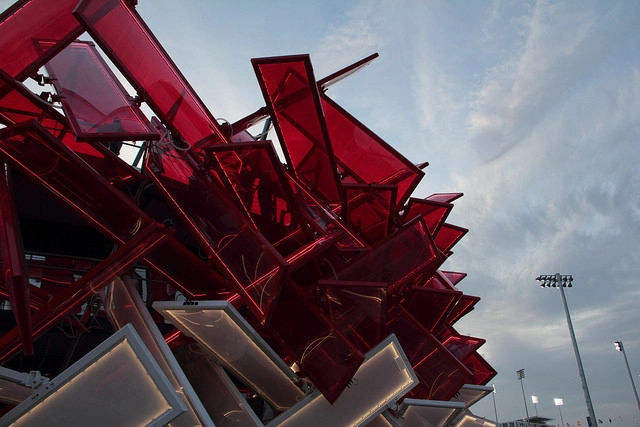
Pernilla Ohrstedt worked on Coca-Cola's 'Beat Box' Pavilion at the London 2012 Olympics. Image via Flickr CC. Used under Creative Commons
In their quest to find the best emerging young designers in the world, Metropolis Magazine reached out to critics, curators and other industry leaders to get their picks for the most promising young professionals in the worlds of architecture, art, graphic design and product design. The results feature a trend towards interdisciplinary and collaborative work. Particular highlights are Pernilla Ohrstedt, selected by John Cary of Public Interest Design; Elliott Hedman, selected by President of IDEO Tim Brown and Alexandra Daisy Ginsberg selected by Paola Antonelli of MoMA. You can view all the selections here.
Courtesy of CARTOGRAM architecture and urban design
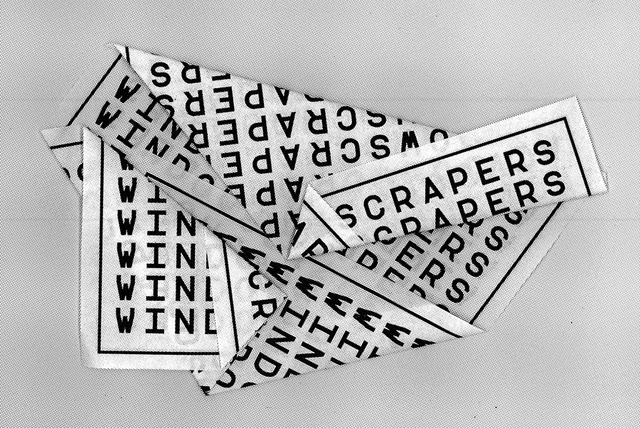
Exploring the intersections of architecture, urbanism, and the world beneath our feet, SOILED is a journal that serves as a space for investigative discussion. The publication toes the line between serious and not-too-serious, aiming to instigate mischief and a close examination of the quotidian. Published by CARTOGRAM Architecture and Urban Design, the semi-annual journal has just released its fourth edition, Windowscrapers.
https://www.archdaily.com/436242/soiled-windowscrapers-cartogram-architecture-urban-designKatherine Allen
"People tend to forget that play is serious." - David Hockney
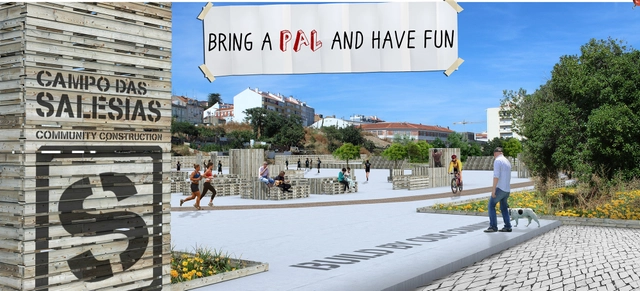
PLAYscapes, an international design competition launched earlier this year asking people to "submit a plan or proposal to turn a neglected forgotten part of your city into a playscape," has announced their winning entries. Set up by Building Trust International, the competition called for "professional and student architects and designers from cities around the world to propose ideas which encouraged public interaction and turned redundant city spaces into fun creative places."
Find out more about the winning professional entry from the City of Cape Town, entitled Cape Town Gardens Skatepark, along with the winning student entry from the Lusiada University of Lisbon, entitled Bring a Pal and Have Fun, after the break...
RTKL, a global architecture and design practice, announced its HALO project will be featured as part of the TransformKC Exhibition (October 4th - 25th in Kansas City, Missouri), which seeks to illustrate what the future could look like for Kansas City transit and innovative rail projects. The HALO concept is a modular, five-foot panelized, glass-enclosed, sustainable walkway for bus passengers that will utilize new technology to capture kinetic energy expended from foot traffic - approximately 7 watts per tile per footstrike. More info here.







_15.31.58.jpg?1381269779&format=webp&width=640&height=580)