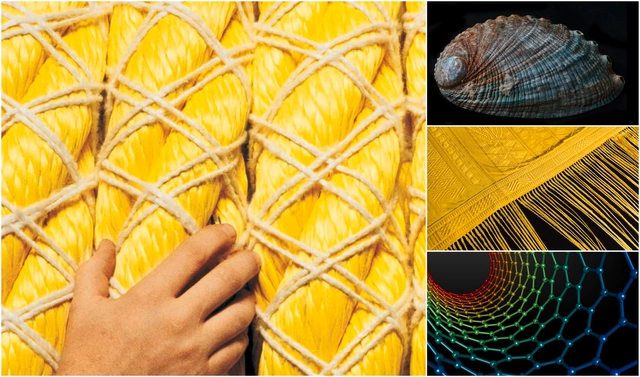
Since the advent of the industrial revolution in the eighteenth century, materials experts have been in constant pursuit of the world's strongest materials. From stone to bricks, concrete to steel, innovation in building material has become a crucial element of architectural progression. For decades, steel has been considered the industry leader in building strength with applications in structures of all types. In a recent online documentary, researchers delved into the possibilities for alternatives to the strongest building materials on the market and arrived at some surprising results.
Could spider silk replace steel cables? Could carbon nanotubes become a substitute for rebar? Find out after the break.
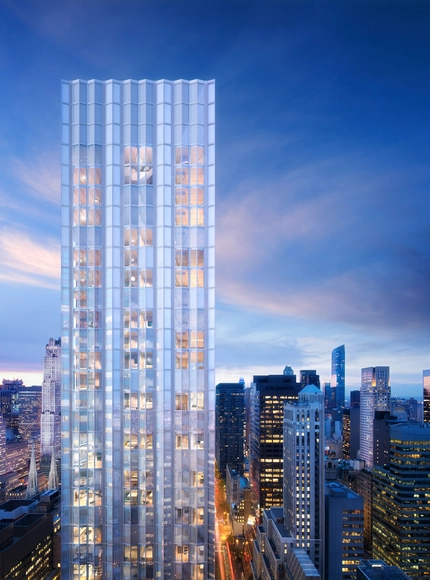
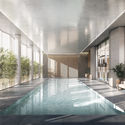
RFR and Foster + Partners have released new images of One Hundred East 53rd Street, a 63-story luxury residential tower in New York next to Mies van der Rohe's famed Seagram Building. The skyscraper, which was announced last year, will contain 94 residences, a swimming pool, wellness facility, spa, library and sitting rooms, and its trademark Foster minimalism is intended to "provide a counterpoint to the Seagram’s bronze edifice," according to the developers RFR.
Overall, 42 projects received 46 awards in 14 categories, including commercial, public, and interior architecture. Winners were selected by a jury from the Chapter Architecture Awards, held earlier this year.
Read on after the break for a list of the winners.
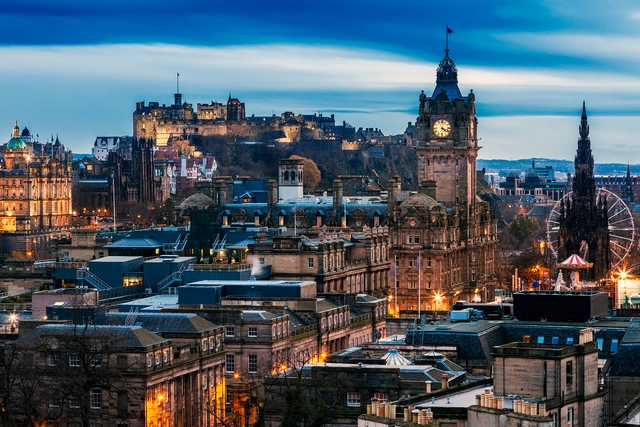
"A spectre," writes Kevin McKenna for The Guardian, "thought happily to have been exorcised from the heart of beautiful Edinburgh, is stalking the city’s old wynds and crevices once more." To put it more bluntly, the "formal recognition of [the Scottish capital] as one of the world’s most beautiful cities is under threat, amid a battle for the soul of its most historic quarter." As the UNESCO inspectorate moves in to determine whether the city's World Heritage Status should be renewed McKenna laments, through a series of case studies, the potentially bleak built future of one of Britain's most loved urban centres.
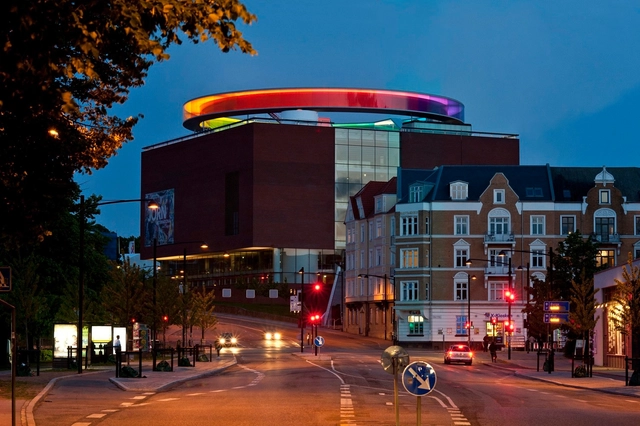
Your Rainbow Panorama / Studio Olafur Eliasson. Image Courtesy of Studio Olafur Eliasson
schmidt hammer lassen architects has been commissioned to expand their ARoS Aarhus Art Museum in Denmark. The architects are expected to collaborate with American artist James Turrell, who will be designing two installations for the expansion's 1200-square-meter subterranean gallery: "The Sphere" and "The Dome." The €30 million expansion is being referred to as "The Next Level," symbolizing the museum's intent to "bring the museum into the world elite of modern art museums." The museum recently embarked on a similar collaboration that involved artist Olafur Eliasson, who designed "Your Rainbow Panorama."
In an effort to spark new ideas for "zero value landscapes," Amanda Williams has been painting abandoned houses in Chicago's South Side with a "palette of culturally coded, monochromatic colors" to "explore how academic and theoretical definitions of color map across veiled language used in American media/popular culture to describe racially charged city spaces... Think a female Gordon Matta-Clark parading around as a Black Josef Albers," says the artist.
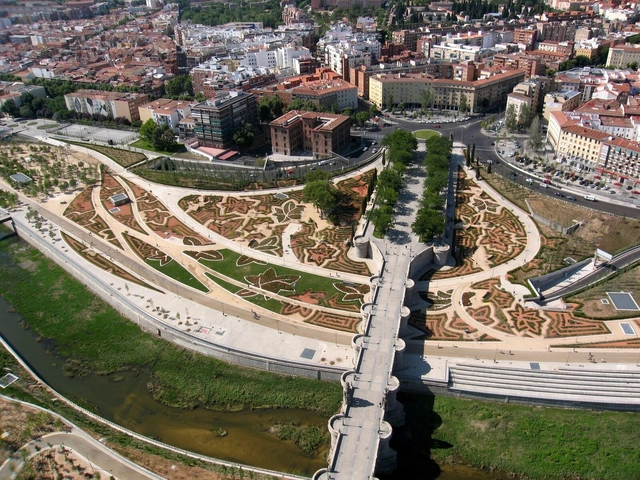
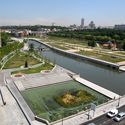
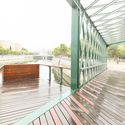
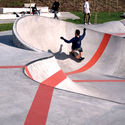
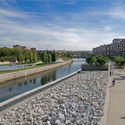
“The decision to award Madrid Río the Green Prize in Urban Design was motivated by the jury’s desire to highlight the potential for thoughtfully planned and carefully executed mobility infrastructures to transform a city and its region,” commented jury chair Rahul Mehrotra, Professor of Urban Design and Planning at Harvard GSD. “The extent to which the project harnesses the deployment of new infrastructures as an opportunity to repair and regenerate the city through carefully articulated design interventions is particularly valuable within the context of contemporary urbanization globally.”
Kengo Kuma & Associates has unveiled its latest project for the Galerie Philippe Gravier in Paris. Entitled Yure, a Japanese expression for a nomadic habitat moving in the wind, the project is made from identical wooden pieces, seeking to blur the lines between art and architecture with its organic structural geometry.
The Royal Institute of British Architects (RIBA)’s Future Trends Survey for September 2015 shows a level of consistency with the workload index remaining unchanged at a balance figure of +21. All nations and regions within the United Kingdom returned positive balance figures, with practices in Scotland responding most confidently about workloads in the next quarter. The report states that practices remain firmly positive about overall workload prospects in the medium term, though with "an apparent leveling-off in the rate of growth."
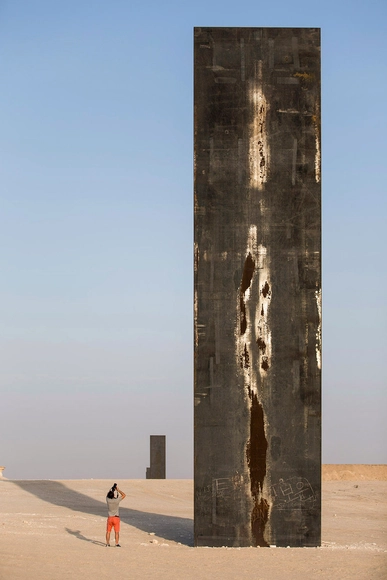
Richard Serra and Thomas Heatherwick are among the seven honored at WSJ. Magazine's fifth annual Innovator Awards last night at the Museum of Modern Art in New York. Serra, who earlier this year celebrated the completion of his second Qatari sculpture, was deemed 2015's "Art Innovator;" Heatherwick's "adaptive designs" landed him the title of "Design Innovator" of the year. Read on for a short interview with both winners.
The project has created a "Bilbao effect" that has helped rejuvenate the area, said the judges. Adding, it's a "masterful integration of different spaces into a seamless and delightful interior."
"340 Flatbush," as it's known, is being developed by JDS. Upon its (tentative) completion in early 2019, the building will offer 466,000-square-feet of residential space, forming 550 units, and 140,000-square feet of commercial space.
In the mid-1980s, after literature had long been held hostage by postmodernist irony and cynicism, a new wave of authors called for an end to negativity, promoting a "new sincerity" for fiction. Gaining momentum into the 1990s, the movement reached a pinnacle in 1993 when, in his essay E Unibus Pluram: Television and U.S. Fiction, pop-culture seer David Foster Wallace, a proponent of this "new sincerity," made the following call to action: “The next real literary ‘rebels’ in this country might well emerge as some weird bunch of anti-rebels, born oglers who dare somehow to back away from ironic watching, who have the childish gall actually to endorse and instantiate single-entendre principles... These anti-rebels would be outdated, of course, before they even started. Dead on the page. Too sincere. Clearly repressed. Backward, quaint, naive, anachronistic. Maybe that’ll be the point. Maybe that’s why they’ll be the next real rebels. Real rebels, as far as I can see, risk disapproval. The old postmodern insurgents risked the gasp and squeal: shock, disgust, outrage, censorship, accusations of socialism, anarchism, nihilism. Today’s risks are different. The new rebels might be artists willing to risk the yawn, the rolled eyes, the cool smile, the nudged ribs, the parody of gifted ironists, the ‘Oh how banal.'"
Architecture, ever in debt to the styles and ideas of other art forms, could learn a thing or two now from the resuscitation of American fiction at the turn of the millennium. It too is enduring an identity crisis, mired by pessimism and uncertainty - a reality made painfully clear this past January when a New York Times Op-Ed by Steven Bingler and Martin C. Pedersen, How to Rebuild Architecture, divided camps and made the design world fume. In the editorial, the authors spoke vehemently of an architectural profession that has become mired by egos and been disconnected from public needs. Things quickly got ugly, critics wrestled with critics and subsequently the public got involved. What no one seemed to take into account is that this type of hounding is at the core of the problem. In its current landscape the discipline has struggled with its past, been deferential to its present, and wrestled with the uncertainty of its future. In a moment when we have become addicted to despondency, can anyone win?
Funded through Kickstarter, Luke Shepard’s short film Night Vision is a “visual exploration of European buildings, monuments and landmarks after dark.” The film travels through 36 cities across 21 European countries, “creating image sequences of some of the most awe-inspiring European buildings.”
Shepard has also created a series of GIFs in conjunction with Night Vision, revealing in just a few seconds the beauty of 10 European heritage landmarks, ranging from the Metropolis building in Spain (featured above) to the Brandenburg Gate in Berlin.
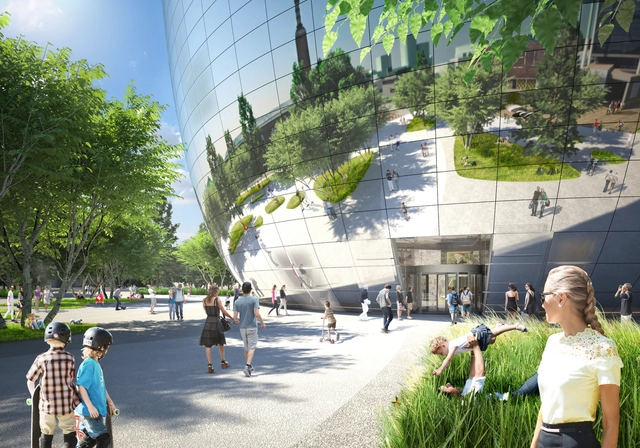
Rotterdam will soon have a new cabinet of curiosities to add to its collection of architectural icons. For many years the city's Museum Boijmans van Beuningen, originally established in 1849, has required a safer space to house its world-class collection of painting, sculpture and prints – a collection which is said to have a total value of €7billion ($7.5billion). Last week the Municipality of Rotterdam voted in favour of the building’s construction and, with zoning approved, "the world’s first fully accessible art storage facility" is now slated to open its doors in 2018.
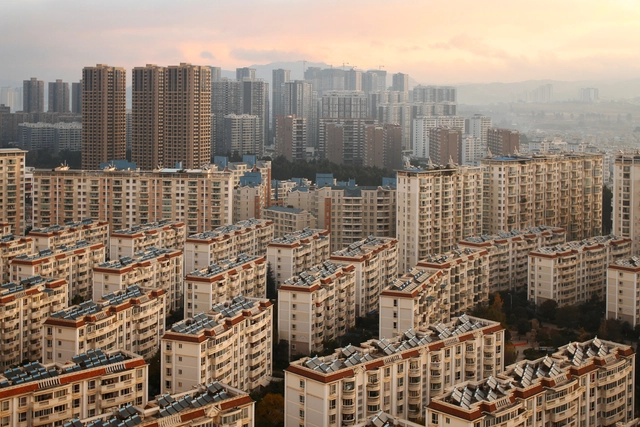
In recent decades, China has undergone the most dramatic urban migration in the history of the world, so you might be forgiven for thinking all that is required from urban planners is to "build it and they will come," so to speak. However, as the Western media often reports with much schadenfreude, China's unprecedented urban explosion has not come without a few missteps, and many new cities are widely claimed to be "ghost cities," empty of residents even as more gigantic apartment blocks are being built. Such stories are usually accompanied by anecdotes of empty public spaces and a rough count of the number of homes left in the dark at night, but little further empirical data. So exactly how underpopulated does a city have to be to be a "ghost city," and just how rife are such places in China?
As reported by MIT Technology Review, one Chinese web company has started looking for answers to just such questions. Baidu, effectively a Chinese version of Google, has used their "Big Data Lab" to investigate the commuting patterns of their 700 million users, establishing exactly which cities are dramatically underpopulated.
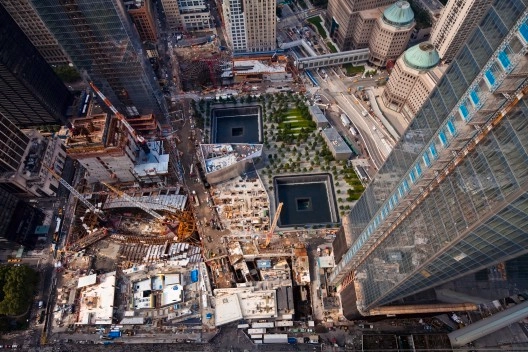
Adding to the controversy surrounding its construction, Santiago Calatrava’s World Trade Center Hub - set to be the world’s most expensive transit hub with a now-estimated budget of $3.7 billion - has delayed its opening until the first half of 2016 due to leaking water, according to an article in The New York Times. The water, originating from the site of an office tower to-be at 3 World Trade Center has been traced back to workers constantly spraying water to handle dust while breaking up concrete, exposing the construction site of 3 World Trade Center to the elements. Though the centerpiece of the Hub, The Oculus, has nearly finished construction, several retail spaces of the Westfield World Trade Center luxury shopping centre have been affected by the leaking and the Westfield Corporation has decided to postpone the move-in of all stores until the problem has been fully addressed. Despite the problems, the Westfield Corporation remains optimistic of the final result that the Oculus will produce and are working aggressively to remedy the leaking.
For its fall season of architecture events, the Royal Academy’s working theme is “Architecture and Freedom: a changing connection,” in a program conceived and organized by Architecture Programme Curator, Owen Hopkins. One of these events was a recent lecture by Patrik Schumacher, Director of Zaha Hadid Architects, and ardent promoter of Parametricism. In his lecture, what starts out with a brief exercise in damage control over the barrage of criticism recently endured by the firm, emerges as an impassioned discussion of architectural politics, design philosophies, and social imperatives.
The winners of the 2015 LEAF Awards have been announced. Founded in 2001, the awards ceremony honors innovative architecture projects in 13 different categories dedicated to various aspects of building, including best façade design and engineering, best future building, and public building of the year.
Find out which projects won the awards, after the break.
DesignIntelligence has released their 2016 rankings of the Best Architecture Schools in the US for both undergraduate and graduate programs. Nearly 1500 professional practice organizations were surveyed this year, as part of the survey's 16th edition, and were asked the following question: “In your firm’s hiring experience in the past five years, which of the following schools are best preparing students for success in the profession?”
This information, along with detailed accounts on the best programs that teach skills in design, communication, sustainability and technology, resulted in the 2016 rankings. The two top schools, Cornell for undergraduates and Harvard for graduates, held their positions as the best programs to attend, according to the study.
Without further ado, the top 10 undergraduate and graduate programs in the US are...
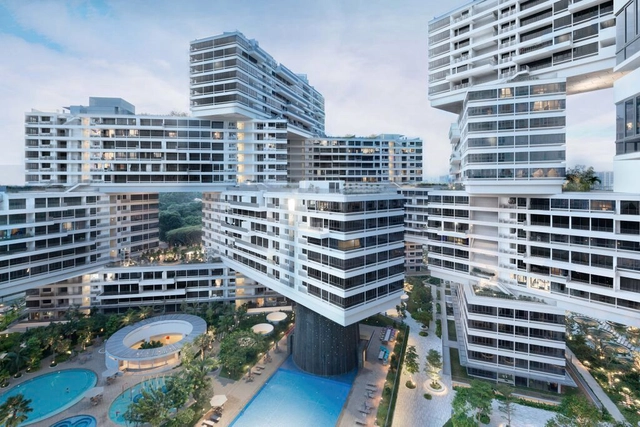
OMA and Buro Ole Scheeren's vertical village in Singapore, The Interlace has been named the World Building of the Year 2015 at culmination of the World Architecture Festival (WAF). Celebrated for being "an example of bold, contemporary architectural thinking," as WAF Director Paul Finch described, the project is eighth building to ever win the illustrious award. It is considered to be a "radical new approach to contemporary living in a tropical environment."
Winners of the year's Future Project, Landscape, Small Project and Color Prize awards were also announced. Read on to see the who won with comments from the jury.
"The architecture itself is the focus and the image regarded only as the medium. The Arcaid ImagesArchitectural Photography Award aims to put the focus onto the skill and creativity of the photographer," said the Award's organizers.
Each shortlisted image was judged on the merits of the photography for composition, sense of place, atmosphere and use of scale; Guerra had the highest scoring image overall.
"The high level of photography has made it a very difficult the task to choose the winners. The most important thing for us has been the concept and atmosphere of the images. How they have been perceived and expressed through the creativity and inspiration of the photographer," said architects and jury members Fabrizio Barozzi and Alberto Veiga.
In the late nineteenth century the rise of the industrial revolution inspired a counter-movement to reignite the production of handmade goods across the world. Led by classically trained artisans from rural England, the Arts and Crafts movement briefly swept Europe and North America on principles of celebrating high calibre and unique goods resulting in an array of furniture, textiles, wallpaper and architecture, among others.
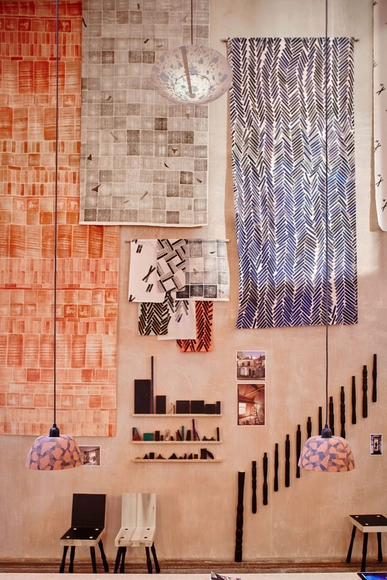
More than a century later, the Arts and Crafts movement is in the midst of a renaissance led by 2015 RIBA Turner Prize nominees Assemble Studio. Founded under the moniker Granby Workshop, the newly formed Liverpool-based artisan collective aims to eliminate widespread dereliction in one of the city's most blighted boroughs through the replacement of objects that have, over time, been stripped away. Sustained through a crowd funding model, Granby Workshop has launched a broad collection of locally sourced, designed and assembled homewares available for purchase online.
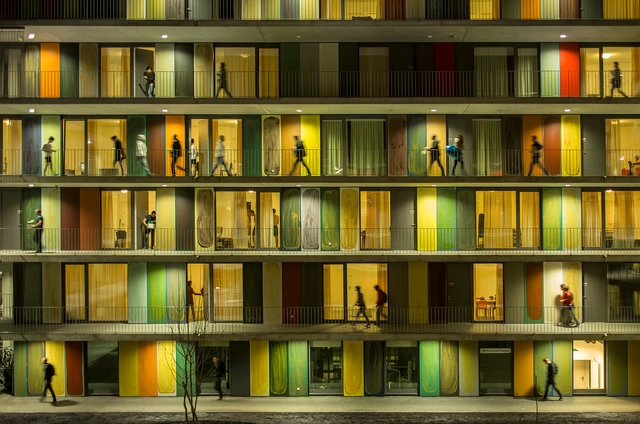
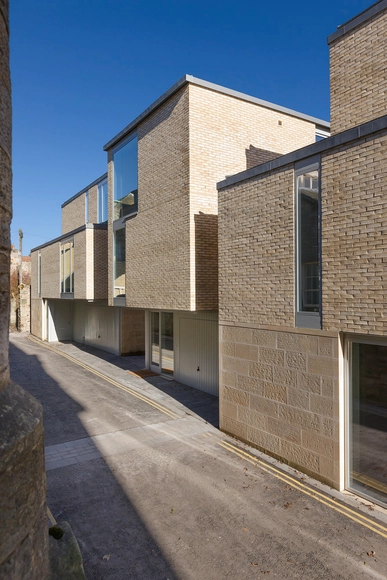
The brick courtyard housing project was lauded by the jury for being "expertly woven" into the context of St. Andrews - one of Scotland's most historic areas.








Stefan_Tuchila_007_K3_2623.jpg?1447183979&format=webp&width=640&height=580)
Stefan_Tuchila_019_K3_2672.jpg?1446606943 "© Stefan Tuchila")
Stefan_Tuchila_016_K3_2675.jpg?1447184094 "© Stefan Tuchila")
Stefan_Tuchila_003_K3_2682.jpg?1447183936 "© Stefan Tuchila")
Stefan_Tuchila_017_K3_2687.jpg?1447184104 "© Stefan Tuchila")
Stefan_Tuchila_007_K3_2623.jpg?1447183979)