Over 18,000 architects and enthusiasts participated in the nomination process, choosing projects that exemplify what it means to push architecture forward. These finalists are the buildings that have most inspired ArchDaily readers.
This diverse group of projects hail from all corners of the globe and from firms of different sizes and style. This year's selection includes some Building of the Year stalwarts alongside a healthy selection of lesser-known and emerging practices - but most importantly, they all capture architecture's capacity to spark positive change in the environment.
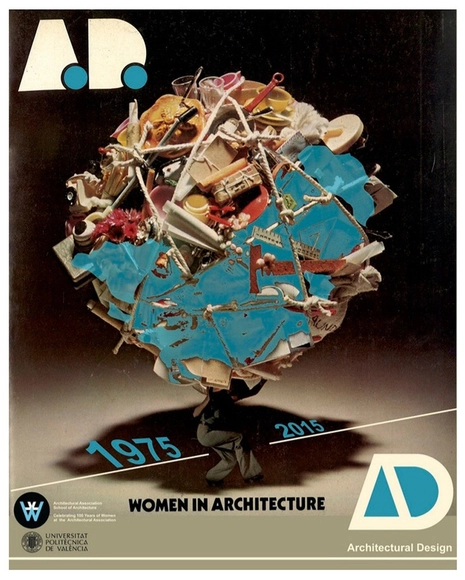
In August 1975, Architectural Design magazine published a special edition about Women in Architecture. At the time, director Monica Pidgeon sent letters to 100 architects asking what women can contribute to architecture that men can’t (and vice-versa), as well as the advantages and disadvantages of being a woman in the profession.
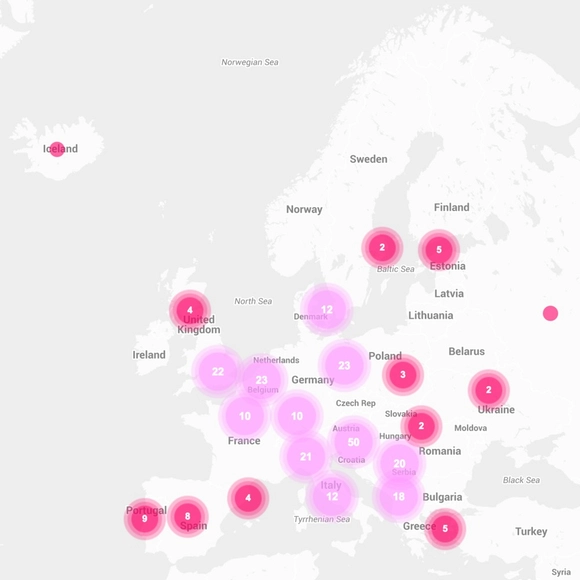
Geographical range of the selected Ideas. Image Courtesy of Future Architecture Platform
The results of the 2015 Future Architecture Call for Ideas have been announced, "revealing the critical thinking of the currently emerging generation of designers and architects in relation to the existing models that shape architecture as a discipline." Submissions presented visions "of what architecture could be, and highlighted architects and designers as initiators of change in the larger societal picture." As the first pan-European platform of architecture museums, festivals and producers, it has been designed to both bring together ideas about the future of cities and architecture closer to the wider public.
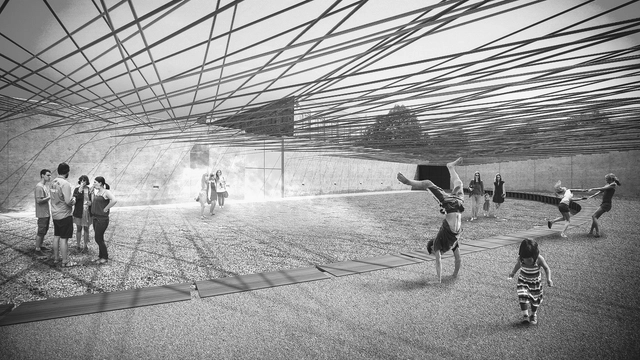
Mexico City-based Escobedo Soliz Studio has been named the winner of MoMA and MoMA PS1's annual Young Architects Program (YAP) in New York - now in its 17th edition. Selected over four other finalists, the winning project, Weaving the Courtyard is “neither an object nor a sculpture standing in the courtyard, but a series of simple, powerful actions that generate new and different atmospheres," says the architect. It will serve as a "temporary urban landscape" for the 2016 Warm Up summer music series in MoMA PS1’s outdoor courtyard.
"Weaving the Courtyard is a site-specific architectural intervention using the courtyard’s concrete walls to generate both sky and landscape, with embankments in which platforms of soil and water suggest the appearance of a unique topography," says MoMA.
A group of Massachusetts Institute of Technology(MIT) engineering students has won the first round of a competition to design transport "pods" for Elon Musk's ultra-fast Hyperloop. Selected from more than 100 other university teams, the top teams will now have the opportunity to build their pods for a trial run on the Hyperloop Test Track (now under construction) by April 2016. If successful, the pods will be able to transport up to 30 people at speeds of 700 miles-per-hour through the Hyperloop's 12-foot diameter tube.
Protestors have prompted developer Sellar Property Group to pull plans on the Renzo Piano-designed skyscraper sited in London's Paddington area. The 72-story "skinny Shard" has been harshly criticized by locals and Historic England for "blighting views" of the capital and being out-of-place, hence its popular nickname - the "Paddington Pole."
“London’s skyline is unique, iconic and loved. It has to be managed sensitively and with proper planning,” Historic England chief executive Duncan Wilson told The Guardian. “Tall buildings can be exciting and useful, but if they are poorly designed, or in the wrong place, they can really harm our cities. We trust that the revised plans for Paddington Place will take the area’s unique character into account.”
For the past quarter century, China’s rapidly expanding economy provided architects with an almost endless supply of building opportunities. Easy lending allowed for an exponential rise in infrastructure projects – China used more concrete in three years than the United States used in the entire twentieth century. But in a country where the number of cities with over a million inhabitants jumped from 16 in 1970 to 106 in 2015, the speed of development enabled high profile, but flawed, experiments alongside the many necessary building projects. There is perhaps no better example of this phenomenon than the city of Ordos. The Inner Mongolian metropolis – home to 100,000 – which sprang from the northern desert in the mid-2000s was designed for over a million inhabitants. The reality of the city came to public attention in 2009 when Al Jazeera wrote about an early uncertainty in the Chinese real estate market.
After living in China for a number of years, photographer Raphael Olivier finally gave in to the nagging urge to see Ordos for himself. Visiting last year, he found a well-maintained city that is still largely uninhabited. I interviewed Olivier about the project, his views on Ordos, Chinese prosperity, and what it means to photograph architecture.
Getting a job or internship at an architecture firm doesn't only depend on your skills as an architect (or student). The way you present your skills plays an essential role. At a time of great professional competitiveness and with resumes becoming more globalized, assembling a portfolio may seem like a chore and often very involving: Which projects do I list? What personal information do I add? Should I include my academic papers in professional portfolios?
Brazilian architect Gabriel Kogan has shared with us a list of twelve tips on how to build a good architectural portfolio, ranging from graphic design to the type of personal information and content that should be included in your resume. Read his guidelines after the break, and if you have any other tips share them with us in the comments section.
Four Dutch designers—Chris Collaris, Ruben Esser, Sander Bakker and Patrick van der Gronde—have envisioned a sustainable design of re-use for a discarded oil tanker in the Southern Gulf Region, which they have entitled The Black Gold. They believe that the oil tanker is the "perfect icon" for representing "the geographic, economic and cultural history of the Arabic oil states" – an icon which they predict will become more and more obsolete as the supply of crude oil is moved away from shipping and into pipe infrastructure.
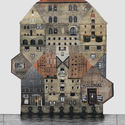
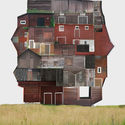
Sweden based visual artist, Anastasia Savinova, has created a series of collages that seek to capture the spirit of cities. Titled “Genius Loci,” her collages form a big house that is composed of many buildings characteristic of each city, visualizing the way of life, the atmosphere, and the feeling of each place. Photographs of architecture are the foundational components of her art work, representing the feeling as a whole.
Nike has unveiled plans to expand their World Headquarters, located near Beaverton, Oregon. Their campus first opened in 1990 and has undergone three waves of construction, doubling its size. Now, Nike will expand the facility again, adding 3.2 million square feet of office, mixed-use and parking facilities.
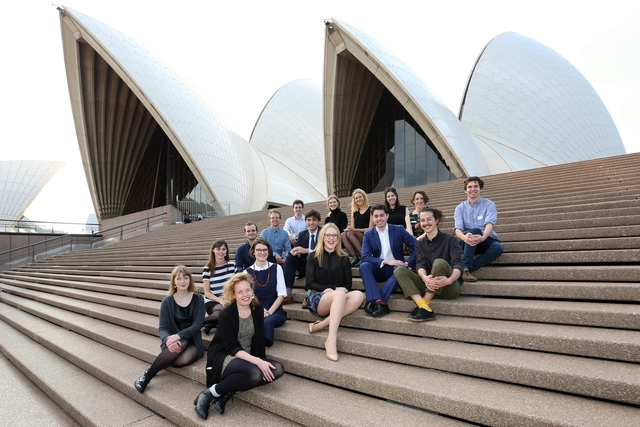
The 2015 session of MADE—the Multidisciplinary Australian Danish Exchange—has recently been completed and presented to the public. Established in 2013 by the Sydney Opera House, the MADE Program is an extracurricular experience for Australian and Danish students of architecture, engineering, and design.
Teams of five students are exchanged between Australia and Denmark and work in multidisciplinary teams of two architects, two engineers, and one designer for six weeks on a collaborative project aligned with Jørn Utzon’s Design Principles.
As a part of the Women in Architecture (WIA) program and its greater campaign, readers are invited to participate in a survey to help track the evolving status of women in the profession on a global level. The anonymous survey is “open to men and women working in the built environment and aims to track perceptions of equality, salary, and flexible working.”
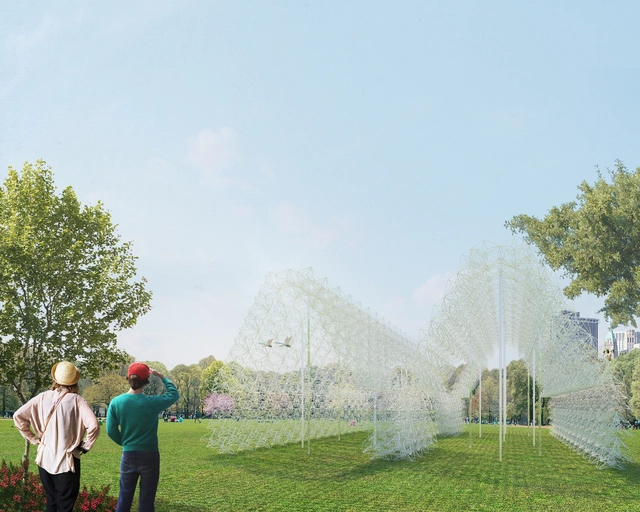
A design for a pavilion constructed out of recycled clothes hangers has been selected as the winner of the sixth annual City of DreamsPavilion Competition. The temporary structure will be built on Governors Island and available to the public for summer 2016, pending final approval and fundraising.
Hosted by FIGMENT, the Emerging New York Architects Committee (ENYA) of the American Institute of Architects New York Chapter (AIANY), and the Structural Engineers Association of New York (SEAoNY), the competition speculates on possible futures with solutions to the current strain on economic and natural resources. Designers are required to consider their materials from sourcing to disposal, or ideally, reuse, promoting sustainable thinking.
Over 100 design proposals were submitted, and the jury selected four finalists who were each given a month to further develop their designs in response to jury comments. See the winning design and the three finalists after the break.
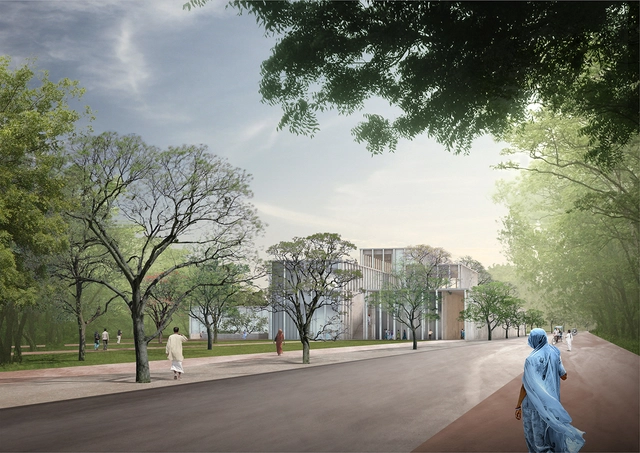
Construction is underway on David Chipperfield Architect's Mughal Museum in Agra, India, near the Taj Mahal's eastern gate. Part of a larger Archohm-led masterplan, which includes the Taj Orientation Center and the Agra Heritage Center, the project will provide 5200-square-meters of permanent and temporary exhibition space entirely "dedicated to the history and culture of the Mughals, a dynasty that ruled over Northern India for over three centuries," says the practice.
99 Hudson Street, soon to be New Jersey's tallest tower, has officially broken ground. Designed by Perkins Eastman, the 900-foot-tall mixed-use condominium tower is said to be one of the tallest residential buildings in the US and will "dramatically remake the Jersey City skyline," according to Mayor Steven Fulop.
“99 Hudson will mark a new milestone for Jersey City’s resurgence as a truly great city in which to live and work. For decades now, people on the west side of the Hudson have marveled at Manhattan’s skyline, but today Jersey City is developing its own dynamic city, along with a world-class skyline. To play a part in this transformation is quite an honor,” said Perkins Eastman principal Ming Wu.
UK Pavilion - Milan Expo 2015 / Wolfgang Buttress. Image Courtesy of Kew
Wolfgang Buttress’ The Hive, the gold medal-winning UK Pavilion from Milan Expo 2015, is being relocated to London's famous botanic garden, Kew. The mesmerizing (and photogenic) "beehive" was designed to give visitors a glimpse into the life of a working bee; its 169,300 individual aluminium components, reaching 17-meters and fitted with hundreds of LED lights, created a multi-sensory experience that shed light on the importance of the pollinator.
"We are truly delighted to announce The Hive's move to Kew, both for its magnificent aesthetic appeal and for the resonance it has with our work – I can think of no better home for this remarkable marriage of architecture and science," Richard Deverell, director of the Kew, told Horticulture Week.
As of June 29, 2016, the National Council of Architectural Registration Boards (NCARB)’s Intern Development Program will be renamed the “Architectural Experience Program," or AXP. Part of a wider change in the industry to retire the term “intern,” the decision was made after years of research and outreach by various committees, as well as feedback from “state licensing boards, industry leaders and emerging professionals.”
The program, developed by the NCARB, is meant to guide aspiring architects through their early career, helping them earn their license and practice independently. NCARB will continue referring to those working toward licensure as “aspiring architects” or “exam candidates.”
Kohn Pedersen Fox Associates and Leslie E. Robertson Associates have joined forces to propose a vision for a new city in Tokyo Bay. “Next Tokyo” imagines a mega-city that is adapted to climate change in the year 2045. Rising sea levels, seismic activity, and the threat of typhoons have drawn attention to the vulnerability of low-elevation coastal zones in the bay. This design proposes a development strategy that improves the bay’s preparedness for these natural disasters, while also creating a mile-high residential tower and a new transit-oriented district.
For this edition of The Urbanist, Monocle 24's weekly "guide to making better cities," the team ask whether the typology of the department store – their urban impact and the ways in which they have redefined the shopping habits of many. The show examines the history of the London department store and heads to Paris to explore France’s first, Le Bon Marché. The team also draw parallels between Istanbul’s old 'hans' and their contemporary equivalents.
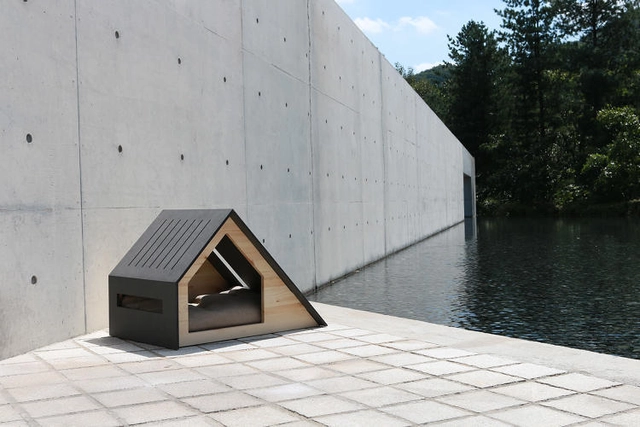
Your pet's den no longer has to be an eyesore. South Korean brand BAD MARLON has designed a line of modern pet homes that would meet the specs of any architect. The minimalist collection is made up of three dog houses, two of which are assembled magnetically, and one beautifully crafted interlocking pen. Take a look for yourself, after the break.
Tim Ronalds Architects. Image Courtesy of Malcolm Reading Consultants
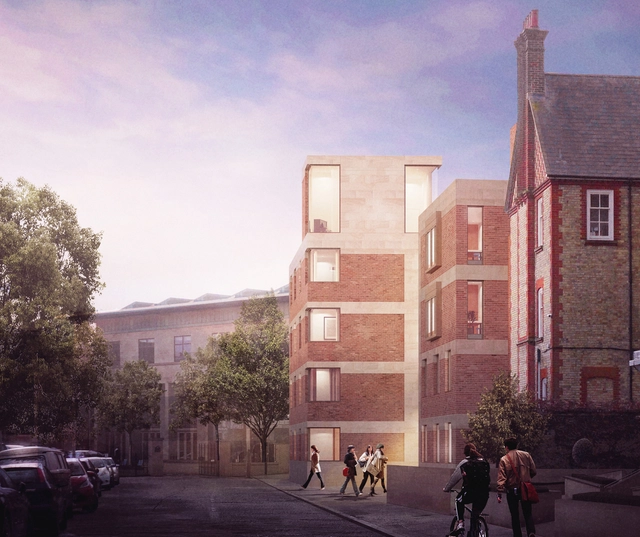
Oxford University has released five shortlisted proposals to overhaul and extend its St Hilda's College. Part of the invited competition Redefining St Hilda's, the concepts are designed to expand student and Fellow accommodation, while providing new social and teaching spaces, Middle Common Room, Porters' Lodge and entrance for the college.
“We are keenly aware of the legacy we give to future generations as well as the opportunity to enhance Oxford itself. This initiative is all about reimagining this beautiful site and creating an academic environment which is pleasing and satisfying to use, and which enables the College to flourish over the next hundred years,” says St Hilda’s College Principal, Professor Sir Gordon Duff.
Read on for a glance at the five shortlisted proposals...
Videos
Courtesy of The World War I Centennial Commission
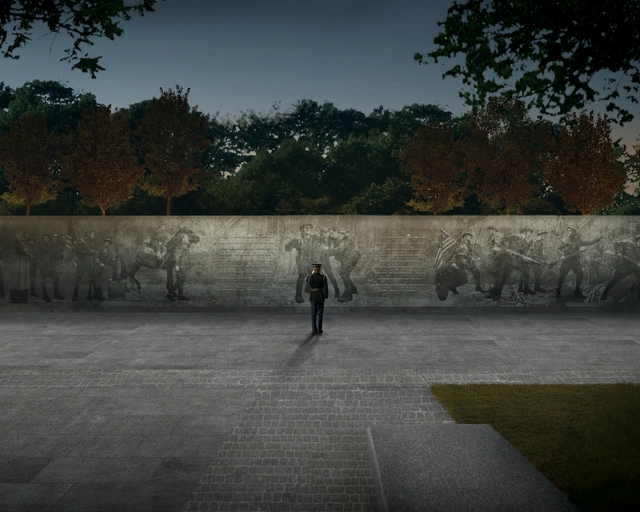
After announcing five finalists in August of 2015, the World War I Centennial Commission has announced the winner of its National World War I Memorial competition: The Weight of Sacrifice by 25-year-old architect Joe Weishaar and sculptor Sabin Howard. The design focuses on the sacrificial cost of war through relief sculpture, quotations of soldiers, and a freestanding sculpture. Visitors are guided through the memorial’s changing elevations by quotation walls that describe the war from the point of view of generals, politicians, and soldiers.




.jpg?1454345916&format=webp&width=640&height=580)