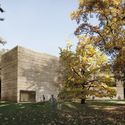
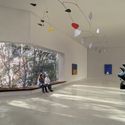
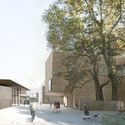
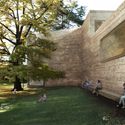
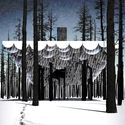
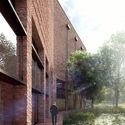
House for Art and Pavilion (right-hand side), View from the Berower Park. Image Courtesy of Atelier Peter Zumthor & Partner
Atelier Peter Zumthor has revealed conceptual designs for their CHF 100 million ($100 million USD) addition of the Beyeler Foundation in Riehen, Switzerland, just outside of the city of Basel. Located on land formerly off-limits to the public, the extension will add an array of new event and gallery spaces to the existing museum, designed by Renzo Piano Building Workshop and opened in 1997.
Drawing from the “village-like character” of Riehen, the addition will consist of three, relatively small new buildings that blend harmoniously into the museum’s nature-filled setting: a stoic building for administration and service, a glass pavilion for events, and a grand House for Art. Together, their arrangement will help to create a subtle link between the new and old areas of the site.
Architectural landmarks can define a city. A mention of Paris conjures images of the Eiffel Tower, whilst no description of Sydney is complete without mentioning its inspiring Opera House. How disorientating it must be, therefore, to encounter a familiar architectural wonder far removed from the city, or country to which it belongs. As it happens, many of our most famous structures have their own "twins," heavily-inspired by their originals, that you may not have been aware of.
In the sixth episode of GSAPP Conversations, Jarrett Ley (a current GSAPP student) speaks with Sir Peter Cook. They discuss architecture as a tool for shaping radical thought, the relationship of the current political climate in Britain, Europe, and the United States on architectural education and practice, and how the most interesting contemporary architectural projects appear to stem from "unknown architects in smaller countries."
https://www.archdaily.com/870552/peter-cook-concerned-by-contemporary-drawing-culture-gsapp-conversationsAD Editorial Team
The Architectural League of New York has announced the winners of the 2017 Architectural League Prize for Young Architects + Designers. Established in 1981, the prize has grown to become one of North America’s most prestigious awards recognizing young architects (ten or fewer years removed from a bachelor’s or master’s degree program) for their talent and forward-thinking ideas.
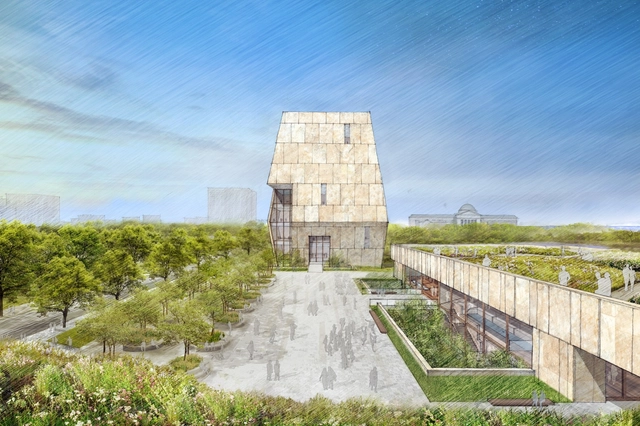
View of the Obama Presidential Center plaza. Image Courtesy of Obama Foundation
The Obama Foundation today unveiled the design of former President Barack Obama’s Presidential Center, reports The Chicago Tribune. Designed by Todd Williams Billie Tsien Architects, the center’s design comprises three buildings. At the north of the site, the tallest building will contain the center’s museum, while buildings to the south will house a library, auditorium, and restaurant, arranged around a public garden.
https://www.archdaily.com/870527/obama-foundation-unveils-twbta-designed-obama-presidential-centerAD Editorial Team
With construction now well underway on One Thousand Museum in Miami, one of Zaha Hadid's largest projects to be completed posthumously, Curbed has reported that the 62-story tower will be the subject of an upcoming Discovery/PBS documentary covering the creation of complex structures from around the world. Titled “Impossible Builds,” the program will highlight the building’s unique glass fiber reinforced concrete exoskeleton.
Architecture can be demanding. As designers, we perform enough roles to fill a Shakespearean drama - from artist, scientist, and mathematician, to economist, cartographer, and writer. Fortunately, one trait many of us share is curiosity - a willingness to embrace new ideas, continually asking how we can improve ourselves and the world around us. The internet, therefore, is somewhat of an architect’s playground - a labyrinth of inspiration, ideas, and hacks.
As the internet continues to respond to societal needs, browsers such as Google Chrome are hosting an array of clever gadgets to enhance productivity, many of which you may not be aware of. From page rulers and palette generators to screen recorders and time trackers, designers can equip their browser with an arsenal of icons to rival a CAD toolbar. Below, we’ve listed 14, just to get you started!
How do you start your day? Chances are that between opening your eyes, getting out of bed, heading for a cup of coffee and brushing your teeth, you're part of the majority of people who check their email within 15 minutes of the alarm clock sounding. It's a pretty intense way to begin the day, so we thought we'd share some daily email newsletters that lift our spirits, make us wiser, and give us the positive energy needed to tackle a long day's work. The best part is that you never stop learning.
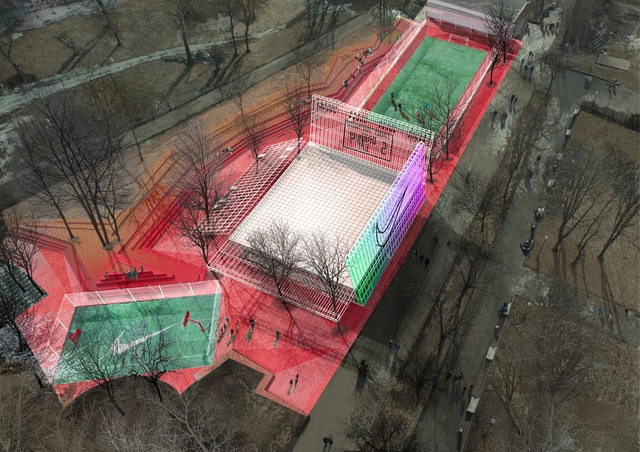
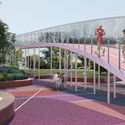
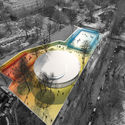
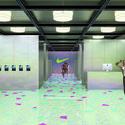
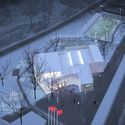
Nike Air Box / Kosmos Architects. Image Courtesy of Nike
Global sportswear brand Nike, in collaboration with urban planning consultants Strelka KB, has announced the winners of the competition to design a new Nike sports facility in Gorky Park, located at the heart of Moscow. The competition asked five of Russia’s leading young architecture studios – KOSMOS Architects, Rhizome, Novoe, Crosby Studios and Xора – to envision a “unique architectural object” that seamless integrates into the surrounding park environment, creating a landmark hub for sport and physical activity for Russia.
With rapid advancements in technology and crystal clear imagery, drones have allowed us to experience our cities and landscapes from unimaginable vantage points and perspectives. In its series of videos, YouTube channelMingomatic uses drones to capture the sights and scenes of predominantly American cities and various locations from above, offering glimpses of skylines, oceans, highways and terrains (and seals!). Check out the 10 videos below for some spectacular views, and find Mingomatic’s full selection, here.
https://www.archdaily.com/870021/experience-cities-from-above-with-these-crystal-clear-drone-videosOsman Bari
Sweden is home to the world’s longest public bench. At 240 feet (around 72 meters) in length, the Långa Soffan (“long sofa”) was installed by the citizens of Oskarshamn in 1867 to overlook its rather unspectacular harbour, which opens toward the Baltic Sea. The function of this bench was not for passing time and taking in the coastal views, however; in times gone by it was rhythmically occupied by the wives of sailors awaiting their husband’s return from sea voyages. It allowed people to gather under a sense of common melancholy and collectively recall the smiles of their distant spouses before the ocean’s broad, blue canvas.
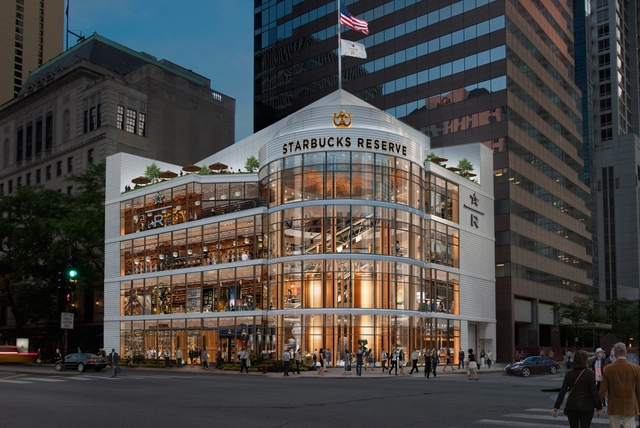
Coffee behemoth Starbucks has announced plans for their third U.S. “Roastery” store to be located on North Michigan Avenue along Chicago’s Magnificent Mile, one of the most well-known retail streets in the world. When completed in 2019, the four-story, 43,000-square-foot space will constitute the largest Starbucks location in the world.
https://www.archdaily.com/870361/worlds-largest-starbucks-to-open-on-chicagos-magnificent-mileAD Editorial Team
We’ve all reached that point in a stressful project where you need to take a step back and take a breather before refocusing on the task at hand – for many, this process can be aided by the liquid motivation of a nice, cold beer.
Identifying this uncanny connection, Finnish firm ALA Architects has just released their very own craft beer, cheekily titled “Revision Cloud Architectural Pale Ale” in a nod to both the unfiltered quality of the drink and the very CAD element that often causes the need for a cold one in the first place.
In an increasingly paperless world, architecture still relies on channeling ideas by hand. Sketching has endured as the method of choice for designers to communicate with clients, the public, and each other. As we have previously reported, the George Architect YouTube channel, managed by Reza Asgaripour and Avdieienko Heorhii, is devoted to bringing sketching techniques and ideas to the wider world, with a series of tutorials on everything from light and shade to three-point perspectives.
https://www.archdaily.com/870219/sketching-tutorials-to-keep-you-filling-up-your-moleskineNiall Patrick Walsh
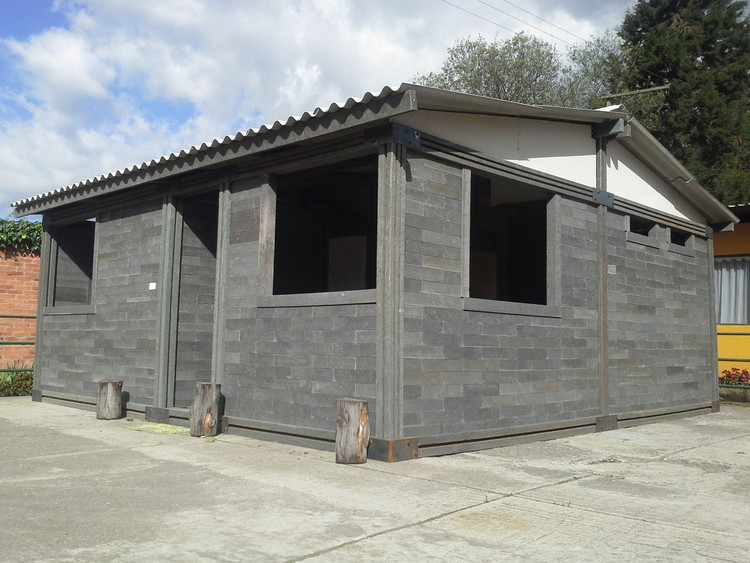
Ten years ago when Colombian Fernando Llanos tried to build his own house in Cundinamarca, he realized that moving the materials from Bogota was going to be very difficult. After mulling it over, he decided to build his house out of plastic, and after a series of trials and errors, he ended up meeting architect Óscar Méndez, who developed his thesis on the same subject, and together they founded the company Conceptos Plásticos (Plastic Concepts) in 2011.
The innovative local company managed to patent its system of bricks and pillars made of recycled plastic, which is then put together like Lego pieces in a construction system that lets you build houses up to two stories high in five days.
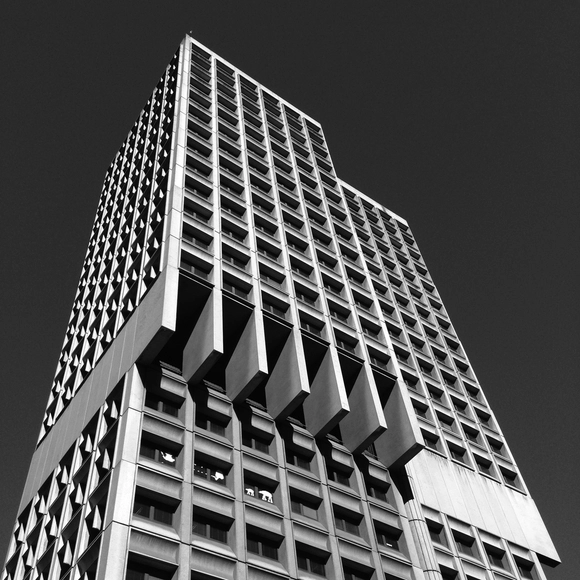
Sydney is the latest city spotlighted by city map publisher Blue Crow Media, with the release of their fourth map of Brutalist architecture. Produced in collaboration with Glenn Harper, Senior Associate at PTW Architects and founder of @Brutalist_Project_Sydney, Brutalist Sydney Map showcases over 50 examples of the architectural style across the New South Wales (NSW) city and suburbs.
“This map not only guides the reader to discover many of Sydney’s oldest and historically important Brutalist buildings, it enables a unique encounter of Sydney and its varied urban and harbor side landscapes,” expressed Harper.
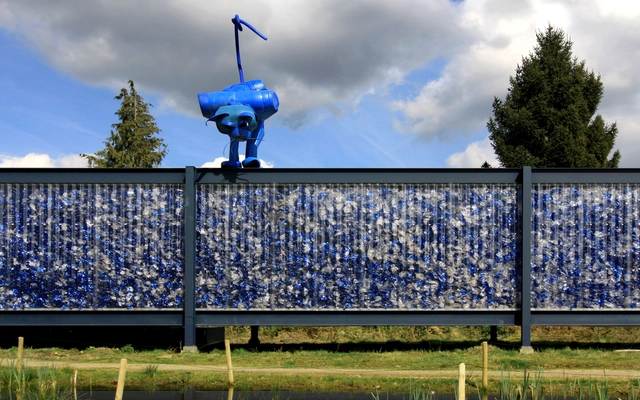
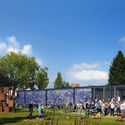
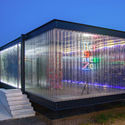
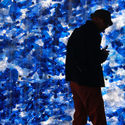
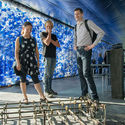
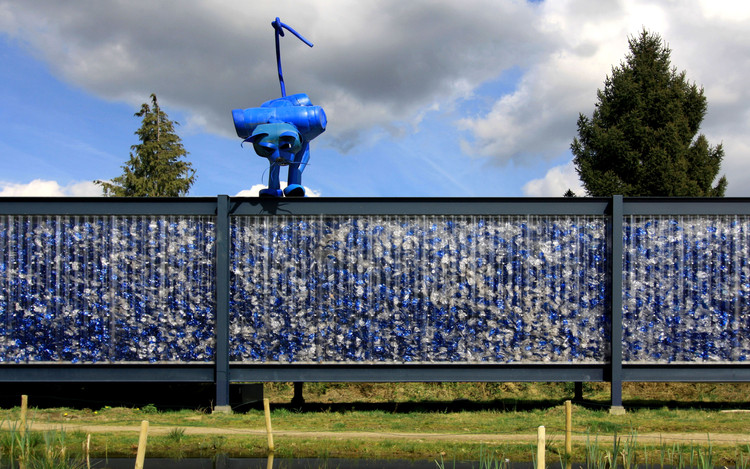
Project.DWG and LOOS.FM have unveiled their PET pavilion, a temporary structure in a community park in The Netherlands that focuses on issues of sustainable building, recycling, and waste by rethinking the ways that buildings are developed, built, and used. Specifically, the pavilion is a study of the use of plastic waste as a building material.
Using the elevated framework of Ludwig Mies van der Rohe’s Farnsworth House, the structure consists of two monumental slabs in a steel framework. “From floor to ceiling, double-walled transparent corrugated sheets hold over 40,000 plastic bottles,” with bottle caps attached to bottlenecks supporting the system.
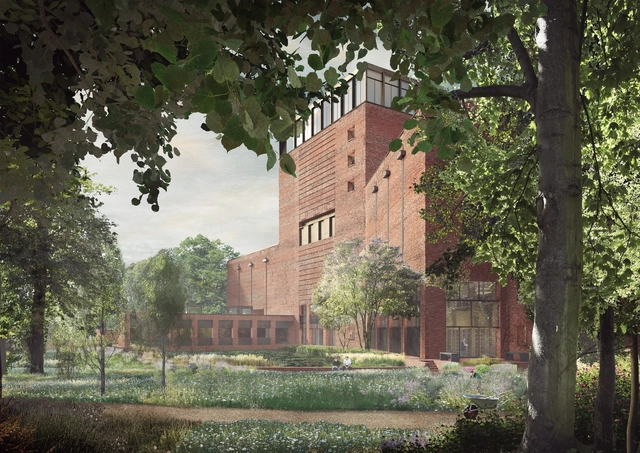
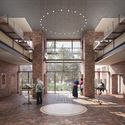
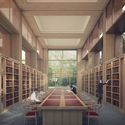
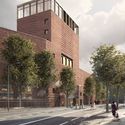
Planning approval has been granted for the design of the first new building at Lambeth Palace in London for approximately 200 years – a new library and archive designed by Wright & Wright Architects. The building is intended to protect the priceless Lambeth Palace Library collection, second only to that of the Vatican and established in 1610 by Archbishop Bancroft, from any potential flooding and consolidate the wealth of rare artifacts and knowledge into a cohesive “portal of knowledge.”
“Wright & Wright and the whole team have responded to the exacting and challenging brief to achieve an outcome which will protect and preserve the collection; allow us to make them more accessible than ever before; be as environmentally friendly as possible; while creating a beautiful building which will be wonderful to work in and visit," said Declan Kelley, Director of Libraries and Archives of the Church of England.
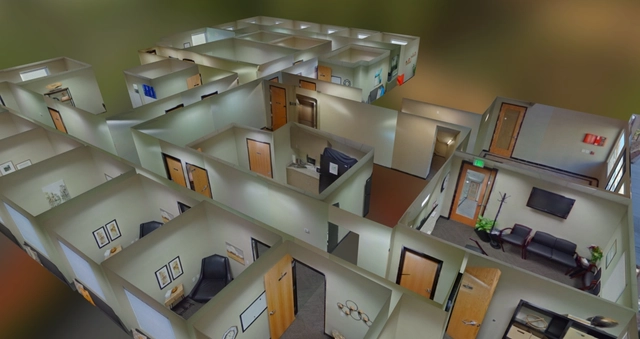
An upcoming app, named Walkabout Worlds, is hoping to drastically simplify the process of creating a 3D model of existing spaces. Designed as both a tool for turning 360 photographs into 3D models and for creating photographic 3D walkthroughs for VR viewing, the app has turned heads for its demonstration that a 360 photograph can be converted into a rough, simple 3D model in as little as a minute by selecting key points in the image such as the corners of the room, as shown in the video below.
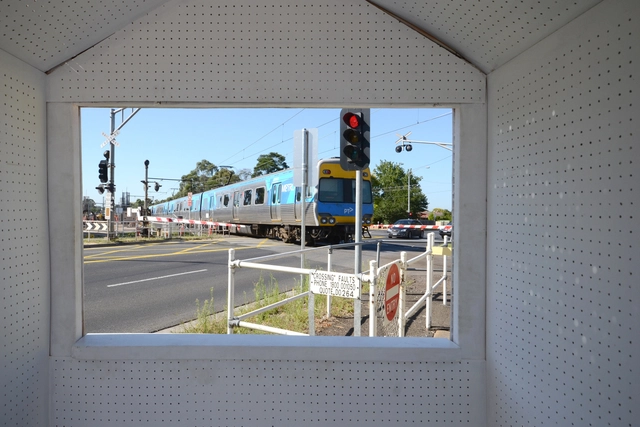
With Melbourne’s contentious elevated rail project starting construction, an independent group has taken the opportunity to critique the way that this key piece of infrastructure is engaging with the public. The project, leftunder, is a platform for alternate, community driven proposals for the public space being made available adjacent to this new infrastructure, that which might normally be overlooked and undermaintained. Run by not-for-profit OFFICE, the project has recently culminated in an exhibition at The National Gallery of Victoria's Design Week.
This article is part of our series "Material Focus", where we ask architects to share with us their creative process through the choice of materials that define important parts of the construction of their buildings.
From the demolition of the existing building to the making of a new one better suited to the travel agency’s requirements of more open space, the new project also needed to leave the remaining neighboring building intact. The solution they went with was to create a new structure away from the wall, stripped to let the bricks show, and within that underlying area create a space with vertical circulation, natural lighting, gardens, and service areas like a kitchenette, restrooms, and a technical shaft. We spoke with architect Baldomero Navarro Gomes from NN Arquitetos Associados to learn more about his choices on materials and the determining role they played in his design concept.
https://www.archdaily.com/869696/rebuilt-travel-agency-receives-a-more-fluid-and-dynamic-spaceEquipe ArchDaily Brasil
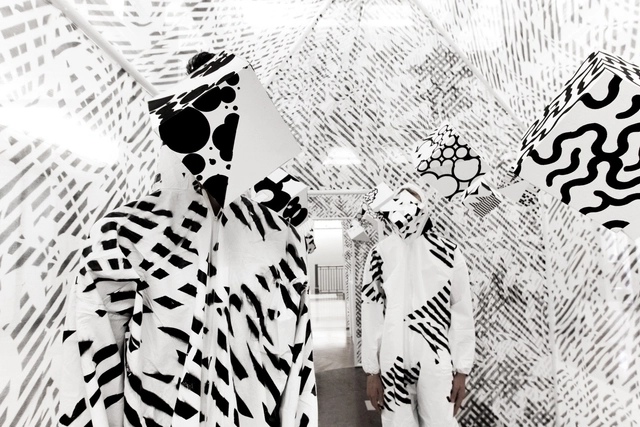
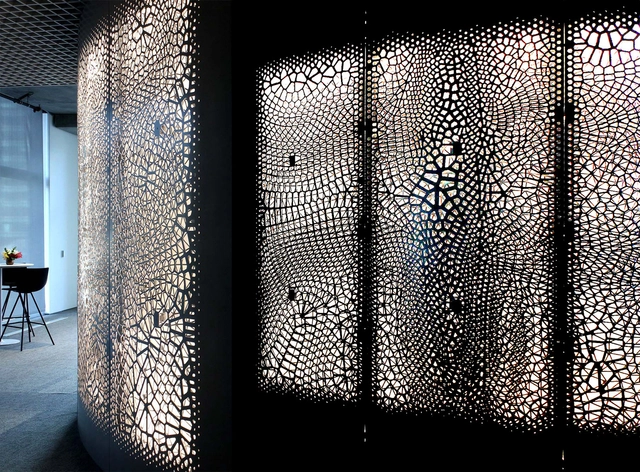
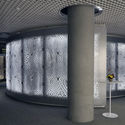
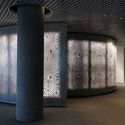
Responding in part to recent debates on how big data will affect our built environments, Synthesis Design + Architecture have teamed up with IBM Watson Analytics to design an interior feature wall for the Watson Experience Center in San Francisco. The project, named Data Moiré after the dizzying patterns created by overlapping sets of lines, uses data from the influence of mobile phones on monthly consumer spending to create a precise screen material that defines the wall.
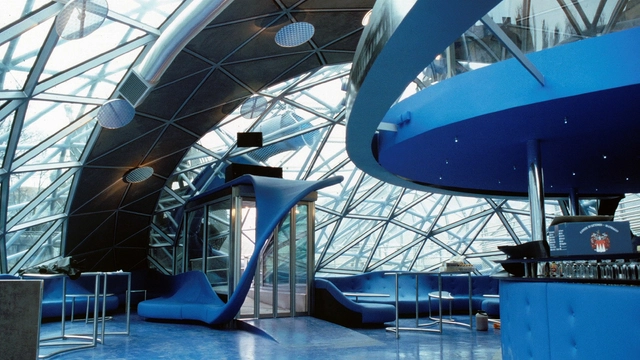
Screenshot via Crane.tv. ImageAcconci Studio's Island in the Mur, Graz, Austria
American architect and artist Vito Acconci has died at the age of 77 as the result of a stroke. A visionary performance and installation artist in his early career, Acconci turned to architecture and furniture design in the 1980s, subscribing to the belief that to truly make an impact on society, one needed to be designing objects that were “part of the world.”
The American Institute of Architects (AIA) has announced the election of William J. Bates, FAIA, as the 2018 First Vice President and 2019 President-elect. Currently serving as a member of the Board of Directors (since 2011), Bates has served terms as a vice president and the chair of the Board Community Committee from 2015-2016. He twice served as president of AIA Pennsylvania, in 1991 and 2010, and was president of AIA Pittsburgh in 1987.