
Across Europe's major tourist cities, housing affordability has increasingly emerged as one of the most pressing urban challenges, prompting governments to reassess the role of short-term rentals within residential neighborhoods. In Barcelona, Mayor Jaume Collboni recently announced plans to phase out tourist short-term rentals entirely by 2028, framing the decision as part of a broader effort to protect residents' right to remain in the city. The announcement coincides with a €64 million fine imposed by the Spanish government on Airbnb for advertising unlicensed properties, placing Spain at the center of an intensifying debate over how tourism-driven accommodation models intersect with housing access, inequality, and urban stability.






Speaking at the municipal level, Barcelona mayor Jaume Collboni has framed housing as one of the main sources of social inequality across European cities, arguing that market activity linked to tourism must not undermine residents' ability to remain in their neighborhoods. In public statements, Collboni has called for coordinated action at the EU level, describing housing affordability as a shared urban challenge that extends beyond local governance. Barcelona's municipal policies reflect this broader positioning. Alongside the proposed elimination of tourist short-term rentals by 2028, the city has implemented rent caps on long-term leases, reporting a decrease in rental prices since their introduction. City officials have characterized these measures as "an extraordinary response to an extraordinary situation," arguing that conventional market mechanisms alone have proven insufficient to address housing pressure fueled by tourism demand. The city's approach places housing policy at the center of urban governance, reframing the issue as a question of social rights rather than solely of economic growth.
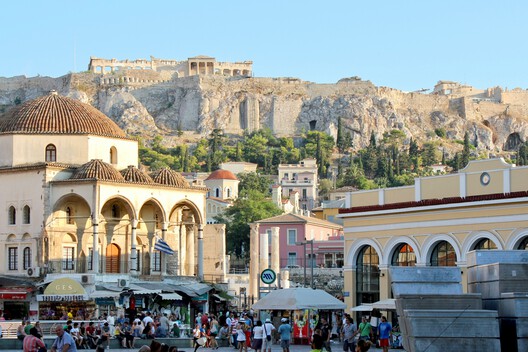
Spain's actions are part of a wider European discussion in which short-term rentals are increasingly scrutinized through the lens of affordability and residential continuity. In Greece, newly introduced regulations position housing policy as a tool to rebalance residential markets under pressure from tourism-driven demand. Existing restrictions on short-term leasing in Athens have been extended to the city center of Thessaloniki, while properties transferred to new owners are now automatically removed from the short-term accommodation registry, effectively limiting their continued use as tourist rentals. Rather than focusing solely on enforcement, the framework combines restrictions with incentives aimed at expanding affordable long-term housing.
Related Article
On Human Rights Day: Perspectives on Architecture, Equity, Housing Access, and Safety Worldwide
In late November, the Lisbon City Council approved amendments to its Municipal Regulation on Local Accommodation, adjusting the proportion of short-term rental units permitted in designated containment areas across the city. The revised rules lower the allowable share of tourist accommodation in areas of absolute and relative containment and introduce a citywide threshold that triggers stricter controls once short-term rentals exceed a defined proportion of the housing stock. Municipal leaders have presented the framework as an attempt to rebalance residential availability and economic activity, allowing limited short-term rentals while preventing further concentration in high-pressure neighborhoods.

In other related news, housing affordability has continued to emerge as a central theme across architectural discourse and policy-driven debates. On Human Rights Day, observed this year under the theme "Human Rights, Our Everyday Essentials" by the United Nations, architecture has increasingly been examined as a spatial framework through which issues of equity, housing access, safety, and shared resources are negotiated. At the institutional level, HouseEurope!, a non-profit focused on the social and ecological transformation of Europe's built environment, received the 2025 OBEL Award, while the Tallinn Architecture Biennale, organized by the Estonian Centre for Architecture since 2011, has foregrounded affordability through its winning proposal "How Much?", which questions how value and access are defined within contemporary architectural practice.