

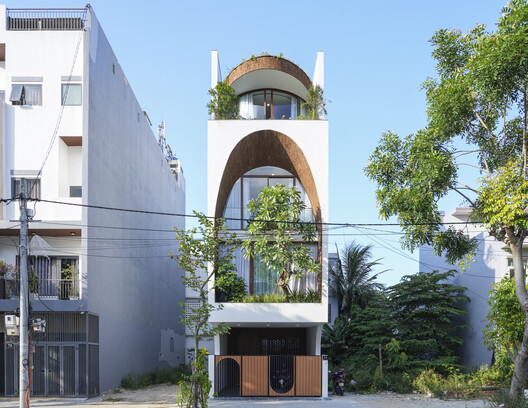
In Vietnam, the tube house has almost become a vernacular form in densely populated cities like Hanoi and Ho Chi Minh City. This typology originated from ancient façade taxes and as a strategic response to urban land scarcity and optimization of street frontage for commerce. Their traditional structure typically relies on the front façade for daylight and ventilation. People living there often face the challenge of designing in a space defined by the deep plots, limited street frontage, and close neighboring buildings, restricting natural light and airflow. To counter this fundamental lack of perimeter exposure, Vietnamese architects usually employ several strategies oriented towards internal environmental manipulation. This curated collection explores tube houses under 100 m2, where their small size increased the need for absolute spatial economy and the verticalization of function, which directly influenced design decisions across all projects.
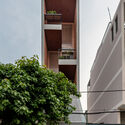

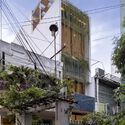
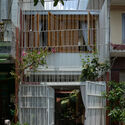
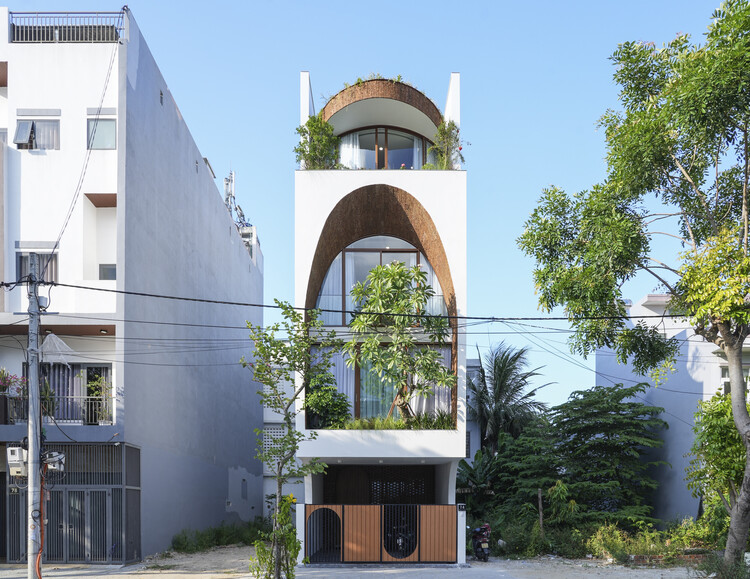
The first focus is on maximizing light penetration. This is achieved through the introduction of vertical voids or atriums, which function as essential light shafts that also promote stack-effect ventilation deep into the plan. In contrast, other projects create external buffer zones by recessing the building to establish courtyards, ensuring crucial cross-ventilation across the entire depth of the home. The second focus is on the spatial economy and the façade as an active climate filter. Since horizontal expansion is impossible, floor area must be generated vertically, compressing non-essential spaces. The use of a consolidated service spine is a common strategy that simplifies utilities throughout the site and allows more room for flexible living spaces.


