
-
Architects: Foster + Partners
- Year: 2022
-
Manufacturers: Terrazzo & Marble




The Constant Future: A Century of the Regional Plan, an October exhibit at Vanderbilt Hall in Grand Central Terminal is a succinct yet gripping display of civic dreams selected from the imagination of the Regional Plan Association (RPA), an independent non-profit that conducts research on the environment, land use, and good governance with the intention of promoting ideas that improve economic health, environmental resiliency, and quality of life in the New York metropolitan area. The occasion is the organization’s centennial, and the show is a testament to its powerful role in developing the tri-state region. Not all of its ideas have been good, but the city owes a debt to the group’s long-term view.


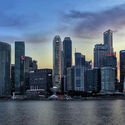
Cities have been, and will always be multi-faceted, elastic sites. They are settlements in continuous evolution, molded by proximity to natural resources, by migrating populations, and by capital. Despite the diversity in the urban character of disparate cities, it has been said that cities look alike now more than ever before, a uniformity that means a glass-and-steel tower in Singapore would not look out of place in Mumbai’s Bandra Kurla Complex.

The Transportation Alternatives and the Massachusetts Institute of Technology have initiated a new digital tool, Spatial Equity NYC, to help users understand how space is distributed and restricted across the neighborhoods of New York City. The tool asses the use of streets, sidewalks, and public spaces, as they are key factors that influence data such as pollution, traffic fatalities, accessibility, or air quality. The data collected shows a direct correlation between neighborhoods with low-income communities and communities of color and the detrimental ways in which public space is used, leading to health and mobility issues in those communities.

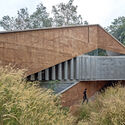
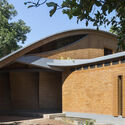
Most architects design projects in the comfort of their offices, sitting behind their desks, making decisions by looking at their flatscreens, never visiting a construction site, and managing everything remotely. This attitude may lead to a design of a sleek and even objectively beautiful building. But such a solution can’t be anywhere near a genuine response to what any given site may require. How do you even find out? Is it possible to build something new as if it were an extension of what is already there in the most innate, consequential, yet original form? The only way to find out is to start from the site itself, says Vinu Daniel, the founder of Wallmakers, an award-winning architectural practice in Trivandrum, the capital of the southern Indian state of Kerala.


Whether you live in an urban, suburban, or rural area, there’s a good chance that using a sidewalk, in some capacity, is part of your everyday routine. Whether crossing over a sidewalk to get to your car in a parking lot or walking several blocks on your commute to your office downtown, sidewalks are critical for creating safe places for pedestrians away from the streets. But what happens when cities don’t take ownership over sidewalk maintenance, and they’re left to be protected by the people who just use them?

The first and only formal architecture union in the American private sector was just formed by Bernheimer Architecture's employees after two years of the union campaign. The Union aims to reframe the discipline and profession and create an established sector of better labor rights standards and work conditions. The BA Union will be associated with the International Association of Machinists and Aerospace Workers to reshape the industry at a large scale and work on Industrywide problems like long hours and low pay.

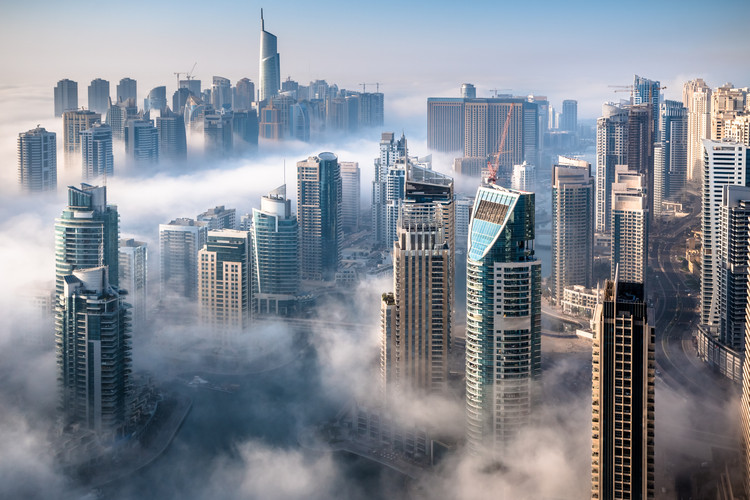
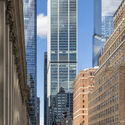
Almost a century ago, the world was introduced to a new architectural typology that changed the entire construction industry. Starting off with the Home Insurance Building in 1885, leading to the Empire State and Chrysler Buildings in Manhattan, skyscrapers became a symbol of power and financial abundance. Soon enough, they were being constructed in almost every city across the world with state-of-the-art designs that defy engineering norms. But with all the changes taking place in the architecture practice, what does the future hold for these heavily criticized yet constantly developed buildings?

This article was originally published on Common Edge.
In 2007, New York City Mayor Michael Bloomberg proposed congestion pricing for Manhattan. The state legislature rejected the plan. Fifteen years later, we’re still debating the idea, fiddling while the planet burns.
The newest problem is that a new environmental study and traffic model from the MTA, The Central Business District Tolling Program Environmental Assessment, says that what’s good for 1.63 million residents of Manhattan and the planet, in general, will increase the pollution in the already unhealthy air in the Bronx. Yes, that’s a problem. Turning the perfect into the enemy of the good is also a problem. We need a plan that benefits all.


Boston is the latest city to announce a city-wide plan that, if passed, would eliminate the use of fossil fuels in new constructions and major renovation projects. This measure expands upon the commitment to enact climate action and make Boston a Green New Deal city. Other US cities like New York, Los Angeles, San Jose, Seattle, and Berkeley have all imposed similar measures in recent years. Seven European cities - Bilbao, Bratislava, Dublin, Munich, Rotterdam, Vienna, and Winterthur - have also developed a project to phase out fossil fuel from urban heating and cooling.

In honor of Virgil Abloh's prolific legacy in the fields of architecture and design, the Brooklyn Museum has put together "Figures of Speech", an exhibition that offers visitors an unprecedented look into the artist’s work of over nearly two decades. Running from July 1st, 2022 until January 29th, 2023, the artist's prototypes are presented alongside finished works of art, products, and fashion designs, along with his myriad inspiration, from centuries-old paintings to contemporary signage at construction sites.


The Port Authority of New York and New Jersey have announced the selection of Foster + Partners and U.S.-based multi-disciplinary design firm A. Epstein and Sons International Inc to reimagine the city's state-of-the-art Midtown Bus Terminal in Manhattan, the busiest bus terminal in the world. The project aims to expand the terminal's accommodation capacity, replacing the aging 72-year-old bus terminal with a new world-class facility. The new terminal will be designed to provide a best-in-class customer experience that serves the region’s 21st century public transportation needs, while enhancing the surrounding community and allowing for the removal of intercity buses from local streets.


Fortunately, architecture has the power to solve numerous issues of the modern world and how we live in it, and there are infinite ways of doing so. However, not all architecture is effective in providing solutions while also being sensitive and thought-provoking. With a portfolio that is getting richer every year, SO–IL, an architecture practice based in New York City, has proven that buildings can actually do this and much more.

The world is facing an Urban Century. The world’s population is collapsing into city centers as manufacturing and agriculture need fewer humans because technology replaces the human hand with machines. The world's urban population has grown from 751 million in 1950 to 4.46 billion in 2021 and will grow to 6.68 billion by 2050.
While architects and designers want to define and control the future of our cities, the immediate reality of New York City, now, is a lesson in what may be our future. It’s response can be seen by the advent of The Tower the fabric of Manhattan.















_Nick_Merrick_for_Hedrich_Blessing_(10).jpg?1637696683 "Burj Khalifa by SOM. Image © SOM")