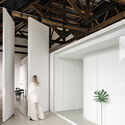
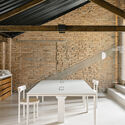
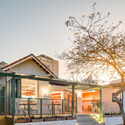
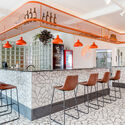
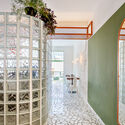
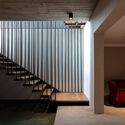
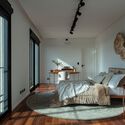
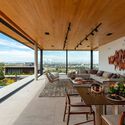
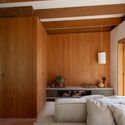
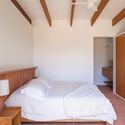
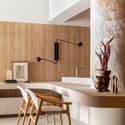
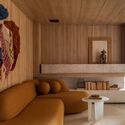
Loft in Itaim / FGMF Arquitetos

Architects: FGMF Arquitetos
Location: São Paulo, Brazil
Architects In Charge: Fernando Forte, Lourenço Gimenes, Rodrigo Marcondes Ferraz
Collaborators: Ana Paula Barbosa, Marília Caetano
Team: Madalena Vidal
Project Area: 162 sqm
Project Year: 2011
Photographs: Fran Parente
Bic Banco Headquarters / Kiko Salomão

Architects: Kiko Salomão
Location: São Paulo, Brazil
Project Team: Kiko Salomão, Ana Lino, Rafael Palombo, Renata Leite, André Almeida, Sophia Helena, Livia Reginato, Marília Franco, Renata Gola.
Project Area: 2,330 sqm
Project Year: 2012
Photographs: Fran Parente
Brasilia Government Forges Controversial Contract with Singapore

While known as the extraordinary city which Niemeyer built, Brasilia is not without its problems. As a recent BBC article noted, while Niemeyer’s architecture is certainly appreciated by its residents, the city itself (designed for the car) lacks a human-scale, mixed neighborhoods, and the vibrant street life which so defines Rio de Janeiro or São Paulo. The city is in need of a face-lift, but who should be responsible for Brasilia’s new face?
Well, if the debates and arguments at the XXIV Pan American Congress of Architects (XXIV CPA), which took place this November, are anything to go by, it certainly should not be those who have just been given the job.
Brasilia’s Government has contracted consulting company Jurong, based in Singapore, with designing a new Masterplan known as “Brasilia Plan 2060.” The move, which was taken with no outside participation or input, was criticized (loudly) – not only by Brazilian architects and urban planners, but by the majority of American and European professionals present at the XXIV CPA.
More details on this controversial move, after the break…
Films & Architecture: “Oscar Niemeyer – Life is a Breath of Air”
By now, there’s no architect in the world unaware of Oscar Niemeyer’s passing, or the legacy he left over his 104 years.
In honor of the greatest Brazilian architect of our time, we invite you to enjoy this interesting documentary, which shows how Neimeyer’s work, which changed the paradigm of architecture and went beyond any stereotype, was just as unique as his noble perspective on life.
The Construction of Brasilia, Photos by Marcel Gautherot

The construction of Brasilia, the federal capital of Brazil and an icon of Brazilian Modernism, began in 1956. Initially planned by the urbanist Lúcio Costa for 500,000 inhabitants (today it holds 2.5 million), Brasilia gained fame for its remarkable buildings, designed by Oscar Niemeyer. Today, Brasilia is the only 20th century city in the world to have been awarded the status of Historical and Cultural Heritage of Humanity by UNESCO.
In honor of the late Oscar Niemeyer, we’ve gathered some stunning black and white photos taken by Franco-Brazilian photographer Marcel Gautherot during the construction of Niemeyer’s emblematic buildings – including the Palácio do Planalto, Palácio de Alvorada (official residence of the President of Brazil), the Cathedral of Brasilia and the National Congress of Brazil. See them all, after the break…
Sao Paulo’s New Green Urban Planning Policy

The new Água Espraiada Operação Urbana urban planning program in Sao Paulo has taken a major approach to sustainability. With this plan in action, the Rochaverá Corporate Towers, a high profile mixed residential, office, and shopping complex, is a great example. The recently built project is located at a former industrial area along the Pinheiros River Basin. This enormous 1.2-million-square-foot development, designed by Aflalo and Gasperini Architects, was built to be highly energy efficient, control water usage, cut greenhouse gas emissions, and ease traffic congestion. With the success of the mentioned project, we can begin to ask ourselves, ‘How can a development accomplish all of those objectives?’ Start with urban planning that mitigates sprawl, one of biggest threats to the planet today. More information after the break.
Guest House / doisamaisv arquitetos

Architects: doisamaisv arquitetos
Location: Araçoiaba da Serra, São Paulo, Brasil
Design Team: Fabiana Cyon, Ana Paula de Castro, Vito Macchione Ferreira
Area: 3,400 sqm
Year: 2012
Photographs: Fran Parente
Boaçava House / Una Arquitetos

Architects: Una Arquitetos
Location: Sao Paulo, Brazil
Design Team: Cristiane Muniz, Fábio Valentim, Fernanda Barbara, Fernando Viégas
Year: 2011
Photographs: Leonardo Finotti
Piratininga São Paulo High-Rise Housing Proposal / OODA

OODA shared with us their design proposal for an iconic high-rise with 40 stories in Sao Paulo. Invited to participate in the competition, the we challenge was to merge in just one whole both tourist apartments and luxury residences with plenty of common spaces, gardens and sightseeing spaces. More images and a brief description after the break.
EF Offices / ST Arquitetura

Architects: ST Arquitetura
Location: Sao Paulo, Brazil
Project Manager: Stephan Steyer
Year: 2012
Photographs: Patricia Nogueira
JPGN House / Macedo, Gomes & Sobreira

Architects: Macedo, Gomes & Sobreira
Location: Brasília, Brazil
Architect In Charge: Danilo Matoso Macedo
Collaborators: Angela Nemer, Simone Fonseca, Viviane Berlim
Structure: Marcello Usai
Lot Area: 800 sqm
Area: 355 sqm
Year: 2007
Photographs: Joana França
Olympic Golf Course Clubhouse Proposal / RUA Arquitetos

RUA Arquitetos shared with us their design for the Olympic Golf Course Clubhouse in Rio de Janeiro which is organized like a comfortable veranda, dissolving the limits between the landscape, the building, and the users. As Rio citizens, the architects wanted an architecture that expressed the city’s lifestyle, one that was tropical, open and generous, like a big varanda leaning over the golf course. They reconfigured the concept of ‘veranda’ with a large, extremely light roofing around which the clubhouse’s activities are organized. More images and architects’ description after the break.
Olympic Golf Camp Headquarters Competition Entry / Group8

To enhance its belonging to the green world the new Olympic Golf Camp Headquarters aims to become a landscape icon merging with the nature of the site. Designed by Group8, the buildings are made by cutting the ground at different points and then by lifting it up at some corners. The newly created landscape is oriented according to the context and the program offering good protection from the ‘superblocks’ complex next to them. More images and architects’ description after the break.
Rio 2016: RUA Arquitetos to design Olympic Golf Course Clubhouse

The Brazilian Institute of Architects and Rio de Janeiro department (IAB-RJ) have announced architects Pedro Évora and Pedro Rivera of RUA Arquitetos as winners of a competition to design the 2016 Olympic golf course clubhouse. The competition, open to professionals who graduated within the last 15 years, attracted entries from 82 teams of architects and landscape architects from across Brazil.
RUA Arquitetos’ winning scheme captures the atmosphere of Rio by showcasing the lush tropical landscape of Barra da Tijuca with a large veranda whose lightweight roof collects rainwater to irrigate the course.
Continue reading for the architects’ project description.
UPDATE: Oscar Niemeyer Hospitalized

Oscar Niemeyer, the renowned Brazilian architect, has been admitted to the Samaritan’s Hospital of Rio de Janeiro.
Niemeyer, who will turn 105 this December, was admitted to the same hospital for about 2 weeks in May after suffering from pneumonia.
According to The Huffington Post, Niemeyer’s doctor, Fernando Gjorup, has said that the architect is “fine” and in stable condition, although “a bit dehydrated. He entered the hospital complaining of nausea, but little else.”
Story via LaInformación.com and The Huffington Post
Gedda House / Mustafá Bucar Arquitetura

Architects: Mustafá Bucar Arquitetura
Location: Goiânia, Goiás, Brazil
Project Year: 2008
Project Area: 360 sqm
Photographs: Paulo Rezende
Congresso Nacional dos Municípios (CNM) Headquarters Winning Proposal / Luis Eduardo Loyola and Maria Cristina Motta

The primary condition for the first prize winning design of the new headquarters of Congresso Nacional dos Municípios (CNM) is the creation of a metropolitan area in line with the urban context of the city of Brasilia. Designed by Luis Eduardo Loyola and Maria Cristina Motta, the project is embodied along an axis in the form of a white metallic volume floating gently on a concrete basement. The transparency of the volume creates a special relation with their surroundings. More images and architects’ description after the break.
City Hall Várzea Paulista Competition Entry / Brazilian Architects

Designed by Ana Cecília Tourinho, Analu Brandão, Gabriel Kozlowski, and Beni Barzellai, their competition entry for the City Hall Várzea Paulista creates a unity among all the planned projects for the downtown of Várzea Paulista. By proposing an infrastructural ring, the project functions as a public connector to embrace the existing green space and north and south. Connected to the public transportation system, it distributes and negotiates the confluence and flow of pedestrians while building a coherent image of the city’s entry. More images and architects’ description after the break.
CASA FIRJAN da Indústria Criativa / Lompreta Nolte Arquitetos
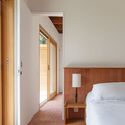
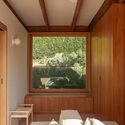
A cultural and educational space for creative industries, such as movie, TV, web design, fashion and performing arts, the first prize winning proposal for the CASA FIRJAN da Indústria Criativa unifies the educational, cultural and corporate segments. Designed by Lompreta Nolte Arquitetos, the project, located in Rio de Janeiro, creates a hub for producers, consumers, and investors of these disciplines to provide interaction, networking and business opportunities. More images and architects’ description after the break.
CAD SP / PAX.ARQ + Vazquez Junqueira Arquitetura

PAX.ARQ, in collaboration with Vazquez Junqueira Arquitetura, designed this concept for the CAD SP (Digital Arts Center of São Paulo) as a study for São Paulo’s secretary of culture. The transparent, prismatic cube arises from the concepts of inter-connectivity, transparency and respect to pre-existing architectural surroundings. Learn more after the break.