How to visualize architectural concepts in SketchUp using D5 Lite for faster design exploration.
How to visualize architectural concepts in SketchUp using D5 Lite for faster design exploration.
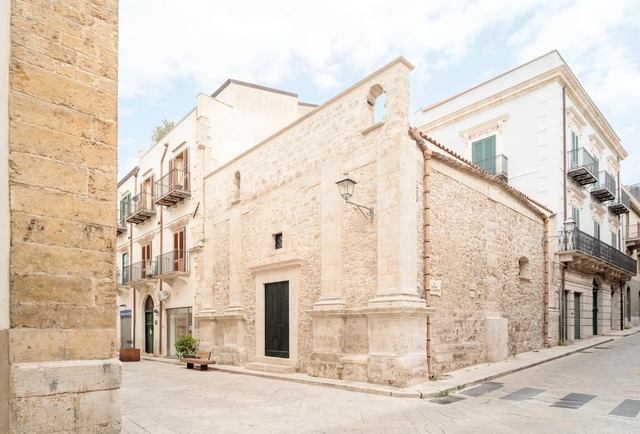


As critical as I am of the impact of shopping malls on urban life in São Paulo, I still cannot avoid them completely. Whether it is because I am short on time but need to stop by the supermarket and buy a birthday present; or because the movie I want to see is only playing at that specific time in that particular mall; or because my children love the play area on the rooftop of Shopping Pátio Higienópolis and, since I really need to buy new sneakers, we end up going there.
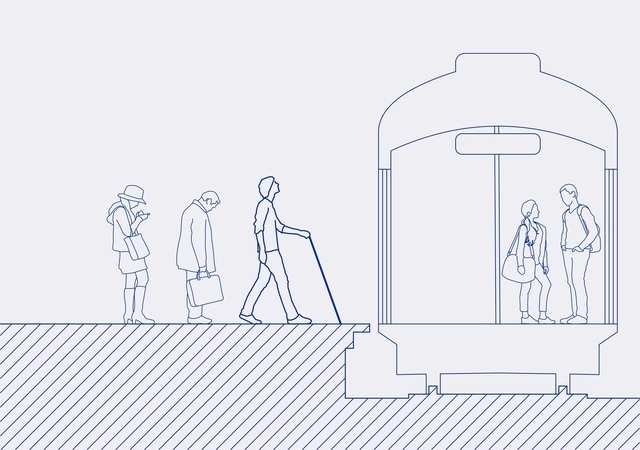
Theoretically, architecture is a multisensory discipline involving textures, colors, shadows, sounds, and aromas. However, in practice, using visual language is often prioritized to explore it, limiting mainly to sight for identifying architectural elements and navigating autonomously in built environments and urban contexts. Therefore, it is crucial to integrate tactile paving surfaces into architecture.
Blindness and vision impairment transcend being a condition or disability; they represent an alternative way of perceiving the environment around us. In this sense, touch becomes a language and a fundamental guide for interacting with architecture. According to the Convention on the Rights of Persons with Disabilities (Article 9), all individuals have an inherent right to access the physical environment on an equal basis with others.
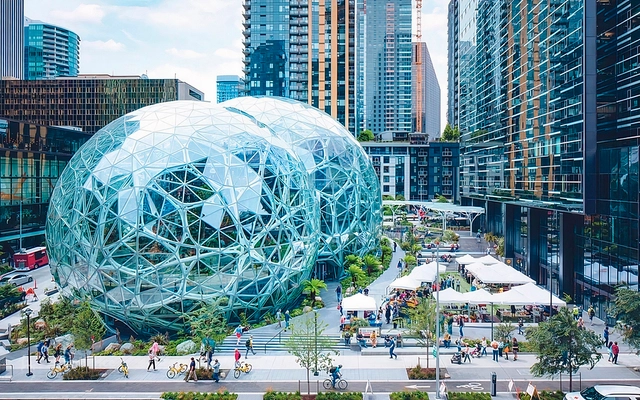
Cities are defined as densely populated geographic areas characterized by urban development. They serve as economic, political, and cultural centers, offering various services, infrastructure, and opportunities. However, urban densification has been associated with negative aspects such as health issues, pollution, and social problems. Countries like India and China, with their massive populations exceeding billions, face a significant demand for services and housing.
Recent research, including studies by institutions like the Berkeley Cool Climate Network, has brought about a paradigm shift in our perception of urban densification. This shift aims to reduce cities' carbon footprint and support collaborative efforts to achieve Sustainable Development goals. Densification is proposed as a crucial strategy for promoting social prosperity, and well-being, and combating climate change. However, a relevant question arises: How can we effectively achieve densification while addressing global warming? Companies like Holcim have responded to this challenge by developing sustainable building solutions and engaging in meaningful discussions with architects, such as Shajay Bhooshan, Associate Director at Zaha Hadid Architects. These collaborations provide valuable insights into the concept of urban densification as a catalyst for climate action.
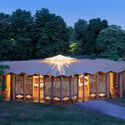
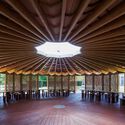
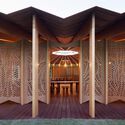
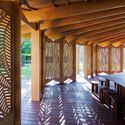
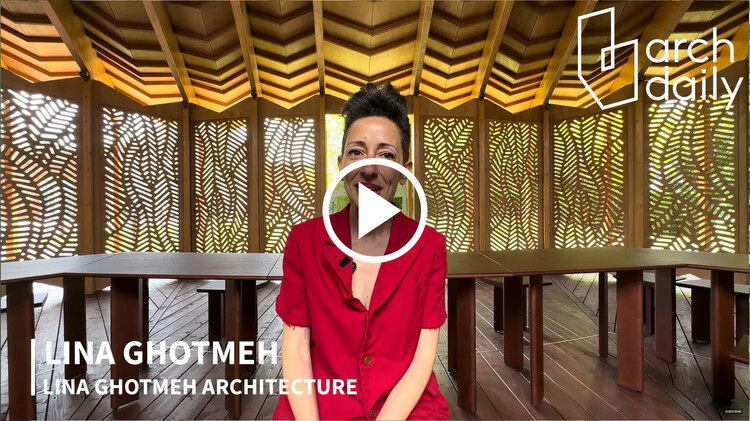
While visiting this year’s Serpentine Pavilion, the ArchDaily team has a chance to sit down with French-Lebanese architect Lina Ghotmeh, the designer behind the temporary structure built in the Kensington Gardens in London. The conversation touched upon Ghotmeh’s motivations and concepts that prompted this pavilion titled À table, conceived as an invitation to sit down together at a table, to enjoy sharing food and engaging in open dialogues. Delving into her Lebanese roots, the architect also expands on her methodology and the desire to create space for conversation and decision-making while encouraging conviviality among people of different backgrounds and experiences. The ArchDaily team also talked to Hans Ulrich Obrist, artistic director at the Serpentine Galleries, about the pavilion as a platform for architecture and the arts.
In 2021, the architectural practice at large started to transform; people “no longer felt the need to stick to the traditional way of doing things when it came to matters related to the work environment”. Employees all over the industry have spoken up in recent years and have considered the solution of unionizing. In May of 2023, the employees of the renowned New York office Snøhetta announced a bid to unionize the studio, the second private-sector architecture studio in the United States to take this step. This week, it was declared that the workers voted against unionizing.
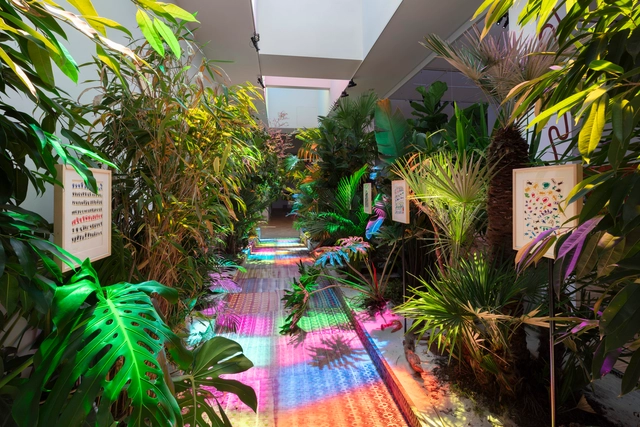
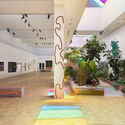
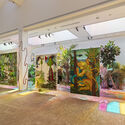
The Triennale Milano and Fondation Cartier pour l'art contemporain present the exhibition Siamo Foresta, inaugurated in June and open until October 29, 2023. Curated by Bruce Albert and Hervé Chandès, the exhibition features works by 27 artists from different countries and cultures, mainly from Latin America and indigenous communities.
The exhibition is the result of a partnership between the two institutions — which has already produced six projects over eight years — and seeks to reach diverse audiences and promote artists from different geographical contexts. Designed by Brazilian artist Luiz Zerbini, the exhibition highlights the importance of the forest as a central theme and provides an emotional connection between the works.
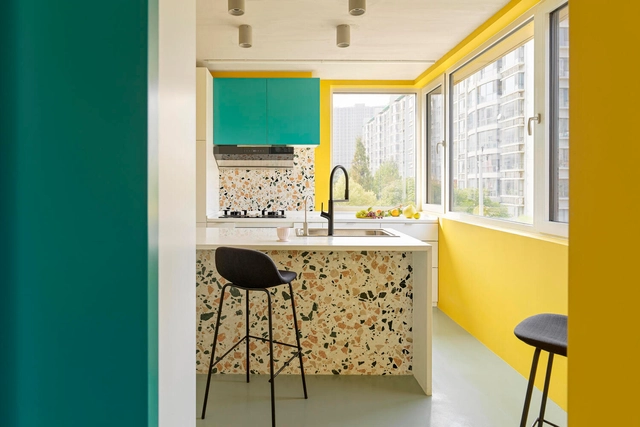
Essentially beginning as a way to use old offcuts of natural stone materials such as marble, quartz, and granite, the 600-year-old technique of creating terrazzo surfaces is enjoying a particularly strong moment in today’s reuse culture. But sustainability isn’t the only calling card Terrazzo has.
The features that really put the manufactured composite material at the top of many designers’ wishlists are its mixture of hardwearing durability, crack-free water resistance, and a near endlessly customizable palette of color and pattern. And although the use of terrazzo originates, as the name suggests, from floor-level surfacing, it also lends itself perfectly to other surfaces and even products, too.
Here’s how and where to use it.

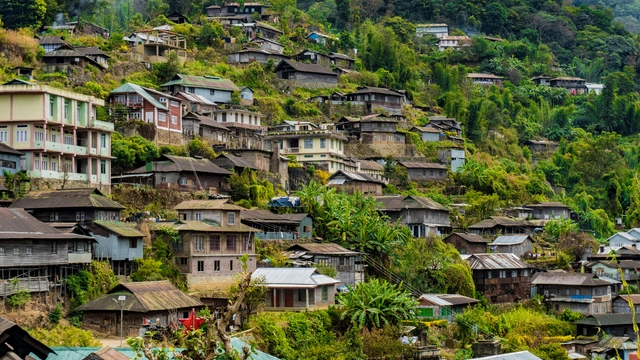
India recently overtook its sub-continental neighbor, China, to become the most populous country in the world with a demography of over 1.4286 billion people. As data from the United Nations also estimates an annual population growth rate of 0.7%, the country’s built environment is set to interact with a new discourse of demography and present its own perspective on how to build for billions. It is set to engage with new challenges of infrastructure, transportation, and adequate housing, which on the surface will force cities to constantly expand as a response to these dynamic needs. However, a critical look at the population distribution within the country reveals that the majority of Indians still live in rural areas as it caters to 65% of the population despite increasing rural-urban migration. This suggests a nudge in a different direction. One where the design and development of the rural areas take precedence over the cities. One that explores architecture in rural areas, its relationship with the cities, and its future as a primary framework to house the exploding population.
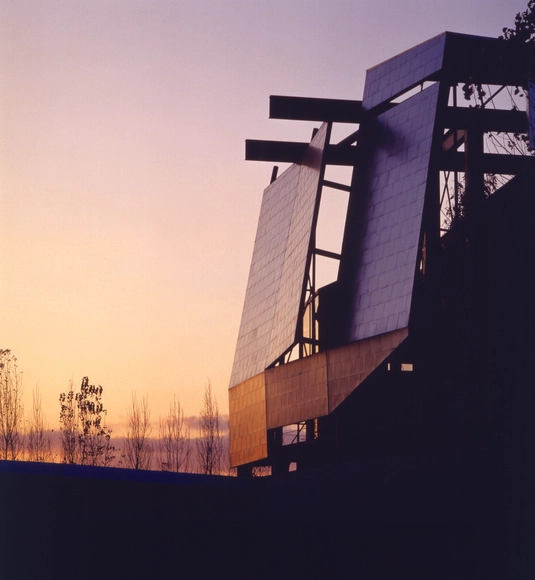
Michael Rotondi’s buildings—museums, civic centers, education facilities, monasteries, restaurants, and residences—evoke kinetic mechanisms that fold, hinge, twist, and split open. They express the architect’s feelings, thinking, and mood at the time they had been designed, and, on some occasions, during their assembly and construction. Rotondi was born in 1949 in Los Angeles.
He established his RoTo Architects, a research-based firm in his native city, in 1991 after co-heading Morphosis for 16 years with Thom Mayne. Parallel to his practicing career, the architect has been teaching and lecturing at SCI-Arc, Southern California Institute of Architecture, which he co-founded in 1972, led its graduate program from 1978-1987, and was the school’s second director for a decade from 1987 to 1997.

GAD Foundation is pleased to announce the launch of an international architecture competition that calls on young architects from around the world to envision a new natural environment based on living in a scenic and magical landscape. Re-Imagining Cappadocia as an Eco-District competition seeks to extend design insight into architecture embedded and in harmony with the Cappadocian landscape as the focus of Eco-District design.