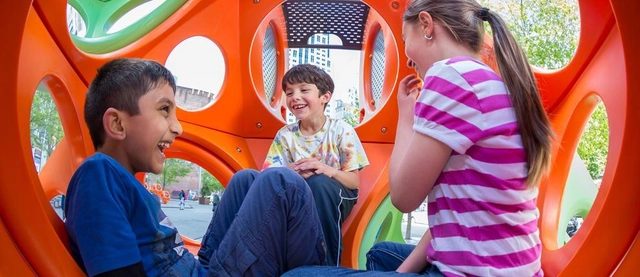
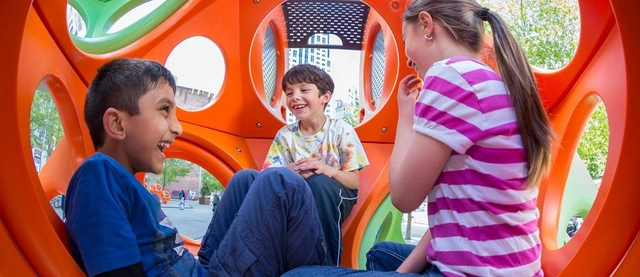
Join Michael Laris and Missy Benson ASLA of Playworld as they explore the design processes of two very different urban play solutions: PlayCubes (originally designed by Richard Dattner FAIA in 1969) and PlayForm7, both featured as part of Extraordinary Playscapes, currently on view at BSA Space.
This workshop invites both children and parents to participate in building unique playscapes with natural materials on The Greenway. Led by local artist and craftsman, Mitch Ryerson, each session will focus on the importance of nature play, group building, teamwork, imagination, and learning to build with new materials. This event is part of a series of family and children’s workshops hosted by Design Museum Boston and the BSA Foundation, focusing on design and play throughout the summer.
Part II: Tuesday, July 19th Storefront for Art and Architecture 97 Kenmare Street, New York
Moderated by Eva Franch i Gilabert and Beatrice Galilee
Manifesto Series: In Our Time – The Sharing Movement, is a two-part series presented by Storefront for Art and Architecture and The Metropolitan Museum of Art. How will today’s sharing movement affect the way we work, move, build, and produce new ideas and knowledge?
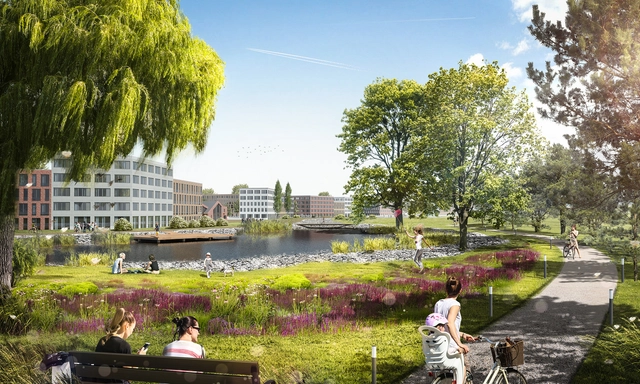
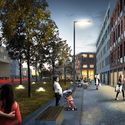
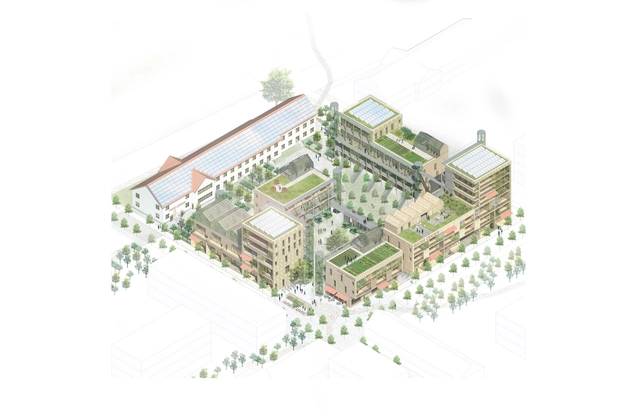
"It Takes a Block" Proposal. Image Courtesy of Kjellander Sjoberg
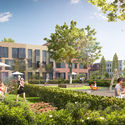
Stockholm-based firm Kjellander Sjöberg (K+S) won the Swedish division of the Nordic Built Cities Challenge 2016 with their vision to transform Sege Park, Malmö into a socially sustainable residential hub. Their project "It Takes a Block" uses climate-smart and economically varied housing models to test architecture's capability to foster sustainable living. The proposal was developed in association with students from Lund University and Danish landscape architecture firms BOGL and Sted.
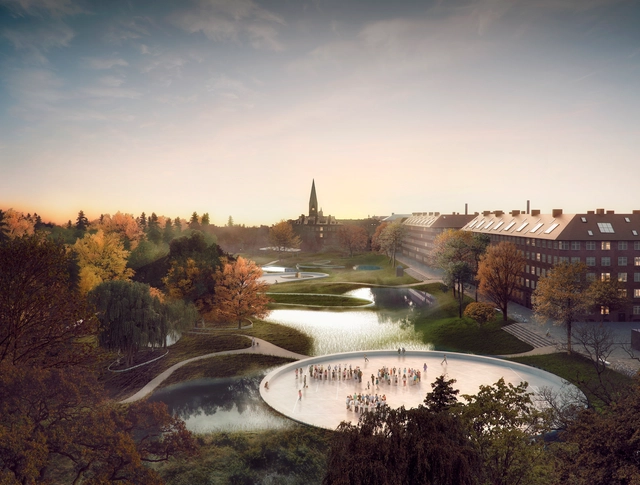
Planning and landscape firm SLA Architects and engineering office Ramboll have won an international competition to redesign Hans Tavsens Park and its surrounding area in the central Copenhagen borough of Nørrebro. The competition tasked architects with envisioning a park and streetscape that would benefit the hydrological, biological and social ecosystems of the neighborhood. The winning proposal, titled The Soul of Nørrebro, tackles the challenge by creating a system of drainage areas and an adaptable park designed to redirect runoff and contain and purify water during flood conditions.
New life to the fabled unbuilt Silkeborg Museum project in Utzon Center’s new exhibition: FATAMORGANA - Utzon meets Jorn
Utzon Center, Aalborg, recently opened their newest exhibition - FATAMORGANA - about Jørn Utzon’s mythical unbuilt project for Silkeborg Museum intended to house the art and private collection of the Danish expressionist painter Asger Jorn. The exhibition unfolds the museum, which never was realised. A museum where art meets architecture and Utzon and Jorn worked on the edge of the possible!
FATAMORGANA takes you into a story, a fantasy, which shows in glimpses the museum that today, more than 50 years later, stands as one of the greatest mirages in the history of architecture, with its large onion-like building structures buried in the landscape. Architects have been admiring the original drawings of its genius winding ramps and spectacular spatial interconnections for decades; therefore, Utzon Center are proud to presents the mirage exhibition: FATAMORGANA.
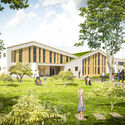
Dutch firm LEVS Architecten won an international competition to design a new residential zone near the Russian city of Kazan. The winning design encompasses the 180-hectare masterplan for the area as well as its architectural content. Along with VLUGP landscape, LEVS used a "Dutch Approach," embracing pedestrian networks, green space and "spirited architecture." The extent of the project will form its own neighborhood, titled "Machaon Valley," and is intended to be fully realized by 2025.
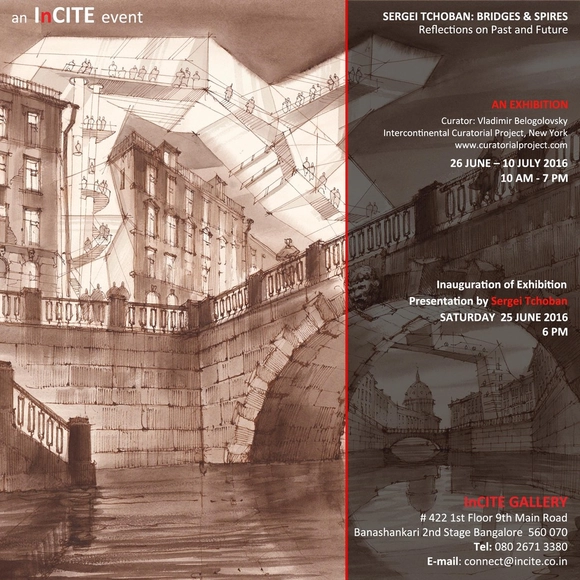
All architecture remains a fantasy up until the moment when it is fully materialized and ready for its intended use. Testing new spatial possibilities is a never-ending process. Physical scale models and sophisticated computer-generated renderings are widely used by contemporary practitioners to explore this creative endeavor. Undoubtedly, these will remain necessary tools in architects’ investigative pursuits. They are efficient, effective, and convincing. Still, there is something particularly authentic and candid about traditional hand drawing that other techniques can’t quite capture. They transmit artistic visions with the right balance of clarity and interpretation, and engage our wildest imaginations helping us envisioning new ideas and dreams in architecture.



.jpg?1467013293&format=webp&width=640&height=580)
.jpg?1467012595 "© Park Sehwon")
.jpg?1467012915 "© Park Sehwon")
.jpg?1467013176 "© Park Sehwon")
.jpg?1467012498 "© Park Sehwon")
.jpg?1467013293)





_LV_Hengzhong.jpg?1466748964&format=webp&width=640&height=580)
_LV_Hengzhong.jpg?1466749162 "© Lv Hengzhong")
_LV_Hengzhong.jpg?1466748468 "© Lv Hengzhong")
_LV_Hengzhong.jpg?1466748490 "© Lv Hengzhong")
_LV_Hengzhong.jpg?1466748942 "© Lv Hengzhong")
_LV_Hengzhong.jpg?1466748964)