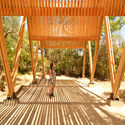
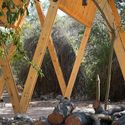
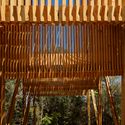
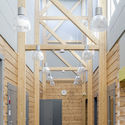
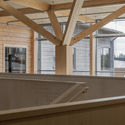
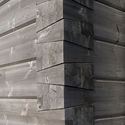
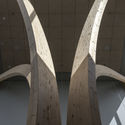
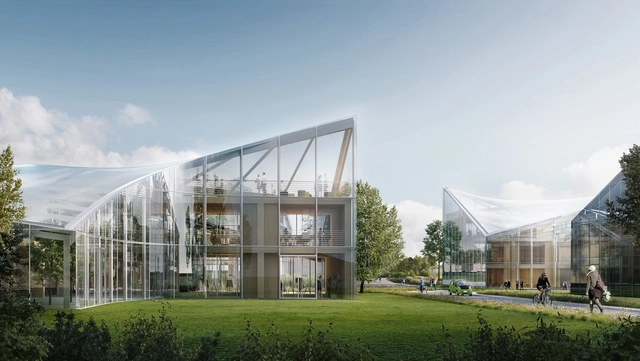
Patkau Architects joins Yasodhara Ashram to cohost a unique weekend masterclass that uses the Temple of Light project as a case study for exploring the design of sacred space at the edge of architectural innovation. Together the group will explore architectural and fabrication practices through short lectures, reflection and meaningful dialogue with each other and invited guests from Patkau Architects, Spearhead and Yasodhara Ashram.
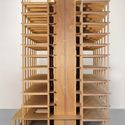
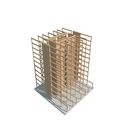
Penda, collaborating with wood consultants from CLT-brand Tmber, has unveiled the design of ‘Tree Tower Toronto,’ an 18-story timber-framed mixed-use residential skyscraper for Canada’s largest city. Drawing inspiration from the distinctly Canadian traditional modular construction, including Moshe Safdie’s iconic Habitat 67, the tower is envisioned as a new model of sustainable high-rise architecture that can establish a reconnect urban areas to nature and natural materials.
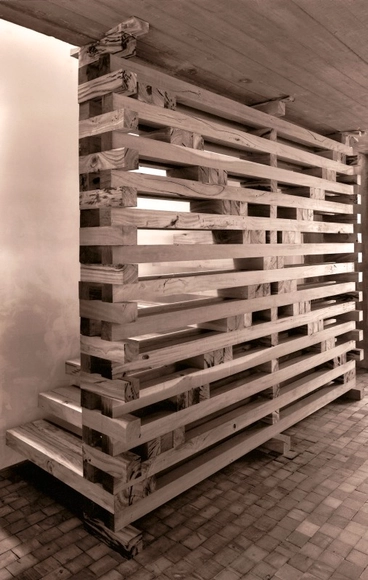
Designed by architect Rafael Iglesia for the home of the Del Grande family in Rosario, Argentina, this staircase is the result of a system of counteracting forces. The structure's wooden elements are held in place only by the friction and pressure that is produced between the pieces of wood that make up the system.
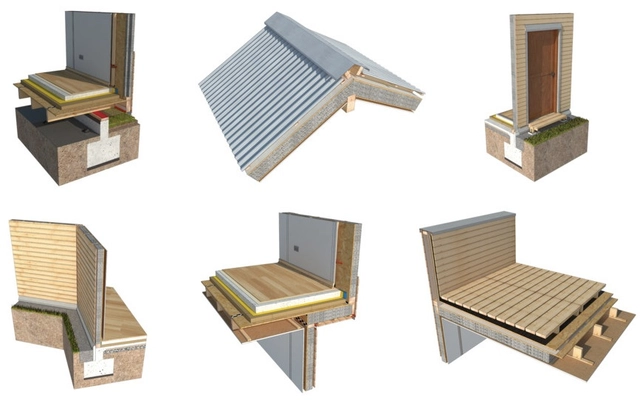
Developed by the POLOMADERA Program at the University of Concepción, the 3D Building Construction Solutions Catalog is a free tool that helps users design construction details for lightweight wooden structural systems.
Though created with the intention of meeting new standards soon to be implemented nationally in Chile (and therefore in Spanish), the catalog was developed jointly with international experts from the Wood Construction Institute at the Holzbau Institut in Germany, and thus incorporates best practices that are applicable around the world.
The catalog allows users to find and download different construction solutions in wood, with details categorized under Foundations, Mezzanines, Doors and Windows, Partitions, Roofs, and Terraces.
Invis Mx2 is a device that allows you to connect screws and bolts easily without leaving any holes. Its cordless screwdriver works through a MiniMag rotary magnetic field, which adapts to any conventional drill, allowing to generate detachable connections with a tensile force of 250 kg per connector.
The system is designed to be applied to wooden elements and ceramic materials, allowing the construction of furniture, railings, coatings, stairs, among others.
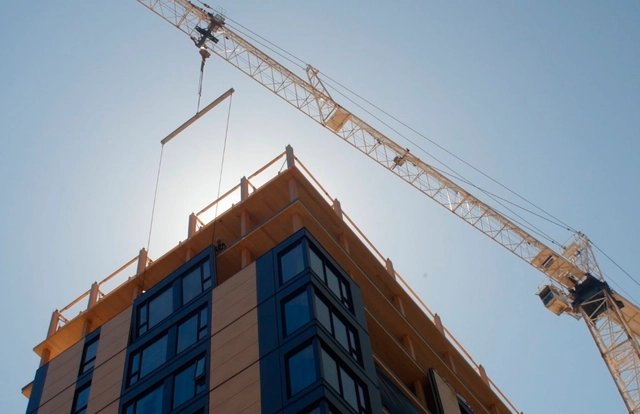
The United States’ first mass-timber highrise (defined by Emporis Building Standards as a building with an architectural height of 115-328 feet, or between 12 and 40 floors) has been granted planning permission, allowing construction on the landmark project to begin. Located in downtown Portland, Oregon, the building known as Framework will cap out at 12 floors and approximately 128 feet, ushering in a new era of tall building construction in the US.
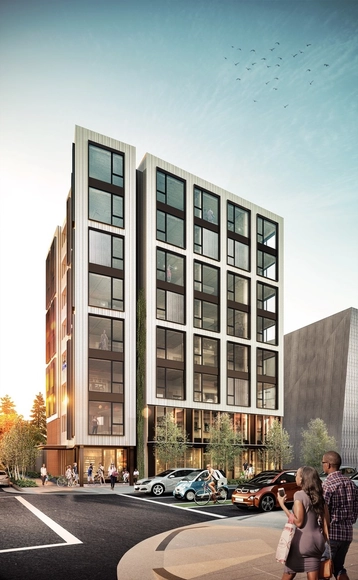
Continuing the ever-increasing growth of timber construction architecture in North America and around the world, Carbon12’s recent topping out has resulted in its newly achieved status as the tallest mass timber building in the United States. Situated in Portland and designed by PATH Architecture, the 8-storey condominium is an example of the cost-effectiveness and labor sensitivity of engineered wood products while helping regenerate Oregon’s local timber industry.
With a growing population and rapid development, much of recent focus has been on Portland’s city center, in an effort to preserve the existing natural landscape that surrounds the urban areas. Built of prefabricated cross-laminated timber panels and glu-lam beams around a steel core, Carbon12’s hybrid construction aids the city’s densification, given its off-site construction and quick assembly that help both reduce costs and respond to residential needs.
https://www.archdaily.com/872219/path-architectures-catalytic-condominium-in-portland-is-the-tallest-timber-building-in-the-usOsman Bari
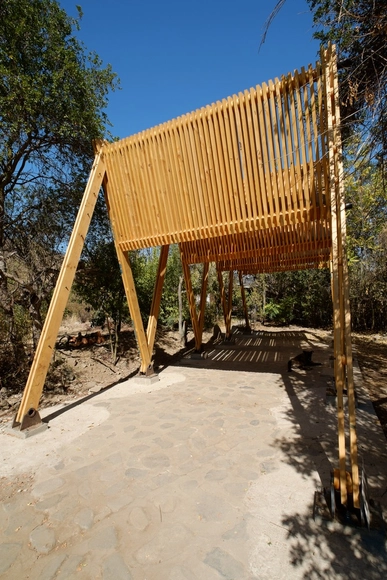
Set in a valley located 45 minutes west of Santiago de Chile, an elementary timber shed by Josep Ferrando and Diego Baloian seeks to unhinge the division between vertical and horizontal architectural elements. The scheme is the result of a private commission to build a wooden shed on a family-owned plot in the town of Curacaví, halfway between the Chilean capital and the coastal town of Valparaíso.
Drawing heavy inspiration from vernacular canopies which historically dotted the landscape of rural Chile, the scheme seeks to create a central family meeting point amongst a vast 2 hectare plot.
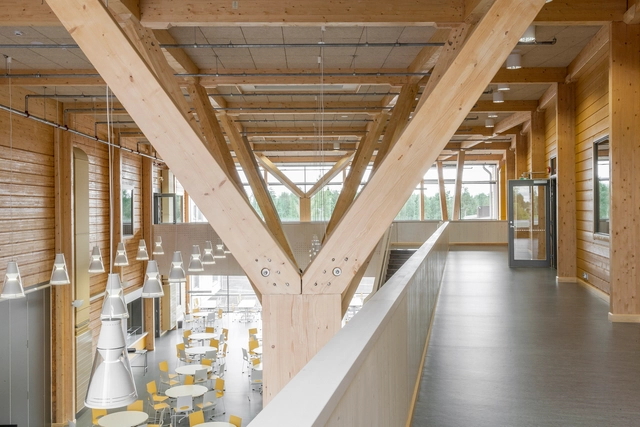
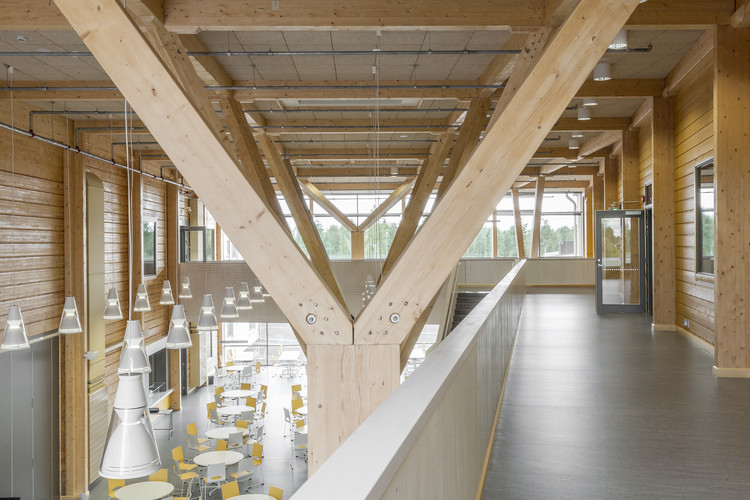
An environmentally-concious material response by Lukkaroinen Architects, the structural design for the Pudasjärvi Wood Campus in northern Finland highlights the potential of large-scale structural timber.
The project features a primary structure of assembled logs and three types of non-traditional pillars, specially constructed in laminated wood for different areas.
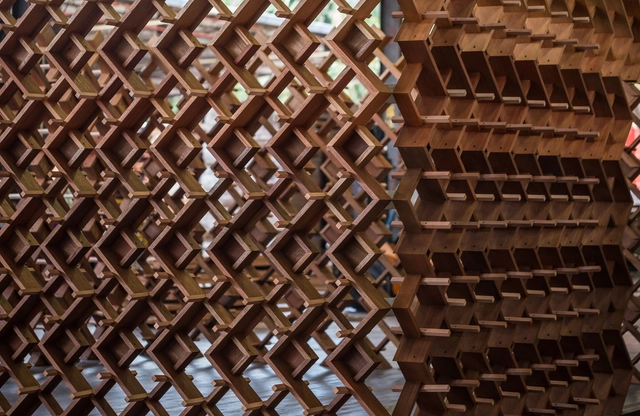
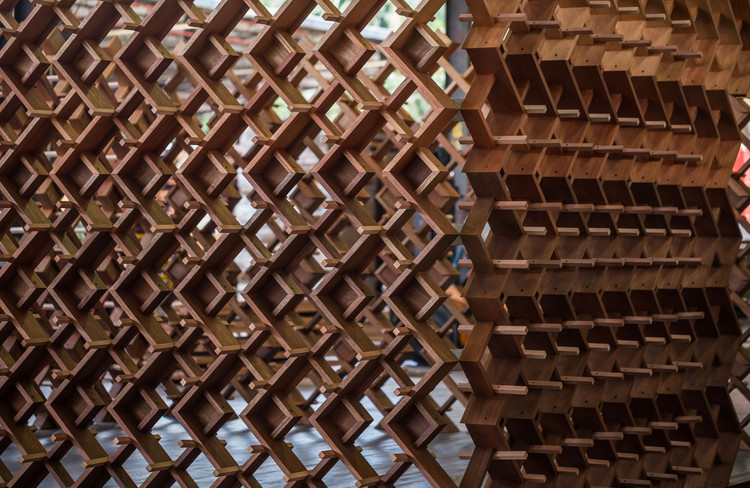
The centerpiece of the Malaysian Timber Council’s exhibition at this year’s AIA Conference on Architecture in Orlando, Florida was a completely dismantlable four-walled enclosure constructed entirely of Meranti timber. Designed by Eleena Jamil Architect, the wholly modular structure showcased the strength and adaptability of this sustainably sourced Southeast Asian hardwood.
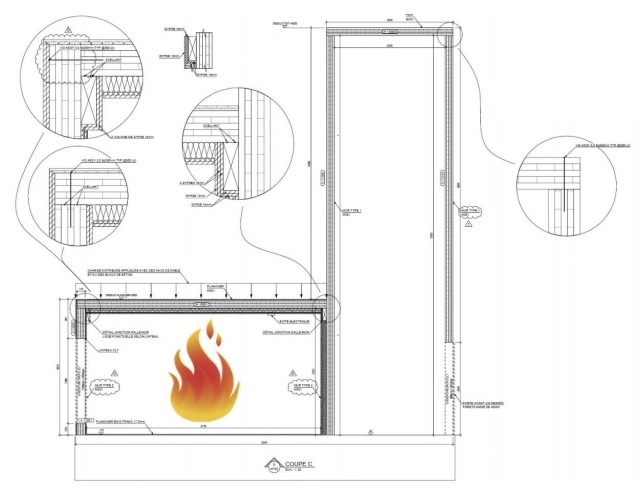
Full-scale Mass Timber Shaft Demonstration Fire. Image Courtesy of reThink Wood
With the aim of raising awareness and expanding knowledge about the advantages of wood in the built environment, reThink Wood has created an online library that collects a series of articles, reports, studies and videos that can be freely accessed right now.
Here we have 5 outstanding resources related to fire safety, which can help you solve this issue on your next project.
https://www.archdaily.com/869687/5-online-resources-for-learning-how-to-protect-wooden-buildings-from-fireAD Editorial Team
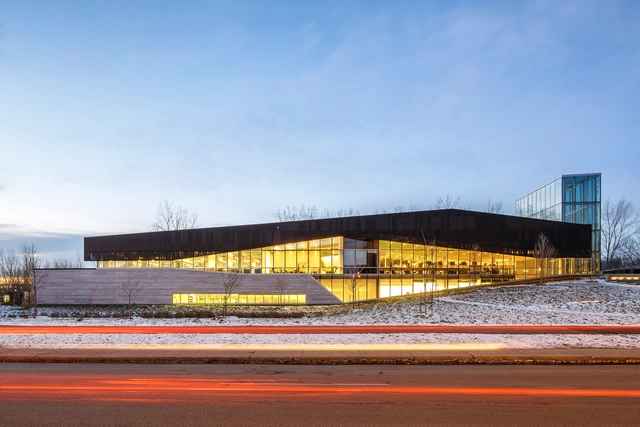
"The library offers a variety of beautifully lit and welcoming spaces throughout, maximizing daylight and views and the use of natural elements, such as wood, to create an environment that contributes to health and wellbeing,” said the jury. “Their approach to high-performance building through whole systems design and strategy has resulted in an impressive achievement.”
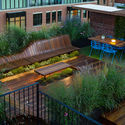
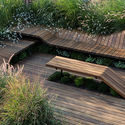
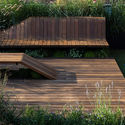
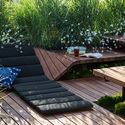
A multidisciplinary design study by J.Roc Design, based in Boston, has developed a proposal using wood to restore value to an underused rooftop at the southern end of the city.
In order to accommodate a series of different activities, which required a wide variety of furniture, and therefore a considerable reduction of space, a subtle treatment was made to the flat surface of the roof creating distinct spaces that could be used for sitting, resting and entertaining.
Planned as a center for local sports and sports science, the ECO park will provide state-of-the-art office space for environmentally-focused companies as well as public access to a wide range of health and leisure activities.
In recent years, timber construction has surpassed its previous limit of two or three stories to create buildings of much greater height. This is not only due to wood's intrinsic strength, stability, and flexibility, but also to a number of new technologies that have further increased its performance, including cross-laminated timber (CLT), nail laminated timber (NLT) and glued laminated timber (glulam).
In order to inform architects, engineers, developers, industry professionals, students, and other interested parties, reThink Wood has launched the reThink Wood Research Library, an online and open resource that will be updated frequently with information about the latest product and timber construction systems around the world, as well as showing where there are gaps that could be covered in the future.
https://www.archdaily.com/868328/learn-about-large-scale-timber-construction-with-rethink-woods-online-libraryArchDaily Team
Videos
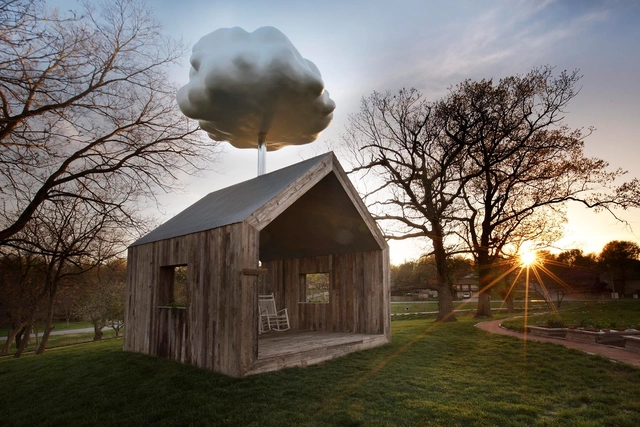
The barn has been constructed of timber and metal salvaged from an abandoned farm. Image Courtesy of Matthew Mazzotta
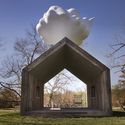
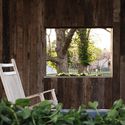
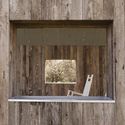
Few sounds in this world are quite as satisfying as that of fresh rainwater falling on a tin roof. However, this soothing sensation is just one element of the Cloud House, a unique, interactive rainwater-harvesting system created by designer Matthew Mazzotta in Springfield, Missouri. From the comfort of a wooden rocking chair, the user is immersed in a rural farm experience, offering passers-by a moment to slow down, enjoy fresh edible plants and, as promised, bask in the sound of rain striking a tin roof.
Videos
Courtesy of Team Aesop (Josh Draper, Lisa Ramsburg, Powell Draper, Edward M. Segal, and Max Dowd)
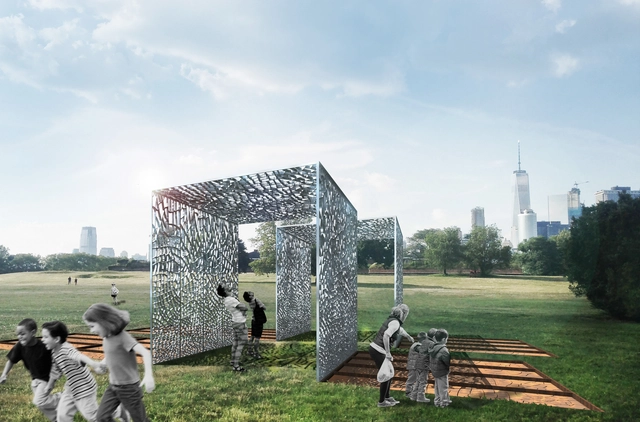
Cast & Place has been announced as the winner of the 2017 City of Dreamscompetition to create a pavilion for New York City’s Governors Island. Held by not-for-profit arts organization FIGMENT, the AIANY Emerging New York Architects Committee, and the Structural Engineers Association of New York, the competition called for a design to be the hub of FIGMENT’s free community arts festival during Summer 2017, based on questions of the future of New York, how design can confront environmental challenges, and how architecture can be built from recycled or borrowed material.
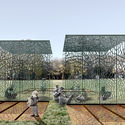
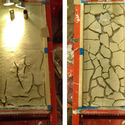
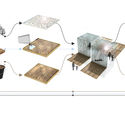
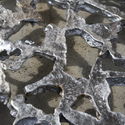
With these questions in mind, Cast & Place was conceptualized as a pavilion made entirely from waste. 300,000 recycled aluminum cans, cast into the cracks of dried clay, will form structural panels that assemble into shaded spaces for performance and play.



.jpg?1501783920&format=webp&width=640&height=580)
.jpg?1501783945 "Courtesy of Penda")
.jpg?1501783890 "Courtesy of Penda")
.jpg?1501783772 "Courtesy of Penda")

.jpg?1501783920)