Today we celebrate Canada Day by paying a special tribute to timber construction and Canada's close ties with wood--as evidenced by its maple tree leaf emblem.
Canadian architects have excelled in timber design and architecture at various scales. These 15 examples of Canadian timber projects and their drawings range from temporary installations to an 8-story high-rise wooden structure building. With sustainability and precision in the details, wood continues, and will always remain, one of our favorite building materials.
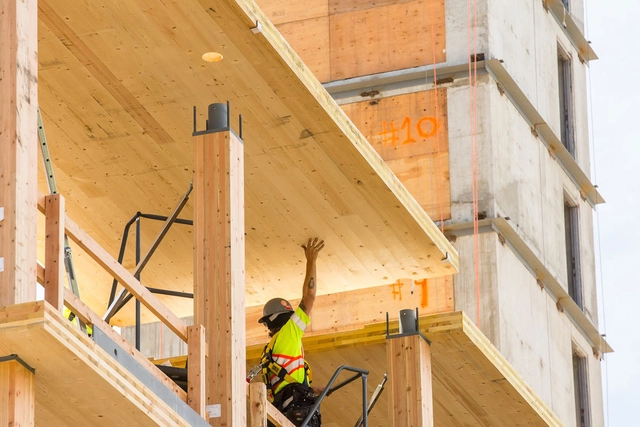
Brock Commons Tallwood House | Photo: KKLaw; Prefabricated panels aid in a project’s efficiency.
Wood as a building material is experiencing a bit of a renaissance. Though elemental and deceivingly simple, applied technology has transformed the building material. If you have questions about how to choose and use wood, Think Wood's mission is to provide access to the expanding pool of research and information.
In support of this year’s AIA theme, Blueprint for Better Cities, Think Wood is at the AIA Conference on Architecture to share research and resources on the benefits of wood and how it offers better solutions for the communities where we work, live and play. If you're at the conference be sure to stop by the Wood Pavilion at booth 757. If you can't make but are interested in learning more, read on to see the benefits of wood.
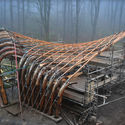
Even as technology advances—leaving many of the old ways of building obsolete—certain traditional crafts and building techniques continue to captivate our imaginations with their simple ingenuity and unimpeachable effectiveness. Although used for millennia, the process of temporarily turning rigid members of wood into pliable, twistable, bendable noodles of lumber remains a favorite woodworker’s trick, capable of producing whimsical transformations and otherworldly forms from the most natural of materials.
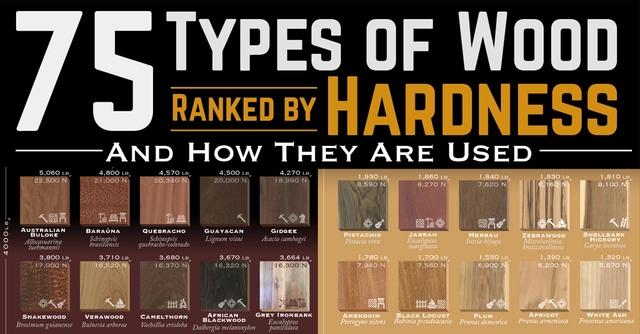
Ever wondered about the hardest and softest woods in the world? As architects, we're all pretty familiar with the softest: Balsa. Its material qualities are what make it so attractive to make models. But what about the the strongest wood in the world? Ever pondered just how many pounds or kilos of force they can withstand?
https://www.archdaily.com/895767/75-types-of-wood-ranked-by-hardnessAD Editorial Team
A few weeks ago we published an article on a recent sustainability crisis that often goes unnoticed. The construction industry has been consuming an exorbitant amount of sand, and it's gradually depleting. When used for manufacturing concrete, glass, and other materials, it is a matter that should concern us. Construction is one of the largest producers of solid waste in the world. For instance, Brazil represents about 50% to 70% of the total solid waste produced. But how can we change this situation if most of the materials we use are not renewable, and therefore, finite?
Popularized in Europe and gradually gaining attention in the rest of the world, Cross Laminated Timber (CLT) stands out for its strength, appearance, versatility, and sustainability.
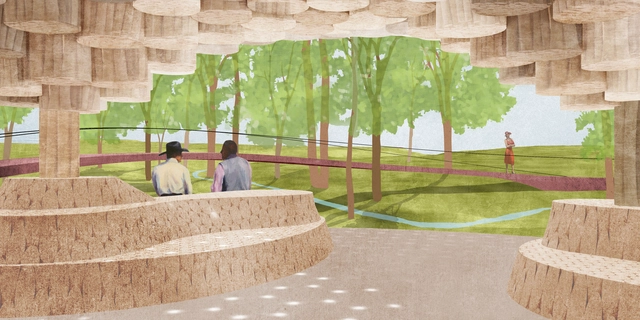
Interior view of Pavilion designed by Francis Kéré at Tippet Rise Art Center in Montana. Image
Tippet Rise Art Center has announced the commissioning of architect Francis Kéré to design a 1,900-square-foot pavilion for the center’s 10,000-acre grounds in Montana, USA. Envisioned as a “communal gathering space nestled among a cluster of aspen and cottonwood trees,” new renderings by Kéré Architecture depict the scheme featuring a locally-sourced log canopy.
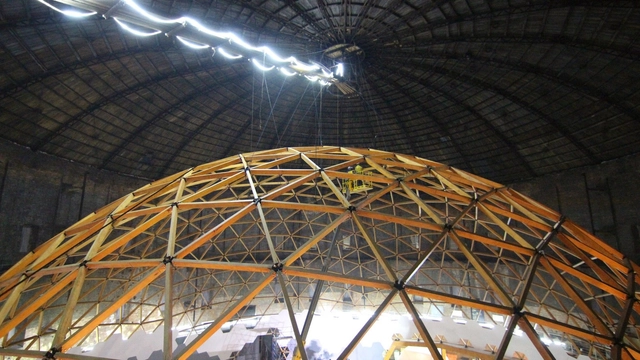
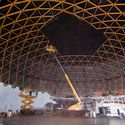
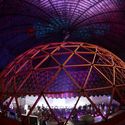
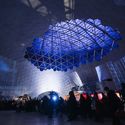
The project inscribed inside a gasholder in St. Petersburg, aims to transform an industrial area into an educational and scientific center with a large projection screen. The fun part? It is located in a large geodesic dome.
The geometric model is made up of mainly with wood and metal links for a light and resistant construction.
You have to consider many factors when designing an architectural project in order to ensure quality and value. The construction technique is in most cases the first item to be evaluated, because it is the one factor that properly materializes the proposed design and determines the efficiency of the project in terms of time, costs, labor, finishes and final quality.
Often as architects we neglect how the buildings we design will develop once we hand them over to the elements. We spend so much time understanding how people will use the building that we may forget how it will be used and battered by the weather. It is an inevitable and uncertain process that raises the question of when is a building actually complete; when the final piece of furniture is moved in, when the final roof tile is placed or when it has spent years out in the open letting nature take its course?
Rather than detracting from the building, natural forces can add to the material’s integrity, softening its stark, characterless initial appearance. This continuation of the building process is an important one to consider in order to create a structure that will only grow in beauty over time. To help you achieve an ever-growing building, we have collated six different materials below that age with grace.
The Arch for Arch, an intertwined wooden archway honoring Nobel Peace Prize Laureate Archbishop Desmond Tutu, has debuted in downtown Cape Town, South Africa on a site near Parliament where Tutu held many of his anti-Apartheid protests.
Designed by Snøhetta and Johannesburg-based Local Studio, in collaboration with Design Indaba and Hatch engineers, the Arch for Arch consists of 14 woven strands of Larch wood, representing the 14 chapters of South Africa’s constitution. Reaching nearly 30 feet tall (9 meters), the structure invite visitors to pass through and be reminded of the location’s prominent role in their country’s history on their way to the Company’s Garden, one of the most popular public spaces in the city since its establishment in 1652.
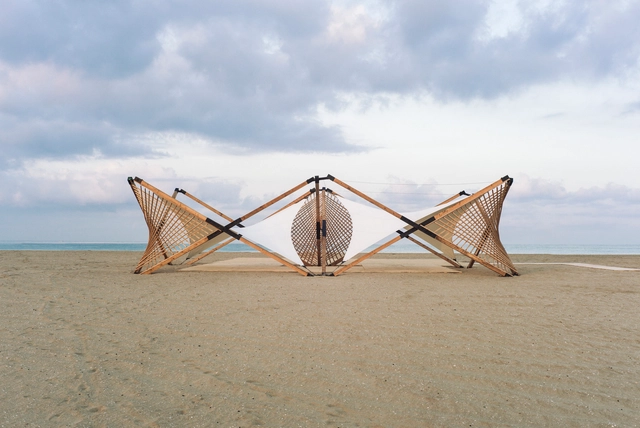
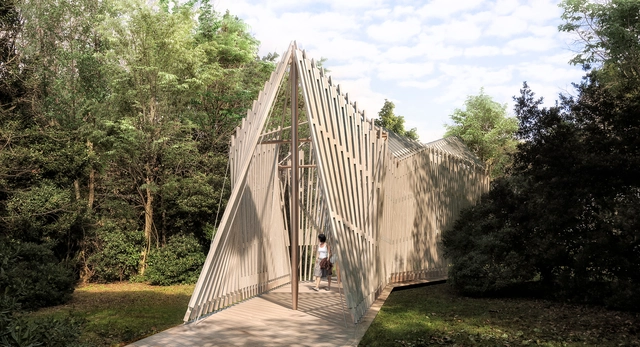
Architecture students of the American University of Beirut used an ephemeral design to approach the lack of awareness of marine biodiversity and responsible use of the coast of Tyre. The proposal consists of a lightweight and deployable structure constituting a programmatic point of meeting and information on the sand.
The project materialized with wood, metal ties and ropes, approach the possible application of light and temporary systems to generate a large social impact and at the same time minimum physical impact on the site.
https://www.archdaily.com/889286/how-a-lightweight-deployable-structure-of-wood-and-metal-can-have-a-large-social-impactAD Editorial Team
Now in its sixth year, CONNECT highlights innovative design programs at universities throughout the country. Students, under the supervision of university faculty, have the opportunity to design environments that incorporate seating and lighting installations, with the intention of offering an intimate area on the show floor where attendees can sit, relax and "connect." Exhibits will be located throughout the show floor, providing SOFA CHICAGO's international audience an opportunity to experience the innovation and creativity of future designers.
CALL FOR YOUNG ARCHITECTS: The ARCASIA Travel Prize in Architecture is the travel and research scholarship given to Young Architects of ARCASIA (40 years and under) who are members of the architect institute of their country
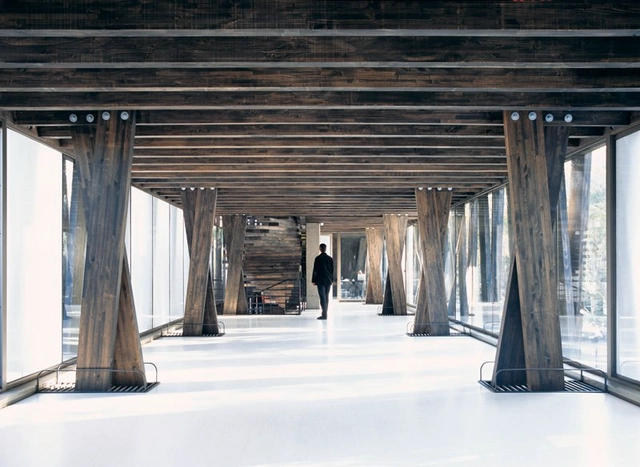
Wood is one of the oldest materials that man has used to build their homes and take refuge from the weather. Wood does not only fulfill a structural function -being highly resistant to earthquakes-, but it also provides interior thermal comfort, as well as adding a warm look and feel to a building, while easily adapting to natural environments.
Below find 21 construction sections for wood structures using the material in incredible ways.
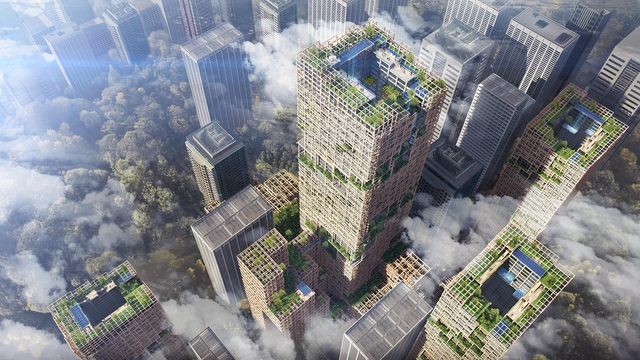
Timber tower construction is the current obsession of architects, with new projects claiming to be the world’s next tallest popping up all over the globe. But this latest proposal from Japanese company Sumitomo Forestry Co. and architects Nikken Sekkei would blow everything else out of the water, as they have announced plans for the world’s first supertall wood structured skyscraper in Tokyo.
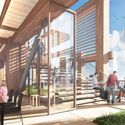
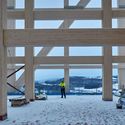
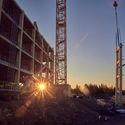
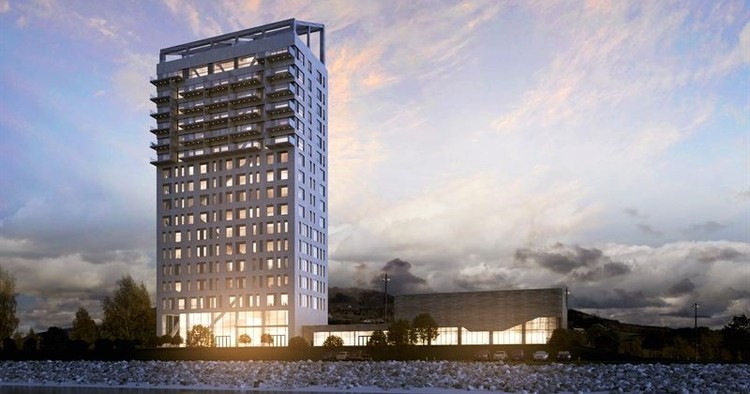
Over the last few months, we have seen a surge in large timber structures being constructed across the globe claiming to be the biggest, the tallest, or the first of their kind—for example, plans for the Dutch Mountains, the world’s largest wooden building, have recently been revealed. Contractors Moelven Limtre are one of the key drivers of this change as the perception of timber as a load-bearing material becomes more common. Their director Rune Abrahamsen is responsible for one of the current claimants of the world record for the tallest timber building, “Treet” in Bergen, at 51 meters tall. However, the contractor’s latest project Mjøstårnet is set to reach an even taller height of 81 meters.
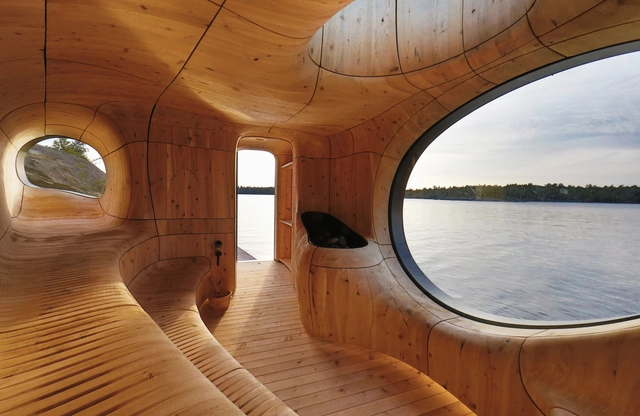
_-_Tom_Arban.jpg?1530212731 "© Tom Arban")















.jpg?1520526832&format=webp&width=640&height=580)
.jpg?1520526846 "© David Southwood")
.jpg?1520526821 "© David Southwood")
.jpg?1520526730 "Pictured at far right: Archbishop Desmond Tutu at the 2017 Design Indaba Conference, where the design was first unveiled. Image Courtesy of Design Indaba")
.jpg?1520526894 "The Arch is formed of 14 strands of Siberian Larch wood, a highly durable and resistant material that will weather gracefully over time, taking on the elements of its surroundings. The warmth of wood was intentionally selected to lend the Arch an intimate, tactile quality, that invites people to interact with the structure in a way that differs from the conventional materials people might expect for a memorial structure, such as concrete, steel, or stone. Image © David Southwood")
.jpg?1520526832)