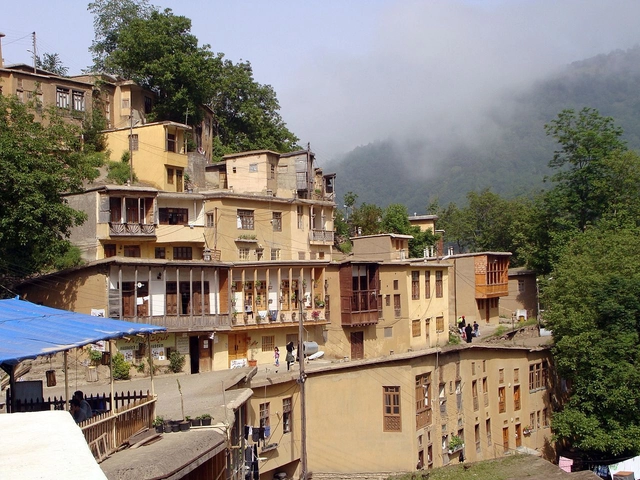
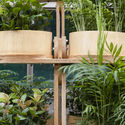
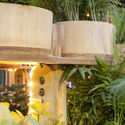
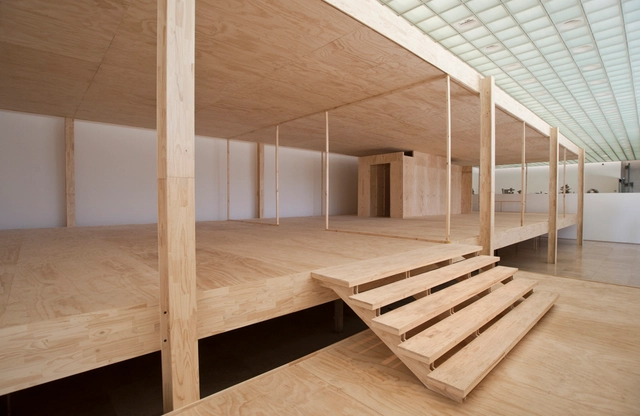
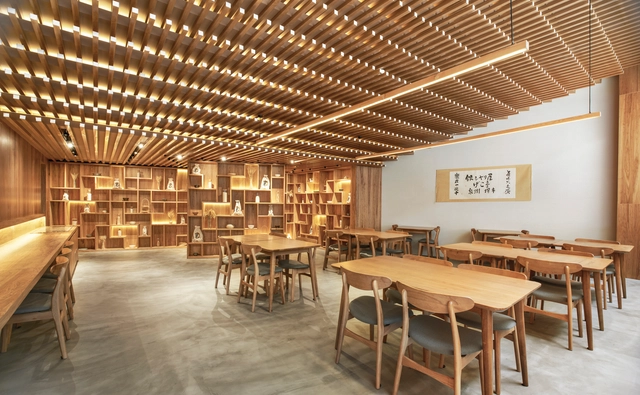
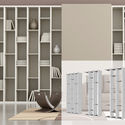
Light, open spaces: Lofts break with the traditional way of living and create room for new ideas.. Image Courtesy of EGGER
As industry withdrew, the creative types came and populated the empty factory floors of the big cities. Art, furniture design and work life benefitted from this international trend. EGGER, a supplier of wood-based materials, interprets this trend with its forthcoming decorative range.
https://www.archdaily.com/799963/life-is-a-loftSponsored Post
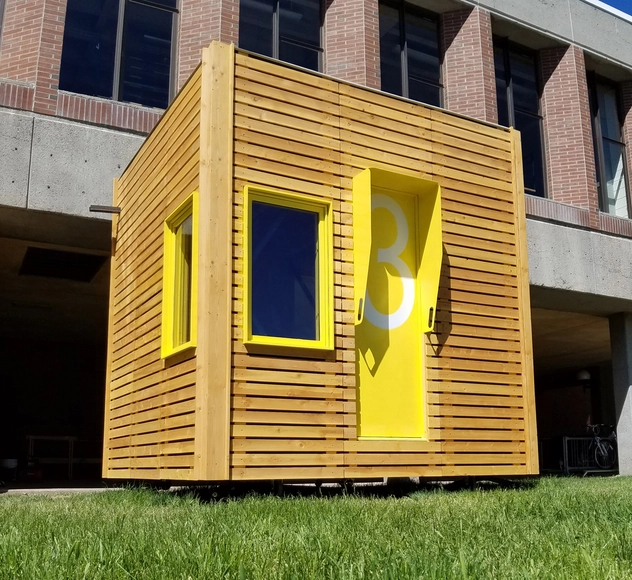
DBR presents PAUSE a competition in partnership with TED2017 ‘The future you’. This year TED is making the conference more explicitly personal. We are questioning what individual space looks like; the personal and private; the open and closed. How do we design an environment and experience that is nurturing, human, satisfying, and exciting?
A fascinating exhibition about the current state of building culture with focus on timber – the natural renewable resource
Based on selected distinguished national and international projects, the exhibition represents the state of the art in sustainable and modern timber architecture. The presentation spans from spectacular projects by Toyo Ito, Shigeru Ban and Frei Otto to direction setting urban timber houses such as those by Kaden & Klingbeil in Berlin/Prenzlauer Berg, and upwards to the newest trends in highrise buildings realized in timber.
In this edition of Section D, Monocle 24's weekly review of design, architecture and craft, the show explores how wood is being used creatively at every scale by designers and architects today. From the "timber terrazzo" of London-based designer Conor Taylor, to the four protected (yet threatened) wooden escalators at Sydney's Wynyard Railway Station, the episode questions how innovative designers are, or need to be, with this age-old tried and tested material. Finally, the show visits Folkhem in Sweden – a construction company who believe wood "to be superior to conventional alternatives in almost every respect, from construction time to acoustic properties."
https://www.archdaily.com/797040/monocle-24-explores-creative-uses-of-wood-in-contemporary-architecture-and-designAD Editorial Team
For centuries before the invention of screws and fasteners, Japanese craftsmen used complex, interlocking joints to connect pieces of wood for structures and beams, helping to create a uniquely Japanese wood aesthetic that can still be seen in the works of modern masters like Shigeru Ban.
Up until recent times, however, these techniques were often the carefully guarded secrets of family carpentry guilds and unavailable for public knowledge. Even as the joints began to be documented in books and magazines, their 2-dimensional depictions remained difficult to visualize and not found in any one comprehensive source.
That is, until a few years ago, when a young Japanese man working in automobile marketing began compiling all the wood joinery books he could get his hands on and using them to creating his own 3-dimensional, animated illustrations of their contents.
As part of a masterplan along the Chicago River, the River Beech Tower is a residential high-rise which, if built, would be taller than any existing timber building. The collaborative team behind River Beech consists of architects Perkins+Will, engineers Thornton Tomasetti and the University of Cambridge. Currently a conceptual academic and professional undertaking, the team state that it could potentially be realized by the time of the masterplan’s final phases.
TAB 2015 installation Body Building by Sille Pihlak and Siim Tuksam. Image by Tõnu Tunnel
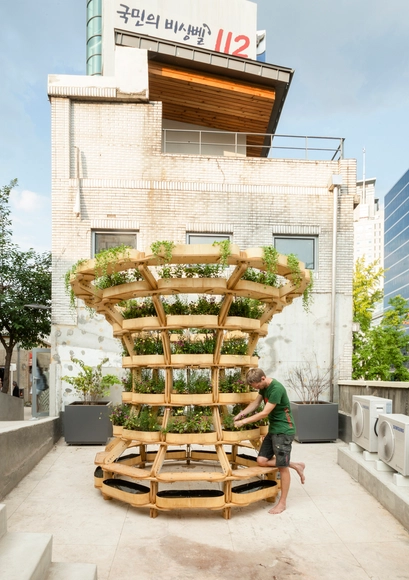
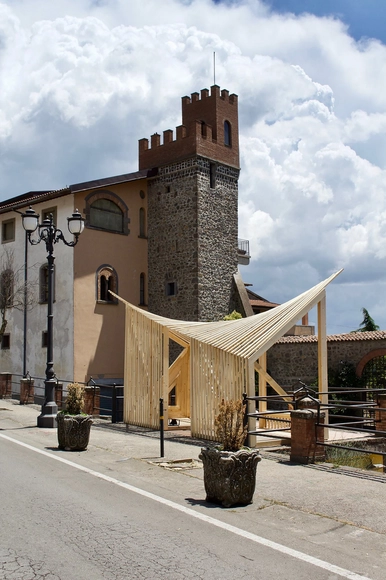
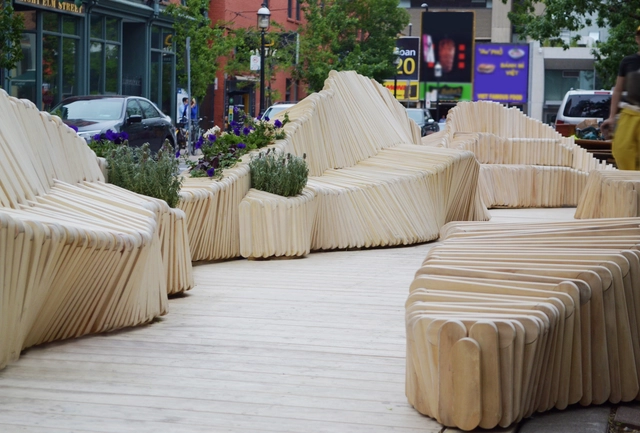
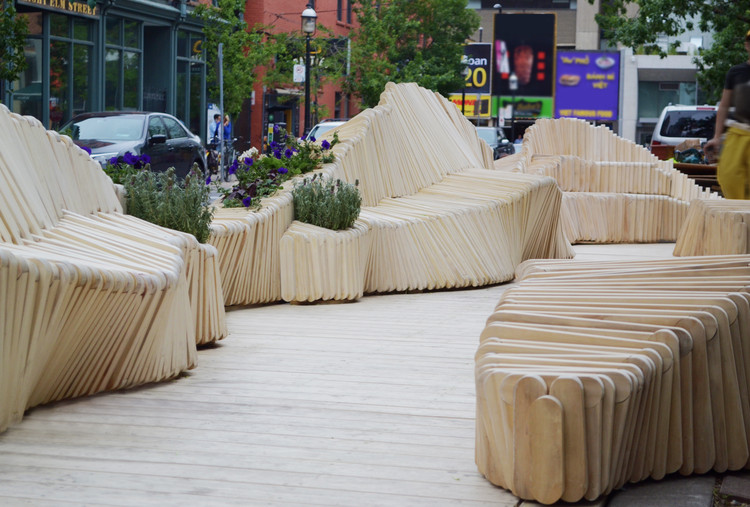
Tallinn Architecture Biennale 2017 is announcing TAB 2017 Urban Installation Programme Open Call, offering emerging architectural talent the opportunity to design and build an experimental wooden folly in the heart of Tallinn. The international open two-stage competition is challenging participants to develop creative designs for a temporary outdoor installation, making innovative use of the fabrication capacities with the Estonian wooden house manufacturers.
promote synergy between emerging designers and industry.
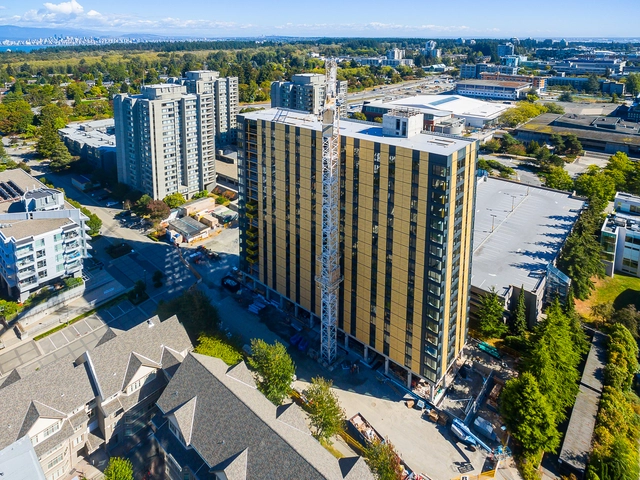
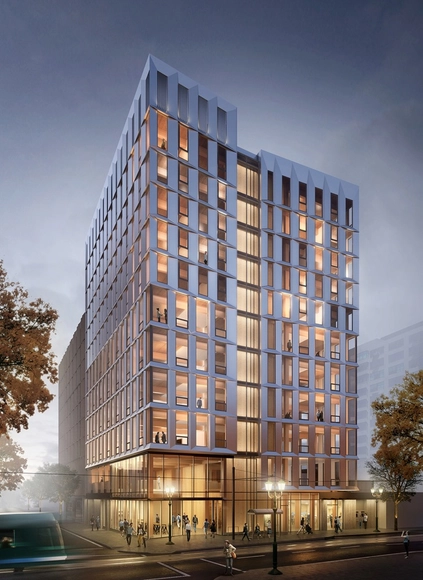
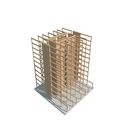
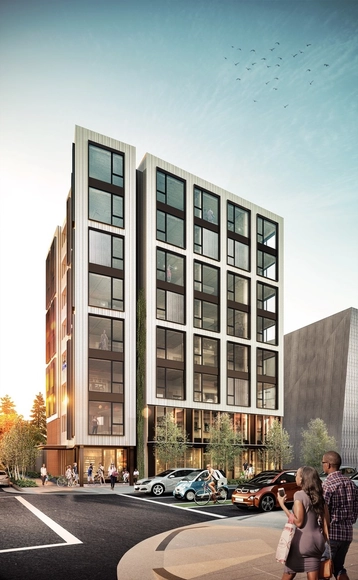
Topping out two weeks ago, the structure of Brock Commons, currently the tallest timber structure in the world, is now complete. Measuring in at 18 stories and 174 feet (53 meters) tall, the building was completed nearly four months ahead of schedule, displaying one of the advantages of building tall buildings with wood.
Wood has always been one of the essential materials used in construction, and with the ongoing trend of timber-framed tall buildings, it has become more important than ever to be conscious of the impacts on the environment from the types of wood we source.
Currently, there exist more than 50,000 tropical timber species in the world, yet only a small percentage of those are utilized in construction projects. This has led to the exploitation of the more well-known timber species, altering the diversity of the world’s tropical forests and putting those species in danger of disappearing completely. But what if we began building with the full range of species available to us?
Students and architects from over 30 countries have constructed a “village” of 14 wooden structures at Hello Wood’s Project Village 2016. Founded in 2010 as an art camp for students in architecture, art and design disciplines, Hello Wood has since grown into an award-winning interior summer school program focused on creating design through collaborative methods and bringing together the principles of architecture, art, innovation and social impact. The Project Village, conceived just last year, pushes these ideals to their limit by challenging students, teachers and designers to work together to create a new architecture of community at Hello Wood’s rural campus in Csoromfolde, Hungary.
Continue reading to see all 14 projects with descriptions from the designers.
The recent trend in timber-framed architecture may just be beginning.
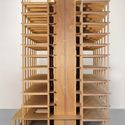
SOM’s Timber Tower Research Project has passed a major milestone as the structural system has successfully completed strength testing that validate initial calculations. Launched in 2013, The Timber Tower Research project was established with the goal of developing a new structural system for skyscrapers that uses timber as its primary material. Using these techniques, the research team estimates that the embodied carbon footprint of buildings can be reduced by 60 to 75 percent when compared to a benchmark concrete building.
Courtesy of University of Washington: Buddy Burkhalter, Mingjun Yin, Connor Irick, Richard Mohler and Elizabeth Golden
The Association of Collegiate Schools of Architecture (ACSA) has announced the winners of the Timber in the City: Urban Habitats Competition, a student competition exploring wood as an innovative building material. Out of more than 850 architectural student entries, three winners have been selected, along with two honorable mentions, with prizes totaling $40,000.
The competition focused on a site in the Lower East Side of Manhattan, and asked for designs for inhabitation, repose, recreation, and local small-scale commercial exchange, all while embracing the possibilities of wood and a variety of wood technologies.
Today, timber is being used in new, innovative ways to help address the economic and environmental challenges of the build environment,” said Cees de Jager, executive director of BSLC. “This competition brought to life the way the design community is recognizing the benefits of wood–from reduced economic and environmental impact to enhanced aesthetic value and structural performance–to design buildings and communities of the future.
The winners of the Timber in the City: Urban Habitats Competition are:
In this video, Ben Uyeda of HomeMade Modern demonstrates how to build a sleek, contemporary spiral staircase using just a standard schedule steel post, plywood and a CNC router (along with a healthy amount of wood and construction glue). To build the staircase, Uyeda uses the CNC to cut out 12 shapes of incremental size from a plywood sheet, which he then stacks and fits around the post to secure into place.
HomeMade Modern has also made the CAD files available for free, so handy woodworking types can attempt the construction themselves.
This October, reThink Wood is heading to Los Angeles for Greenbuild – the world's largest conference and expo dedicated to green building. If you haven’t registered already, this is your chance to win a free pass to the conference and hear from dozens of inspiring speakers about the latest advancements in the green building movement.
To celebrate, reThink Wood is offering a full pre-paid conference pass ($1,050+ value) to one lucky ArchDaily reader. The winner will be invited to learn more about why building with wood is sustainable and to meet with experts onsite who are passionate about sustainable design with wood in a variety of structure types.
Enter to win by answering the following question in the comments section before August 26 at 12:00PM ET.:
Urban Agency and Group-K have placed 3rd in a competition for a “Wood Experience Center” on the island of Jeju, South Korea. The project location is an area of the island called Redorum, a wild natural environment containing a dense cedar forest and a tranquil lake. The architects responded to this unique site by designing a building that both preserves the unspoiled beauty of the landscape and creates an iconic building containing an exhibition hall, workshop and library.
What do Frederic Chopin, Alexander Calder and Montana's Bear Tooth Mountains have in common? A long summer day at Tippet Rise Art Center seeks to make the connections audible, visible, tangible.
Founded by philanthropists and artists Cathy and Peter Halstead and inaugurated in June 2016, Tippet Rise began as—and largely remains—a working ranch. It sprawls across 11,500 acres of rolling hills and alluvial mesas of southwestern. To the west rise the snowy heights of the Bear Tooth Mountains. Off to the east, hills give way to golden prairies that stretch out to the horizon.
Into this privileged landscape, the Halsteads and team have strategically inserted massive outdoor sculptures by Alexander Calder, Mark di Suvero, Stephen Talasnik, plus three specially commissioned works by the Spanish architectural firm Ensamble Studio. And hidden in a small depression near the entrance of the massive ranch, the LEED Platinum-certified Olivier Barn serves as both base camp for visitors and a state-of-the-art concert hall.
White Arkitekter’s Copenhagen studio has been selected as winners of a competition to design 115 individual homes as part of a social housing project in Denmark’s Allerød Municipality. Located north of the capital city of Copenhagen, the new neighborhood will be bordered by forest and a lake, inviting the nature in to complement and screen individual buildings. The project, titled “By the Woods,” will attempt to subvert typical preconceptions about social housing through the blurring of public and private space.