1. ArchDaily
  2. Windows and Doors

Windows and Doors: The Latest Architecture and News

What to Consider When Choosing a Window

 | Sponsored Content

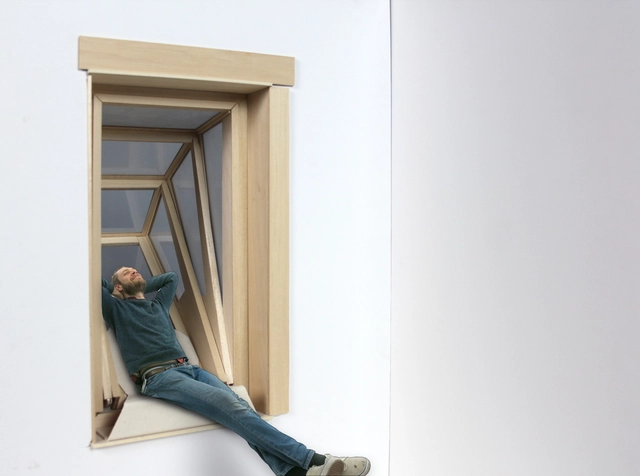
"And a window that looks out on Corcovado. Oh, how lovely." Tom Jobim's lyrics, immortalized by João Gilberto and Astrud Gilberto's voices and a soft guitar, was one of the early songs that introduced the world to the idea of a paradisaical Rio de Janeiro and a promising Brazil, with an increasingly urban population and a modern capital being built from nothing. Almost 60 years later, Paulo Mendes da Rocha casually quotes this song in an interview and points out that for him, in this scene, the most important element is the window, not Corcovado or Christ the Redeemer. That's because it frames the view and directs our eyes to what matters. It is a phrase that goes almost unnoticed, but that carries enormous poetic and artistic significance to the craft of architecture.

Brazilian Houses: 14 Homes with Wooden Window Frames

Subscriber Access | 

Wood is a material naturally associated with beauty, versatility, and comfort and is used in many different ways in architecture, from flooring to roofing. These qualities also stand out when used in window frames.

Brazilian Houses: 14 Homes with Wooden Window Frames - Image 2 of 4Brazilian Houses: 14 Homes with Wooden Window Frames - Image 6 of 4Brazilian Houses: 14 Homes with Wooden Window Frames - Image 8 of 4Brazilian Houses: 14 Homes with Wooden Window Frames - Image 11 of 4Brazilian Houses: 14 Homes with Wooden Window Frames - More Images+ 10

How to Expand Spaces with Revolving Corner Windows

 | Sponsored Content

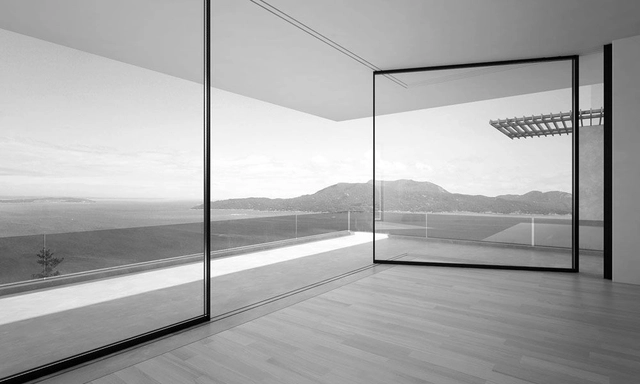
The window is the architectural element that satisfies our innate need to relate to the outside space, providing us with ventilation and light. The more extensive and clean the window is, the greater the sensation of "being outside". Consequently, opening up spaces to the outside has become a common requirement for people who want and need to inhabit flexible, adaptable spaces, in contact with the air and nature. There are many ways to do this, but not all of them allow an airtight enclosure to become fully open and continuous, clearing the boundaries between both spaces.

Open Corner Sliding Glass Doors: Towards a Light & Wide Architecture

 | Sponsored Content

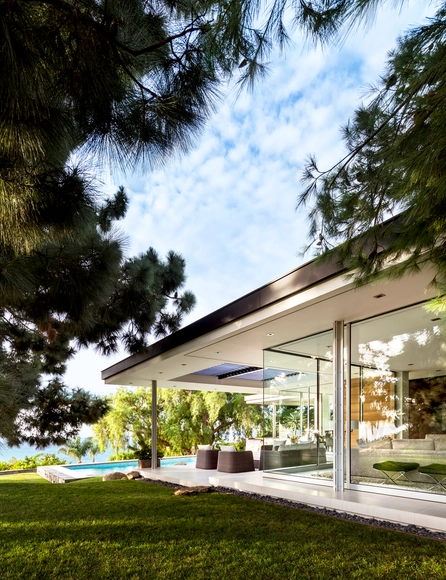
Malibu Crest, a 2019 remodeling of a 1949 International Style home, was a vital undertaking by the architecture firm Studio Bracket that aimed to expand the structure’s square footage and panoramic views of Malibu while retaining over 50% of the home’s original walls. The project was ultimately successful, not only in its refurbishment of the interior rooms and reconfiguration of the space, but in its enlargement of the windows to truly capture views of the surrounding lagoon and mountains. This expansion of the view was done in part through an open corner window scheme and floor-to-ceiling glass, manufactured by Western Window Systems. The uninterrupted glass walls afforded by this open corner technology is one of the most effective ways that architects can open an interior space to the stunning vistas of a natural environment. Yet an even more striking configuration increasingly being employed by residential architects is that of the open corner sliding glass door – a system that can even more completely open an interior space to the unobstructed outdoors. Below, we discuss this technology in more detail, alongside several examples of projects using the open corner glass door.

Beat Guhl: "We Allow Architects to Build Fluid, Uninterrupted, and Digitized Spaces"

Subscriber Access | 

We spoke with Beat Guhl, CEO of Sky-Frame, during the Swiss Bau fair – one of the largest events in the materials industry. Sky-Frame produces frameless sliding window systems; vital components to achieve an effective and efficient transparency in architectural projects. The company is constantly pushing for technical innovation and works closely with architects to help achieve fluid spatial concepts.

Stainless Steel, Bronze, Brass, or Aluminum: How to Choose Handle Materials

Subscriber Access | 

Stainless Steel, Bronze, Brass, or Aluminum: How to Choose Handle Materials - Image 1 of 4Stainless Steel, Bronze, Brass, or Aluminum: How to Choose Handle Materials - Image 2 of 4Stainless Steel, Bronze, Brass, or Aluminum: How to Choose Handle Materials - Image 3 of 4Stainless Steel, Bronze, Brass, or Aluminum: How to Choose Handle Materials - Image 4 of 4Stainless Steel, Bronze, Brass, or Aluminum: How to Choose Handle Materials - More Images+ 27

Door handles are a ubiquitous part of daily life, being used constantly in almost every space but rarely given thought by the passing user. Nevertheless, the chosen material of each handle can vary widely in terms of aesthetics, durability, and sustainability, with good choices going noticeably right and poor choices going noticeably wrong. For objects that are seen and used multiple times every day without fail, it’s imperative that designers get the choice right.

To deepen this topic, FSB helps us to lay out the properties of four of the most common handle materials below, allowing you to make an informed decision on which material aligns best with your project’s needs.

A Building Shaped by Views: Living with 'Sky-Frame' in Hamburg

 | Sponsored Content

The leaves are still sprinkled with delicate drops of morning dew.
Outside, in Hamburg, the bustling metropolis in northern Germany, the streets are already a hive of activity as another working day begins.

Time to savour a long, leisurely gaze over the Alster.
To watch the seagulls glide silently across the sky.
As you take in the great, boundless expanse, from a room flooded with natural light, the borders between indoors and outdoors begin to blur, as though the laws of physics no longer applied.

You feel the first rays of warm sunlight on your face.
Aren’t these precisely the kind of moments which give you the energy you need for yet another hectic day? – A view, not a window.

Minimalist Windows with High Rigidity Steel Profiles: Transparency and Subtle Design

Subscriber Access | 

After centuries of using wood for the development of window and door carpentry, the Rationalism of the 20th century began to adopt a new material for these purposes: steel. Driven by industrial production, and promoted by architects such as Adolf Loos, Mies van der Rohe, and Le Corbusier, steel was evolving to generate increasingly thin and resistant frames. However, efficient and low-cost materials, such as aluminum and PVC, gradually began to replace its widespread use, increasing the size of the frames and losing steel's "clean" aesthetic when applied to a growing architecture of large glass paneled facades.

At present, new technologies have refined their production processes, developing minimal profiles of high rigidity and precision, which take full advantage of the transparency of the glass and deliver new comfort and safety features. We talked with Jansen's experts to deepen our understanding of their application in contemporary architecture.

Our Favorite Indoor-Outdoor-Inspired Homes

 | Sponsored Content

Another year, another crop of homes featuring fresh, contemporary architecture, striking décor, and seamless transitions between inside and outside spaces. Peruse our picks below to find the inspiration you need to make indoor-outdoor living part of your next home design.

Our Favorite Indoor-Outdoor-Inspired Homes - Image 1 of 4Our Favorite Indoor-Outdoor-Inspired Homes - Image 2 of 4Our Favorite Indoor-Outdoor-Inspired Homes - Image 3 of 4Our Favorite Indoor-Outdoor-Inspired Homes - Image 4 of 4Our Favorite Indoor-Outdoor-Inspired Homes - More Images+ 7

How to Choose the Right Glass for Your Projects

Subscriber Access | 

Today, improvements in glass processing technology have made it possible to render specific and effective solutions for a wide range of architectural projects. In fact, there are so many options available that it's almost necessary to research different products and their properties, and how this will impact, for example, the windows and doors that you are designing.

What variables should be considered – and prioritized – when choosing the glass used in a project? How can aesthetics coincide with function and efficiency? We sat down with the experts at Cristales Dialum to delve into the complex world of glass and to better understand the hows and whys of choosing the best type of glass for your projects and ensuring the best results for your clients.

Accordion Doors And Windows: Opening Façades To The Outside

Subscriber Access | 

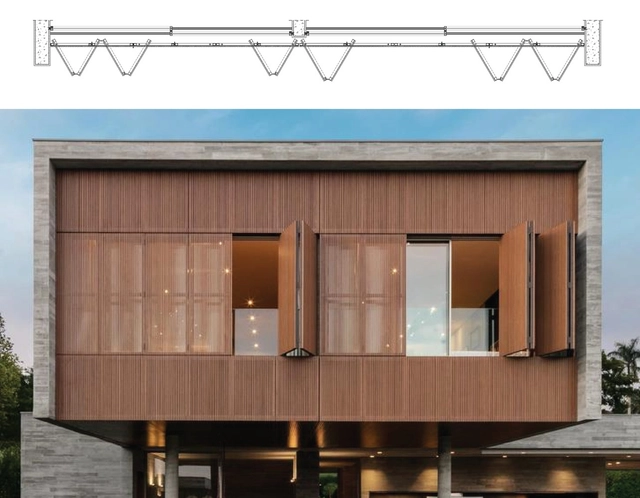
As ingenious solutions for environments that require additional space and ventilation, articulated or accordion doors and windows operate by folding their leafs one over the other and onto the sides of the opening. They moving via upper and lower rails which can be embedded into masonry and allow separation and integration rooms while adding aesthetic value to the project.

This system generates a similar effect to that of a sliding door or window, but it differs in that all its leafs remain in the same plane when they are closed, giving a clean appearance to the façade.

Infographic: The Evolution of Glass

Subscriber Access | 

Glass is so present in our lives that it’s very difficult to think about the amount of work, experimentation and technologies behind each panel or glass object. It’s also impossible to separate innovations from modern architectural projects –from architects such as Mies Van der Rohe and Le Corbusier– from the advances of the glass industry.

We’re following the history of glass, from Mesopotamian artifacts to technological glasses, and we invite you to travel with us.

Pivoting, Sliding, Accordion and Curtain Wall: Different Types Of Windows In 11 Buildings

Subscriber Access | 

Although all windows have common functions such as allowing the passage of light, providing ventilation, and focusing the different views, these objectives can be enhanced through a series of useful options. Depending on the orientation of the building, climatic conditions, direction of the wind, and architectural point of view, each specific window model can make a difference within a project, improving usability and the spatial and environmental quality of each room.

Below, we present types of windows that can be found in today's homes, specifically in 11 projects previously published on our site.

Pivoting, Sliding, Accordion and Curtain Wall: Different Types Of Windows In 11 Buildings - Imagen 1 de 4Pivoting, Sliding, Accordion and Curtain Wall: Different Types Of Windows In 11 Buildings - Imagen 2 de 4Pivoting, Sliding, Accordion and Curtain Wall: Different Types Of Windows In 11 Buildings - Imagen 3 de 4Pivoting, Sliding, Accordion and Curtain Wall: Different Types Of Windows In 11 Buildings - Imagen 4 de 4Pivoting, Sliding, Accordion and Curtain Wall: Different Types Of Windows In 11 Buildings - More Images+ 31

How to Design for Visual Comfort Using Natural Light

Architects are increasingly aware of our influence on the well-being and good health of the users of our projects. Natural lighting –and how it should be complemented with artificial lighting– is an essential factor to consider for the visual comfort of interior spaces. But, do we know how to handle it correctly?

Sun-Filled Spaces Created By Skylights In 20 Architectural Projects

Subscriber Access | 

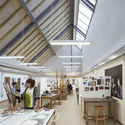
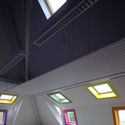
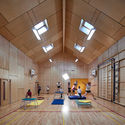
Perhaps the most renowned 'skylight' ever built is the Pantheon of Rome commissioned by Marco Vipsanius Agrippa during the reign of Emperor Augustus (27 BC-14 AD) and rebuilt by Hadrian (117-118) around 126 AD. At the highest point of its dome (in this case, the oculus) the sunlight shines, casting its beams over the various statues of planetary deities that occupy the niches on the walls. The light that enters the space symbolizes a cosmic, sacred dimension. In projects around the world, natural light continues to fulfill this scenic role, especially in religious projects.

It is characterized as zenithal illumination as that which comes from above, from the sky (zenith). Very useful for large spaces that can not be adequately lit by windows, skylights are a widely used device for providing a pleasant, diffuse light. Generally, care is taken to prevent direct entry of sunlight; the openings must be well designed so that they do not overheat the space of allow water infiltration. Below is a collection of projects that make good use of this technique.

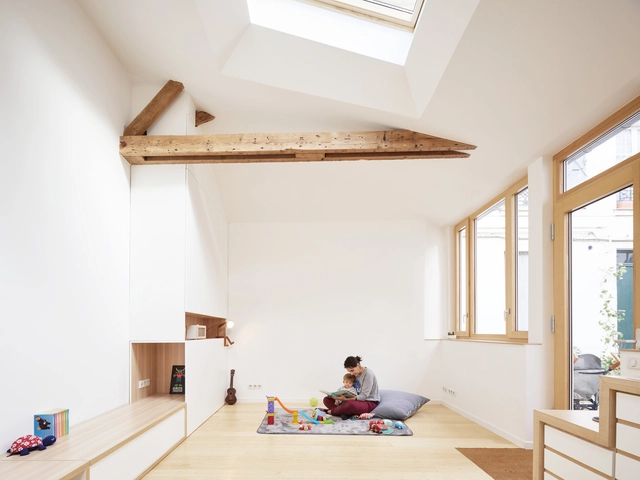
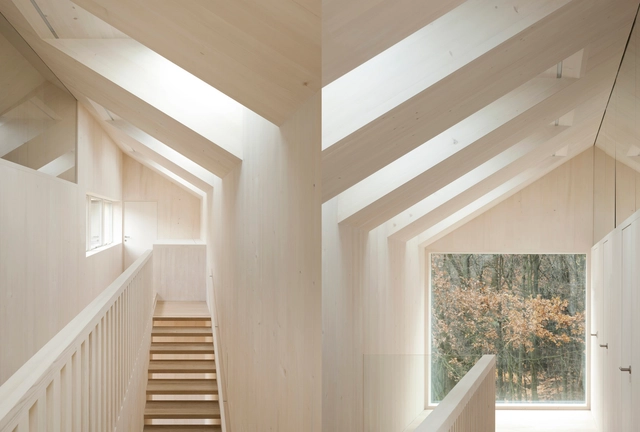
Sun-Filled Spaces Created By Skylights In 20 Architectural Projects - Image 1 of 4Sun-Filled Spaces Created By Skylights In 20 Architectural Projects - Image 2 of 4Sun-Filled Spaces Created By Skylights In 20 Architectural Projects - Image 3 of 4Sun-Filled Spaces Created By Skylights In 20 Architectural Projects - Image 4 of 4Sun-Filled Spaces Created By Skylights In 20 Architectural Projects - More Images+ 39

16 CAD Files of Roof Windows and Light Tubes Available for Your Next Project

Subscriber Access | 

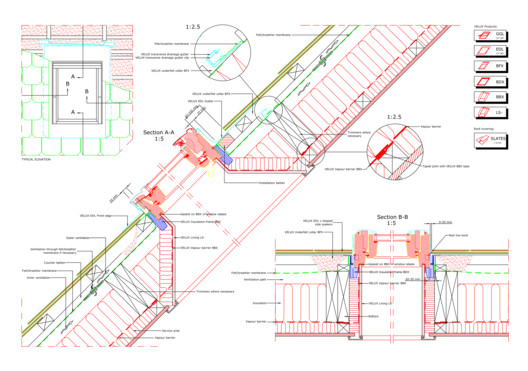
In the spirit of supporting our readers’ design work, the company Velux has shared a series of .DWG files with us of their different roofing windows models. The files can be downloaded directly from this article and include great amounts of detail and information.

Check the files below, separated into 'Pitched Roofs', 'Flat Roofs' and 'Light Tube'.

New Renderings Reveal Thomas Heatherwick's Design for Residential Towers Straddling NYC's Highline

Thomas Heatherwick is touching the New York Architecture Scene again, revealing his design for a pair of residential towers in a pair of renderings. The two towers will flank either side of the New York High Line, located at 18th Street, it will situate itself adjacent to Frank Gehry’s IAC Headquarters building.