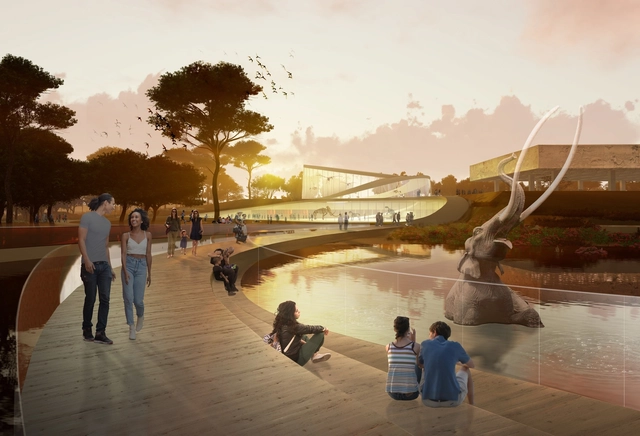
Weiss/Manfredi have been selected to lead the new La Brea Tar Pits master planning in Los Angeles. The team's ‘Loops and Lenses’ concept was developed to create new connections between "the museum and the Park, between science and culture, and envisions the entire site as an unfolding place of discovery." The team will work with NHMLAC on a multi-year process of public engagement, master planning, design and construction on the Tar Pits’ 13-acre campus.
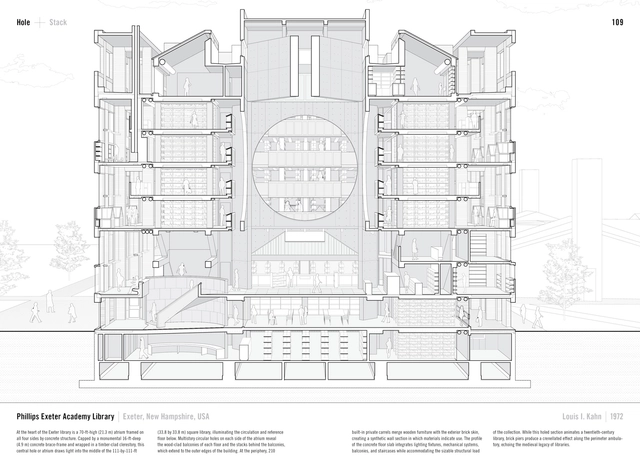
Phillips Exeter Academy Library by Louis I. Kahn (1972). Published in Manual of Section by Paul Lewis, Marc Tsurumaki, and David J. Lewis published by Princeton Architectural Press (2016). Image Courtesy of LTL Architects
For Paul Lewis, Marc Tsurumaki and David J. Lewis, the section “is often understood as a reductive drawing type, produced at the end of the design process to depict structural and material conditions in service of the construction contract.” A definition that will be familiar to most of those who have studied or worked in architecture at some point. We often think primarily of the plan, for it allows us to embrace the programmatic expectations of a project and provide a summary of the various functions required. In the modern age, digital modelling software programs offer ever more possibilities when it comes to creating complex three dimensional objects, making the section even more of an afterthought.
With theirManual of Section(2016), the three founding partners of LTL architects engage with section as an essential tool of architectural design, and let’s admit it, this reading might change your mind on the topic. For the co-authors, “thinking and designing through section requires the building of a discourse about section, recognizing it as a site of intervention.” Perhaps, indeed, we need to understand the capabilities of section drawings both to use them more efficiently and to enjoy doing so.
The Natural History Museums of Los Angeles County (NHMLAC) have unveiled three new concepts for a master plan of the La Brea Tar Pits. The proposals were designed to improve the entire 12-acre site, which has not been renovated or considered comprehensively since it opened more than forty years ago. The three proposals were made by Dorte Mandrup, Diller Scofidio + Renfro and WEISS/MANFREDI. The concepts aim to create a more integrated experience of the museum and the landscape in Hancock Park.
Weiss/Manfredi has unveiled their design for the re-envisioned U.S. Embassy campus in New Delhi, India. The first phase of a long-term masterplan, the scheme features a New Office Building, a support annex, and connected landscape offering a secure campus for America’s mission in India. Included in the design is the restoration of the early modernist Chancery Building by Edward Durell Stone.
As the Durell Stone-designed embassy reaches its sixtieth anniversary, the scheme offers a sustainable vision for the Embassy’s future that builds on the legacy of the historic campus to create a new foundation for American diplomacy in India.
https://www.archdaily.com/912252/weiss-manfredi-designs-us-embassy-in-new-delhi-indiaNiall Patrick Walsh
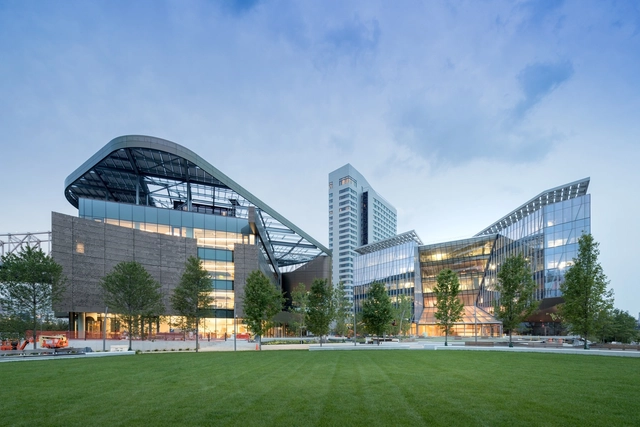
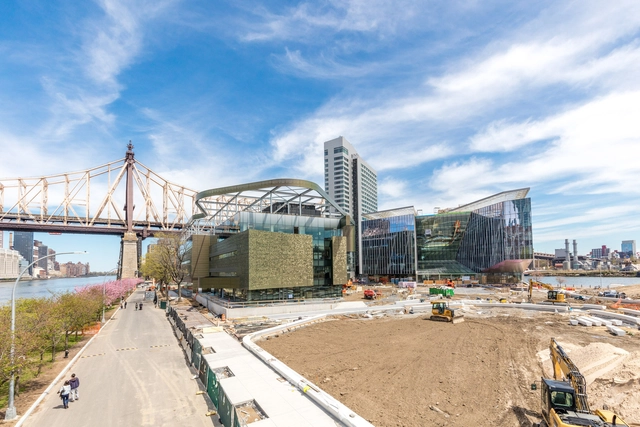
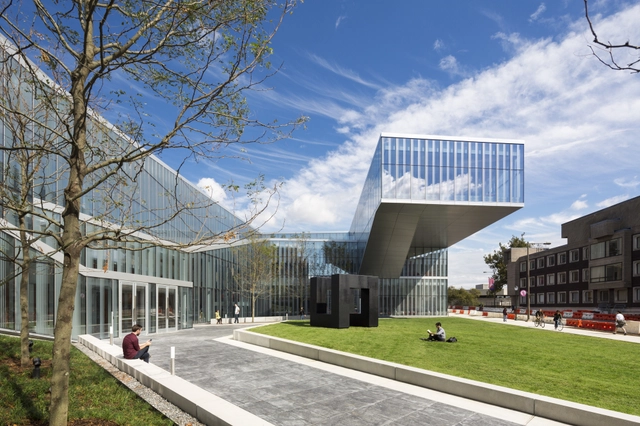
The innovative Cornell Tech campus has officially opened on New York City’s Roosevelt Island. Master planned by SOM and featuring buildings and landscapes by Morphosis, Weiss/Manfredi, Handel Architects, and James Corner Field Operations, the campus represents a new vision of a campus for the digital age. Two years after breaking ground in 2015, the campus now houses some of the most environmentally-friendly and energy-efficient buildings in the world.
With construction nearing completion ahead of its September opening date, the first building at the new Cornell Tech campus on New York City’s Roosevelt Island has been dubbed “one of the most environmentally-friendly buildings in the world” by the university, as they revealed their aspirations for the building to reach Net Zero and LEED Platinum status.
Designed by Morphosis, The Bloomberg Center (named for Emma and Georgina Bloomberg, daughters of former New York mayor Michael Bloomberg) will employ a range of strategies including solar power; geothermal ground source heat pumps; a dynamic energy-efficient facade which balances transparency and opaqueness to maximize building insulation; and an array of smart building technologies that monitor lighting and plug load use, among other metrics.
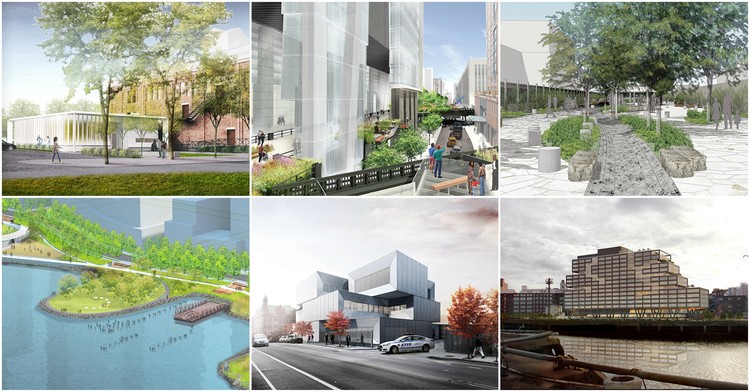
Mayor Bill de Blasio and the New York City Public Design Commission have announced the winners of their 2016 Awards for Excellence in Design. Established in 1983, the award has been bestowed annually to projects from the city’s five boroughs that “exemplify how innovative and thoughtful design can provide New Yorkers with the best possible public spaces and services and engender a sense of civic pride.” Both built and unbuilt projects are considered for the award. Previous winners have included Studio Gang’s Fire Rescue 2 (2015), the Louis Kahn-designed Four Freedoms Park (2014), and Steven Holl’s Hunters Point Library (2011).
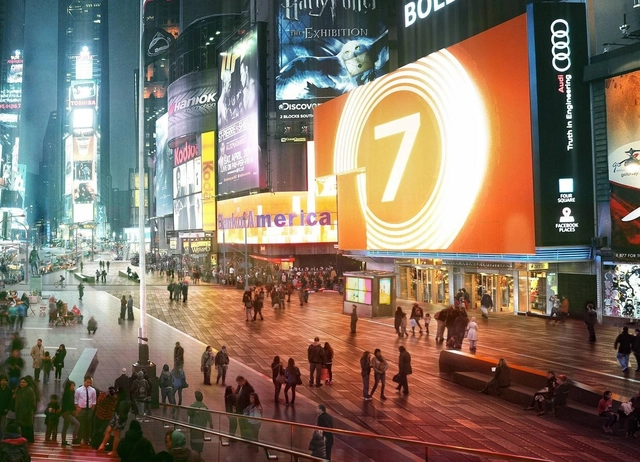
The New York City Department of Design and Construction (DDC) has selected 26 architecture firms to be pre-qualified to design new public projects throughout the city’s five boroughs. In effect until 2019, these firms will be given exclusive access to Request for Proposals (RFPs) for public works projects with an estimated budget of $50 million of less. These projects will include new constructions, additions and renovations of existing public buildings, parks and plazas.
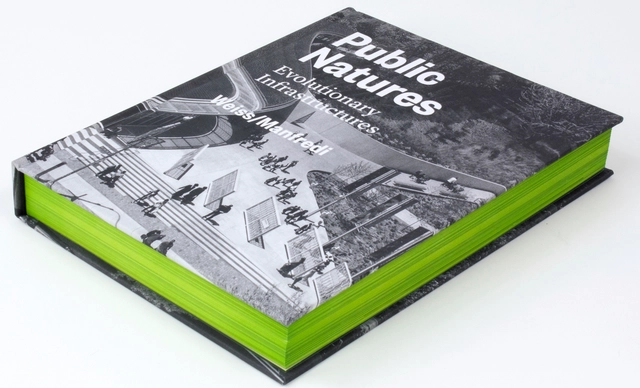
From the Publisher. Rail lines, bridges, highways, waterways, and off-ramps—larger than life but part of it, infrastructural systems are the enduring forms of urban evolution, multiplying as cities grow and requiring expanding swaths of territory to accommodate more and more monofunctional requirements. What if the very hard line between landscape, architecture, engineering, and urbanism could find a more synthetic convergence?
The United States Department of State has commissioned WEISS/MANFREDI to re-envision the Edward Durell Stone-designed embassy compound in New Delhi, India. Fifty years after its opening, the masterplan hopes to "restore the early modernist Chancery Building and recast the Embassy Compound as a multi-functional 28-acre campus setting." The masterplan's first phase will see the addition of a new office annex and restore the complex's landscape.
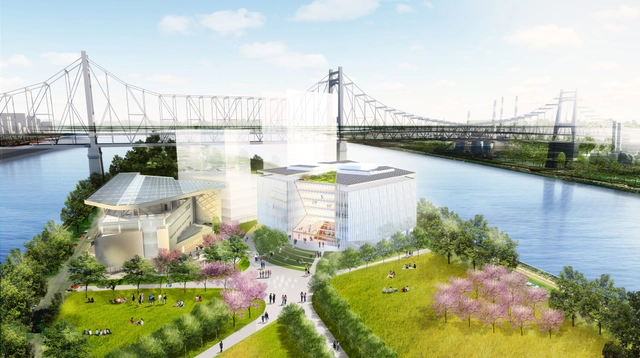
WEISS/MANFREDI broke ground yesterday on Cornell Tech's pioneering building, "The Bridge." Spearheading the first phase of the $2 billion Roosevelt Island tech campus, the new building will "bridge" the gap between academia and industry, providing a seven-story "corporate co-location" loft where students and industry leaders will collaborate.
“The Bridge is a crystalline incubator with river-to-river views and creates a three-dimensional crossroads, an ecosystem of innovation to catalyze collaboration between academics and entrepreneurs,” say design partners Marion Weiss and Michael A. Manfredi.
The design, dubbed the “Kent State Design Loft,” transforms the notion of a continuous studio loft into a three-tiered structure that unites all the college’s programs, including construction management, under one roof.
In honor of World Photo Day (August 19th) ArchDaily wanted to thank the photographers who bring to life the projects that we publish every day. So we asked architects to weigh in on the work of some of our most-appreciated architecture photographers. Here, Weiss/Manfrediwrites on behalf of ESTO.
https://www.archdaily.com/539106/world-photo-day-esto-by-weiss-manfrediAD Editorial Team
Wiel Arets, Dean of the College of Architecture at Illinois Institute of Technology (IIT) and Dirk Denison, Director of the Mies Crown Hall Americas Prize (MCHAP), have announced the inaugural MCHAP shortlist – 36 “Outstanding Projects” selected from the 225 MCHAP nominees.
“The rich diversity of these built works is a testament to the creative energy at work in the Americas today,” said Arets. “When viewed alongside the innovative work by the MCHAP.emerge finalists and winner, Poli House by Mauricio Pezo and Sofia von Ellrichshausen which we honored in May, we see the evolution of a distinctly American conversation about creating livable space.” See all 36 winners after the break.
New York-based architects Weiss / Manfrediand Philadelphia-based landscape architects OLIN have been announced as winner of the National Mall Design Competition for the Washington Monument Grounds at Sylvan Theater in Washington, DC. Weiss / Manfredi and OLIN were one of three winning teams selected by the Trust for the National Mall to rejuvenate and transform three neglected sites on the National Mall (read our original announcement here). In the winning proposal for Sylvan Theater, Weiss / Manfredi and OLIN sculpt the ground plan and restore the existing tree canopy to create a new performance landscape that can accommodate a wide variety of events, while permeating the site with critical visitor amenities.
Continue reading for more images, video and the architects’ press release.
After an intense and highly publicized competition, the Trust for the National Mall has announced the three winning teams selected to redesign the neglected sites of America’s front yard. As reported by the Washington Post, Rogers Marvel Architects &Peter Walkerand Partners will redesign Constitution Gardens east of the Vietnam Veterans Memorial, while Weiss/Manfredi&OLIN will bring new life to the Sylvan Theater, southeast of the Washington Monument. The Union Square will be forwarded to the Architect of the Capitol and transformed by Gustafson Guthrie Nichol&Davis Brody Bond.
Continue reading for more on the winning proposals.
The ten finalists competing in the final phase of the National Mall Design Competition are dreaming big. Proposals to restore the National Mall include flourishing lakeside gardens, contemporary cafés hovering over water, grassy new amphitheaters and underground pavilions exposed at the foot of the Washington Monument. Since the announcement of the finalists, the teams have been refining there proposals behind closed doors.
Now, the Trust for the National Mall has released the highly anticipated proposals to the public. From now until Sunday, at the Smithsonian Castle and the National Museum of American History, you can view each proposal in its entirety. If you don’t live in the D.C. area, no need to worry. Continue after the break to catch a glimpse of each submission and learn how you can help the jury decided who will revamp America’s “front yard”.
.jpg?1576108217&format=webp&width=640&height=580)




.jpg?1551218987&format=webp&width=640&height=580)