1. ArchDaily
  2. Weiss Manfredi

Weiss Manfredi: The Latest Architecture and News

Update: National Mall Design Competition Stage II Results

Subscriber Access | 
Update: National Mall Design Competition Stage II Results - Featured Image

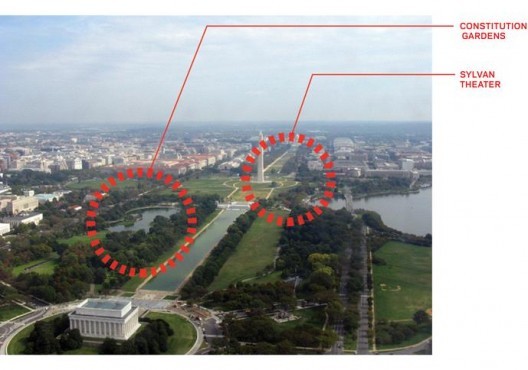
Trust for the National Mall has announced the Stage II results, naming the ten design teams selected to continue in the third and final stage of the National Mall Design Competition. The National Mall will undergo an approximate $700 million restoration in three selected areas – Union Square including the Reflecting Pool and the Ulysses S. Grant Memorial, Sylvan Theater on the Washington Monument Grounds, and the Constitution Gardens between the Vietnam Veterans Memorial and the Lincoln Memorial.

“We are excited about the teams selected to advance to Stage III and have no doubt each of them will create beautiful, useful and sustainable designs for the National Mall,” said Caroline Cunningham, President of the Trust for the National Mall. “We are eager to share their final designs with the public in April.”

Continue reading for more information and the complete list of finalists.

National Mall Competition Finalists Announced

Subscriber Access | 
National Mall Competition Finalists Announced - Featured Image

Over 1,200 entires from 30 states and 10 countries submitted applications for the National Mall competition. Late last month fifteen design teams were chosen as finalists to advance to the second stage of this prestigious contest.

Hosting 25 million visitors annually, the National Mall will undergo an estimated $700 million restoration beginning in 2012. The competition has been broken down into three areas of restoration: Union Square including the Reflecting Pool and the Ulysses S. Grant Memorial, Sylvan Theater on the Washington Monument Grounds, and the Constitution Gardens between the Vietnam Veterans Memorial and the Lincoln Memorial.

Among the finalists to move on to stage two of the competition, Diller Scofidio Renfro, Weiss/Manfredi, and Rogers Marvel Architects who are shortlisted for two out of the three areas of restoration, as well as Snohetta, Michael Maltzan Architecture, Ten Arquitectos, and Bohlin Cywinski Jackson who are finalists for one area of restoration.

“Entrants were evaluated on past design performance, philosophy, design intent, thoughtfulness, creativity and overall resume,” according to a release from the Trust of the National Mall. The jury, compiled of architects, professors and other members of the architecture community, included Michael Gericke of Pentagram NYC and Pritzker Prize Laureate Thom Mayne founder of Morphosis.

The second stage of the competition includes interviews of the teams conducted by the Trust for the National Mall and the National Park Service, and the last stage will include proposed plans for the restoration. The competition will culminate in May 2012 and the proposed designs from stage three of the competition will be available to the public prior to the winning design being selected.

Follow the break for a complete list of design finalists for the National Mall Competition.

St. Petersburg Pier Design Competition Announces Semi-finalists

Subscriber Access | 
St. Petersburg Pier Design Competition Announces Semi-finalists - Featured Image
Photo by Matthew Paulson

The St. Petersburg Pier, a long-adored and long-outdated West Florida cultural attraction, has unveiled the semi-finalists in its international redesign competition. Of the twenty-three qualified inquiries received, nine were chosen to move forward in the contest. The competition attracted big names in the architecture world; BIG, West 8 Urban Design, James Corner Field Operations, and HOK Architects were among the participants.

More on the St. Petersburg Pier after the break.

2011 AIA Honor Award / The Diana Center / Weiss Manfredi

Subscriber Access | 
2011 AIA Honor Award / The Diana Center / Weiss Manfredi - Featured Image
© Albert Vecerka/Esto

We are happy to share that our friends from New York-based Weiss Manfredi will be recognized at the 2011 AIA Honor Awards Ceremony in New Orleans this May. The firm’s Diana Center for Barnard College has infused the urban campus with a new sense of vitality as the vertically organized quad unites landscape and architecture with interior and exterior spaces. While the building contains 98,000 sqf of mixed use functions, the project also strongly emphasizes the constant connection between urban user and nature as a grand diagonal slash through the building creates a double-height glass atria to provide inward, as well as outward views. The slipped atria and an unfolded glazed staircase bring in natural light and eliminate visual boundaries between the College and the city, while providing spaces for informal interaction to encourage collaboration and dialogue across disciplines. The building has achieved a LEED Gold certification and Debora L. Spar, president of Barnard College explained, “The Diana Center has not only transformed the way our community interacts, but through its environmentally responsible design and function, has inspired us to become active participants in sustainability efforts. The project was also named a winner of ArchDaily’s Building of the Year Award for 2010 [be sure to view our full coverage of the Diana Center previously on AD].

AD Interviews: Weiss Manfredi

Subscriber Access | 

Some time ago we visited New York City based Weiss/Manfredi Architecture/Landscape/Urbanism, to interview founding principals Marion Wesis and Michael Manfredi. The multidisciplinary firm has distinguished themselves with their holistic design approach, successfully integrating the disciplines of architecture, art, infrastructure, and landscape design.

Museum of Earth / Weiss Manfredi

Subscriber Access | 
Museum of Earth / Weiss Manfredi - Image 4 of 4
Pavilions and Reflecting Pool © Paul Warchol

Our friends from Manhattan-based Weiss Manfredi have shared their museum design for Ithaca, New York’s Paleontological Research Institution, which houses one of the United States’ largest paleontological collections. Situated in the Finger Lakes region, the natural landforms of the site inspired the architects to take advantage of the existing gradual 40 ft slope – a feature which resulted from a receding ice sheet more than 20,000 years ago. Rather than considering the site as distinct and separate from the museum, this project creates a new topography: a continuous, terraced landscape that fuses architecture and ecology into a cohesive expression of the geologic processes involved in the region’s formation.

More images and more about the museum after the break.