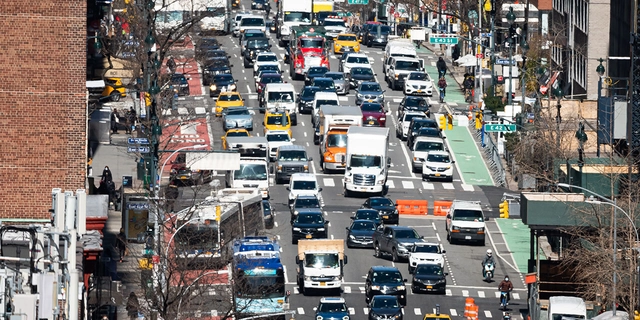
In 2007, New York City Mayor Michael Bloomberg proposed congestion pricing for Manhattan. The state legislature rejected the plan. Fifteen years later, we’re still debating the idea, fiddling while the planet burns.
The newest problem is that a new environmental study and traffic model from the MTA, The Central Business District Tolling Program Environmental Assessment, says that what’s good for 1.63 million residents of Manhattan and the planet, in general, will increase the pollution in the already unhealthy air in the Bronx. Yes, that’s a problem. Turning the perfect into the enemy of the good is also a problem. We need a plan that benefits all.
Reinvention is one of the founding myths of the United States of America. For those lucky enough to come here on the decks of ships rather than chained in the hold, this country offered a chance to be someone else, somewhere else. For them and generations of immigrants who followed, America seemed to put a safe distance between their pasts and a boundless future.
But the illusion was eventually flipped on its head. Around the turn of the millennium, reinvention was a prevailing theme for movie characters intent on getting out of small-town America; in architecture, that sentiment took the form of building dream cities anywhere but here. In Dubai and Shanghai our brightest design minds conjured up hermetically sealed towers, malls, and museums largely disconnected from history, community, and climate.
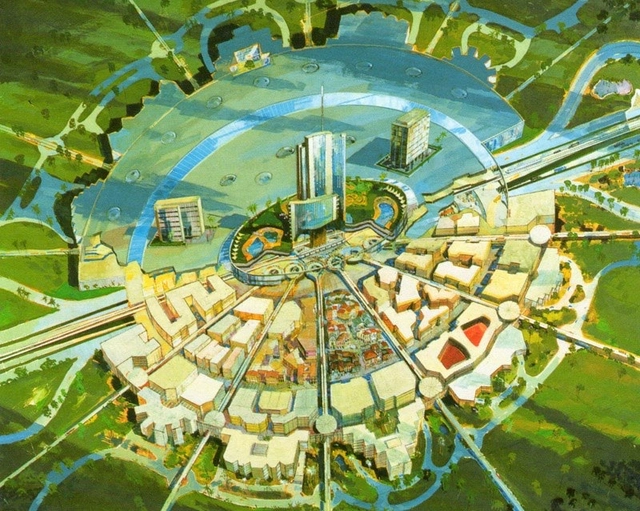
Beneath the Spaceship Earth geodesic sphere and the display of world cultures that symbolize Disney World’s EPCOT lies the buried vision for a utopian city. The original EPCOT - a community built around innovation - was one of Walt Disney’s last visionary projects. Bothered by haphazard urban sprawl, Disney had bold ideas for an urban fabric that would drive progress in the USA. The “Experimental Prototype Community of Tomorrow” was Walt Disney’s antidote to the decay of American cities.
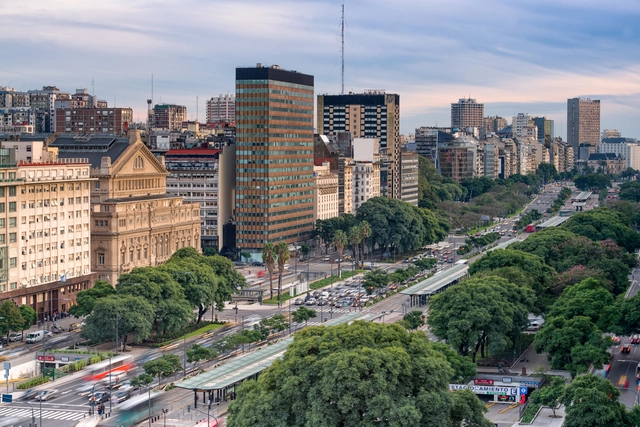
Buenos Aires, Argentina. Image from sharptoyou. Image via Shutterstock
Understanding the diversity and plurality of people who inhabit and pass through cities on a daily basis, gender-responsive urban planning aims to incorporate all those identities, perspectives and activities that have been invisible for years. Understanding the complexities that surround cities and getting involved in the urban experiences of their inhabitants, public spaces turn out to be the scenario for the development of urban life and, as such, should bring together a series of guidelines and considerations in accordance with this new paradigm that act as planning tools, composing this network of spaces and contemplating all the users of the city.
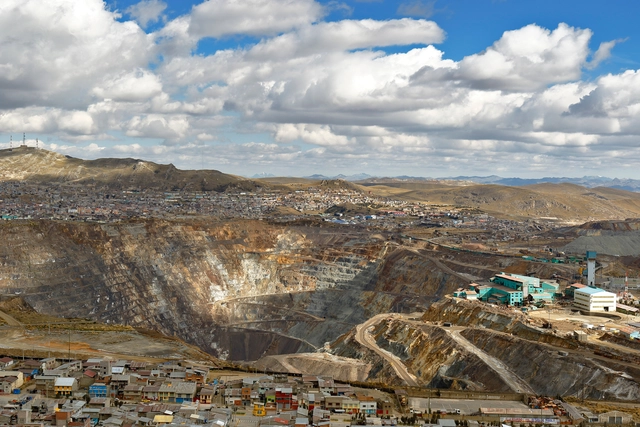
What happens when streets, squares and buildings start to disappear in a city?
This is the case of Cerro de Pasco, capital of the district of Chaupimarca and at the same time of the province of Pasco, located at 4380 m.a.s.l. in the highlands of the Peruvian Andes. It is in this place that the constant expansion of the "open-pit" mining method has devoured the urban fabric, resulting in permanent damage to the territory as its public spaces, heritage buildings and, consequently, its history, disappear.
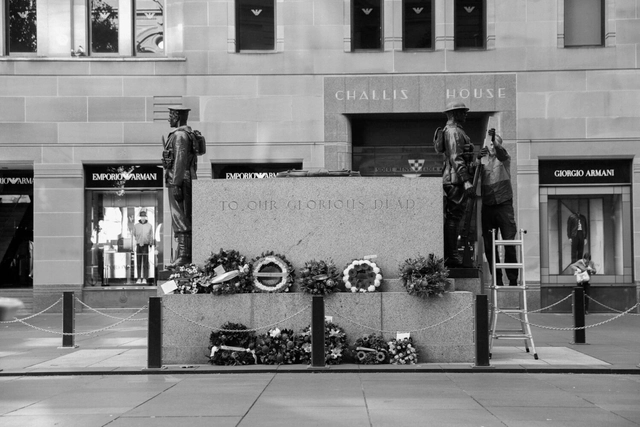
In October 2011, inspired by the Arab Spring revolutions, thousands of people in Australia and in many other cities in the world started to occupy public spaces. In Sydney, where I live, this occupation took place in Martin Place, appropriately enough right outside the Reserve Bank of Australia. This widely publicized protest was an attempt to promote a pro-democracy, civil liberty, social justice message, and to protest against corporate greed and economic inequality.
All of which begged a central question: Was it an occupation of our public space, or was it a reclamation of our public space from governmental and corporate dominance?
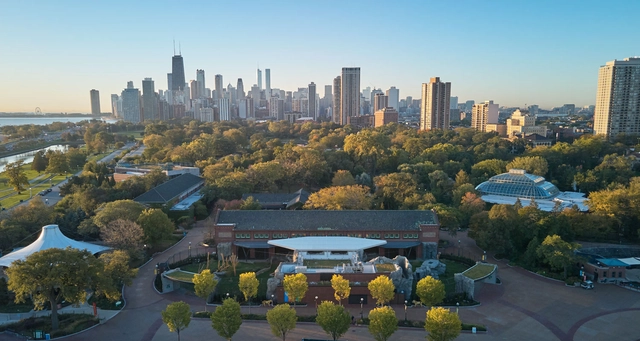
Chicago Mayor Lori Lightfoot and the Department of Assets, Information and Services (AIS) has announced that by 2025, all city-owned buildings and facilities in the city will be fully operated with clean, renewable energy. At the moment, Chicago is one of the largest cities in the United States to reduce the city’s carbon footprint at such a scale, and has already began the process of transitioning its transportation busses and cars to all-electric vehicles by 2035. The agreement demonstrates the city's plans to "drive high-impact climate action, build the clean energy workforce of the future, and equitably distribute meaningful benefits to foster the local clean energy economy for all.”
ICLEI Circulars has launched a new practical Equitable Transitions Guidebook to help cities make sure that their urban development projects are equitable for all groups of citizens. The guidebook is based on multiple case studies from cities worldwide under the Urban Transitions Alliance project. The guide’s purpose is to provide insights, recommendations, and tools for city practitioners to understand better and unpack what social equity means at the local level. The publication is free to download.
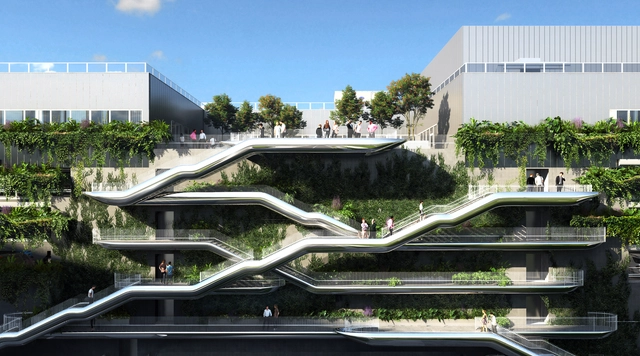
MAD Architects led by Ma Yansong, unveiled renderings of the MoLo, short for Mobility and Logistic hub, a new gateway situated along the western boundary of the Milano Innovation District (MIND). In collaboration with Architect Andrea Nonni, Open Project, and Progeca, the 28.5 meters high complex brings together several facilities across 68,700sqm of surfaces. Designed as an integration of nature and architecture, the MoLo “performs as a welcoming entrance and education space for issues related to mobility in which visitors can drop off their cars to explore the district on foot and see innovative transportation technology in person”.
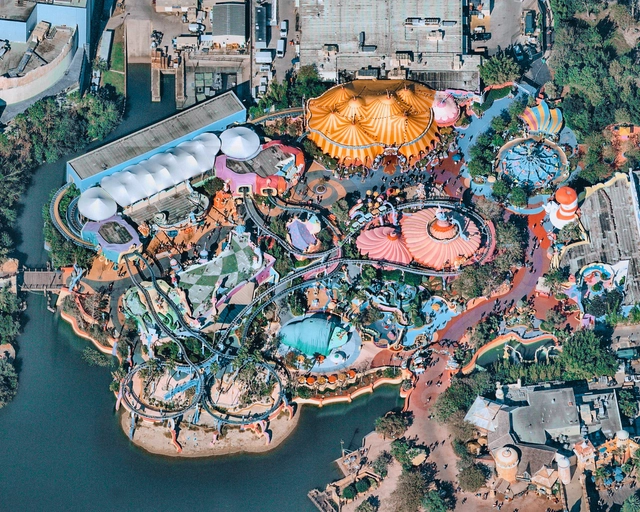
Throughout history, humans have always craved a sense of thrill and an affinity for different forms of entertainment and attraction at all different scales and sizes. Theme parks have continuously evolved, as society redefines what it means to be entertained, and have transformed from evening strolls into physics-defying twists and turns on state-of-the-art rollercoasters.
The urgency to reduce greenhouse gas emissions has never been greater, and getting there is going to require bold steps for buildings, infrastructure, and communities. Incremental reductions are not enough; we need to focus on full decarbonization, which means removing carbon emissions caused by our built environment.
These big changes in the way energy is generated and used will raise important questions about who benefits and who pays. Technology-focused incentive programs can wind up leaving our most vulnerable communities behind, exacerbating a legacy of underinvestment and health disparities, while also failing to reach the essential goals of a complete energy transition. Instead, we need holistic solutions that put disadvantaged communities first and transition buildings that would otherwise be left out, leading to bottom-up market transformation that benefits everyone.
As one of the first steps in the elaboration of an architectural project, the study of the current legislation on the ground is of paramount importance for the success of the proposal. Through calculations and restrictions, zoning laws present limits to be considered in projects that, consequently, instigate architects to think of intelligent solutions, dealing with such limitations in a practical and creative way.
These parameters are dictated by the government and aim to stop, maintain or accelerate urban growth in certain portions of cities. These are norms that establish guidelines for land occupation, delimiting the percentage of built-up area, setbacks, distances, permeability, among others.
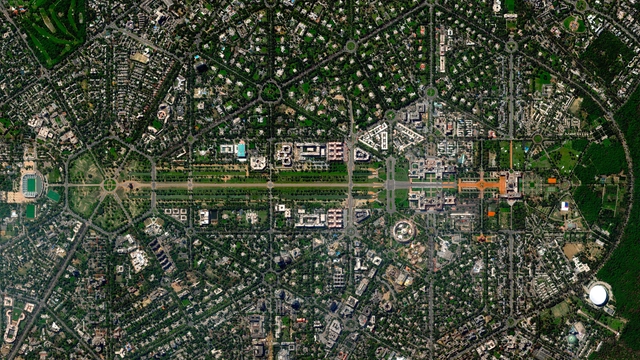
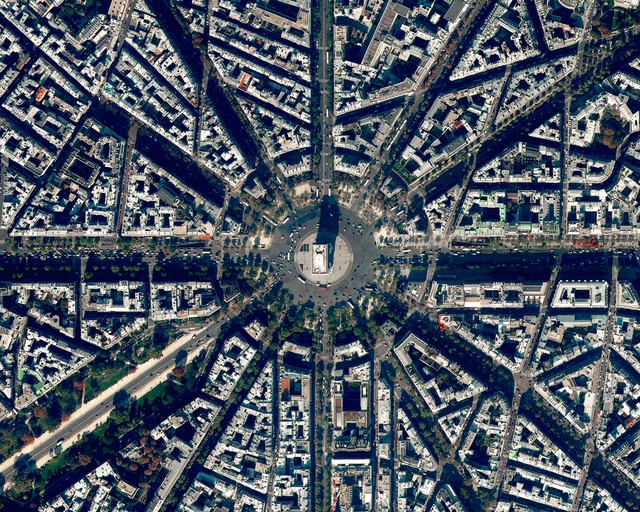
Arch of Triumph. Created by @benjaminrgrant, source imagery: @digitalglobe
In theory, urban planning is a process of elaborating solutions that aim both to improve or requalify an existing urban area, as well as to create a new urbanization in a given region. As a discipline and as a method of action, urban planning deals with the processes of production, structuring and appropriation of urban space. In this sense, its main objective is to point out what measures should be taken to improve the quality of life of the inhabitants, including matters such as transport, security, access opportunities and even interaction with the natural environment.
If you’re reading this right now, or have read an article on ArchDaily, it’s because you were in a place that enabled you to connect to the internet. Think about a time when you found yourself in a dead zone, where the internet was lagging and you were unable to connect your computer to WiFi to finish an assignment or even without the ability to connect your phone to quickly Google something. You likely dashed to the nearest coffee shop, or place where WiFi was more reliable, just to have the feeling of being online again. The internet, in an ideal world, is equally open to all providing access to knowledge and the ability to easily connect with others. But what happens when you don’t have internet? How is your life impacted if you’re on the wrong side of the digital divide and live in an area without broadband access?
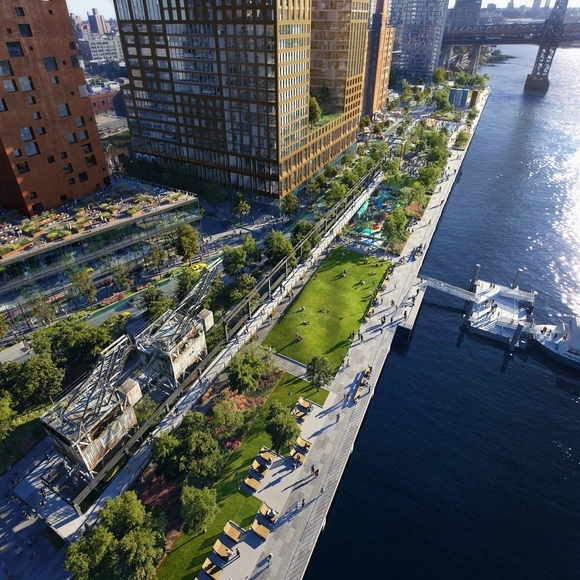
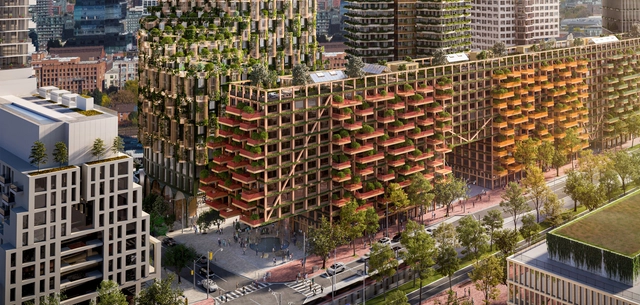
Alison Brooks Architects, Adjaye Associates, Henning Larsen and SLA to Develop Toronto's Waterfront. Image Courtesy of Waterfront Toronto
As more smart cities make their way across the globe, whether it being in countries of the Far East, Latin America, or the Middle East, Toronto is stepping back from the smart city bandwagon, and reassessing its substantial contribution to the community. The Canadian city, which ranked 15th on Global Finance's ranking of the world's best cities to live in for the year 2022, plans on "killing the smart city forever", especially after Quayside's controversial cancellation reasons, questioning its lack of privacy, necessity on an urban scale, and whether people truly want to live in a tech-driven environment.
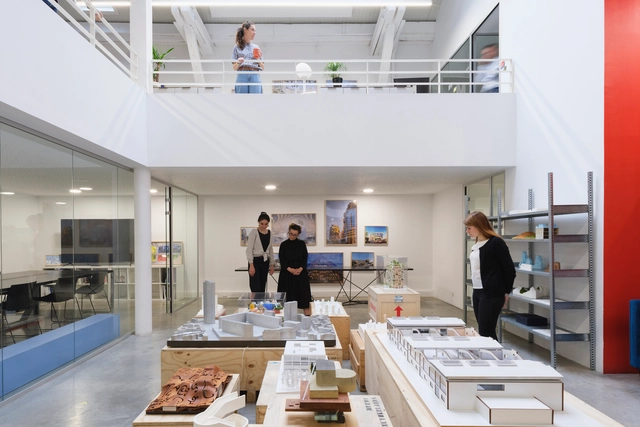
MVRDV and The Why Factory's have collaborated on an exhibition that explores the principles of "architecture and urbanism calls to action”. Titled "Agir", the exhibition is open to the public since June 9th, in the connected spaces of the ArchiLib Gallery and MVRDV’s Paris office. The exhibition takes its name from the French verb meaning “act”, and examines the activist works of MVRDV and The Why Factory, revealing its capacity to address a wide variety of environmental and social challenges.
Social responsibility and the desire to improve society has long been influenced by the built environment. Looking at city centers, architecture has contributed to the improvement of the urban fabric, whether it being through planning and zoning strategies, integration of public spaces, or small interventions. In some cases however, these interventions are in fact used as tools to keep the homeless off the streets, disguised as art or conceptual designs. Several public urban policies have all implicitly prohibited the homeless and other marginalized social groups from city centers, claiming that their presence and “irregular” use of public space could compromise the reputation, security, and desirability of the city.
An online search away from any computer are eye-level views of many of the world’s cities. This technology is powerful – allowing people to have an in-depth look at the cities they might one day visit, live in, or work in. It’s a useful tool for understanding buildings on a more comprehensive level than photographs. This technology is, of course, Google Street View – which recently turned fifteen years old.































.jpg?1655725729 "© Juan Jerez")

.jpg?1655725498 "© Juan Jerez")