Low-carbon Material Solution - ECOPlanet. Image Courtesy of Holcim
Cities are defined as densely populated geographic areas characterized by urban development. They serve as economic, political, and cultural centers, offering various services, infrastructure, and opportunities. However, urban densification has been associated with negative aspects such as health issues, pollution, and social problems. Countries like India and China, with their massive populations exceeding billions, face a significant demand for services and housing.
Recent research, including studies by institutions like the Berkeley Cool Climate Network, has brought about a paradigm shift in our perception of urban densification. This shift aims to reduce cities' carbon footprint and support collaborative efforts to achieve Sustainable Development goals. Densification is proposed as a crucial strategy for promoting social prosperity, and well-being, and combating climate change. However, a relevant question arises: How can we effectively achieve densification while addressing global warming? Companies like Holcim have responded to this challenge by developing sustainable building solutions and engaging in meaningful discussions with architects, such as Shajay Bhooshan, Associate Director at Zaha Hadid Architects. These collaborations provide valuable insights into the concept of urban densification as a catalyst for climate action.
https://www.archdaily.com/1003021/rethinking-urban-development-densifying-cities-for-accelerated-climate-actionEnrique Tovar
There are three primary settings in which lower-density urbanism can be useful, and where conditions favored by YIMBYs are weak or nonexistent: as a replacement for what is currently slated to be built out as sprawl, as a recovery process for existing sprawl, and in small towns that are growing. Giving up on these settings forces all development intended to combat the housing crisis into urban settings, ideally near transit, where land is much more expensive to acquire and to develop. It also allows the sprawl machine to roll on unimpeded.The best vehicle for implementing principles illustrated here at the scale of a neighborhood, hamlet, or village is not a major production builder, as these principles violate almost all of their conventional industrial practices. Instead, look to the record of stronger New Urbanist developers who are no strangers to doing things considered unconventional by the Industrial Development Complex in the interest of better places with stronger lifetime returns.
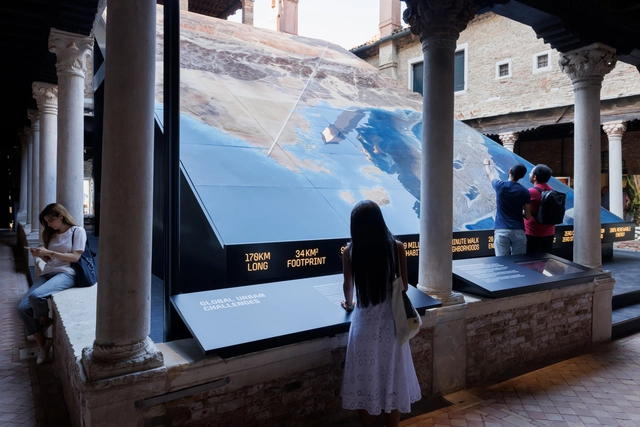
At the 18th International Architecture Exhibition of La Biennale di Venezia, NEOM has unveiled the “Zero Gravity Urbanism- Principles for a New Livability” exhibition to present the concept and standards guiding the design of the Line, their proposed 170-kilometer-long linear city in north-west Saudi Arabia. The event aims to introduce to the public an alternative vision for urban planning whose compact configuration strives to become a model for the development of more efficient and sustainable cities. Prior to the opening of the exhibition, more than 20 internationally recognized architects and designers joined the design team, including Sir Peter Cook, Massimiliano Fuksas, Jean Nouvel, and Ben van Berkel. The exhibition is open from 20 May to 24 September 2023 at Abbazia di San Gregorio, Venice.
How did we end up building an environment where the private car is often treated better than many of our fellow human beings? In the U.S., the center of car culture, parking is expected to be convenient, available, and free, writes Henry Grabar in his engaging and entertaining new book, Paved Paradise: How Parking Explains the World (Penguin Press). Parking consumes vast amounts of land; in Los Angeles County, for example, it totals about 200 square miles. In New York City alone, there are 3 million curb parking spaces (not counting parking garages), which account for 6% of the city’s area—the equivalent of 13 Central Parks! Grabar asks: What better use could we make of this space? A 2021 study revealed that if New York reclaimed just a quarter of the street space allotted to cars, the following could be created: 500 miles of bus lanes; 40 miles of busways; 38 million square feet of community space; 1,000 miles of open streets; 3 million square feet of new pedestrian space; and 5.4 million additional square feet for restaurants, businesses, and cultural institutions.
https://www.archdaily.com/1002504/why-does-america-provide-more-space-for-storing-cars-than-housing-peopleMichael J. Crosbie
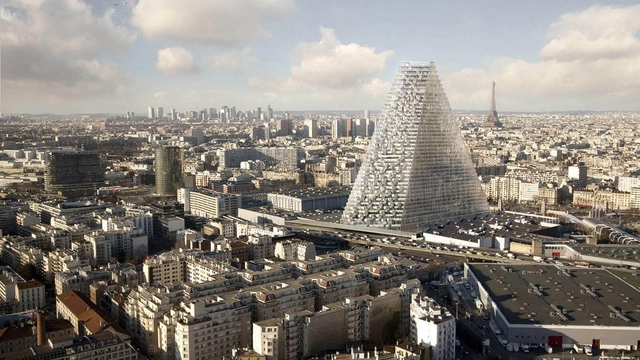
Tour Triangle . Image Courtesy of Herzog & de Meuron
The city of Paris has officially reinstated a rule that limits the height of new buildings in the French capital to 37 meters, or 12 storeys. Among the factors for the decision was the controversy surrounding the construction of the 180-meter-tall Tour Triangle, designed by Herzog & de Meuron, which began in 2021 after more than a decade of legal battles and backlash. The new urban planning regulation is introduced as part of Mayor Anne Hidalgo's Local Bioclimatic Urban Plan, which aims to reduce Paris' carbon emissions.
According to the World Population Clock, the human population reached 8 billion on November 15th. According to the UN, this milestone represents a celebration of human longevity due to improvements in public health and medicine, but it also comes with warnings about inequality, limited access to food and resources, and environmental damage. Despite the impressive number, the annual World Population Prospect report shows that the global population is growing at the slowest rate since 1950, and it predicts a continued deceleration in the second half of this century.
As more than half of the worldpopulation lives in cities, an estimated 55.7%, according to UN-Habitat’s latest reports, the urban challenges are growing exponentially. The UN expects this number to increase to 68% by 2050, with close to 90% of this increase taking place in Asia and Africa. Accelerated urbanization can pose significant risks, such as increasing inequality, poverty, sectorized development, social exclusion, and pollution. In this context, a well-balanced urban agenda becomes crucially important in achieving inclusive, safe, and sustainable cities.
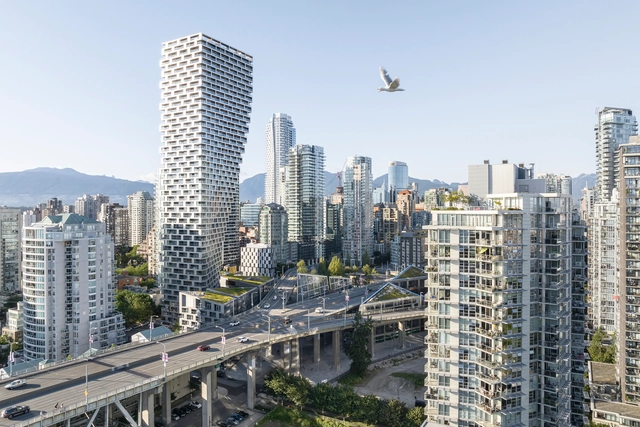
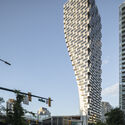
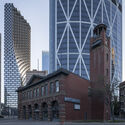
BIG – Bjarke Ingels Group has released a photo series of the Vancouver House and the Telus Sky towers, captured for the first time since their opening in 2020 during the pandemic. In a sort of "yin and yang," both skyscrapers are shaped by a curvilinear silhouette that involves the surrounding like a giant curtain revealing the building to the skyline.
The 220-meter-tall Telus Sky tower, and the 149 meters high Vancouver House, accommodate mixed-use offices and residential spaces, with connections to cycling and pedestrian pathways in their platforms. Moreover, both hold the highest level of Energy and Environmental Design. Vancouver House is the city's first LEED Platinum building, and TELUS in Calgary now occupies the largest LEED Platinum footprint in North America, with 70,725 square meters.
Co-living is a residential community living model, referring to a modern form of group housing that has significantly transformed London life and the UK as a whole. The notion of co-living has even more so been popularized by the rise of housing startups, with many offering affordable housing in homes and apartments alike shared by a handful of adult housemates.
The Saudi Arabian government has released visuals of a 170-kilometer-long skyscraper as part of the NEOM project. Announced by crown prince Mohammed bin Salman, The Line is a reimagined urban development linking the coast of the Red Sea to the mountains and upper valleys of northwest Saudi Arabia. The compact structure, 200 meters wide, represents a social and economic experiment. The city aims to be zero-carbon, through the elimination of carbon-intensive infrastructures like cars and roads, and will operate on 100% renewable energy, including the operations of its industries.
In the 1960s and 1970s, a series of critiques of the modern city appeared. Jane Jacobs’s attack on those intent on redeveloping New York City was the most immediately impactful, loosening the grip of Robert Moses and his followers, but others had a broader influence on practicing architects and planners. As an observer of San Francisco Bay Region’s cities, I wondered if their books from this period would shed light on current issues of adding density in urban contexts.
https://www.archdaily.com/985024/how-do-the-critics-of-yesteryear-think-about-urban-densityJohn J. Parman
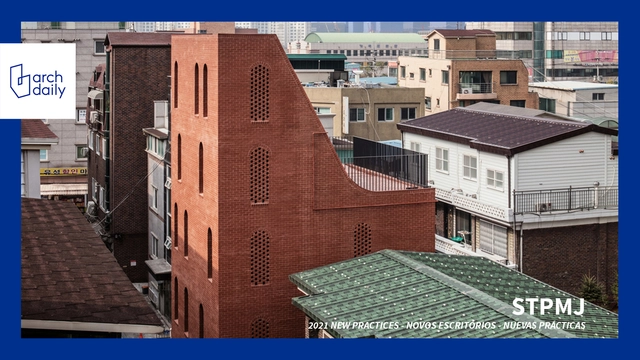
Seoul, similar to numerous large cities across the globe, are characterized by land scarcity, overpopulation, staggering real estate prices, and urban segregation. These living conditions forced architects and urban planners to pursue alternatives, (re)introducing new models of co-living, low-cost housing in suburban areas, and mixed-use developments. However, proximity to work, educational, commercial, health facilities, and public transportation, as well as optimized infrastructure and better governance have sustained living within compact city boundaries desirable. Tucked within the busy streets of Gangseo-gu, Five Story House by stpmj is a project that explores the relationship between single-family housing and dense urban contexts beyond investment value and contextual constraints.
The new, online NYC Climate Dashboard confirms that New York City is not doing enough to meet its climate goals. What’s worse, the goals don’t measure up to the challenge citizens face. A growing consensus among scientists says the world has only until the end of this decade to avert catastrophic climate change. Here in New York, the biggest contributions to greenhouse gasses come from our buildings and our driving. As an architect and urban designer, John Massengale shares what he believes the world is missing and some significant changes that the world can make for the sake of future generations.
The 2021 edition of Dutch Design Week (DDW) that took place in October in Eindhoven brought forward a range of explorations and innovative ideas that have the potential of shaping a positive future in the direction of less waste and sustainable consumption. As part of the programme, the Future Cities talk discussed the challenges faced by urban environments and addressed the potential of carefully considered inward growth and densification in tackling housing shortage and achieving sustainable development.
Planning cities and the way that we comfortably live in them is often a pull between many things. From creating affordable housing for all, enhancing community facilities and amenities, and designing walkable neighborhoods, all aspects of urban design have trade-offs, or do they? While there are many reasons why cities are becoming increasingly more expensive, dense, and less pedestrian-friendly, one of the key drivers behind the increase in unaffordability has to do with the way that outdated zoning codes drive the lack of available housing that they regulate.
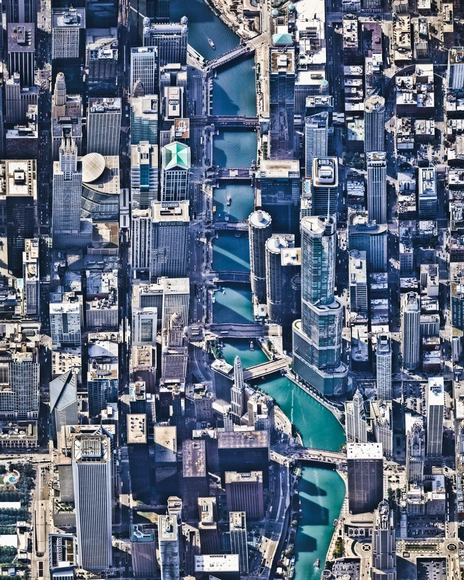
Chicago, United States. Created by @overview. Source imagery: @nearmap
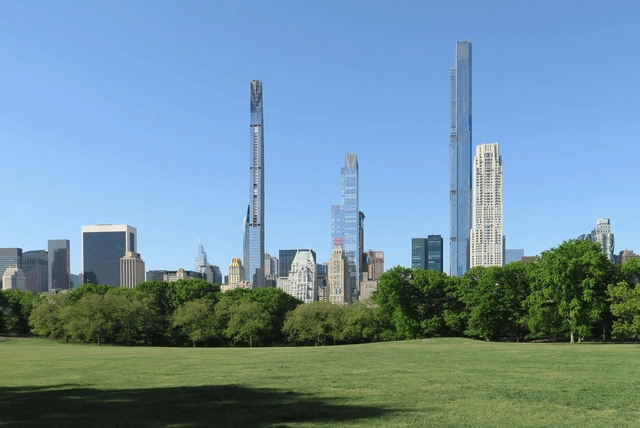
Because of the decrease in the availability of land area and the ever-increasing price per square meter, cities often tend to grow vertically. When we picture large metropolitan areas, we almost always imagine high-rise buildings, and the recognizable skyline becomes an icon that immediately evokes the places in which they are located.
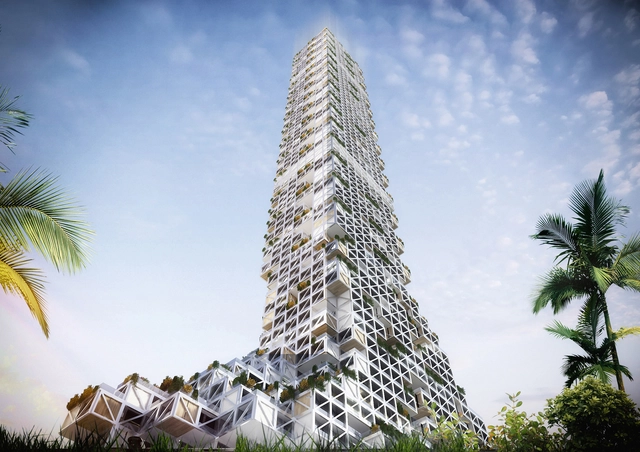
Dubai Nhabitat, a mixed-use tower proposed by Ankara-based firm rgg Architects, utilizes its own unique formal system to create "permeability through different materials and building tectonics." The tower is an aggregate of individual modules that can be enlarged or shrunk by an "8mx8m grid" based on programmatic needs, creating views and outdoor spaces unique to each spatial arrangement.
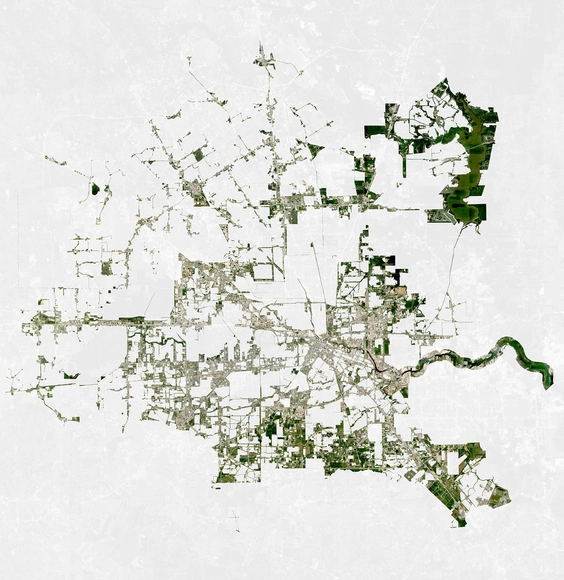
Pritzker Prize winner Thom Mayne has completed a three-semester–long study of Houston’s future, given its current sprawling urban conditions and rapid growth. The project, conducted alongside 21 University of Houston students and faculty members Matt Johnson, Peter Zweig, and Jason Logan, focused on ways of addressing the problems that arise from Houston’s historical lack of zoning in conjunction with the largely unregulated growth of industry and capitalism. These approaches include reinventing the current energy infrastructure, changing real estate and density, and leveraging the lack of zoning to generate new ideas.
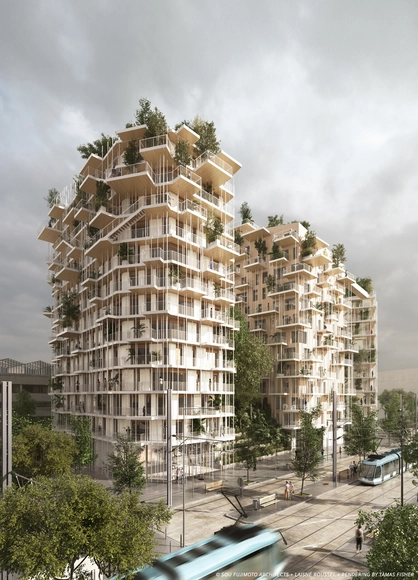
Nowadays the main building materials used in the construction industry are concrete, steel and timber. From the point of view of ecological sustainability, there are four important differences between these three materials: first, timber is the only material of the three that is renewable; second, timber needs only a small amount of energy to be extracted and recycled compared to steel and concrete (but the implementation of its potential is not as developed yet); third, timber does not produce waste by the end of its life since it can be reused many times in several products before decomposing or being used as fuel and; and fourth, timber traps huge amounts of carbon from the atmosphere – a tree can contain a ton of CO2 [1] – and the carbon absorbed remains embedded as long as the wood is in use.
Considering the fact that 36 percent of total carbon emissions in Europe during the last decade came from the building industry,[2] as well as 39 percent of total carbon emissions in the United States,[3] the materiality of construction should be a priority for governments’ regulations in the future as measurements against global warming. The amount of CO2 in the atmosphere and the level of carbon emissions of the big economies across the globe are big issues that need to be solved with urgency in order to avoid larger, more frequent climate catastrophes in the future. The current regulation in several countries of the EU, which is incentivizing the use of renewable materials in buildings, is showing the direction the building industry in many other parts of the world should follow. And if these measures are adopted across the EU and beyond – if other countries start to follow this tendency as well – there will be significantly more wood in cities.




























.jpg?1656064406 "© Bae Jihun")