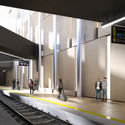
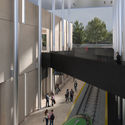
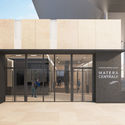
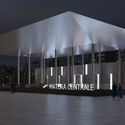
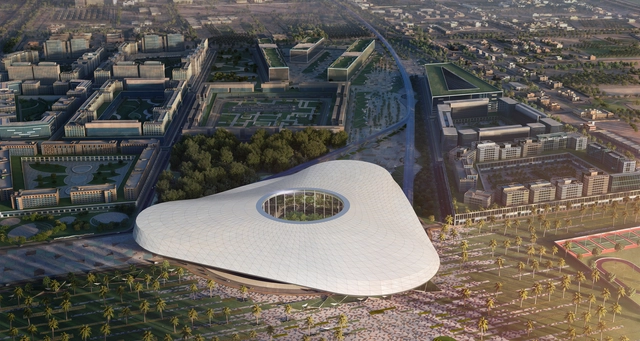
Stefano Boeri Architetti has released images of their proposed renovation of Matera Central Station in Southern Italy. Matera Central FAL railway station will be structurally altered through an “aesthetic and functional redevelopment together with technological upgrading of the railway itself.”
The proposal seeks to alter the existing hierarchy of space in the city by making the transport hub a genuine and significant urban landmark, rather than simply an infrastructural node. The scheme is therefore designed to incorporate a recognizable, pedestrianized public square, forming connections with the nearby historic city center.
Mercer released their annual list of the Most Livable Cities in the World last month. The list ranks 231 cities based on factors such as crime rates, sanitation, education and health standards, with Vienna at #1 and Baghdad at #231. There’s always some furor over the results, as there ought to be when a city we love does not make the top 20, or when we see a city rank highly but remember that one time we visited and couldn’t wait to leave.
To be clear, Mercer is a global HR consultancy, and their rankings are meant to serve the multinational corporations that are their clients. The list helps with relocation packages and remuneration for their employees. But a company’s first choice on where to send their workers is not always the same place you’d choose to send yourself to.
And these rankings, calculated as they are, also vary depending on who’s calculating. Monocle publishes their own list, as does The Economist, so the editors at ArchDaily decided to throw our hat in as well. Here we discuss what we think makes cities livable, and what we’d hope to see more of in the future.
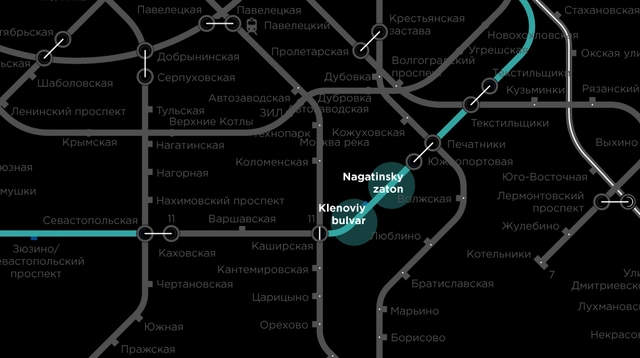
The main objective of the Competition is to find the unique architectural-artistic solutions for interiors of passenger areas and entrance halls of the two new metro stations - “Nagatinsky zaton” and “Klenoviy bulvar”. These are the stations of the Third interchange circuit and will be located in South administrative district of Moscow.
Metro and subway maps can tell us a lot about cities. For example, by comparing metro maps from different cities, you might be able to understand those cities' relative size or level of development. Or, by comparing a metro map to an earlier version from the same city, you can learn about the pace of development being experienced in that city. What these "maps" rarely tell you with any reliability, though, is the actual geography of the city itself.
In a fascinating series of posts over at /r/dataisbeautiful earlier this year, Reddit users created GIFs comparing the official metro maps of cities around the world with the real geography those maps correspond to. The results show the incredible changes that cities are subjected to in the name of visual clarity: in cities such as London, Tokyo, and Berlin, transit maps expand the urban core, masking the density at these regions' centers; in other cities such as Washington DC, shortened lines hide the extent of the city's suburbs; while in some cities, entire neighborhoods are moved to the other side of the city to make the map layout more attractive (we're looking at you, Prague). Read on to see 11 of the best creations by Reddit users.
The drive to introduce autonomous vehicles to the roads took a blow yesterday, when a self-driving shuttle bus in Las Vegas was involved in a minor collision with a truck—just 2 hours into the vehicle's first day of operations. The bus, a 12-seat Navya Arma, was on the first day a 12-month trial covering a 0.6-mile (1-kilometer) loop in Las Vegas' Fremont East “Innovation District” when it was grazed by a reversing truck.
In a blog post by the city of Las Vegas, the blame was placed on the driver of the truck, who was cited by city officials for illegal backing. However, according to The Guardian, passengers at the time said the crash could have been avoided if the shuttle had simply backed out of the truck's way.
Aerial Futures: Leading Edge is lively, provocative and interdisciplinary symposium examining the architecture, technologies and cultures of the contemporary airport. Curated by PLANE—SITE and free to attend, this two-day event understands the airport as a choreographed topography of hypermobility, information and cultures, defining how we travel, trade and connect with each other. It marks the threshold between land and sky, as well as sovereign territories. The airport — what the philosopher Giorgio Agamben describes as a ‘zone of exception’ where the ordinary rules no longer apply — is where the definitive issues of the 21st century play out.
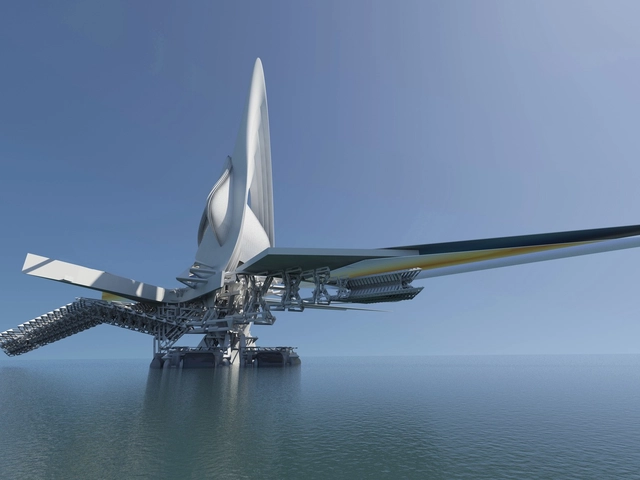
Dr. Margot Krasojević, known for creating impossibly futuristic architecture has unveiled her latest project: a bridge that can sail across the water. Dubbed the “Revolving Sail Bridge” - the experimental project was commissioned by the Ordos government in the Kanbashi District of Inner Mongolia (China) to be built across the Wulamulum River. Featuring a main floating section topped with a carbon-fibre triple sail, the flexible structure is capable of sailing anywhere across the river to relocate itself.
One general trend in today's Information Age involves the absolute transmutation of downtime into productivity or engagement of any kind, however meaningless. We hear it all the time: we have lost our ability to be still. However, as a team at Ennead Lab has observed, some of the same technologies that are causing this shift in routine also have the potential to open new, empty pockets of time in our daily lives, and affect the built spaces with which we interact.
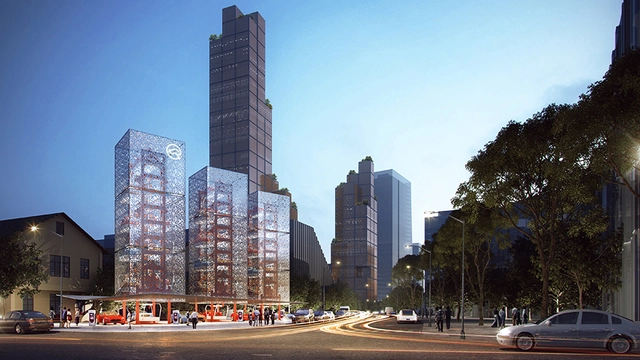
Tasked with designing an electric car charging station for a development in Shanghai, Ennead realized that the five hours required to fill up a single standard charge necessitate a place for customers to wait. In an article on Metropolis Magazine, they show that the promise of transportation-less people to stick around in one place for such a period of time opens up a host of possibilities for what could fill the latency period; the Shanghai project, however, focuses on the opportunity to create a civic space. The team has imagined the modern "gas station" as a vertical charging tower that calls upon the functionality of urban parking elevators in the 20th century, this time clad in reflective silver to serve as a beacon for customers in search of a charge. Rather than standalone charge-park towers, the projects are integrated into a system that encourages patrons to walk to neighboring zones to eat, shop, and socialize while they wait.
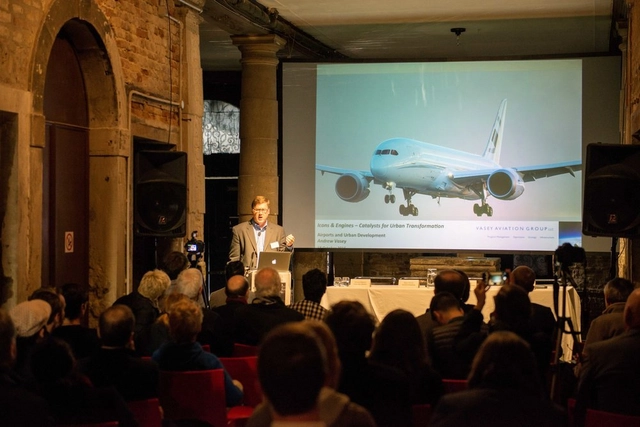
Aerial Futures, Grounded Visions: Shaping the Airport Terminal of Tomorrow was a two-day symposium held in October 2016 as part of the European Cultural Center's collateral event at the 2016 Venice Biennale. It encouraged discussion about the future of air travel from the perspectives of architecture, design, technology, culture and user experience. The event featured presentations and discussions by the likes of airport architect Curtis Fentress, Nelly Ben Yahoun, Donald Albrecht, Director of the Museum of the City of New York; Anna Gasco, post-doctoral researcher at the ETH-Future Cities Laboratory in Singapore; Jonathan Ledgard, co-founder of the Droneport Project; and Ashok Raiji, Principal at Arup New York.
https://www.archdaily.com/803677/aerial-futures-grounded-visions-the-airport-terminal-of-tomorrowAD Editorial Team
In an age when companies of all types are seeking diverse and creative ways to achieve their goals, the traditional model of architectural practice appears to be increasingly old-fashioned. Last year, one of the most dramatic changes in the make-up of architectural practice was the foundation of product design firm BIG Ideas, an off-shoot of Bjarke Ingels Group, which is tasked with solving problems that are usually outside the scope of an architect's work. In this interview, originally published by Archipreneur in their "Archipreneur Insights" series as "Making BIG Ideas Happen Through Design With Jakob Lange," the head of BIG Ideas speaks to Tobias Maescher about the foundation of this entrepreneurial company and the value of keeping such close connections between a product design company and its parent architecture firm.
Today’s interview is with Jakob Lange, Partner at BIG (Bjarke Ingels Group) and Head of the BIG Ideas project unit, which was established in 2014. With this unit, BIG is broadening the scope of their architectural practice to a wider field. Combining technology and product design, this remarkable incubator creates prototypes, products and new materials within the building industry.
The Friday Smart Lock, an electronic door lock that pairs with a user’s mobile device, is one great example of an innovative product the team at BIG have helped to produce. They have also utilized creative methods for financing their projects, including a recent Kickstarter campaign for the prototype of a steam ring generator at a BIG-designed power plant in Copenhagen.
We think it is fascinating that one of the world’s most innovative and successful architectural offices is moving into other fields of practice—a very archipreneurial move! However, this is just one of many ways that architects can apply their skillsets to future business innovations. Here are Jakob’s thoughts on architecture, design and product development.