Construction has begun on The Independent, a 685-foot residential tower set to be the tallest of its kind, located west of the Mississippi in Austin. Designed by local practice Rhode Partners, major progress in shaping the building’s stacked and offset form has been made, through the setting of the 24th floor to create the first of these tiers, which encompass 58 stories and 370 units.
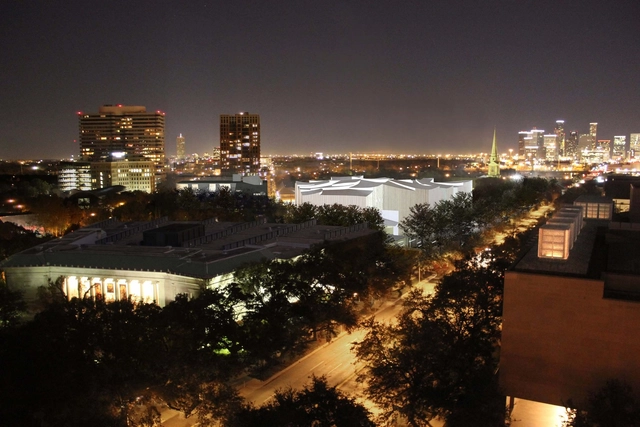
Steven Holl Architects has broken ground on the Nancy and Rich Kinder Building for Modern and Contemporary Art at The Museum of Fine Arts in Houston, Texas. Selected through an international competition in 2012 among finalists Snøhetta and Morphosis Architects, the winning proposal is a 164,000-square-foot museum building that will be one of the campus’s two newest additions. To expand and unite its campus as an integral experience, the Museum is also realizing a new Glassell School of Art also designed by Steven Holl Architects, totaling a 14-acre redesign led by the office.
Louis Kahn’s Kimbell Art Museum is a masterclass in natural lighting, with thin-shelled concrete vaults that feature subtle openings to reflect light into the galleries below. While Kahn’s wing of the Fort Worth Museum opened in 1972, in 2013 a second Renzo Piano-designed pavilion was added to the complex. Piano was selected to design the addition because he had worked for Kahn as a budding architect, and the homage to his former mentor is evident in the building’s similar layout and use of translucent glass panels. In this video, architect-photographer Songkai Liu takes viewers on a serene stroll through the museum’s campus. Time-lapses and pans of Kahn’s concrete are juxtaposed with the clean details of Piano’s glass in a soothing exploration of the two complementary projects.
Now, a new pool at Houston’s Market Square Tower is upping the ante even further with a transparent plexiglass wading pool that projects out 10 feet past the end of the building – and 500 feet above the busy street below.
https://www.archdaily.com/868968/this-glass-bottomed-sky-pool-is-suspended-500-feet-from-the-groundAD Editorial Team
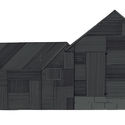
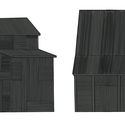
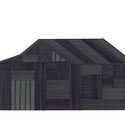
John Redington, a Texas-based illustrator, documents abandoned rural sheds and their modest architectural impact. In this visual essay he reveals this unseen, underrepresented vernacular arguing that the "shaky charm of the abandoned shed could offer a look into a more humble form of inspiration for architects."
The car rattles on a loose road as thick white dust rises from the back of its tires. On either side seas of sunburned grass just barely keep themselves from breaking onto the path. The sky sits heavily on the horizon, as the fragrance of both wild and cultivated plants fill the air.
We are now accepting applications for our second year of the MFx WORKSHOP. Like last summer, we will have a team of paid, full-time positions available for undergraduate and graduate students to join our crew from June 5 to August 11.
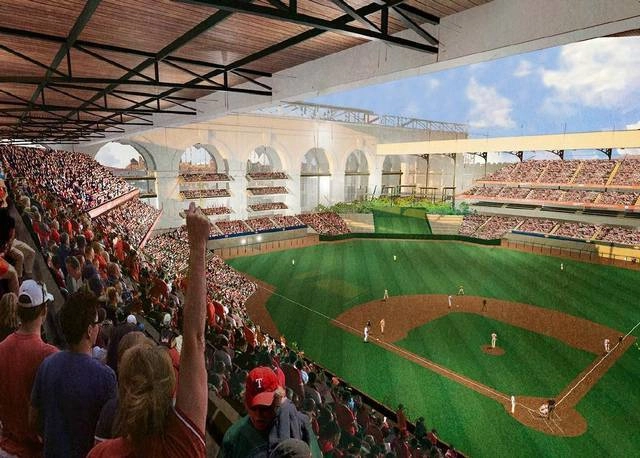
HKS Architects has been selected to design a new Major League Baseball stadium for the Texas Rangers, to be built in Arlington, Texas. As part of a new multipurpose sports and entertainment venue, the stadium will feature a retractable roof for climate control and shelter during the hot Texan summers.
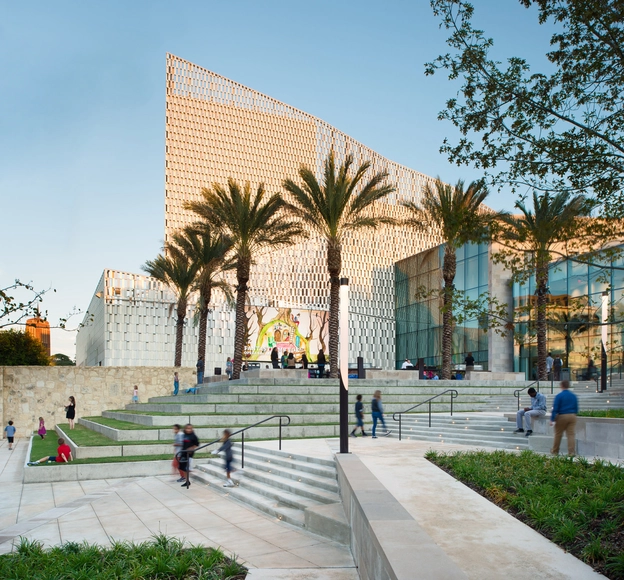
“Designed by LMN Architects in partnership with executive architects Marmon Mok Architecture, the $150 million expansion and renovation project embrace the multi-faceted cultural identity of the city with a distinctive tapestry of form, materiality, light, and landscape" stated Mark Reddington, FAIA, lead designer and partner at LMN Architects.
Completed in 2014, the project incorporates a metallic veil that wraps program elements in programmable LED lighting, in order to create a variable play of light on the city’s skyline.
New York’s Architecture Research Office (ARO) has been selected to lead in the renovation and master planning of the Rothko Chapel in Houston, Texas. The project aims to modernize and improve the renowned structure, which houses 14 monumental paintings by Mark Rothko in an interior space designed to meet the artist’s precise specifications, and its surrounding plaza and reflecting pool. The original building was largely designed by Rothko himself, with consult from a trio of architects including Philip Johnson.
North façade of the Moody Center for the Arts at Rice University, Houston, TX. Image Courtesy of Michael Maltzan Architecture, Inc.
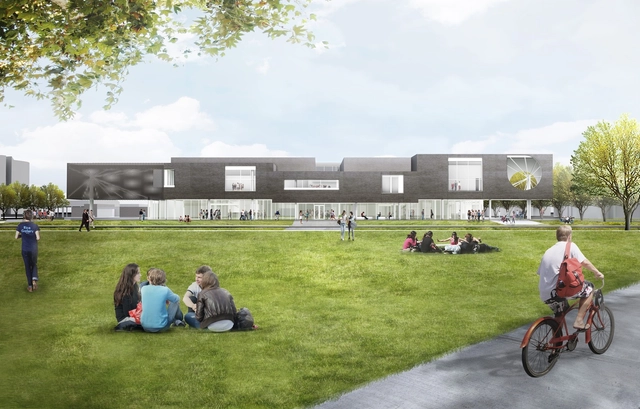
Michael Maltzan Architecture has released new images of their design for the Moody Center for the Arts at Rice University in Houston, Texas, coinciding with the announcement that the building will open to the public on February 24, 2017. The building is conceived as a multi-disciplinary lab for creativity, which will contain “an experimental platform for creating and presenting works in all disciplines” as well as a flexible teaching space and a forum to host partnerships with visiting national and international artists.
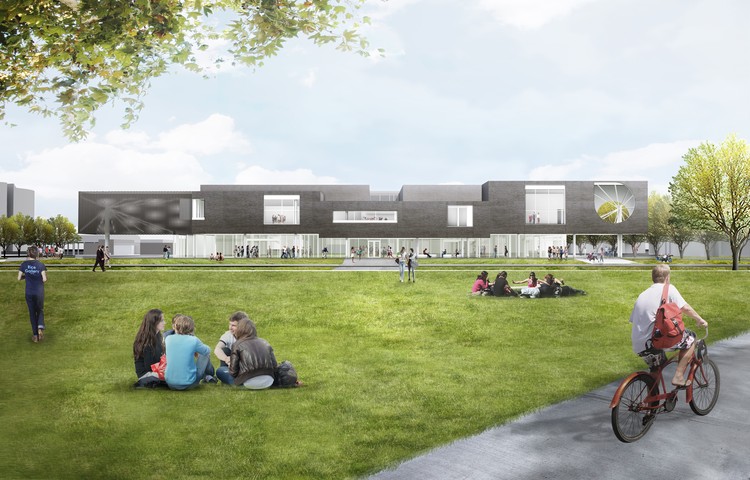
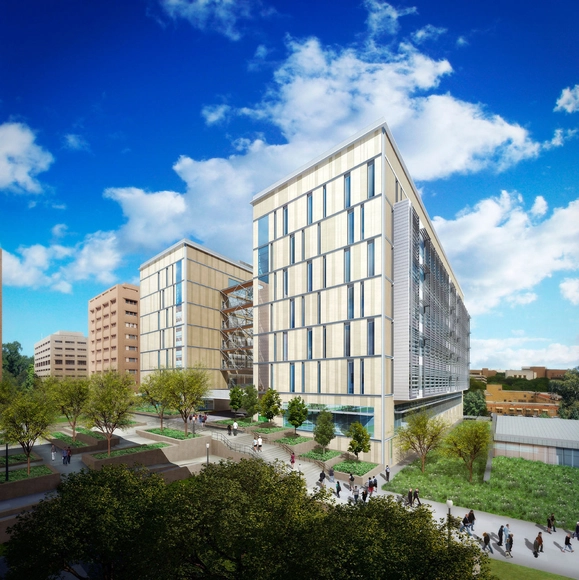
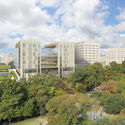
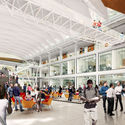
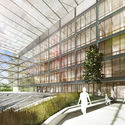
Ennead Architects has released images of the new Engineering Education and Research Center for the University of Texas at Austin’s Cockrell School of Engineering. Currently under construction, the 433,000 square foot (40,200 square meter) building will house undergraduate education, interdisciplinary graduate research and two distinct engineering departments, and will become a new hub of activity at the edge of campus. The design takes advantage of a unique section featuring stacked atrium and outdoor spaces to serve a variety of educational and public functions.
Deep Ellum developed in the late 1800s as a residential and commercial neighborhood on the east side of Downtown Dallas. The early 1900s flourished with industrial development, serving factory facilities for the Continental Gin Company and Henry Ford’s Model T. Deep Ellum’s real claim to fame was found in its music. By the 1920s, the neighborhood had become a hotbed for early jazz and blues musicians, hosting the likes of Blind Lemon Jefferson, Huddie “Leadbelly” Ledbetter, Texas Bill Day and Bessie Smith. Following WWII, the success of Deep Ellum started to fade. The ever-growing availability and use of the automobile led to the removal of the Houston and Texas Central railroad tracks -- to make way for the Central Expressway-- and by 1956 the streetcar line had been removed. Businesses closed and residents moved, and in 1969 a new elevation of Central Expressway truncated Deep Ellum, completely obliterating the 2400 block of Elm Street.
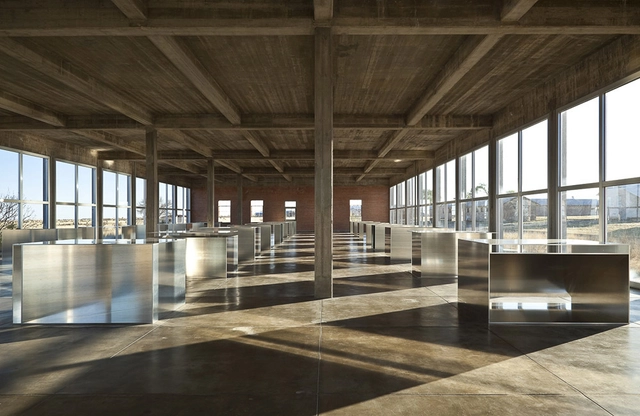
Completed in 1986, Donald Judd's 100 aluminum boxes offer one of the most exciting locations to study the grace of minimalism. His vision at Marfa in Texas has transformed a piece of military history into a peaceful and unique environment for art and architecture. Here, the shimmering material transcends the formal strictness of plain patterns and the narrow concepts of minimalism. The multiple reflections of light and space create an illusionary atmosphere beyond ascetic ideas.
Walk the Talk—A talk and tour about “missing middle” housing in Austin
Walk the Talk—A talk and tour for people interested in learning more about “missing middle” housing in Austin. Join us for a panel discussion and self-guided tour of "missing middle" housing types—such as duplexes, fourplexes, courtyard housing, and accessory dwelling units—in the Blackland and Cherrywood neighborhoods. Our expert panel represents varied perspectives on the subject. After a Q&A session, participants can easily bike or walk to the missing middle sites in the neighborhood. We welcome you to join the conversation!
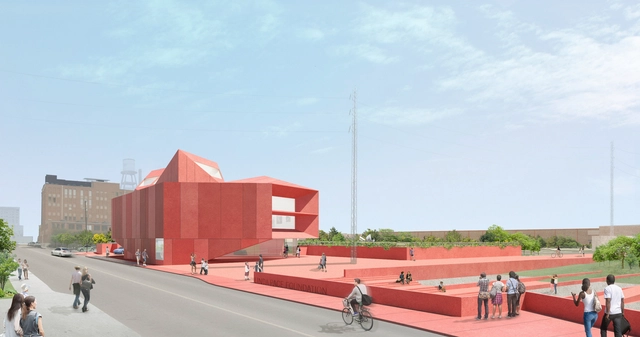
The Linda Pace Foundation has unveiled plans for a new building designed by Adjaye Associates. Planned to open in San Antonio, Texas in 2018, "Ruby City" will house the Foundation's growing collection of contemporary art. The two-story structure, clad in "crimson-hued panels of precast concrete with glass aggregate," will be distinct with its "dramatic rooftop of sloping angles and skylights that rise to varying heights and echo cut-away spaces at the building’s base."
Kaufmann House by Richard Neutra, 1947. Renovated by Leo Marmol, Marmol Radziner, the featured speaker at the "Modernism" Symposium
Leo Marmol is one of the world’s leading authorities in the restoration of iconic Mid-Century Modern and International style residences, including the Kaufmann House by Richard Neutra in Palm Springs, considered one of the most important residences of the 20th Century. His firm also incorporates those timeless concepts into new architecture, including product design exemplifying these design elements. Marmol will overview his firm’s landmark restoration projects, and discuss how the firm integrates Mid-Century design elements into their new construction and pre-fab projects, producing award-winning residences.
Texas and clean energy are hardly considered synonymous. However, as uncovered by a recent article in the Wall Street Journal, Texas has emerged as an unexpected leader in solar power, with $1 billion now being invested in solar energy infrastructure with an aim to produce up to 12,500 megawatts of solar electricity by 2029. To mark this important moment in US energy production, the New Jersey Institute of Technology has produced this infographic revealing the benefits (and drawbacks) of solar energy for the average American consumer, including everything from the history of solar energy to incentives available for solar systems nationwide. Read on to view the infographic in full.
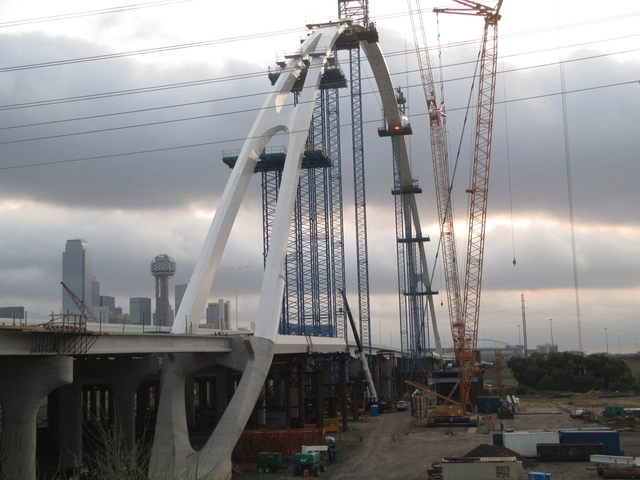
Santiago Calatrava has topped out on his second Dallas bridge - the Margaret McDermott Bridge - two years after completing the Margaret Hunt Hill Bridge. The steel arch, reaching a height of 275 feet, is the first of two that will support the 1311-foot-long bridge that is intended to provide access to pedestrians, bicyclists and cars over the Trinity River. The $113 million bridge is part of the massive $798 million Dallas Horseshoe Project that aims to alleviate traffic and enhance accessibility downtown. It is scheduled to complete by the summer of 2017.


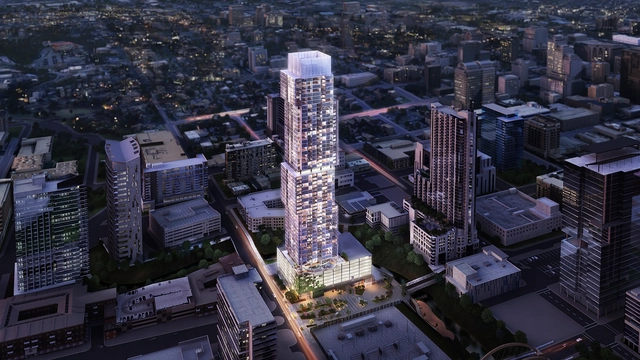

.jpg?1502671282 "Courtesy of The Independent")