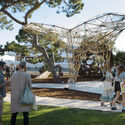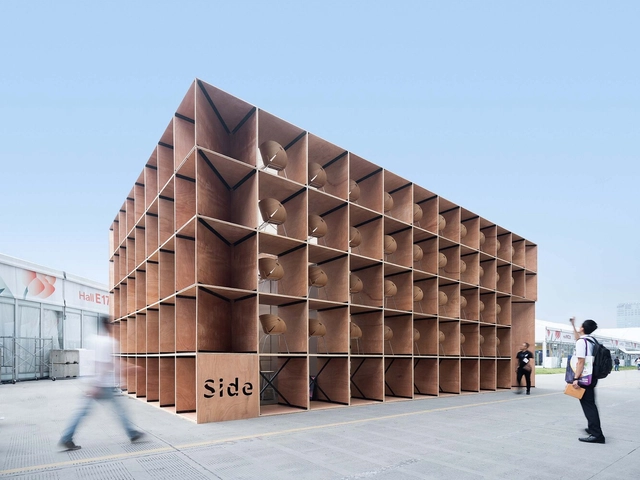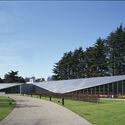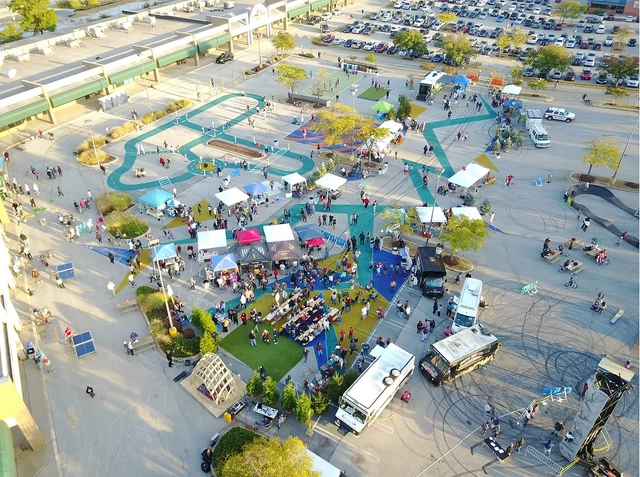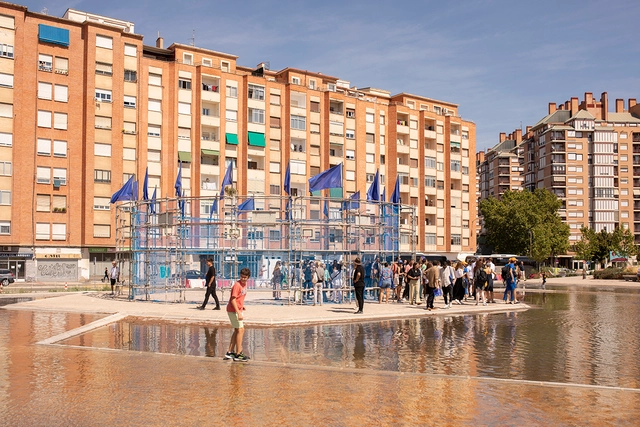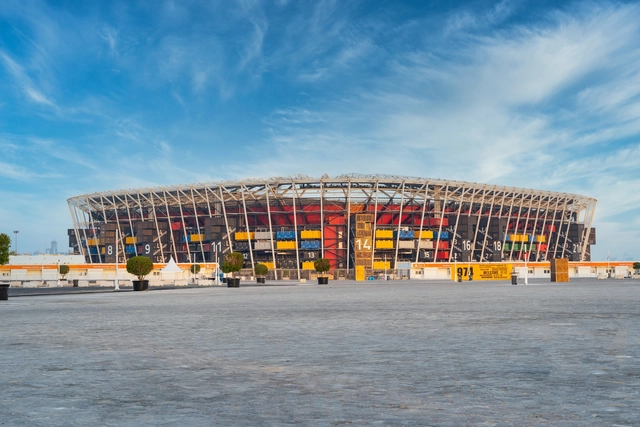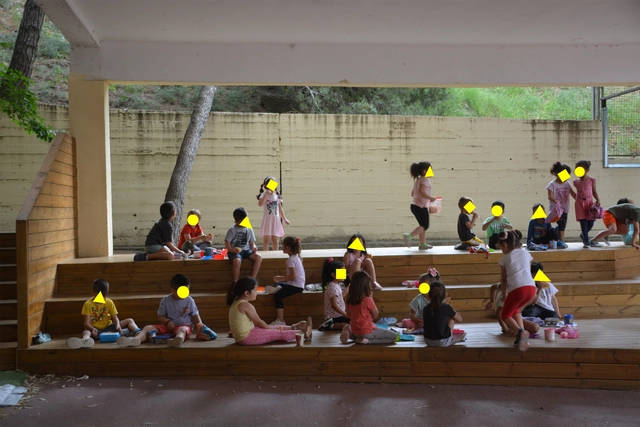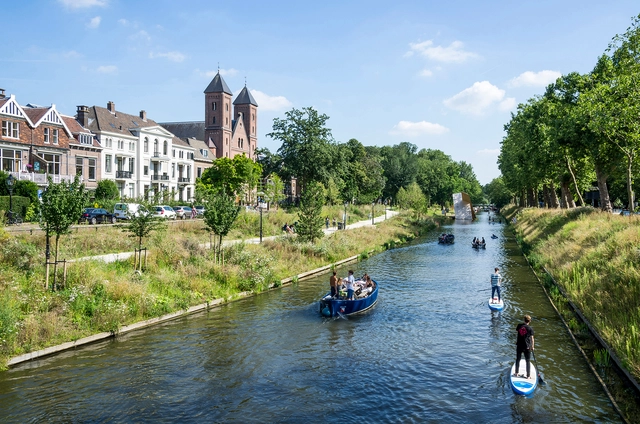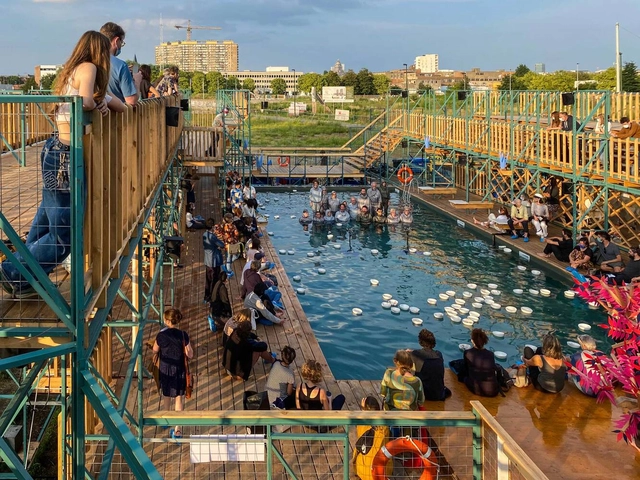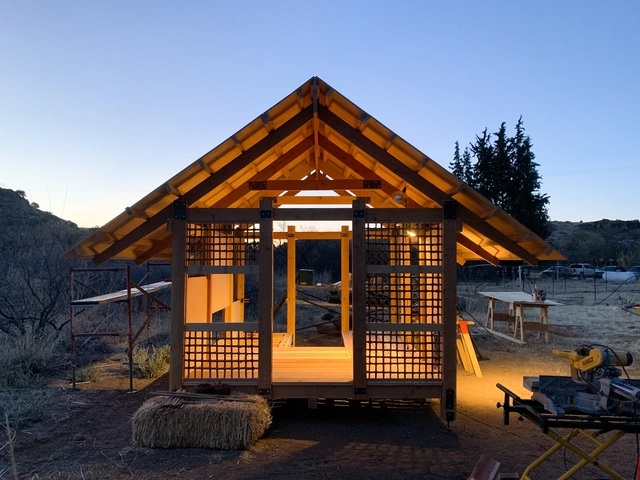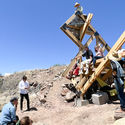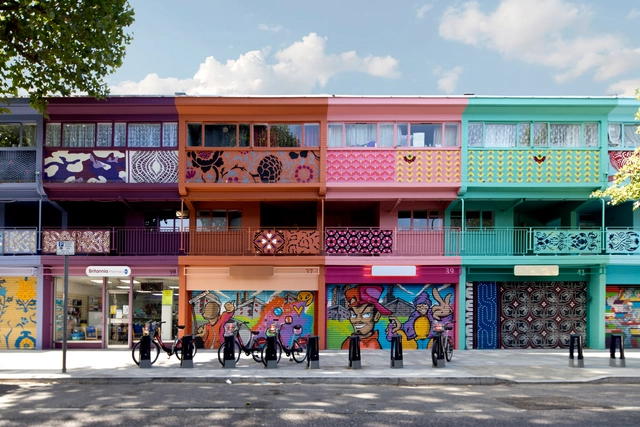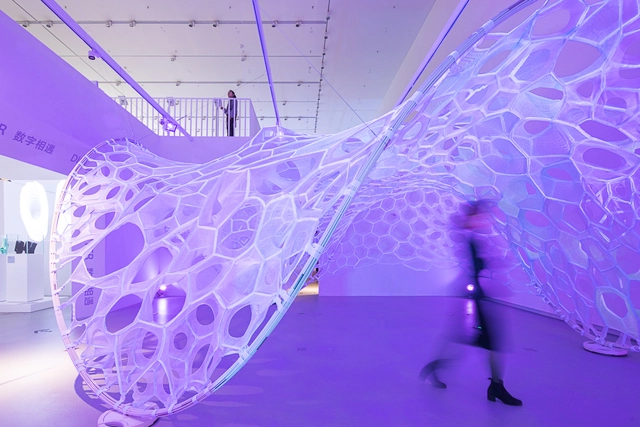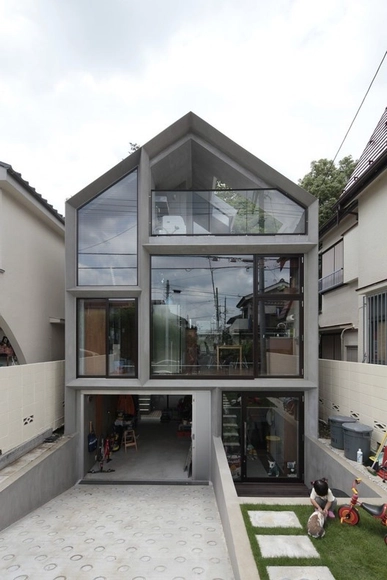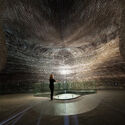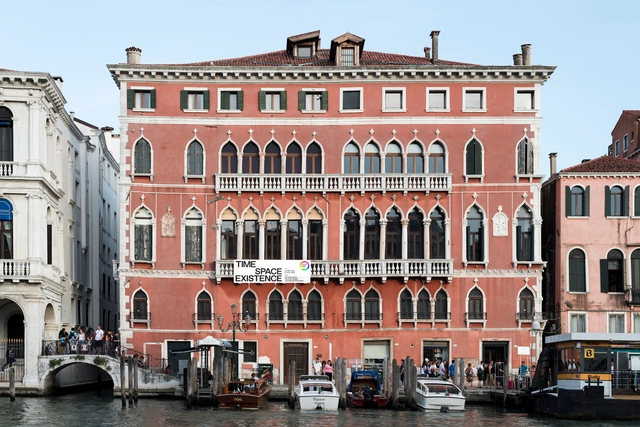
FLOW, 2021 / POOL IS COOL, Decoratelier Jozef Wouters. Image Cortesía de CCCB
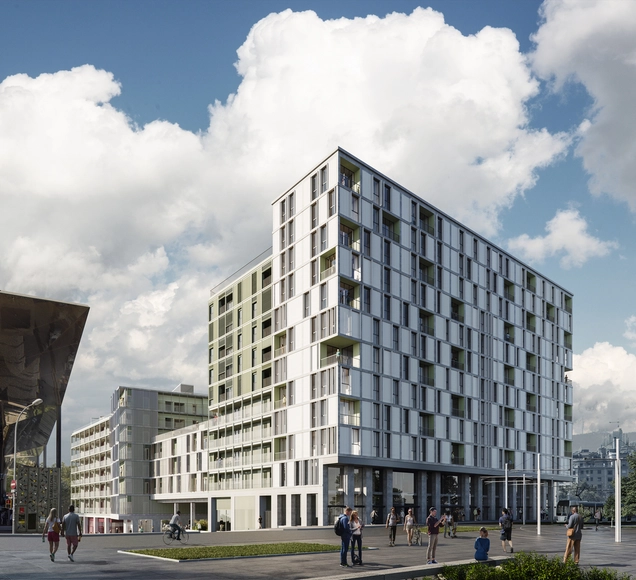
The European Prize for Urban Public Space is a biennial, honorary competition organised by the Centre of Contemporary Culture of Barcelona (CCCB), which, following its exhibition "The Reconquest of Europe" in 1999, decided to create a permanent observatory of European cities. The prize has been awarded since 2000, recognising the best interventions for the creation, transformation and recovery of public spaces in Europe.
The School of Architecture, founded by Frank Lloyd Wright as the Taliesin Fellowship in 1932, is undergoing significant transformations. Two years after separating from the Frank Lloyd Wright Foundation, TSOA landed at Arcosanti, an experimental desert community in Arizona owned and operated by The Cosanti Foundation. In line with the school’s values, the program at Arcosanti seeks to provide students with a contemporary design education based on immersive, experimental, and experiential learning. The curriculum offers 2 and 3+ year NAAB-accredited Master of Architecture degrees and a 1.5-year Master of Science in Design-Build.
The award-winning firm based in London, England, Jan Kattein Architects, works to realize the civic and spatial opportunities that architecture presents’ with their projects establishing a social and physical legacy, achieved by embracing an open, interactive design process that responds positively to the needs and aspirations of the clients.
Allowing the process to drive each individual project, their method stimulates innovative design, seeking to add benefits through education, economic growth, cultural activity, and greater community coherence.
Architecture in its broadest sense concerns itself with the uprooting of structures that are permanent, cementing themselves within the greater cultural context and history of its humanity, however, where do we place the creation of structures that are designed with the intention to be disassembled. How much meaning and value can these structures hold, knowing they were never designed to last, but to simply take up space for a moment?
In most countries around the world, value is placed on older buildings. There’s something about the history, originality, and charm of an older home that causes their value to sometimes be higher than newly constructed projects. But in Japan, the opposite is almost always the preference. Newly-built homes are the crux of a housing market where homes are almost never sold and the obsession with razing and rebuilding is as much a cultural thing as it is a safety concern, bringing 30-year-old homes to a valueless market.
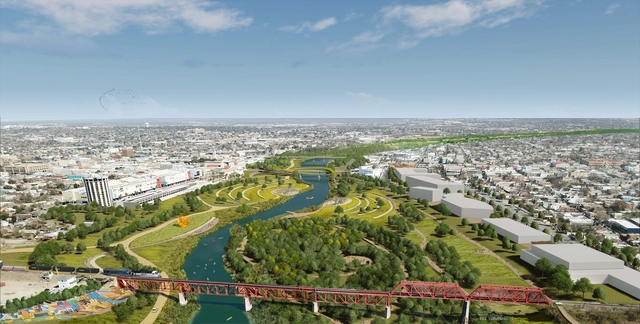
As part of a strategy developed in late 2021 by Ken Salazar (US Ambassador to Mexico), Deanna Kim (US Consul General in Nuevo Laredo), and Esteban Moctezuma (Mexico Ambassador) in collaboration with leaders politicians, and businessmen from the southern region of Texas and the Mexican state of Tamaulipas, Overland Partners has been announced in conjunction with Able City as the creators of the new 6.3-mile "Binational River Park" that will extend along the Rio Grande - Rio Grande between Laredo, Texas and Nuevo Laredo, Mexico. This new space aims to restore and revitalize the ecosystem as well as attract tourism and celebrate the multiculturalism that takes place in this border territory.
MVRDV revealed its design for a temporary intervention that takes tourists and city dwellers on a walk across several rooftops in Rotterdam, highlighting an untapped potential for expanding the public realm. Created in collaboration with Rotterdam Rooftop Days, the project will feature an aerial bridge from the roof of The Bijenkorf department store to the top of the World Trade Centre plinth and will be available to the public from May 26 to June 24 2022, during Rotterdam Architecture Month.
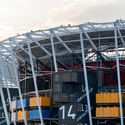
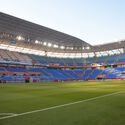
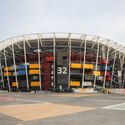
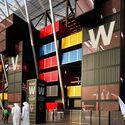
Architectural events like biennales, urban festivals or the World Expo provide a framework for research and experimentation, allowing architects to showcase their visions on an international stage, with the aim of advancing the practice and driving innovation. World Expos, in particular, allow for these lines of inquiry to unfold at an architectural scale rather than that of an installation. Within these platforms for discourse and knowledge exchange, temporary architecture becomes a medium for communicating ideas about architecture and the city, its challenges and possible lines of development.
The 7th edition of the International Architecture and Design Festival Concéntrico proposed new readings of public space through a series of temporary installations that re-imagined various places throughout the Spanish city of Logroño. Emerging architecture practices and artists from around the world shared their perspectives on the public realm and the spaces of social interaction by exploring various themes and experimenting with new ways of understanding urban spaces.
This year’s Exhibit Columbus explores the conditions of middle places as interconnections between ecosystems and the built environment through 13 temporary installations that highlight various aspects that make up the identity of the Mississippi watershed. Now at its third edition, the event builds on the Modernist cultural legacy of the Indiana city through a series of artistic and architectural explorations that activate public spaces and engage the community of Columbus.
Beyond "experience tourism" and light entertainment, temporary architecture is a fertile ground for testing ideas, examining places, popularizing new concepts and technologies. Taking a wide array of forms, from disaster relief projects and utilitarian structures to design experiments, architectural statements and playful installations, transient structures showcase alternative visions for the built environment, opening up new possibilities and questioning established norms. As temporary architecture now seems at odds with sustainability imperatives, the following discusses the value of temporary architecture as a vehicle of experimentation, advancing design and engaging communities.
Curl la Tourelle Head Architecture has built the first socially distanced tent, a pop-up school proposal in London. Located at Manorfield Primary School in Tower Hamlets, the project aims to maximize social distancing measures among students and teachers, during this post COVID-19 period.
The first unit from Carlo Ratti’s CURA project was built at a temporary hospital in Turin, north of Italy, one of the world’s hardest-hit regions by the pandemic. Launched four weeks ago, the initiative to convert shipping containers into plug-in Intensive-Care Pods for COVID-19 patients was assembled at record speed.
Just 2 months ago, the city of Wuhan, China announced the construction of Wuhan Huoshenshan Hospital, adding 1,000 beds, 30 ICUs, and new isolation wards to the city's medical arsenal to combat the Coronavirus epidemic. The building was completed in under 10 days by a team of 7,000 construction workers, a far cry from the reality many countries are facing as they scramble to quell the outbreak and wrestle with the shortcomings of their own healthcare systems. With over 14,000 dead and more than 300,000 infected worldwide, not to mention a shortage of medical supplies and facilities, health systems across the globe are feeling the strain of preparing for a crisis.
Normally the efforts of the construction industry are aimed to design permanent and durable spaces. However, on some occasions creating temporary spaces can be of great help, not only when providing fast assembly infrastructure after the effects of a natural disaster, but also when activating residual or abandoned spaces in our cities. To exemplify the potential of these interventions, we present thirteen successful temporary public spaces.
Garage Museum of Contemporary Art announces the second competition for the development of conceptual designs for 2020’s Garage Screen, a summer cinema located on Garage Square in front of the Museum. The competition’s goal is to provide architectural bureaus with an opportunity to submit their vision of a temporary pavilion to be installed in Gorky Park from spring to fall 2020. Applications will be accepted from 22 July through 16 August 2019.
The inaugural competition, held in the beginning of 2019, gathered over 130 applications from 24 Russian cities. Its geography and number of participants confirmed the importance of such
The apple of every athlete's eye, the Olympic Games direct the gaze of the world onto one host city every two years, showcasing the best that sport has to offer across both summer and winter events. In a haze of feel-good anticipation, the general buzz around the city before during the four week stretch is palpable, with tourists, media and athletes alike generating contributing to the fervour. With almost an almost exclusively positive public response (the majority of Olympic bids are met with 70% approval or higher), the Games become an opportunity for a nation to showcases their culture and all it has to offer. At first glance, it's an opportunity you'd be a fool to miss.
Yet as the dust settles, these ‘lucky’ host cities are often left with structures that lack the relevance and function of their initial, fleeting lives. Empty aquatics centers, derelict running tracks and rarely-used stadiums have become as much a trademark of the Games as the Rings, with the structural maintenance and social implications burdening former hosts for years to come. In recent years, fewer cities have been taking part in the bidding process, suggesting that the impact of the Games is beginning to catch up with the excitement. As many as 12 cities contended for the honor of hosting the 2004 games; only two were put forward for 2024/28.
Videos
APSS Porto Montenegro 2018 with KOSMOS Architects and Mikael Stenström
APSS is a summer school of architecture located in Boka Bay, Montenegro, For six years now it has been acting as a platform for architecture, urbanism, informal education with studies and research that has lead to more projects such as Montenegro Pavilion at Venice Biennale in 2104 and 2016 that has originated from APSS work. After our Re-Use series in APSS, we have continued our journey with the topic of TEMPORARY in architecture, this year extended to CROSSING TEMPORARY.