Thousands of people in Tel Aviv put together over 500,000 plastic building blocks to create the tallest LEGO structure in the world. The project was created in memory of 8-year-old Omer Sayag, who loved the toy blocks before he was taken by cancer in 2014.
The name Niemeyer stands for one thing above all: curves. Whether undulating lines, soaring domes, or swooping pillars that repeat in perfect rhythm, his designs reject “the straight line, hard and inflexible, created by man” in favor of “the curved Universe of Einstein,” as he wrote in his 2000 memoir The Curves of Time. Indeed, a late interview with him was headlined “the architect who eradicated the straight line.”
But what happens to an artist who becomes wedded to a certain philosophy of form and pursues it exclusively for decades; does it become restrictive? I wonder whether Niemeyer ever questioned his monogamous dedication to the curve. Perhaps a certain restlessness drove the uncharacteristically sharp-edged plan of the Tel Aviv house he designed for hotel magnate Yekutiel Federmann—or perhaps it reflects the political and personal upheaval of the moment.
With the completion of the citywide light-rail expected in 2020, connecting Tel Aviv’s city center to neighboring Ramat Gan, Ramat HaHayal, Bat Yam, Jaffa, and Givatayim brings a new wave of residential architecture to transform the skyline. The city of Tel Aviv boasts the highest land value in the Middle East, and with this new connectivity it is only projected to increase demand and value.
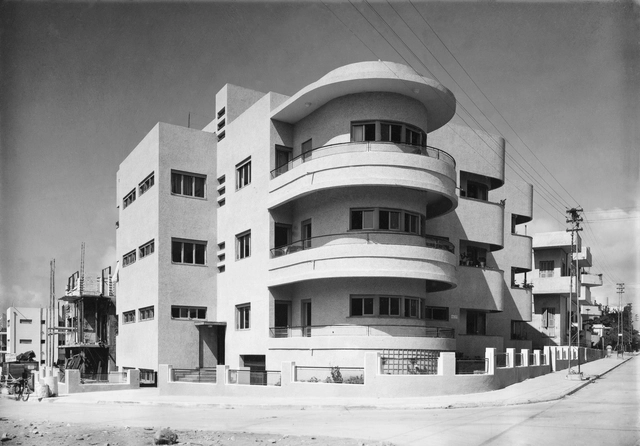
The city Tel Aviv is deemed a UNESCO World Heritage Site for its collection of over 4,000 Bauhaus and Eclectic Architecture-style builds. The original city plan was made in 1925 by Sir Patrick Geddes, and is about to witness a significant shift. To promote density, the “TAMA 38” policy gives developers the opportunity to add additional units and floors in exchange for updating the existing units and infrastructure.
The exhibition Social Construction: Modern Architecture in British Mandate Palestine, tracing the influence of international Modernism on the architectural vernacular that developed in Palestine during 1917–48, is on display at the Yale Architecture Gallery from August 31to November 18, 2017. Originally organized by the Israel Museum, in Jerusalem, the show draws inspiration from the extensive research of architects Ada Karmi-Melamede and Dan Price, whose accompanying book, Architecture in Palestine during the British Mandate, 1917–1948, explores not only the functional aspects of this new architecture but also the social values that shaped the defining language of this new architectural style. The original exhibition was curated and designed by Oren Sagiv, chief of exhibition design at the Israel Museum, with Eyal Rozen.
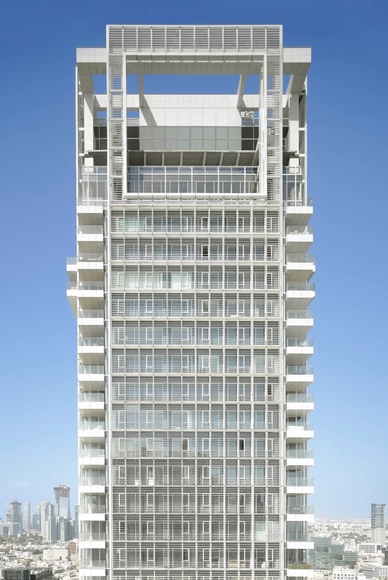
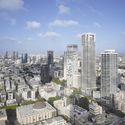
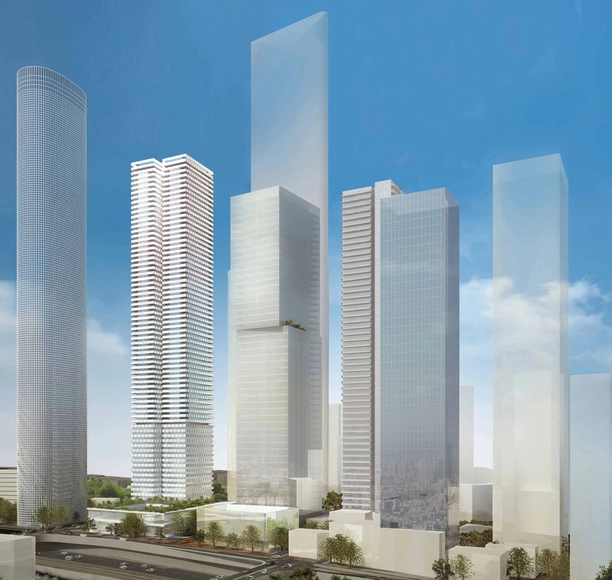
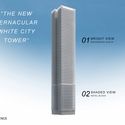
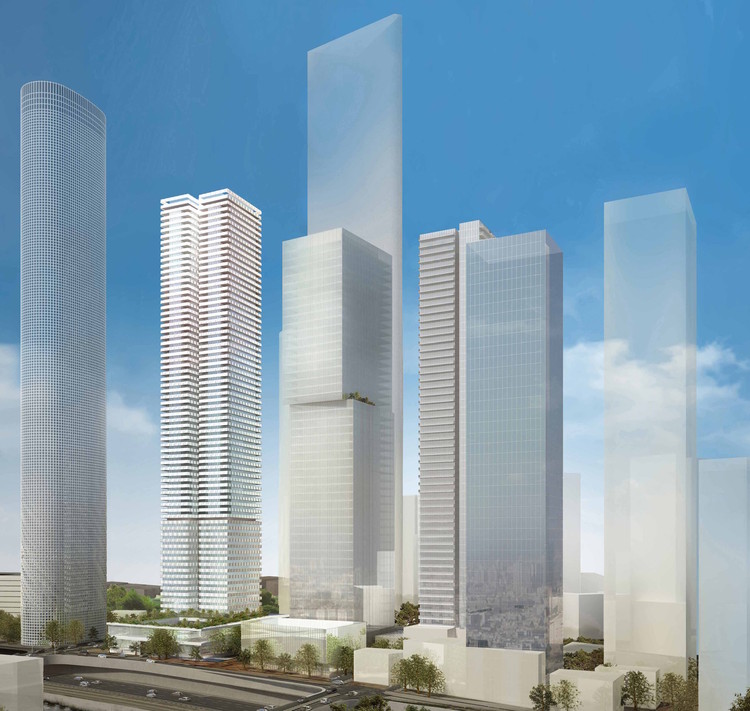
MYS Architects has been selected to design a new mixed-use high-rise in the northern business district of Tel Aviv, an area home to the city’s urban skyscraper belt. Called the “Egged Tower,” the project consists of a 65-story tower rising from a commercial podium, constituting one of the largest current construction projects in the city.
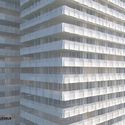
The tower will be clad in a unique panelized facade system that employs techniques developed in the “Function of Ornament” research course led by Farshid Moussavi at the Harvard GSD.
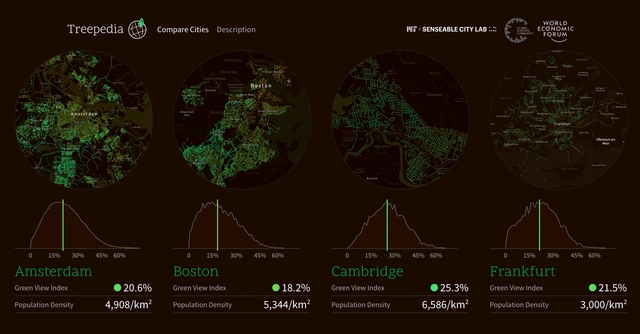
Users can compare their green canopy to cities across the world. Image Courtesy of MIT Senseable City Lab
Researchers at the MIT Senseable City Lab have launched a new platform using Google Street View data to measure and compare the green canopies of major cities across the world. Treepedia, created in collaboration with the World Economic Forum, is an interactive website which allows users to view the location and size of their city’s trees, submit information to help tag them, and advocate for more trees in their area. In the development of Treepedia, the Senseable City Lab recognizes the role of green canopies in urban life, and asks how citizens can be more integral to the process of greening their neighborhoods.
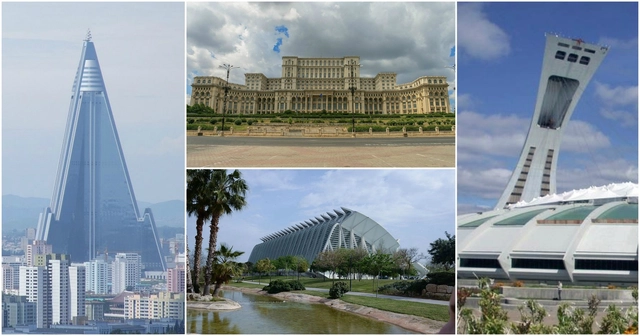
Not every piece of architecture can be an economic and social success. But there is one dreaded term reserved for only the mot wasteful of projects: "white elephants." The term comes from a story of the kings of Siam, now Thailand, who would reportedly gift sacred albino elephants to courtiers they didn't like. Refusing the gift from the king would have been unacceptable, but being sacred, these animals were forbidden from work, leading the courtier to financial ruin—a fact the kings knew all too well.
Of course, in architecture the term "white elephant" is used frequently to disparage certain projects, and whether a project is deserving of such infamy is usually a matter of perspective. Often eyesores or reminders of poorly spent funds, these projects refuse to be forgotten despite few wanting to remember them. Dotted around the world and across history, they all have the same thing in common: although they may (or may not) have once looked good on paper, they probably should have just stayed on paper.
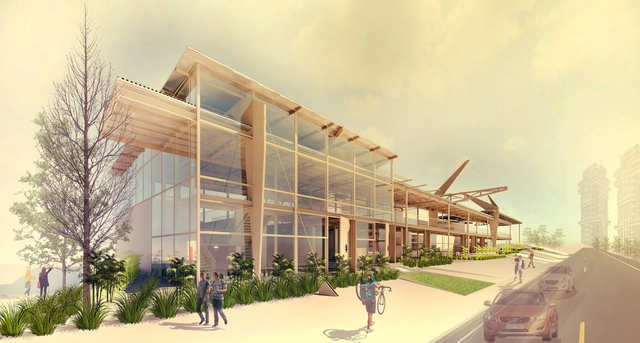
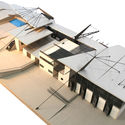
As a final project at Shenkar College under academic advisor Arch. Yaron Golani, Rotem Guy Workshop has completed Urban Club for Soldiers, a project in Tel Aviv, Israel.
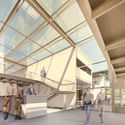
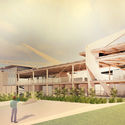
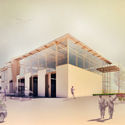
Based on the duality of order and movement, the project centers on a large multi-purpose building with its programs spread throughout “like a measuring stick.”
The design is generally modeled after historic “Tel Pach” temporary housing, specifically “Nissen huts,” which were cabins built with steel and rounded tin pegs. The project utilizes simple materials, like steel and tin, as well as mineral plaster and wet masonry.
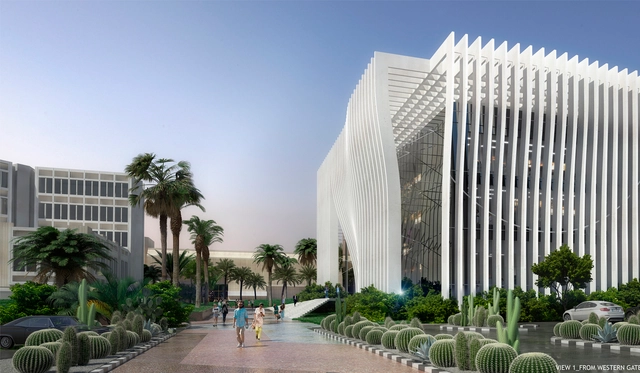
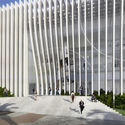
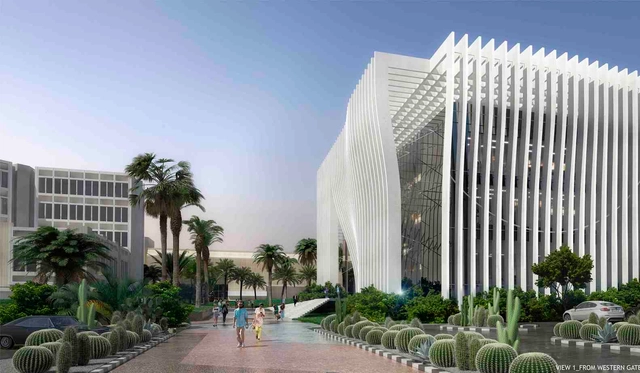
Atelier d'Architecture Michel Remon has been announced as the winner of the Open International Competition for the Tel Aviv University Nanoscience and Nanotechnology Centre. The French company has a history of designing buildings for technological purposes, including the National Research Centre for Scientific Research (Meudon, suburb of Paris), the Physics and Biology Laboratories for Ecole Polytechnique (Palaiseau, suburb of Paris), the National Solar Energy Institute (Savoy), and the Paris-Saclay Research Сentre of Air Liquide. In Tel Aviv, a matrix of vertical lines creates a "skin" over a three story, 6,000 square meter structure that will house 12 research labs – including those for physical, biophysical, and neural engineering, as well as molecular electronics, and others – in addition to offices and public areas. Once complete, the building will house 120 scientists and engineers as collaborators with one of the most significant universities in Israel.
The competition called for designs to meet scientific needs and establish an identity befitting the local context of the city of Tel Aviv and the University campus. Thus, the three finalists created a balance between technical requirements and soft program elements like office and public space, presenting proposals for a center that acts "as an effective facilitator in the dialogue between modern science, Tel Aviv University, and the general public," according to a press release.