Videos
Desenvolvido para Harmony Timber Solutions (https://harmonytimber.com/). Image Cortesia de Steven Emerson
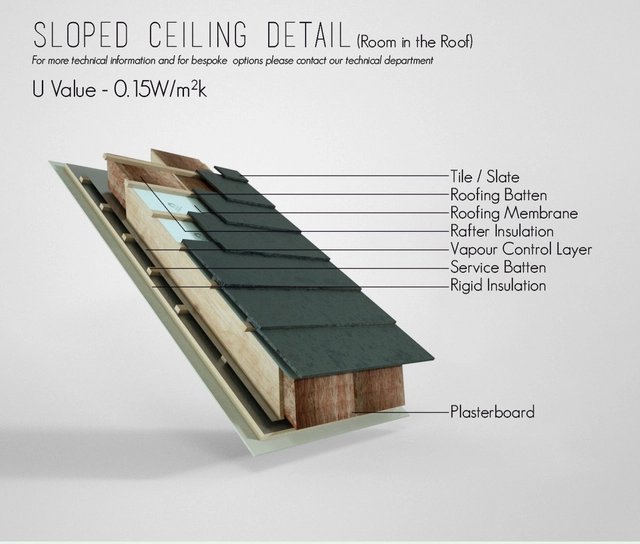
Incredible lighting, shining finishes, healthy trees, and properly positioned human figures seem to be the perfect kit for a good and traditional image of architecture, which, however, is not always representative of reality or context. We are accustomed to thinking of renderings as visions of future buildings, occupied and in use, which serve to sell or convince customers of the worth of a project. But what if rendered images also helped us understand the construction, systems, and functioning of some parts of the building? We talked to two professionals who have developed images that are both beautiful and explanatory.
Would you be willing to buy a home from a robot using only an app? As technology becomes more and more integrated into the design and real estate sector, that once an outlandish idea has become a reality. Only a decade ago, almost no one talked about technology and start-ups in the built environment. The real estate industry, which has historically lacked technological innovations compared to other sectors, is now taking a stance to reinvent itself as an industry that is more efficient, flexible, and automated- all resulting in one of the newest buzzwords that has taken the world by storm, proptech or Property technology.
Videos
Art&Fact Innovation: This 12-meter mast is produced by printing six high-performance concrete segment forms, which are then poured and assembled. Image Courtesy of XtreeE
There's no question that 3D printing is here to stay. However, it is still a developing technology that raises certain questions: Is it really effective for massive and large-scale construction? How sustainable is it? Will it go from being an option to becoming the norm in the construction industry?
To help clarify the broader picture of 3D printing's place in architecture and construction, we spoke with Alain Guillen, Managing Director and Co-founder of XtreeE. XtreeE is a platform that allows architects to bring their designs to reality through advanced large-scale 3D printing, which generates quick and precise shapes without material waste. Read below to find out how he and his team envision the future of robotics in architecture and why architects should prepare to embrace this new technology, leading us toward a more efficient yet equally creative future.
Videos
Slab House Proposal / Skeleton. Image Cortesía de reBENT
The reBENT project, developed by the Research Group 9 of the March 2019-20 Program of the Bartlett School of Architecture (UCL), explores the interactive relationship between augmented reality (AR) and manual construction processes using PVC pipes –highly resistant and cheap– as a base research material. In addition to taking advantage of its active bending properties to interact with AR, this material provides a fast and affordable system for the creation of complex concrete structures made by weaving together a series of bent PVC pipes and reinforcing bars, which are then used as formwork for glass fiber reinforced concrete (GFRC).
So far, the exploration of this hybrid approach –neither purely analog nor purely automated– has led to the design of prototypes, architectural elements, and habitable structures. In addition, the team developed an augmented reality platform for Microsoft Hololens in order to guide the construction and customization process through holograms.
The construction industry moves a huge amount of resources, employs millions of people, and is a fairly accurate gauge for the economic situation of different countries. If the economy goes down, construction shrinks, and vice versa. Members of the construction industry include mining companies, contractors, material manufacturers, architects, engineers, governments, real estate, and more. In other words, many agents participate either directly and indirectly in the industry. But construction is also considered to be one of the most backward and resistant industries to embrace new technologies, instead opting to replicate traditional ways of doing less efficient work with high rates of waste. A study by McKinsey & Company showed that, unlike other industries, industry productivity has remained stable in construction in recent years, despite all the technological progress that has occurred.
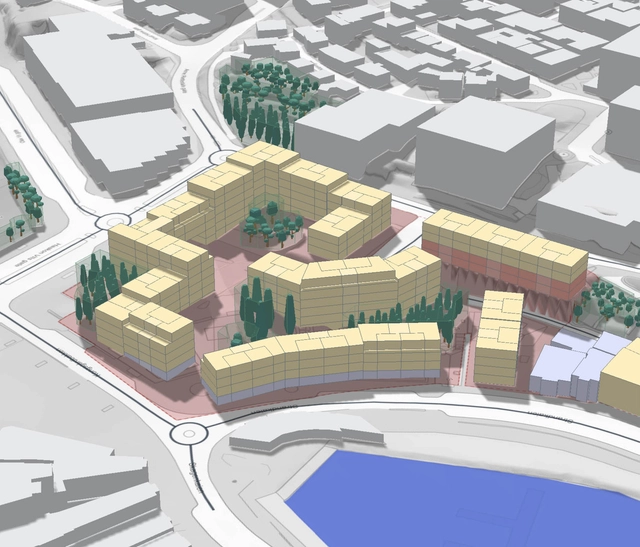
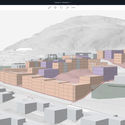
Autodesk has just acquired Spacemaker, a platform that “gives architects and developers the automation superpower to test design concepts in minutes” and explore the best urban design options. Targeting architects, urban designers, and real estate developers, the cloud-based AI-powered generative design helps professionals taking better early-stage design decisions.
More than 55% of the world’s population lives in cities, with that number only expected to increase in the coming decades. Despite the rising population in urban areas, local governments continue to raise flags about inadequate infrastructure and the declining quality of life that cities are facing. Perhaps the large scale problems that we typically categorize as urban innovation, inclusion, and infrastructure, can be solved if we get to the root of the smaller troubles, that we may not even know existed. It’s time to take urban issues off the back burner and improve cities not just for today, but for the long term future.
Clayton Miller is an Assistant Professor at NUS, part of BUDS Lab, a scientific research group that leverages data sources from built and urban environments to improve energy efficiency and conservation, comfort, safety, and satisfaction of humans. He holds a Doctor of Sciences from the ETH Zürich, an MSc. (Building) from the National University of Singapore (NUS), and a BSc. Masters of Architectural Engineering (MAE) from the University of Nebraska - Lincoln (UNL).
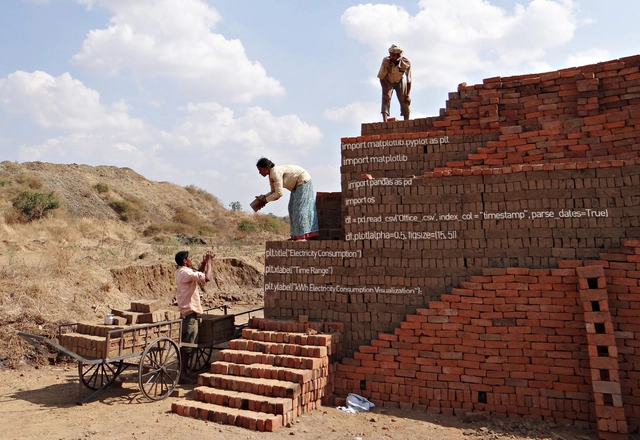
ArchDaily had the chance to interview Miller and find out his point of view on how programming and data science can help in improving architecture and construction.
BIG has unveiled its design for AI CITY, the future home for Terminus Group, a smart service provider. Imagined as the new center of innovation for China, the project will be dedicated to "artificial intelligence, robotics, networking, and big data”. Located in Chongqing, in southwest China, known as the “mountain city”, the project is set within the Chongqing Hi-Tech Industrial Development Zone.
In order to assist the city of London and encourage constructions after Covid-19, the Mayor of London, with tech-led design practice Bryden Wood and leading residential consultancy Cast, have launched a new version of the housing design app PRiSM. Using the latest digital technology and data to help design and build manufactured homes, the freely available application will allow users to share expertise and use technology to transform the design process and get the city building the homes Londoners need.
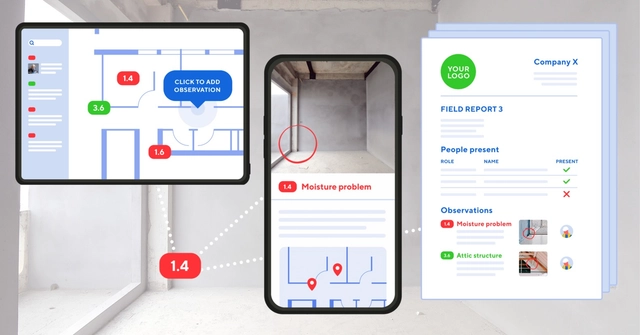
In 2012, Belgian software developers Peter Eerlings and Jerry De Paepe were contacted by an architecture firm looking for a solution to simplify their field reports. Creating field reports was an extremely time-consuming activity for them: first, writing down notes on paper and taking photos during a site visit. Back at the office, transferring the photos to the PC with a cable. Next, adding annotations to photos with Paint, deciphering and typing out the handwritten notes, struggling with the layout while inserting photos in Word, and so on. Over and over again. It was an administrative hassle that easily took more than an hour for each field report - sometimes two or three.
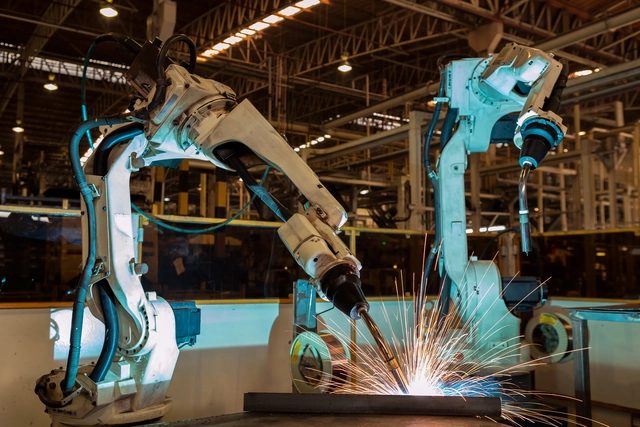
Robotic automation has been widely adopted by the manufacturing industry for decades. Most automotive vehicles, consumer electrical appliances, and even domestic robots were made and assembled by “armies” of robots with minimal human supervision. Robotic automation brings higher production efficiency, a safer working environment, lower costs and superior quality. After years of development and deployment, the process now requires minimal human involvement.
https://www.archdaily.com/945761/a-fully-automated-construction-industry-still-a-long-road-aheadDarwin Lau
As planners who regularly engage everyday citizens in the planning process, we like to start by having people build their favorite childhood memories with found objects. Most often, these memories are joy-infused tales of the out-of-doors, nature, friends, family, exploration, freedom. Rarely do these memories have much to do with technology, shopping, driving, watching television, and so many of the other things that seem to clutter up our daily lives. But then again, these are folks who have known a world that has been—at least for part of their lives—screen- and smartphone-free.
https://www.archdaily.com/946090/designers-and-planners-take-note-peoples-fondest-memories-rarely-involve-technologyJames Rojas, John Kamp & Vassil Yorgov
Our cities, vulnerable by nature and design, have generated the biggest challenge that humankind has to face. With the vast majority of the population expected to settle in urban agglomerations, rapid urbanization is going to raise the issue of adaptability with future social, environmental, technological and economic transformations.
In fact, the main problematic of the decade questions how our cities will cope with fast-changing factors. It also looks into the main aspects to consider in order to ensure long-term growth. In this article, we highlight major points that help future-proof our cities and create a livable, inclusive and competitive fabric that adapts to any unexpected future transformation.
Now more than ever, architecture is in need of innovation. The pandemic has made us fundamentally rethink the functioning of our cities, public spaces, buildings, and homes. Meanwhile, the recent Black Lives Matter and racial justice protests have us questioning architecture’s complicity in broader socioeconomic issues. These challenges are pressing, and we cannot put off changing architecture any longer.
Videos
Peter Eisenman, Patrik Schumacher, and Alisa Andrasek among the speakers that participated at Digital Futures. Image Courtesy of Digital Futures
Like most functions in recent months, this year’s Digital FUTURES, which is held annually since 2011 at Tongji University in Shanghai, had to move online due to the pandemic. The organizers took this as an opportunity to give the event a global dimension, turning the festival into what they rightfully call the most significant worldwide event for architectural education ever staged, with a 24/7 display of workshops, lectures and panel discussions involving some of the most prominent architects and educators. Here is an overview of the festival, together with a selection of lectures from Digital FUTURES World.
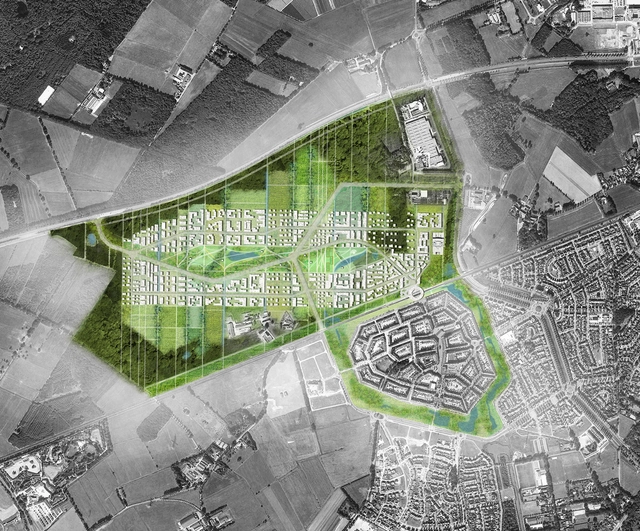
Brainport Smart District, Helmond, NL. . Image Courtesy of UNStudio
By 2025, Frost and Sullivan, a market research company, has predicted that there will be at least 26 fully-fledged major smart cities around the world. While some still think that as our cities get more intelligent, they will resemble sci-fi futuristic movies, the reality is that the quality of life in these cities will drastically improve. Cities are set to become more efficient with better services. Nevertheless, before reaching these ideals, let us go back on the process itself, and evaluate the challenges that we might face.
Because the concept of smart cities is still very new, with rare finalized and implemented projects, the topic is still unclear. Although big titles and strategies are well defined, the on-ground application is still uncertain, giving us the opportunity to question its planning process. In fact, how can we go wrong when designing smart cities? What key element are we failing to address in the planning phase?
While not all plastics are being recycled, even the ones that display the recycling sign, the global plastic waste problem is nowhere close to being resolved. Recycling, generally determined by factors like demand, legislations, and economy, takes on arguably around 20% of the annual production of plastics, leaving a large quantity unattended, doomed to last forever in our environment. In addition, competing with newly-produced materials, recycled plastics need to meet standards of quality and price, and undergo a sustainable, efficient, and economically viable transformation.
ROGP or Rejects of Glass & Plastics Technology is an innovative approach that repurposes plastics, once labeled as non-recyclable materials due to technical complexity or economy-related issues.



-1.jpg?1611379381&format=webp&width=640&height=580)







_Blerta_Kambo.jpg?1597868162&format=webp&width=640&height=580)








.jpg?1596025638 "© Charbel Tannous, courtesy of Development Inc.")
