ArchDaily and Airbnb were both founded in 2008, but for two very different reasons. Since then, ArchDaily has amassed a vast database of tens of thousands of buildings, located in cities and countries all around the world. Meanwhile, Airbnb has revolutionized the way in which we explore these countries, and use these buildings, even if just for one night.
The winning design features seven new quadrangles designed around historic features and woodland, integrating sustainable features such as solar connectors and water retention ponds. The competition sought to express UCD’s creative abilities and strengthen its physical presence and identity, signifying a major educational project for the Irish capital.
The project features 72,000 square feet of interior space across a 4.6-acre site, resulting in a 20% increase in public areas, and a doubling of outdoor space.
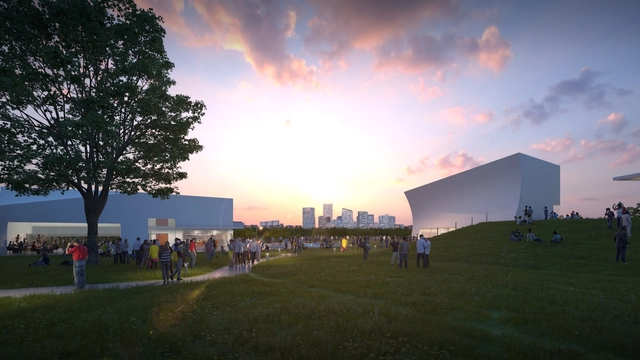
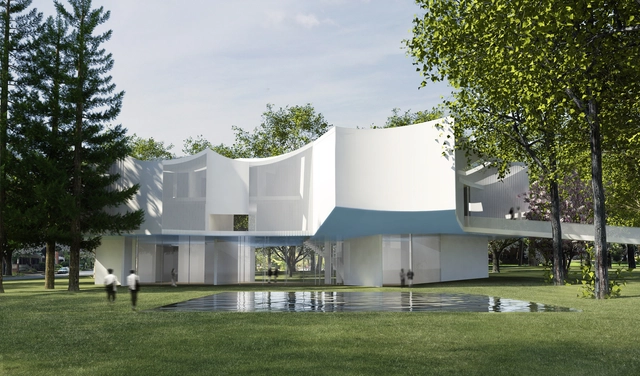
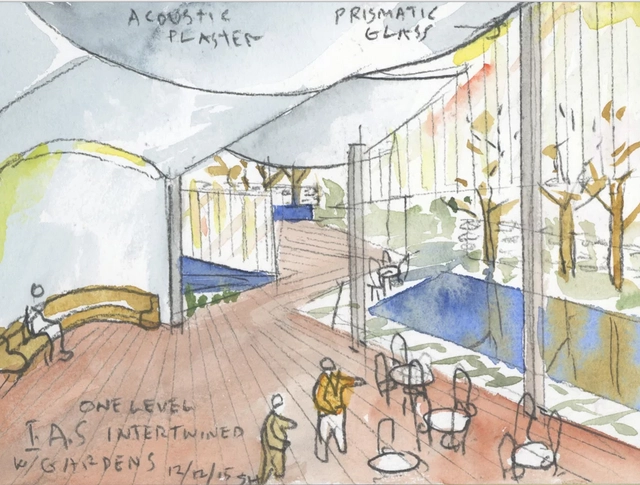
The groundbreaking ceremony has taken place for Rubenstein Commons, a $20 million campus building for the Institute of Advanced Study in Princeton, New Jersey. Designed by Steven Holl Architects, the scheme aims to provide space for enhanced collaboration and communication between faculty and scholars at “one of the world’s leading centers for curiosity-driven basic research.” The ceremony took place on March 14th, the birthday of famed physicist Albert Einstein, who spent the last twenty-two years of his life working at the Institute.
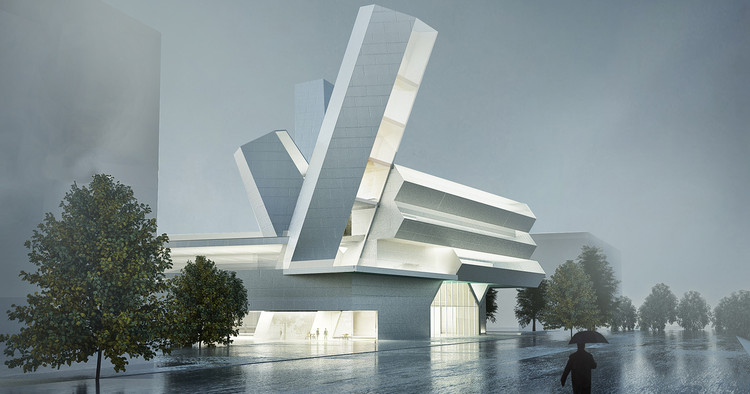
Steven Holl Architects has won an international competition for the design of the Angers Collectors Museum and adjacent hotel in the historic city of Angers, France. Working in collaboration with developers Compagine de Phalsbourg, Holl’s scheme draws inspiration from the nearby 9th century Chateau d’Angers fortress, and seeks to form a new cultural gateway to the city.
Deeply rooted in the phenomenological ideas of Maurice Merleau-Ponty, Steven Holl’s architectural philosophy is centered on human experience, materiality, and a thorough engagement with the site or context. But more than his experiments with space and material, he is best known for his mastery over what is perhaps his favorite material, or medium: natural light.
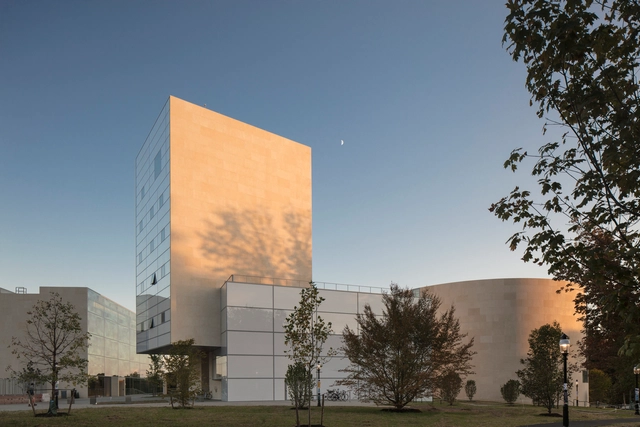
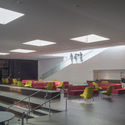
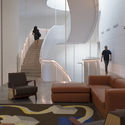
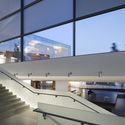
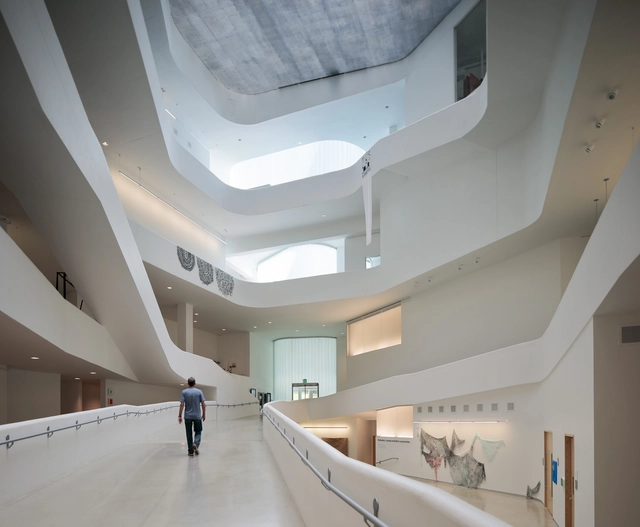
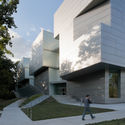
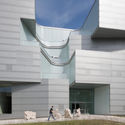
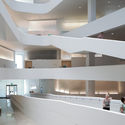
His design for the Visual Arts Building at the University of Iowa, seen here through the lens of photographer Aaron Dougherty, is one of his projects that best explores these concerns. Clad in weathering zinc and stainless steel, the four-story building houses studios, teaching spaces, galleries and faculty offices for all visual arts departments—from Ceramics, Jewelry Design and Sculpture, to Printmaking, Painting, Video Art, and 3D Design.
Steven Holl Architects' new Visual Arts Building at the University of Iowa, completed last fall, has already begun to make its impact on the school's social environment, pairing Art Building West (also designed by SHA, in 2006) to create a revitalized Arts Quad with public spaces the whole campus can enjoy.
These two videos give an in-depth look at the new building. In the video above, Steven Holl and Senior Partner Chris McVoy tour the school while providing commentary about their design process, as well as the history of the site and the building's construction. Also check out the video below to see all the spaces in action.
9 years ago today, ArchDaily launched with a challenging mission: to provide inspiration,knowledge and tools to the architects tasked with designing for the 3 billion people that will move into cities in the next 40 years. Over these 9 years, as we have developed innovative approaches to help architects tackle the urban challenges facing our world, our work has brought us into contact with some of the most creative and respected architects in the world. To help us celebrate our 9th birthday, we asked 9 architects who are renowned for their creative and imaginative abilities to create drawings inspired by our logo, to show the world what ArchDaily means to them.
https://www.archdaily.com/866860/9-drawings-to-celebrate-our-9th-birthdayAD Editorial Team
Architecture, I believe, changes your life. It changes the way you can live life – the way you can see, the way you can feel. Like Winston Churchill says, ‘First we shape our buildings, and then they shape us.’ I think this house has that shaping ability.
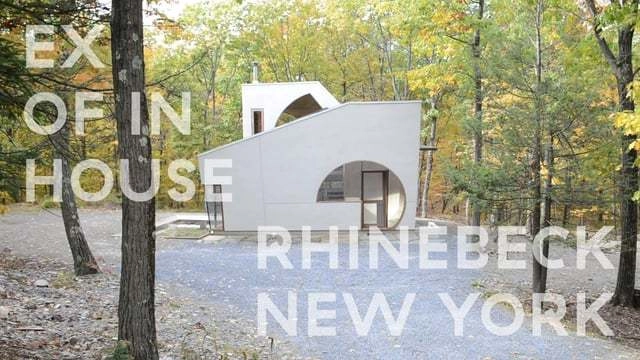
In this video by directors Spirit of Space, architects Steven Holl & Dimitra Tsachrelia explain the core concepts and exploratory mission driving the architecture of the firm’s recently completed Ex of IN House. Watch as the architects lead you through the home's unique layout and construction, describing how the house “explores a language of space, aimed at inner spatial energy strongly bound to the ecology of the place - questioning current clichés of architectural language and commercial practice.”
This article was originally published by Metropolis Magazine as "Q&A: Steven Holl."
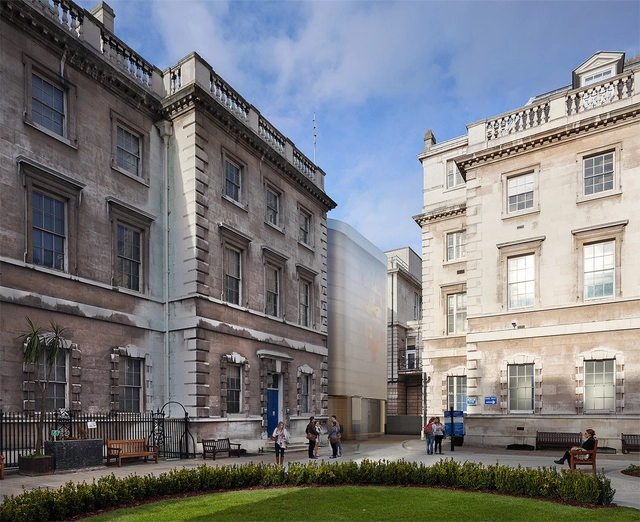
For twenty years, Maggie's Centres have been providing cancer treatment to patients within thoughtful, beautiful spaces designed by renowned architects like Rem Koolhaas, Frank Gehry, and Zaha Hadid. Steven Holl's Maggie's Center Barts, located adjacent to St. Bartholomew’s Hospital in central London, is slated to open at the end of this year. While the design has been somewhat controversial in the UK due to its contemporary nature, the cancer care facility incorporates innovative lighting, sustainable materials, and a compact structure in a way that is—according to the architect—entirely complementary to its historical neighbors. We spoke with the renowned architect to learn more about the project and what it has meant to him over the past four years.
“Writing about music is like dancing about architecture”
This well-known quote, most often attributed to comedian Martin Mull, compares attempting to explain music’s complex auditory intricacies with words to trying to interpret architectural forms through the motion of the human body – the underlying implication, of course, that it’s fruitless.
But take a closer inspection of the analogy. Music and writing may be media for disparate senses, but, at their height, dance and architecture share a realm of space and light; both perform as formal exercises that relate to the human proportion of the body. Must dancing about architecture truly be an exercise in futility?
A year after premiering at the 2015 Chicago Architecture Biennial, last week Steven Holl and dance choreographer Jessica Lang’s “Tesseracts of Time” made its New York debut at the City Center mainstage. The 21-minute performance, designed as a part of Holl’s ‘Explorations of IN’ project, explores the relationship between performance and environment through four phases, which the designers liken to the passing of the four seasons.
Steven Holl has been awarded the 2016 Daylight Award in Architecture, which honors architects “who have distinguished themselves by realizing architecture or creating urban environments that showcase a unique use of daylight, for the benefit of overall quality of life, its impact on human health, well-being and performance, and its value to society.”
Exterior, Day View. Image Courtesy of Steven Holl Architects
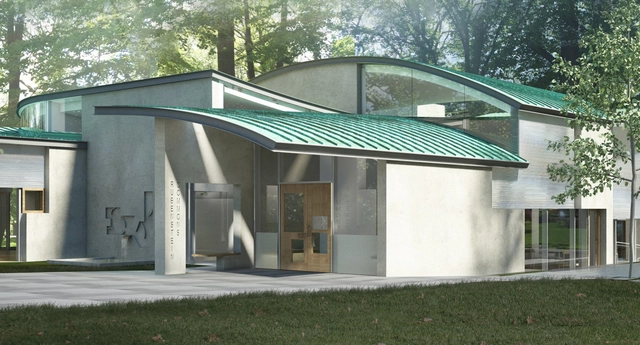
Steven Holl Architects has been commissioned by Franklin & Marshall College, in Lancaster, Pennsylvania, for a new Visual Arts Building and Quad, promoting a future for the arts on the campus. Inspired by the trees that will surround the building, Holl calls the project a “pavilion on the park,” in a design compared to a kite in the trees. The project was announced by President Daniel R. Porterfield during F&M’s commencement on May 7, after Holl and Senior Partner Chris McVoy presented their concept to the College Board of Trustees two days prior.
Steven Holl Architects has been selected as the winner of an invited competition to design the Rubenstein Commons at the Institute for Advanced Study (IAS) located in Princeton, New Jersey. The new Rubenstein Commons will be situated at the center of the campus and serve as a new forum for scholars to interact and share ideas. The IAS, which was home to where Albert Einstein worked for 22 years until his death in 1955, received the project funding from David Rubenstein, Co-Founder and Co-CEO of the Carlyle Group.
In a world of climate change, refugees, and displaced peoples in crisis, Pamphlet Architecture asks for visions on the concept of BUOYANCY AND LIFT (FLOATING CITIES). Proposed solutions will provide housing, clinics, and other community services to 1,500 - 2,000 inhabitants with incremental additions while incorporating innovative technologies.
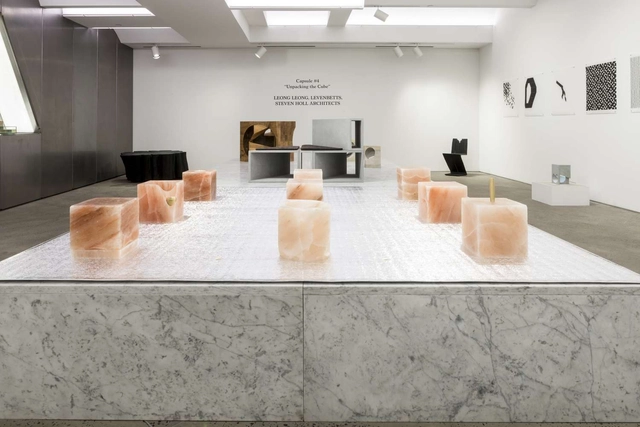
CHAMBER is pleased to announce their first exhibition in 2016, Capsule #4: “Unpacking The Cube,” presenting works by LEONG LEONG, LEVENBETTS, and STEVEN HOLL ARCHITECTS. The exhibition will open Thursday, January 21st.
Andrew Zuckerman, curator of Collection #2 “Human | Nature” in collaboration with Chamber, approached three architecture studios, each at different points in their professional trajectories - LEONG LEONG, LEVENBETTS, and STEVEN HOLL ARCHITECTS - prompting the architects to reach into the conceptual roots of their practice and convey them via physical objects for the exhibition space.
As the first month of 2016 draws to a close, we decided to tap into our network and ask an esteemed group of architects, critics, theorists and educators to tell us what they are looking forward to this year in architecture.
What are you looking forward to in architecture this year?
https://www.archdaily.com/780498/50-architects-tell-us-what-they-are-looking-forward-to-in-2016AD Editorial Team
Referencing architecture's intimate past with the arts, Steven Holl argues the importance of collaborating with other artists for the benefit of the profession alongside choreographer and dancer Jessica Lang. "If we don't intermix the arts and collaborate, we are going to close... The arts are going to fade out individually. We are stronger together."
Watch the Spirit of Space video above to learn more about Holl and Lang's collaboration - Dance with Architecture - that uses dance to explore the four types of architecture: "under the ground, in the ground, on the ground, and over the ground."