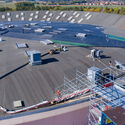
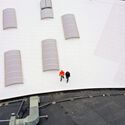
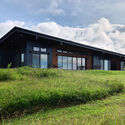
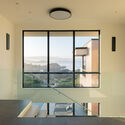
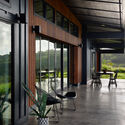
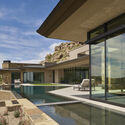
Building roofs are advancing through a multidimensional optimization process that encompasses technological innovations, new materials, energy-saving performance, and faster construction methods. From green roofs and rainwater harvesting systems to solar panels, contemporary architects are working to balance aesthetics, performance, durability, and environmental impact in their projects. Roof renovation not only extends the service life of buildings but also reflects an environmental commitment by improving efficiency and sustainability.
The kitchen has evolved from a functional space into a shared environment and the heart of many households. Serving as the setting for daily rituals in countless families—and even collective practices in urban life—food brings people together, making the design of spaces that respond to these needs essential to everyday living. Beyond the various kitchen layouts, aesthetics, and configurations, the integration of appliances and equipment plays a key role supporting storage, preservation, and daily use that cooking demands. From innovative technologies to advanced materials, these elements shape contemporary kitchen spaces that bring together customs and cultures from diverse backgrounds.
Over the past decade, the definition of a performing arts venue has shifted. No longer singular-purpose destinations, today's cultural facilities are expected to operate as flexible, revenue-generating, community-centered ecosystems. This evolution has challenged architects, operators, and owners to rethink not just how venues are designed, but how they function over time.
Buildner has announced the results of its Museum of Emotions Competition Edition 7. The Museum of Emotions is an annual international design competition that tasks participants to explore the extent to which architecture can be used as a tool to evoke emotion.
The brief calls for the design of a conceptual museum with two exhibition halls: one designed to induce negative emotions; the other designed to induce positive emotions. Participants are free to choose any site of their liking, real or imaginary, as well as choose the scale of the project. The meaning of 'positive' and 'negative' is up for interpretation: What two emotions might a designer consider contrasting? How might an architect conceive spaces which elicit fear, anger, anxiety, love or happiness?
What makes a home resilient? Extreme weather events are becoming increasingly frequent around the world. From power outages, hurricanes, and earthquakes to wildfires, floods, and droughts, the world is experiencing a process of transformation and adaptation that requires collaboration among diverse disciplines. The role of architecture in the built environment reflects an opportunity to rethink how homes perform under changing environmental conditions—not only by anticipating the unexpected. Designing for resilience means thinking holistically, considering material choices, energy systems, landscaping, and construction details that anticipate disruption and help homes recover quickly. It involves creating architecture that evolves with the environment, is worth preserving, and endures for years and generations.
Architectural schools usually leave lasting marks on their students, shaping their style and critical inquiry long after formal education has ended. For example, SCI-Arc, founded in 1972 and based in downtown Los Angeles, is an institution recognized for its culture of experimentation, critical investigation, and creative independence, building a reputation based on the idea that architecture should be understood as a field open to dialogue with art, technology, design, and contemporary culture. The diversity of trajectories of its alumni demonstrates how this environment can generate distinct professional approaches, but united by the same willingness to explore new possibilities.
As the technical requirements of building envelopes have evolved, fire performance has become a key criterion in the design of ventilated facades. Given this situation, analyses no longer focus solely on the individual reaction of materials, but also on the joint response of the entire building envelope under possible scenarios of external fire propagation.
In an industry defined by engineering tolerances and performance certainty, interior finishing still relies on a process that introduces variability into every project. Even experienced applicators often depend on judgement-based mixing—estimating water ratios and adjusting by feel until the material appears workable. While skill reduces variability, it does not eliminate it. The result is inherent inconsistency that transfers directly onto the finished surface.
Buildner has announced the results of its competition, the Concrete Pavilion. Part of Buildner's Material Studies series, the competition invited architects and designers to explore the architectural potential of concrete through the design of an experimental pavilion. Participants were challenged to reconsider the material beyond its conventional use, investigating its spatial, structural, and sensory possibilities.
Qbiss Notch, a new design edition developed by Pininfarina for Trimo's Qbiss façade system, has received the Red Dot Design Award. Based on Trimo's Qbiss façade technology, the project introduces vertically installed modular Qbiss panels, an alphabet of engraved Glyphs, and Notches with integrated lighting. Together, these elements allow designers to create distinctive façade compositions. Despite its visual flexibility, the system is designed around the efficiency and precision of prefabricated construction.
Åvontuura Founder Karl van Es with his Architecture Guide to Toronto
Karl van Es spent twenty years as a practicing architect before walking away to solve a problem every architect faces: the resources to travel like a professional simply do not exist. Mainstream guidebooks and travel apps rarely highlight the buildings that truly matter to the architectural community. Åvontuurawas born from that frustration — an independent publisher of illustrated architecture guides created by an architect, for architects. Its latest release, Madrid, maps 70 of the city's most significant buildings, representing a mission to bridge the gap between architectural interest and travel logistics.
House of Wine in Berneck. Image Courtesy of Faruk Pinjo + Carlos Martinez Architekten
Bi-folding doors flood a room with light, offering the spatial flexibility to establish a dialogue with the surroundings. The Woodline series by Solarlux integrates manufacturing quality and technical expertise with architectural freedom, providing transparent facade solutions for versatile, sustainable architecture. The natural surfaces further enhance the building envelope with a distinct tactile quality.
Buildner has announced the results of its competition, the Last Nuclear Bomb Memorial No.6. This competition is held each year to support the universal ban on nuclear weapons. In 2017, on the 75th anniversary of the 1945 bombings of Nagasaki and Hiroshima, which claimed the lives of over 100,000 people, the United Nations adopted the Treaty on the Prohibition of Nuclear Weapons.
Cities in Southeastern Europe do not wait to be read. They accumulate, layer upon layer of socialist planning, post-socialist disruption, and the quieter, less legible work of citizens remaking space from the ground up. Here, space and legacy insist on their own terms. What happens to architectural research when the cities that we observe already seem to know something our discipline has not yet learned to see?
Vana Vasa Resort by MJ Kanny Architect, Steel Architectural Awards ASEAN 2024 Winner. Image Courtesy of NS BlueScope
The Steel Architectural Awards ASEAN 2026 is a regional architectural awards program presented by NS BlueScope to recognize built projects that demonstrate architectural excellence through the use of coated steel solutions. Under the theme Shaping Resilient Futures: Timeless Design with Coated Steel, the program highlights projects across Indonesia, Malaysia, Thailand, and Vietnam, progressing from the Country Awards to ASEAN-level recognition. This article explains how the two-stage pathway works, what categories are included, and how projects are assessed through Design Excellence, Innovation, and Sustainability.
Architectural visualization has long played a key role in communicating and shaping design ideas. Today, that role is expanding. With the rise of artificial intelligence, visualization is becoming more deeply embedded throughout the entire design workflow, supporting faster iteration and more informed decision making.
Today, interdisciplinary learning and exchange are more important than ever in addressing increasingly complex environmental, social, and urban challenges.
Each summer, the University of California, Berkeley's College of Environmental Design (CED) becomes an intensive laboratory for architectural, landscape, and urban exploration. Through two complementary programs—Design + Innovation for Sustainable Cities (DISC) and the Summer Institutes—Berkeley offers an immersive curriculum grounded in disciplinary rigor, intentional exchange, and a shared institutional culture. Together, these programs reflect CED's long-standing multidisciplinary structure, with architecture, landscape architecture, city planning, and urban design thriving and collaborating under one roof.
Buildner has also announced the results of Buildner's Unbuilt Award 2025, the second competition in a series celebrating architectural design that has yet to be realized. With a generous 100,000 EUR prize fund, this initiative provides a global platform for architects and designers to showcase their most compelling unbuilt projects, whether conceptual, published, unpublished, or fully developed.