First Prize Winner: A Thread Through Time. Image Courtesy of Buildner
Buildner has announced the results of the Dubai Urban Elements Challenge, a landmark international design competition organized in strategic collaboration with Dubai's Roads and Transport Authority (RTA). With a total prize fund of 2,000,000 AED (approximately €500,000), the initiative represents one of the most significant publicly funded global design competitions focused on urban transformation.
The competition was conceived as a forward-looking procurement and innovation platform for one of the world's fastest-evolving metropolitan environments. Participants were invited to propose modular, climate-responsive urban elements—seating systems, shading devices, lighting infrastructure, wayfinding components, rest areas, and micro-retail structures—designed to enhance pedestrian life and strengthen Dubai's public realm identity.
Videos
Villa Tai. Image Courtesy of ARK Architects
The single-family house remains one of the most complex territories in contemporary architecture. At once intimate and technical, everyday and symbolic, it concentrates debates around comfort, sustainability, landscape, and ways of living, while also serving as an instrument for projecting the identity of its inhabitants. It is within this field that ARK Architects operates. Based in Marbella and Sotogrande, the studio's work, under the creative direction of co-founder Manuel Ruiz Moriche, develops from a direct relationship between architecture, natural light, and environmental context.
From the large industrial roofs and galleries of the 19th century to the contemporary atriums of museums and public buildings, glass has been a recurring material in shaping large and monumental interior spaces. More than a technological or engineering solution, these horizontal glazed planes introduce a distinct luminous quality: light that comes from above. Unlike lateral daylight entering through façades, zenithal light is more evenly distributed, reduces harsh shadows, and lends spaces a sense of continuity and openness that is difficult to achieve otherwise.
Highlighted Submissions: Common Spaces. Image Courtesy of Buildner
Buildner, in collaboration with the City and County of Denver and AIA Colorado, has announced the winners of the Denver Affordable Housing Challenge, an international ideas competition exploring how affordability and design excellence can reinforce one another within the specific urban, social, and environmental context of Denver.
As the nineteenth edition in Buildner's Affordable Housing Challenge series, the competition invited architects and designers from around the world to respond to Denver's housing crisis through proposals operating at architectural, urban, and systemic scales. The brief did not prescribe a single site or typology but, rather, encouraged flexible strategies capable of addressing affordability, climate resilience, and community impact while contributing positively to Denver's urban identity.
Second Prize Winner + Buildner Student Award: Silent Equilibrium
Buildner is pleased to announce the results of its Architect's Chair Competition Edition 4, an annual international competition that invites architects and designers worldwide to submit designs for a signature chair. Following in the footsteps of iconic figures like Charles and Ray Eames, Ludwig Mies van der Rohe, Marcel Breuer, and Arne Jacobsen, participants are tasked with creating custom chairs that reflect their unique design philosophies and visions.
In the picture: F128 PA Black Ambiance Granite, U590 PM/TM Deep Blue, U705 PM/TM Angora Grey, U755 PM/TM Havanna Grey, H1708 ST17 Brighton Chestnut. Image Courtesy of EGGER
Designing an interior is, in many ways, an exercise in orchestration. Just as a conductor coordinates instruments, timbres, rhythms, and intensities to compose a coherent piece, the architect brings together materials, color, light, texture, and proportion to define the spatial quality and atmosphere of an environment. None of these decisions operates in isolation: the choice of a surface influences how light is reflected; a given material can shape how a room ages over time; color, in turn, directly affects the perception of scale.
Wood-based materials such as decorative particleboards, MDF boards or laminates can therefore be understood as more than simple finishes. Industrially produced, they combine decor selection, surface texture, and technical substrate, defining both their appearance and the way a space responds to use, light, and time. Factors such as dimensional stability, ease of maintenance, and resistance to wear become integral to design decisions, particularly in interiors subject to intensive use.
Founded by Oliver Thomas, the ATN Summit is the first flagship conference of the Archi-Tech Network, marking five years since the platform began as a grassroots initiative to share real-world architectural knowledge. Taking place on March 18–19, 2026, in London, the ATN Summit brings together architects, technologists, and industry innovators to explore how emerging technologies are reshaping architectural practice. Designed as a high-production, ideas-driven event, the Summit reflects ATN's evolution from an informal online conversation into a global platform actively engaging with the future of the built environment.
By shifting rotation away from traditional hinges and distributing weight vertically, pivot doors were developed to address a specific architectural challenge: how to move large, heavy door panels with precision, durability, and minimal visual interference. These systems allow doors to grow significantly in scale, weight, and material ambition, often blurring the line between door, wall, and architectural surface. Over time, this technical innovation has expanded the role of doors in architecture, allowing them to operate not only as points of access, but also as spatial thresholds, compositional devices, and expressive elements within the building envelope.
Highlighting this evolution, FritsJurgens established the Best Pivot Door Contest to showcase projects where engineering precision and architectural intent converge. Founded in the Netherlands, the company is internationally recognized for its concealed pivot systems capable of supporting exceptionally large and heavy doors. These systems give architects greater freedom in scale and materiality while maintaining precision, reliability, and architectural clarity.
Having explored adaptability at the city scale, we are now zooming in on the building itself—and, crucially, on practice. How can architects, developers, and consultants embed adaptability as a measurable, mainstream outcome? This question will be on the agenda at the Adaptable Building Conference (ABC) on January 22 at the Nieuwe Instituut in Rotterdam, where architects, engineers, policymakers, and industry leaders will explore the potential of adaptable buildings—and how to deliver them at scale.
In a balance of aesthetics, performance, and versatility, HIMACS shows a solid surface material of choice for many architects and designers. Taking a further step forward, the entire range of standard HIMACS sinks and basins is now officially SCS certified, containing a minimum of 8% pre-consumer recycled content. This certification enhances the material's technical and visual appeal by providing a more sustainable option without compromising quality or functionality.
From bathroom vanities with integrated basins to kitchen islands with flush-mounted sinks, HIMACS shapes offer a seamless balance of style and function. Each component integrates effortlessly with the surrounding HIMACS surface, creating a continuous, grout-free finish that is both elegant and easy to maintain.
Taking a deeper look at the interplay of light and shadow in architecture seems to be a recurring topic on the agenda of many professionals in the field. Spaces of light and darkness are conceived to enhance circulation and spatial directionality, as well as to highlight the colors, textures, and forms of specific architectural elements. That said, the impact of natural light on building facades reveals the need to develop strategies that support energy savings, improve the thermal and visual comfort of interior spaces, and promote the reduction of carbon emissions. Considering light as another material in architecture, in what ways could its power contribute to the architectural experience?
Videos
Second Prize Winner: Branch. Image Courtesy of Buildner
Buildner has announced the results of the Howard Waterfall Retreat architecture competition, an international design challenge developed in close collaboration with the Howard Family Trust. The competition invited architects and designers to propose a multi-generational family retreat set within a privately owned, forested landscape in Northwestern Pennsylvania, centered on the dramatic presence of Howard Falls and the surrounding gorge.
Rather than prescribing a singular architectural solution, the brief emphasized a careful dialogue between architecture and nature. Participants were asked to consider how a retreat could balance shared and private living, respond to steep topography and water systems, and integrate sustainably within a sensitive ecological setting. The project also called for an interpretation of family legacy, encouraging designers to acknowledge the history of the site and the original summer cottage while imagining a retreat capable of evolving across generations.
Videos
First Prize Winner: Edge of presence. Image Courtesy of Buildner
Buildner has announced the results of its Re-Form: New Life for Old Spaces, an international ideas competition examining the adaptive reuse of small-scale existing buildings. The competition invited architects and designers to propose transformations of used, abandoned, or overlooked structures with an approximate footprint of 250 square meters, located anywhere in the world. With no fixed site or program, participants were encouraged to explore alternatives to demolition and new construction through reuse strategies grounded in contemporary social and environmental concerns.
As an open-format competition, Re-Form foregrounded sustainability, feasibility, and community impact over formal or typological constraints. Submissions ranged from precise urban insertions to more speculative rural interventions, reflecting a broad range of approaches to working with existing fabric. Many projects focused on how limited, often marginal spaces could be reactivated to support new forms of collective use while responding to material, climatic, and ecological conditions.
Ellisse, location: Armando Cose, Designer: Philippe Malouin
Communicating an idea using only the essentials is a far greater challenge than it often appears. From Japanese haikus to the refined sculptures of Constantin Brâncuși, many artistic expressions have sought to condense the maximum meaning with the minimum of elements. This economy of form is not a sign of scarcity, but of intensity: every stroke, every word, every silence gains weight. There is something intrinsically appealing in what presents itself as simple and well-resolved, whether it is a text that wastes no words, a tennis player who moves with purposeful gestures, or a melody that is both direct yet unexpectedly profound.
That same principle, which transcends various artistic languages, resonates deeply in contemporary design. When reduced to the essential, furniture or everyday objects reveal a form of beauty that arises from precision and transcends their function. This is exemplified by HUM, the new collection of taps developed by designer Philippe Malouin for QuadroDesign, in which a simple gesture is transformed into a complete language.
Bratislava, the rapidly developing capital of Slovakia—located in the heart of Europe—continues to strengthen its presence on the European architectural map. As a growing hub of contemporary design—already home to projects by Zaha Hadid Architects, Massimiliano & Doriana Fuksas, Stefano Boeri, Studio Egret West, and Snøhetta—the city has now reached another important milestone: an international architectural and urban design competition has been announced to shape the future of Zváračák, one of the last major brownfield sites near the city center.
Liminal Air Space-Time by Shinji Ohmaki, Noor Riyadh 2025. Image Courtesy of Noor Riyadh
Noor Riyadh 2025 brought large-scale light installations to public sites across the Saudi Arabian capital, temporarily transforming transit hubs, historic districts, and significant landmarks into illuminated urban environments. From November 20 to December 6, 2025, Riyadh became a citywide gallery of light, motion, and shifting perception. The festival's fifth edition featured 60 artworks by 59 artists from 24 countries, including more than 35 new commissions, responding to the theme "In the Blink of an Eye." Through light as both medium and concept, the installations reinterpreted the capital's rapidly evolving architectural landscape and reflected how perception shifts in spaces shaped by heritage and ambitious urban development.
Creating living spaces in a world between on and off. Image Courtesy of GIRA
Across recent architectural discourse, interior design has been centered on how spaces shape psychological and atmospheric experience, and on what gives interior environments their emotional resonance. Attention has shifted toward small details rather than relying primarily on form or structure. Light, for instance, is not only a technical requirement but also an architectural material in its own right. It can structure space, animate surfaces, define textures, and shape atmosphere while influencing well-being. At the same time, the characteristics between minimalism and maximalism shape how atmospheres are perceived, prompting reflection on how approaches to simplicity or exuberance might influence mood. Rather than existing as opposing aesthetics, these tendencies explore how interiors interact with mental states, reflect personal identity, and respond to the subtle shifts in the way people inhabit and experience space.
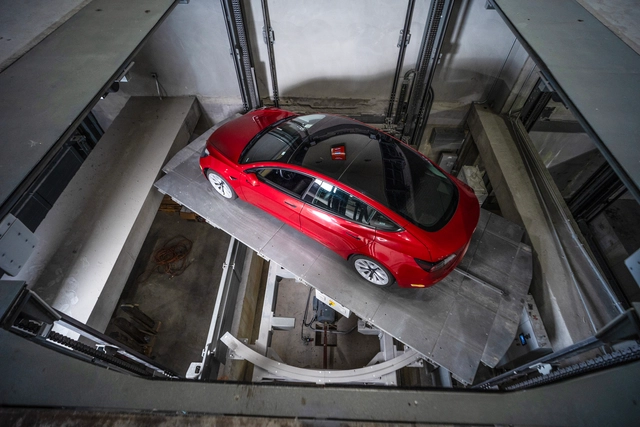
Cities are slowly reshaping themselves. Walkable streets, bike-friendly networks, and mixed-use neighborhoods are becoming planning priorities as climate goals, changing lifestyles, and remote work reshape daily patterns. Yet even as these people-centered ideas gain momentum, most cities still rely heavily on private cars, creating a tension between the urban futures we're designing for and the mobility habits that persist today.
This tension has pushed architects and developers to rethink one of the hardest pieces of the urban puzzle: parking. Mixed-use buildings are multiplying, stacking homes, workplaces, and services into tighter footprints, and every square foot has to work harder. The challenge is no longer simply where to put the cars, but how to integrate parking in ways that support density, livability, and long-term adaptability—allowing cities to evolve without letting vehicles dominate their form.