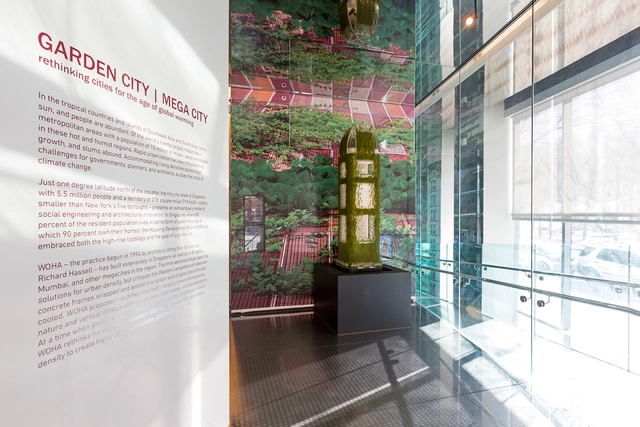
From commercial mixed-use to hospitality and social housing, Singapore-based WOHA reinterprets the skyscraper as a prototype for hyper-dense, green urban living. Their first major exhibition in the United States, GARDEN CITY MEGA CITY, opened on March 23rd, 2016 at The Skyscraper Museum, and unveiled twelve of their most recent vertical ecosystems.
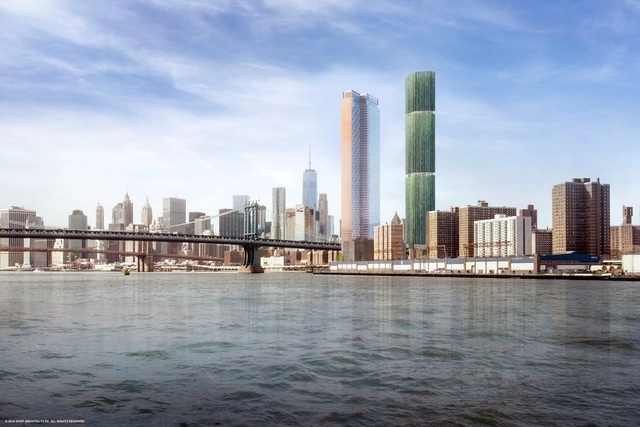
SHoP has unveiled the design for a new 900 foot tall skyscraper in Manhattan’s Lower East Side. The 77 story, 500,000 square foot, mixed-income tower will have 600 units, 150 of which will be permanently affordable and distributed evenly throughout the building. The project has been developed as a collaboration between SHoP and JDS who are co-owners of the development, with the partnership of two not-for-profit groups: Two Bridges Neighborhood Council (TBNC) and Settlement Housing Fund (SHF).
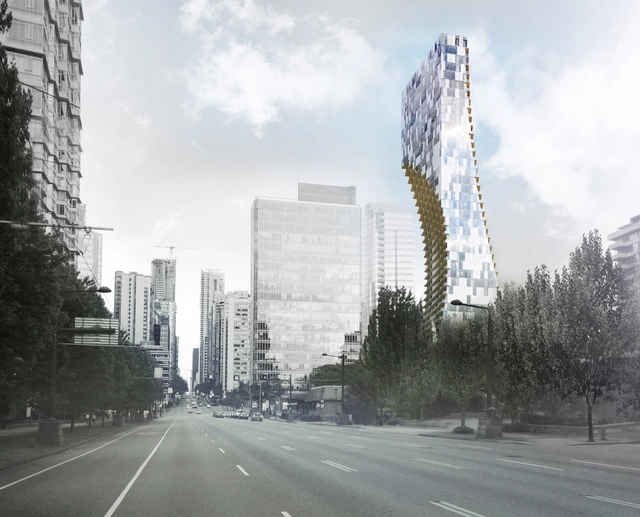
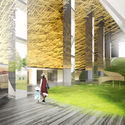
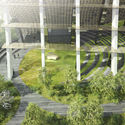
Kengo Kuma and Associates has revealed plans for the office’s first North American skyscraper, a mixed-use luxury tower on a site adjacent to Stanley Park in Vancouver. Known as ‘Alberni by Kuma,’ the 43-story tower combines 181 residences with retail space and a restaurant in a rectilinear volume accented by "scoops" on two sides. These curvatures are the building’s most important formal attribute, while a moss garden at the tower's base is its most important spatial feature. The project is being organized by Westbank and Peterson, and is part of a group of architecturally significant projects being developed by the pair in the west coast city.
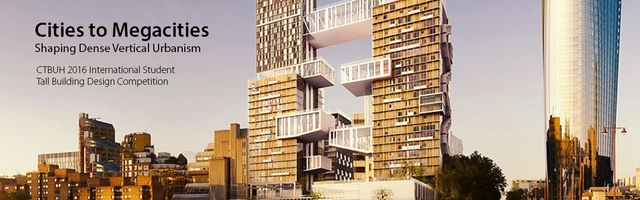
The Council on Tall Buildings and Urban Habitat (CTBUH) is pleased to announce its 5th International Student Tall Building Design Competition. The goal of the competition is to shed new light on the meaning and value of tall buildings in modern society.
Renzo Piano's Proposed Tower at 87 Park in Downtown Miami. Image Courtesy of Terra
While certain cities in the world have instantly recognizable skylines, other burgeoning cities like Miami are still finding their architectural identity. A new online, 3D-map by the Miami Downtown Development Authority (DDA) outlines the over 100 new towers being erected in the city by architects including Renzo Piano and OMA, set against Miami’s existing cityscape. The projects are color-coded according to their status as either proposed, under construction or built. You can access the interactive map here.
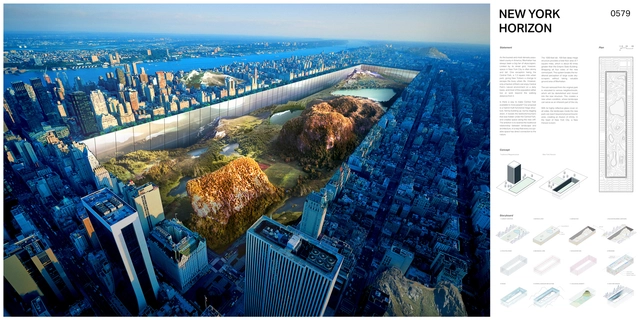
"New York Horizon" / Yitan Sun and Jianshi Wu. Image Courtesy of eVolo
A competition now in its 11th year, eVolo Magazine has announced the winners of its 2016 Skyscraper Competition: a group of three top prizes and 21 honorable mentions culled from 489 entries. The award annually recognizes the vanguard of high-rise construction "through [the] novel use of technology, materials, programs, aesthetics, and spatial organizations." Among this year's winners are a project that proposes digging down and creating a megastructure along the perimeter of Central Park, a skyscraper that acts as a hub for drones in future commercial applications, and a tower that takes advantage of the climate of Iceland as an ideal location for data servers.
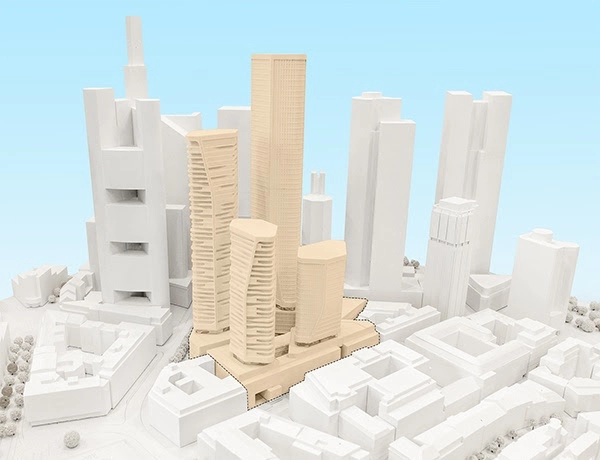
UNStudio has won a competition to transform the former Deutsche Bank site in Frankfurt's financial district into a lively mixed-use site comprised of offices, apartments, hotels, retail, gastro and open public spaces. With four high-rise towers reaching up to 228-meters-tall, the proposal plans to feature the city's highest residential and office buildings.
“Bringing a mixed-use project into this financial district will not only enliven the area during daytime, but it will also introduce evening programs and create an essential form of social sustainability to this part of the city," says Ben van Berkel of UNStudio. "The introduction of the residential and the leisure components are key to this strategy. This sculptural family of towers will also create the suggestion of a cohesive neighborhood within the skyline and emphasize the importance of this part of the city within the whole."
Russian designer Vasily Klyukin has envisioned the "Asian Cobra Tower." Just as its name suggests, the gold-plated tower takes the shape of a snake, offering offices and apartments in its body and a restaurant, night club and terrace in its jaws.
"In Japan telling someone that he is a snake means a compliment. In China snakes and dragons often mean the same," says Klyukin. "The symbol of wisdom and eternal life, this tower would embellish any Eastern city."
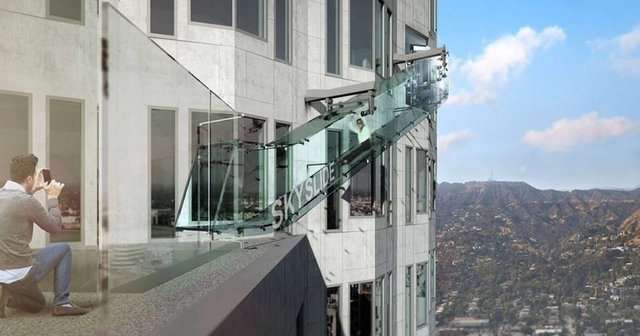
The West Coast's tallest building, Los Angeles' US Bank Tower is going to be outfitted with a terrifying glass slide designed by engineering firm M.Ludvik & Co. Set to hang 1000-feet above the street, the project will be part of the building's Gensler-designed OUE Skyspace LA attraction - soon to be California's tallest open-air observation deck.
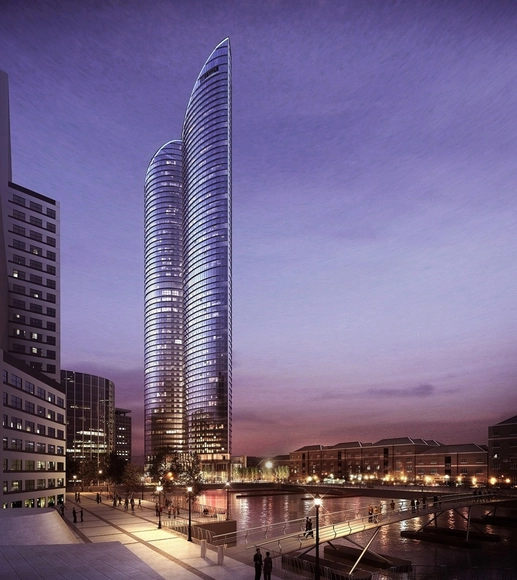
HOK’s latest project, “Hertsmere House” on West India Quay in London’s Canary Wharf has been approved for development by members of Tower Hamlets’ Strategic Development Committee. At 67-stories and 789 feet tall, Hertsmere House will be Western Europe’s tallest residentialtower. The design, inspired by flower petals, aims to create a unique addition to the London skyline. Read more about the project after the break.
"With the support of the Architectural Society of China and the Architectural Society of China Shanghai, the first year of this regionally focused awards program was very successful, with numerous high-quality projects entering into the running under six categories of recognition," said CITAB and CTBUH.
Carlo Ratti Associati has teamed up with German engineer Schlaich Bergermann Partner and British design studio Atmos to design the world's tallest man-made structure. Nearly twice the height of the Burj Khalifa, the 1609-meter-tall tower was envisioned as a vertical "Central Park" clothed in vegetation and supported by a lightweight matrix of pre-stressed cables.
"Imagine you take New York's Central Park, turn it vertical, roll it and twirl it," said Carlo Ratti.
British firm PLP has unveiled their design for a large complex at the heart of the Pearl River Delta in China. The master plan comprises four buildings: the Platform for Contemporary Arts, the Lizhi Park Tower, the Concourse, and the Nexus - a 600-meter tall office and hotel tower that will be the masterplan's centerpiece and the region's tallest skyscraper.
This month, Family Design Day is all about skyscrapers! Boston, home to the Hancock and Prudential towers, is taking steps to elevate the city’s skyline. But how tall can architects and engineers actually build? Learn more about the architecture, science, and art behind what keeps the world’s tallest buildings standing and then, using a kit of parts, design and build your own skyscraper.
Protestors have prompted developer Sellar Property Group to pull plans on the Renzo Piano-designed skyscraper sited in London's Paddington area. The 72-story "skinny Shard" has been harshly criticized by locals and Historic England for "blighting views" of the capital and being out-of-place, hence its popular nickname - the "Paddington Pole."
“London’s skyline is unique, iconic and loved. It has to be managed sensitively and with proper planning,” Historic England chief executive Duncan Wilson told The Guardian. “Tall buildings can be exciting and useful, but if they are poorly designed, or in the wrong place, they can really harm our cities. We trust that the revised plans for Paddington Place will take the area’s unique character into account.”
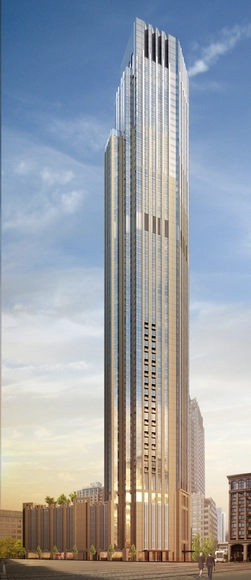
99 Hudson Street, soon to be New Jersey's tallest tower, has officially broken ground. Designed by Perkins Eastman, the 900-foot-tall mixed-use condominium tower is said to be one of the tallest residential buildings in the US and will "dramatically remake the Jersey City skyline," according to Mayor Steven Fulop.
“99 Hudson will mark a new milestone for Jersey City’s resurgence as a truly great city in which to live and work. For decades now, people on the west side of the Hudson have marveled at Manhattan’s skyline, but today Jersey City is developing its own dynamic city, along with a world-class skyline. To play a part in this transformation is quite an honor,” said Perkins Eastman principal Ming Wu.
Courtesy of Noe & Associates and The Boundary; Via The Architects' Newspaper
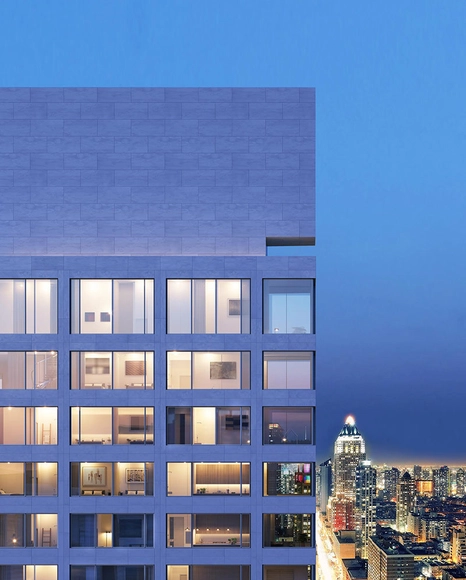
An image of Álvaro Siza's first US building has been released. The luxury New York tower, planned for the corner of West 56th Street and Eleventh Avenue in Midtown, will rise up to 120 meters (just over 400 feet) and offer 80 units, a private roof garden, sun deck, spa and fitness center, and more.
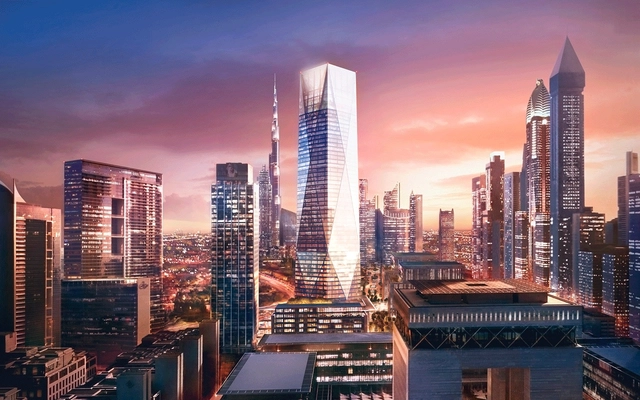
Construction is underway on a new office and retail tower in the Dubai International Financial Center district (DIFC). Designed by Foster + Partners, the 1.5-million-square-foot "ICD Brookfield Place" has officially broke ground and is expected to be completed by late 2018.
"The beginning of construction at ICD Brookfield Place marks the next phase of one of Dubai's most prestigious developments at the DIFC. We were honored to be chosen by ICD Brookfield to design a project that we believe will become a new social focus for Dubai, combining world class office space with a major civic plaza," says Foster.


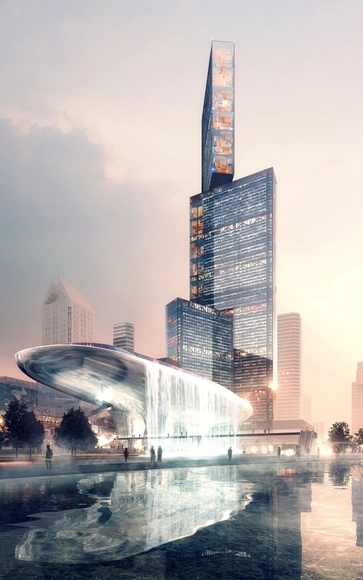
CCDI.jpg?1456507917&format=webp&width=640&height=580)





.jpg?1454345916&format=webp&width=640&height=580)