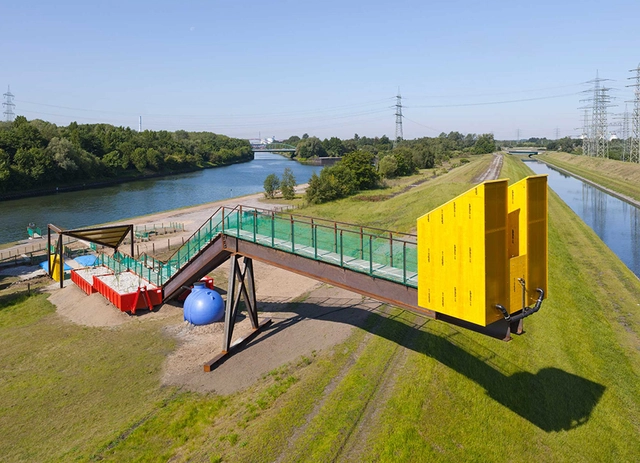
On a small strip of land between the Emscher River and the Rhine Herne Canal in Germany sits a rest stop whose colorful appearance belies its radical purpose. The structure’s artful design consists of pipes leading from two toilets and the Emscher (the most polluted river in Germany) that converge at a small community garden and drinking fountain. The garden is, in fact, a manmade wetland that collects, treats, and cleans the effluence from the toilets and river—making it drinkable.
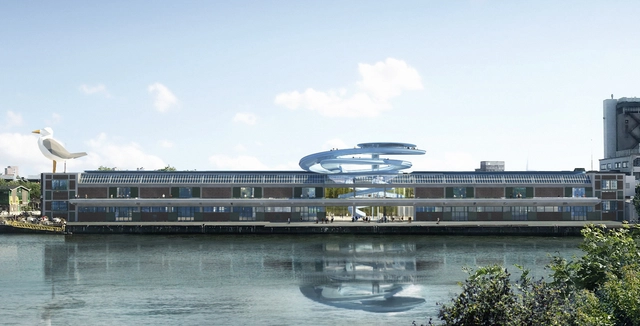
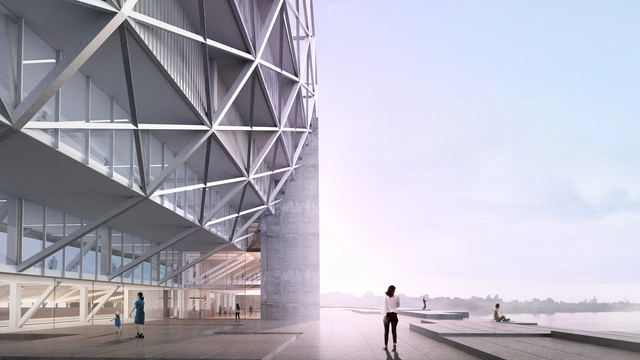
MAD Architects has unveiled images of their proposed panoramic viewpoint for the Fenix Warehouse in Rotterdam, commissioned by the Droom en Daad Foundation. The scheme represents MAD’s first public cultural project in Europe, which sees them tasked with uncovering the forgotten history of what was once one of the biggest warehouses in the world.
The viewpoint is to form part of a restoration project of the historic warehouse itself, to be led by Rotterdam-based Bureau Polderman. The scheme is situated on the site of one of the oldest Chinatowns in Europe, on the southern banks of the port of Rotterdam.
https://www.archdaily.com/906500/mad-architects-design-panoramic-viewpoint-for-historic-warehouse-in-rotterdamNiall Patrick Walsh
In recent years, architecture film festivals have erupted around the globe providing critics, theorists, and all architectural thinkers with an additional median for architectural expression and discussion. The symbiotic relationship between architecture and film stems from architecture’s effect on its built environment and its determined social/cultural impact.
As the international audience grows and new genres emerge, architecture film festivals have come to encompass more than just the film’s initial viewing; programs, lectures, and discussions are organized, enhancing the intellectual impact of the viewing material. Architecture Film Festival Rotterdam (AFFR) is celebrating its tenth edition this October by exploring the concept of “building happiness” in an age when we seek to build a more sustainable world - a challenge for both historic and contemporary design.
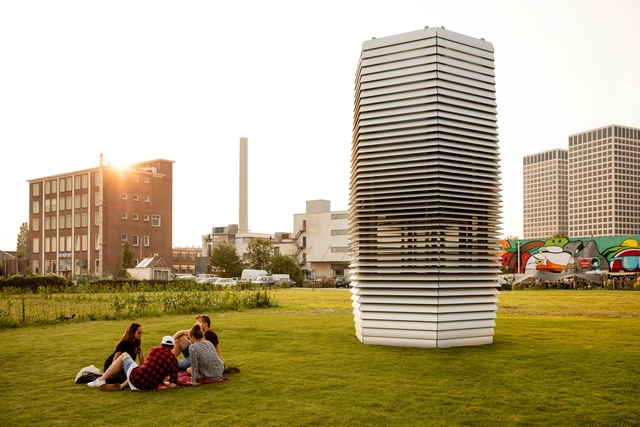
Courtesy of Studio Roosegaarde. ImageStudio Roosegaarde's Smog Free Tower
In Metropolis Magazine's latest - and last - installment in their annual design cities review, the focus is not on output or culture but on cities themselves as the point of inspiration. For the designers surveyed, these were the cities that made their hearts beat a little faster; the ones that remained in their minds and wormed their way into their work.
https://www.archdaily.com/901153/the-top-10-inspirational-design-cities-of-2018-as-revealed-by-metropolis-magazineKatherine Allen
ArchDaily and Airbnb were both founded in 2008, but for two very different reasons. Since then, ArchDaily has amassed a vast database of tens of thousands of buildings, located in cities and countries all around the world. Meanwhile, Airbnb has revolutionized the way in which we explore these countries, and use these buildings, even if just for one night.
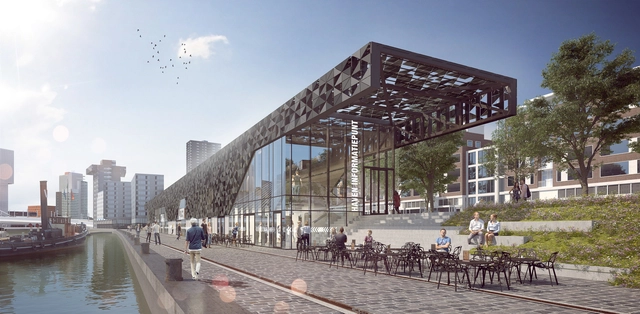
Render. Image Courtesy of MoederscheimMoonen Architects
A new public pavilion from MoedersheimMoonen Architects is set to be built in the old 'Leuvehaven' port in Rotterdam. Located near the Erasmus Bridge, the pavilion intends to bring new life to the historic port of Rotterdam. The municipality of Rotterdam is also set to invest in a bustling residential climate, with this new pavilion housing multiple programs that will contribute to a "lively" and "greener" Maritime District.
The building will replace three existing pavilions, providing a new perspective for visitors to the Leuvehaven. Much of the structure and foundation from the existing buildings are reused in the new design, promoting sustainability, honoring the present conditions of the site, and bringing high-tech design elements to the historical context.
The various programs for the Pavilion will include "the Port Information Point of the Port of Rotterdam, two publicly accessible workshops from the Maritime Museum Rotterdam and two catering establishments with terraces by the water," with the surrounding exteriors space also to be renewed in phases.
OMA has released updated images of their Feyenoord City masterplan after reaching initial city approval in 2016. Developed for the Feyenoord football club in Rotterdam, the project comprises a mixed-use district and a new 63,000 seat stadium along the River Maas.
https://www.archdaily.com/897920/oma-releases-updated-images-for-feyenoord-city-masterplanKatherine Allen
Rotterdam-based Barcode Architects have designed a new 110-meter-tall triangular shaped residential tower to become an icon in the city’s skyline. The tower, which has been named CasaNova, features a large plinth and a building base which tapers down four stories to meet the ground with a sharp angular form.
MVRDV has revealed the design of Weenapoint, a new mixed-use development for the firm’s home city of Rotterdam, The Netherlands.
Located in the Rotterdam Central District adjacent to Rotterdam Central Station, the 50,000-square-meter scheme will add to the recent transformation of the Weenapoint complex led by developer Maarsen Groep. The third and final phase of the master plan, MVRDV’s proposal will add 17,000 square meters of office space, a life-filled commercial plinth and up to 300 residential units.
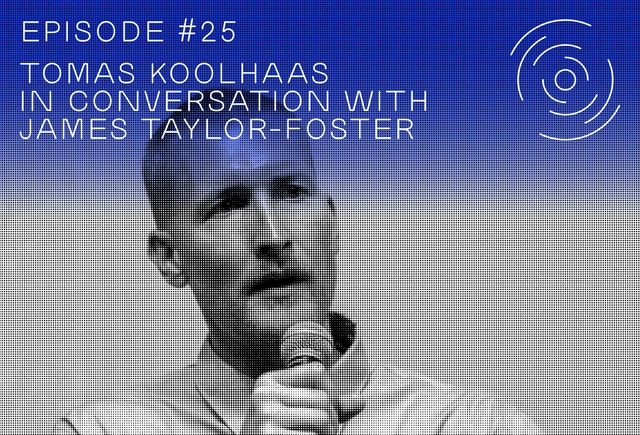
In this episode of GSAPP Conversations, Tomas Koolhaas—the director of the much anticipated documentary-biopic REM, a film about the eponymous founder of the Office for Metropolitan Architecture (OMA), Rem Koolhaas—discusses the movie at length. Among other topics, the conversation touches upon Koolhaas's specific tools and methods for filming architectural space, and the challenges of producing a film founded on a personal relationship.
https://www.archdaily.com/880918/tomas-koolhaas-discusses-the-reasoning-devices-and-reception-of-rem-gsapp-conversationsAD Editorial Team
Het Nieuwe Instituut (HNI) have announced WORK, BODY, LEISURE as the theme of the Dutch Pavilion at the 2018 Venice Architecture Biennale. Envisioned as "a collaborative research endeavor by a national and international network," Marina Otero Verzier—head of the Research Department at HNI and a member of the After Belonging Agency, curatorial team behind the 2016 Oslo Architecture Triennale—will act as the creative mediator of a series of collaborative contributions, pooling the expertise of "architects, designers, knowledge institutions, and the private sector."
https://www.archdaily.com/880058/dutch-pavilion-at-the-2018-venice-biennale-to-explore-alternative-modes-of-living-work-and-leisure-hniAD Editorial Team
In collaboration with the Canadian Centre for Architecture (CCA), Het Nieuwe Instituut presents The Other Architect, an exhibition of architects who expanded their role in society to shape the contemporary cultural agenda without the intervention of built form. It showcases architecture’s potential to identify the urgent issues of our time, featuring 22 case studies, dating from the 1960s to the present day, that illustrate how international and often multidisciplinary groups invented and adopted new methods outside of traditional design practices. The Other Architect is a touring exhibition organized by the CCA and will be on view in Rotterdam from 8
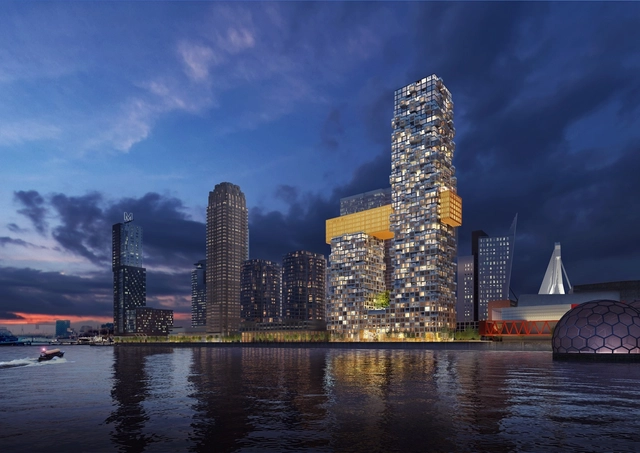
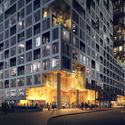
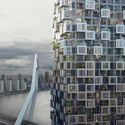
MVRDV has been selected as the winner of a competition for The Sax, a 51-story mixed-use tower in Rotterdam’s Wilhelminapier port development. The building will add a total of 82,000 square meters (882,000 square feet) of residences, retail spaces and commercial facilities across two towers, the Philadelphia & the Havana, connected halfway up by a bridge containing a 150-room hotel.
Located on the south side of Wilhelminapier, the Sax will become one of the last residential buildings to rise within a new development on the historic harbor, one of the city’s most popular areas. The building’s recognizable pixelated silhouette and waterfront siting will give the building an immediate presence on the Rotterdam skyline, recently coined the “Manhattan On the Maas.”



.jpg?1533734642 "VillaLóla / ARKÍS architects. Image © ARKÍS architects")











.jpg?1519240599)
.jpg?1519240713 "View of the plinth. Image © Mozses")
.jpg?1519240623 "View from street. Image © MVRDV")
.jpg?1519240576 "Corner view. Image © Mozses")
.jpg?1519240651 "Night view. Image © MVRDV")
.jpg?1519240599)