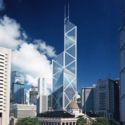
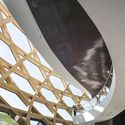
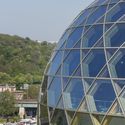
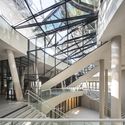
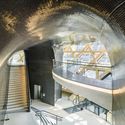
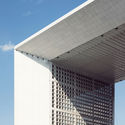
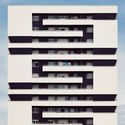
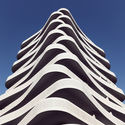
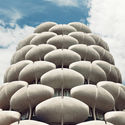
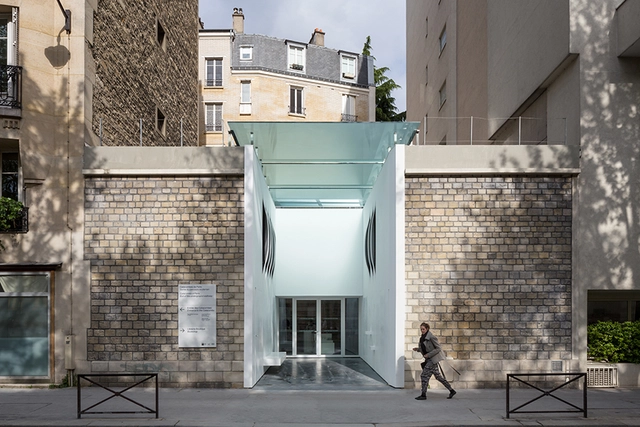
For Hamburg-based photographer Sebastian Weiss, buildings are dramatis personae, or "characters". Inspired by Ash Amin and Stephen Graham's 1997 book The Ordinary City, in which the authors described the city as the "theater of life", this photo-essay of architectural landmarks in the French cities of Arcueil, Nanterre, and Paris examines the personalities of public buildings.
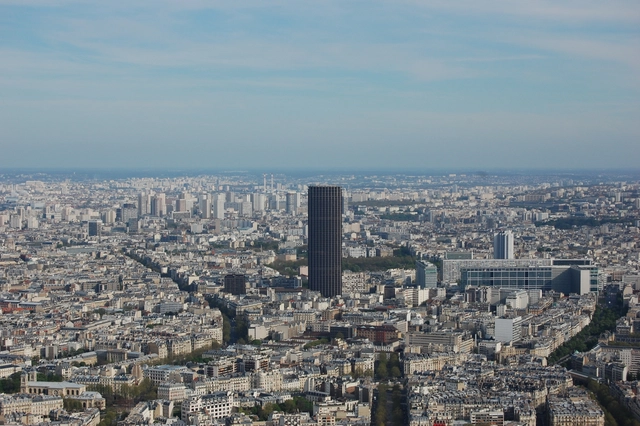
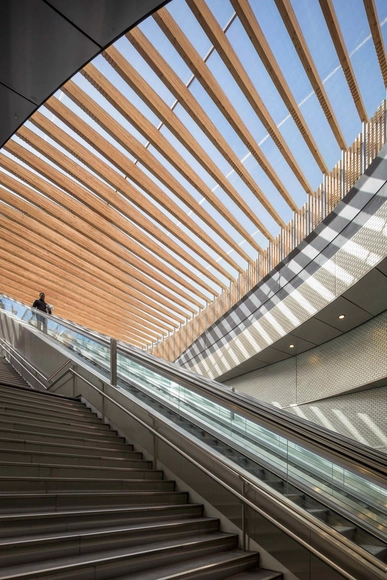
The competition asked teams to submit a vision for the tower that “not only creates a powerful, dynamic and bold new identity for the Tour Montparnasse but also addresses all the challenges involved in terms of user accessibility, comfort and energy performance.”
In 2017, many of the world's cities have become potpourri time capsules of architecture. We live in an eclectic era in which a 19th-century industrial loft, post-war townhouse, and brand new high rise condominium are all comparably desirable properties. This increasingly varied urban landscape—and the appetite for variety of the people who live there—makes it more difficult than ever for new architecture to grab the public's attention.
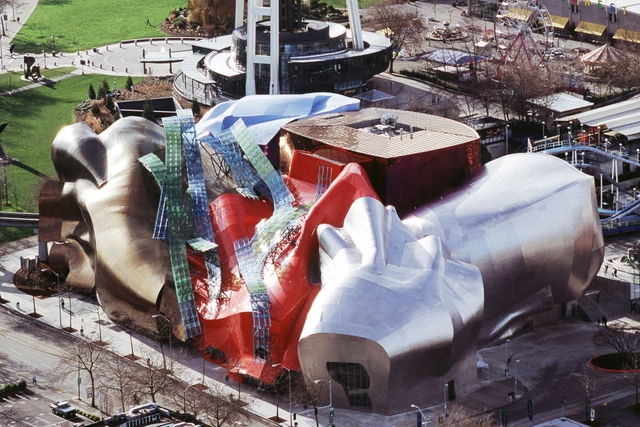
To combat this, architects often attempt to produce an "iconic" work: a building whose design is so so striking that it attracts even a layperson's focus. Sometimes this ambition pays off as timeless, and sometimes it irreversibly pock-marks the skyline. What follows is a collection of attention grabbing structures. Will they be remembered as eccentric landmarks or glaring eyesores? You decide.
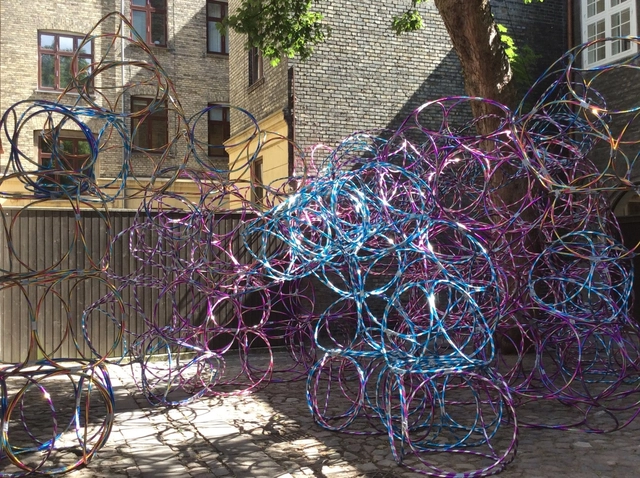
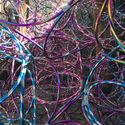
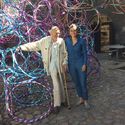
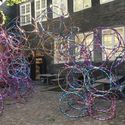
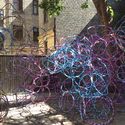
Architect and theorist Yona Friedman has brought his playful “People’s Architecture” installations to Rome’s MAXXI Museum, Paris’s Les Halles and Denmark where they were recently assembled in a workshop at the Danish Association for Architects. Built using plastic hula hoops, each installation is assembled spontaneously, creating new variations of space with each turn. Says Friedman: “Architecture for people proposes a variant of the original “Ville Spatial.” It is based on a structure easy to modify, a structure not necessarily raised over ground level, keeping that option open if wanted.”
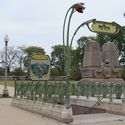
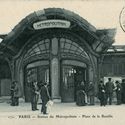
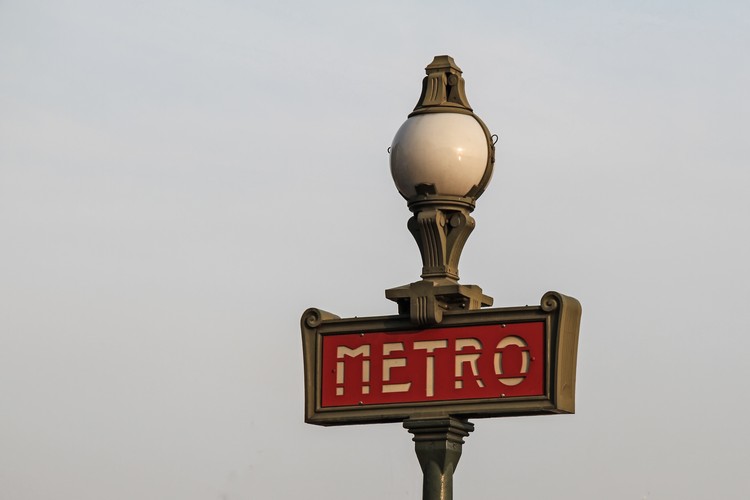
Scattered throughout the streets of Paris, the elegant Art Nouveau entrances to the Métropolitain (Métro) subway system stand as a collective monument to the city’s Belle Époque of the late 19th and early 20th Centuries. With their sinuous ironwork patterned after stylized plants, the Métro entrances now count among the most celebrated architectural emblems of the city; however, due to the city’s wariness in the face of industrialization and architect Hector Guimard’s decision to utilize a then-novel architectural aesthetic, it would take decades before the entrances would earn the illustrious reputation that they now enjoy.
Paris and the entire country of France is world-famous for its cuisine, with a non-exhaustive list of delicacies and culinary systems. The culinary reputation of Paris is very rich, cultured and diverse. French food culture, according to UNESCO, is important for 'bringing people together to enjoy the art of good eating and drinking' and the power to create 'togetherness, the pleasure of taste, and the balance between human beings and the products of nature'.
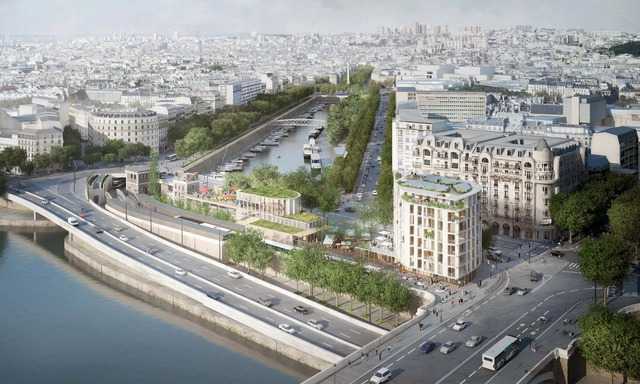
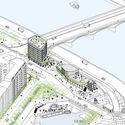
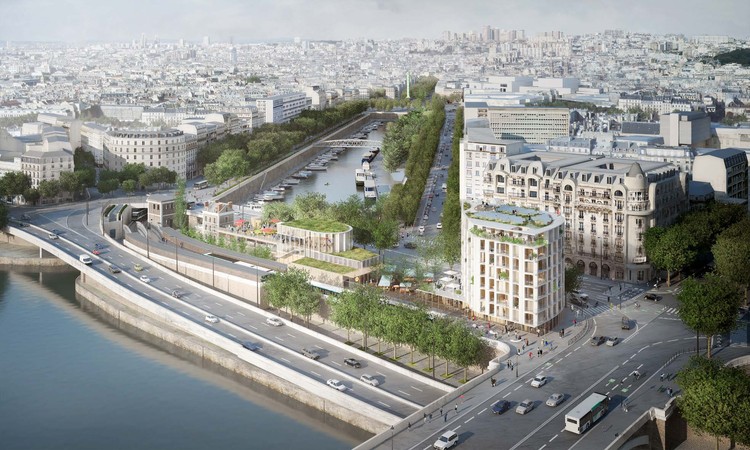
SO-IL and Laisné Roussel architects have been selected as the winners of an international competition to design a new masterplan for Place Mazas in Paris. Titled L’Atelier de l’Arsenal, the proposal seeks to integrate the historic fabric of the site into a new, flexible urban strategy organized around a variety of new buildings and public spaces.
Paris and Los Angeles will become the next Olympic host cities, after the International Olympic Committee (IOC) voted unanimously to approve a plan simultaneously awarding the 2024 and 2028 Olympic Games to the competing cities.
Which city will host each year, however, is still on the table – the two bid cities and the IOC will have until a September 13 conference in Lima to reach an agreement. If they cannot agree, solely the 2024 Olympics will be awarded, though this outcome seems unlikely after recent collaborations by Los Angeles Mayor Eric Garcetti and Paris Mayor Anne Hidalgo.
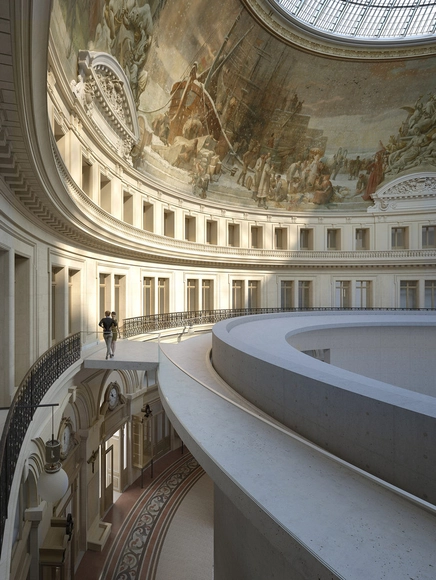
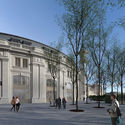
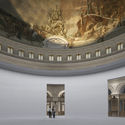
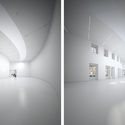
Renowned art collector François Pinault has revealed plans for a “completely circular museum” that will be located within a 19th century, domed structure that once housed the Parisian Stock Exchange. To accomplish this, Pinault has enlisted the services of Pritzker Prize-winning architect Tadao Ando, whose design calls for the construction of a giant concrete cylinder located directly below the building’s soaring rotunda.
https://www.archdaily.com/874675/tadao-ando-to-design-art-museum-inside-historic-domed-structure-in-parisAD Editorial Team
Humanity always cherishes great works of art that stand the test of time. This June, for example, marks the 50th anniversary of The Beatles’ psychedelic Sgt. Pepper's Lonely Hearts Club Band, and the 20th anniversary of Radiohead’s dystopian Ok Computer. These psychologically satisfying birthdays have generated serious appreciation and nostalgia. Similarly, we also love to praise the longevity of innovative architecture. The AIA bestows an annual “Twenty-five Year Award” to acknowledge projects that have "stood the test of time” and “exemplify design of enduring significance.” But one project a year seems stingy. Below are 15 modern classics which, though not always given the easiest start in life, we’ve come to adore:
Photographer duo Luc Boegly & Sergio Grazia have released a new photo series capturing the Seine Musicale, which recently opened its doors. Designed as a partnership itself between architects Shigeru Ban and Jean de Gastines, the mixed-use music and cultural center is located in Paris’ western Boulogne-Billancourt suburb. The project is the latest feature in the site’s Island Master Plan designed by Jean Nouvel. Features include a multi-purpose concert hall seating 4,000, a classical music call seating 1,150, rehearsal and recording rooms and an outdoor park area for visitors and practicing musicians.









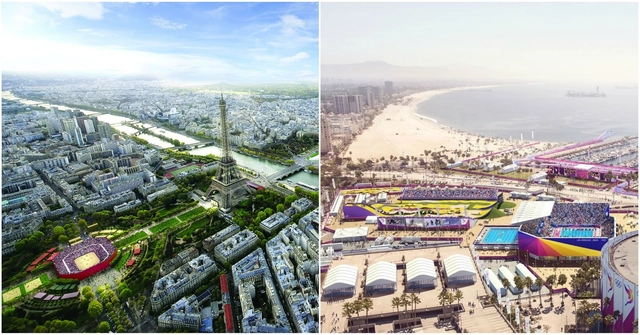

.jpg?1499789165 "Main Stadium - Future home of the NFL's LA Rams. Image Courtesy of LA 2024")


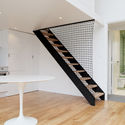
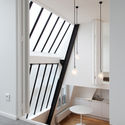


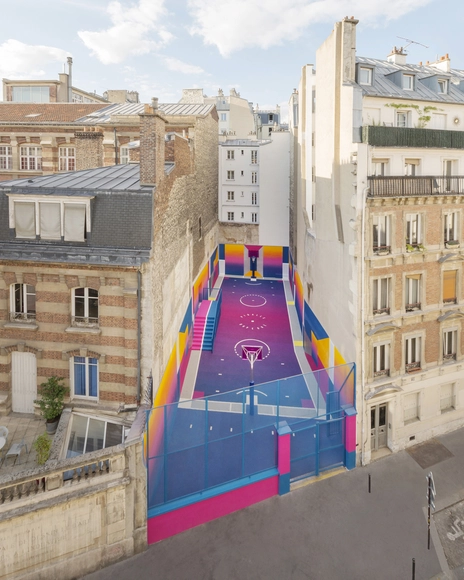

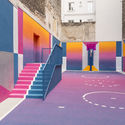
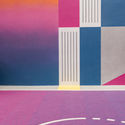








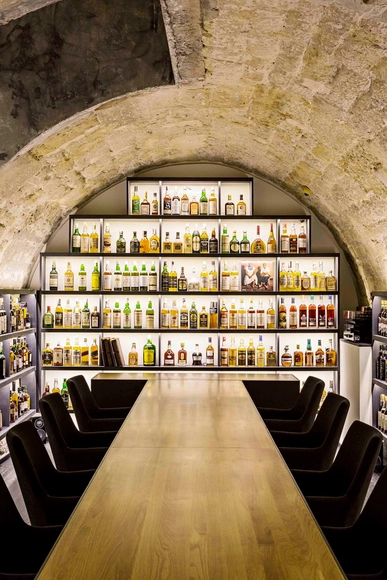


Stefan_Tuchila_16_K3_7217.jpg?1496990500&format=webp&width=640&height=580)
Stefan_Tuchila_06_K3_6206.jpg?1496990378 "© Ştefan Tuchilă")
Stefan_Tuchila_58_K3_7768.jpg?1496991138 "© Ştefan Tuchilă")
Stefan_Tuchila_30_K3_5030.jpg?1496990776 "© Ştefan Tuchilă")
Stefan_Tuchila_16_K3_7217.jpg?1496990500)