
-
Architects: Seine Design
- Year: 2019
-
Manufacturers: AutoDesk, McNeel, Targetti, YAMAHA
-
Professionals: Seine Design


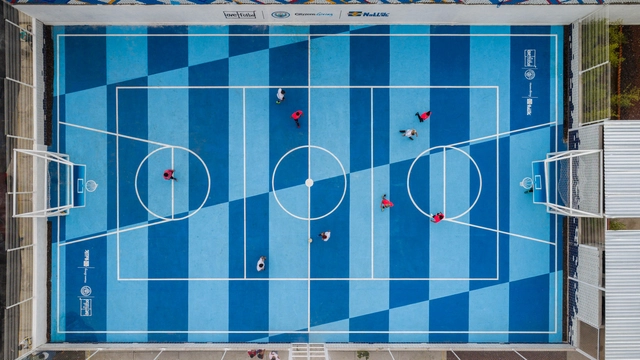
People often gather around sports activities, whether they are the ones exercising or the ones cheering. This internationally recognized social interest brings everyone together seamlessly, regardless of their background, gender, culture, ethnicity and so on.
Urban regeneration can take different aspects, and one of the most prominent and efficient solutions that can reconcile a community with itself and its surroundings is a sports function. In fact, this purpose encourages people to reclaim their fundamental right to public spaces and regenerate demoted, hostile or forgotten areas.
Read on to discover examples from all over the world, where physical activities made an urban impact on the neighborhood and the community.
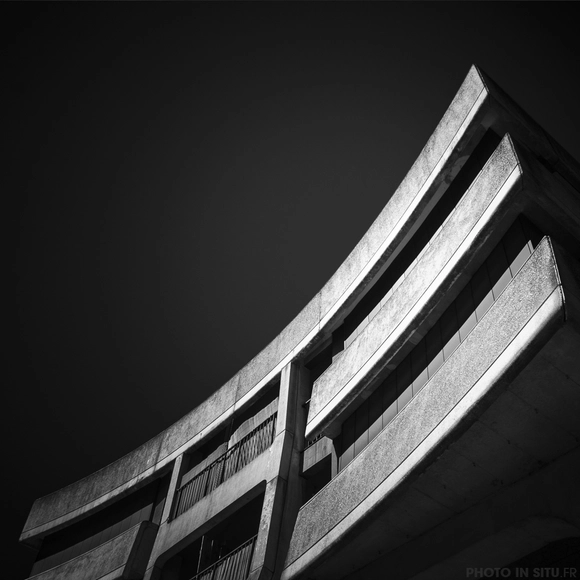
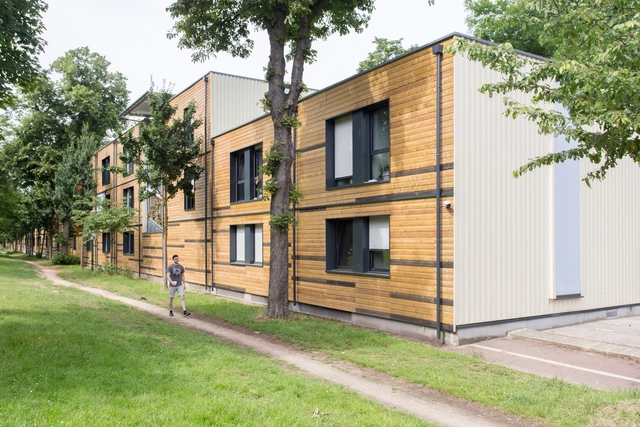
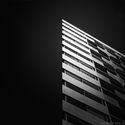
The “New Créteil” was an urbanization program carried out in the seventies. It was intended to provide the city of Créteil, which is located around 6 km southeast of Paris, new apartment buildings and public facilities such as a town hall, prefecture, hospital, and courthouse. In a series called “See the New Créteil,” photographer Robin Leroy documents a city considered transcendent of the traditional clichés of modern architecture.
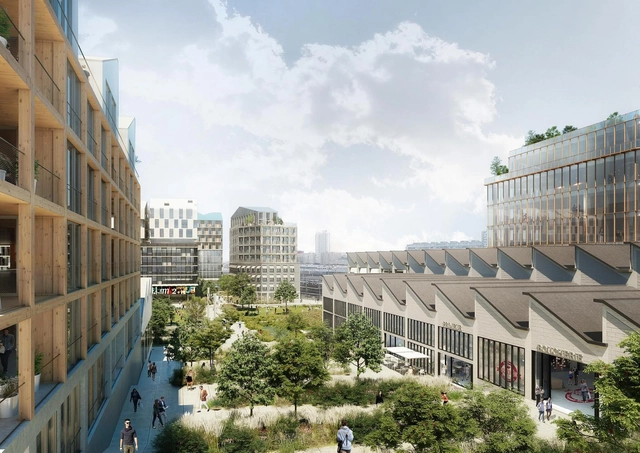
SLA and BIECHER ARCHITECTES, have won the international competition to develop the former location of the Ordener-Poissonniers’ railway into a socially sustainable urban development, in the heart of the 18th arrondissement of Paris, France. The 3,7-hectare site will include 1000 new residents, big public parks, offices, theater, public school, industrial design incubators, a graduate school of design, food courts and urban farming.
_HD_3.jpg?1567471080)
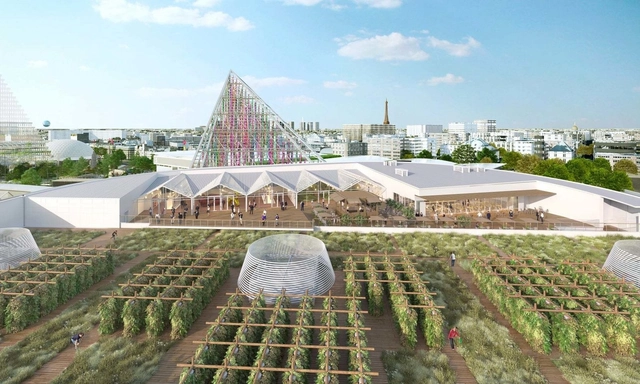
The world's largest urban farm is set to open next year in Paris. The six-story, 150,000-square-foot garden aims to grow more than 2,000 pounds of fruits and vegetables a day. Twenty gardeners will tend to 30 different kinds of plants to produce vegetables for the community. Called Agripolis, the project uses aeroponic farming so the plants absorb water and nutrients via mist.

Anna Saint Pierre's Granito project is harvesting the ingredients for new architectural building blocks from demolished structures.

Rapid urban change comes and goes without many even noticing it. Entire slices of a city’s history disappear overnight: What was once a wall of hewn stone is now fritted glass and buffed metal. The building site is always, first, a demolition site.
This is the thread that runs through Granito, a project by the young French designer and doctoral researcher Anna Saint Pierre. Developed in response to a late-20th-century Paris office block due for a major retrofit, one involving disassembly, it hinges on a method of material preservation Saint Pierre calls “in situ recycling.” Her proposal posits that harvesting the individual granite panels of the building’s somber gray facade could form the basis of a circular economy. “No longer in fashion,” this glum stone—all 182 tons of it—would be dislodged, pulverized, and sorted on-site, then incorporated into terrazzo flooring in the building update.
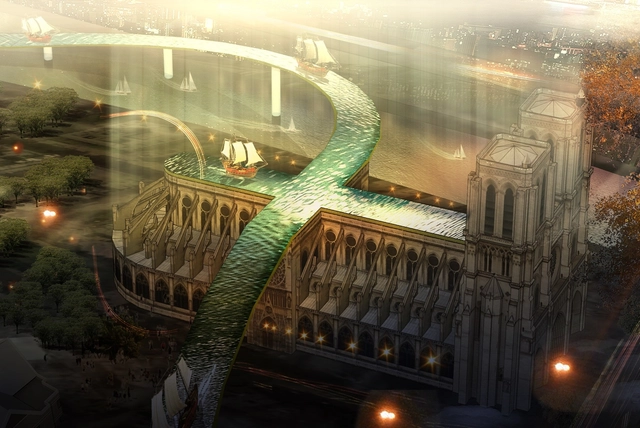
Vietnam-based Bay Huynh Architects have created a proposal for an urban waterway as a new rooftop for Notre Dame Cathedral in Paris. Designed to explore the value of faith and society, the proposal comes after the Notre Dame fire in April this year. Called the Flowing Fish, the project aims to break the traditional notion of a church to create a "new ecosystem" for worship.
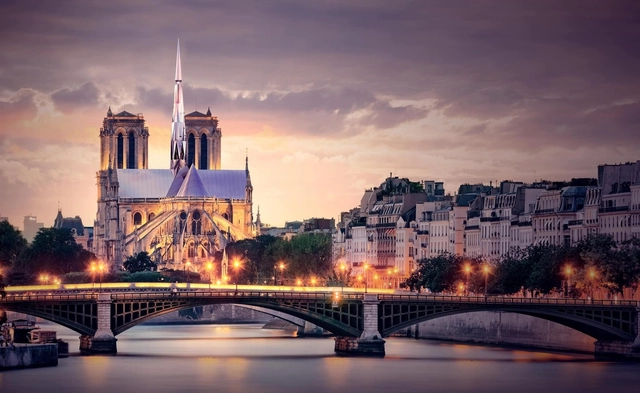
GoArchitect has announced designers Zeyu Cai and Sibei Li as the winners of The Peoples Notre-Dame Cathedral Design Competition. With 226 entries from 56 countries, the winning proposal was chosen by the public with over 30,000 people voting. The competition aimed to create a new vision for the future of the iconic cathedral after the Notre Dame fire in April this year. Called Paris Heartbeat, the winning design creates a literal heartbeat for the city.
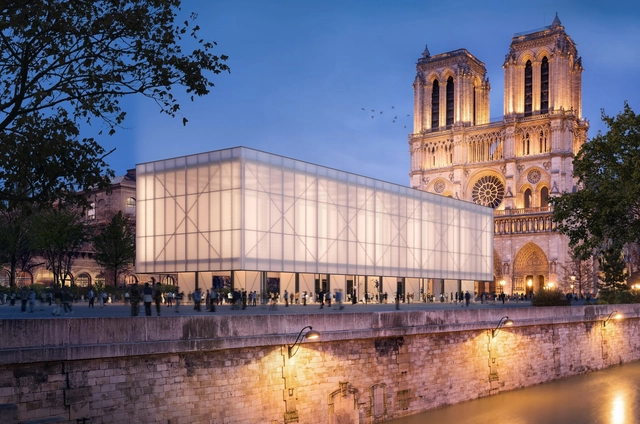
Architecture firm Gensler has unveiled a design for a temporary worship pavilion at Notre-Dame Cathedral in Paris. Set to be located in Parvis Square, the temporary structure would be constructed primarily out of charred timber for added strength and durability. The proposal comes after the Notre Dame fire in April this year. The Pavillon Notre-Dame was designed to offer hope to Parisians and international visitors while the 850-year-old cathedral is being restored.
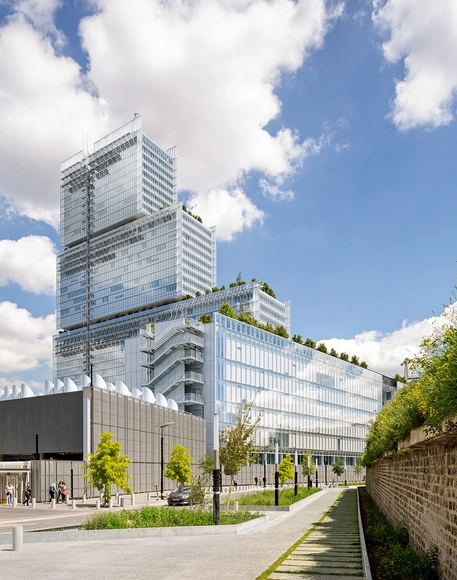
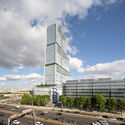
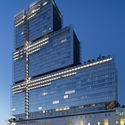
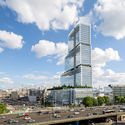
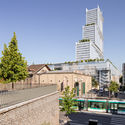
Architectural photographer Marwan Harmouche has published images of the new Paris Courthouse, designed by Renzo Piano Building Workshop. Situated on the northern edge of Paris, the Tribunal de Paris regroups various facilities previously dispersed around the capital, becoming the largest law courts complex in Europe.
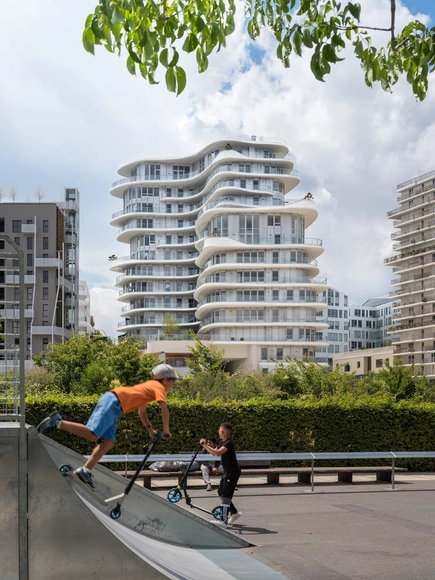
MAD Architects’ first built project in Europe is nearing completion in the French capital of Paris. Led by Ma Yansong, MAD was awarded the project in 2012 following an international design competition, working in collaboration with French firm Biecher Architectes. The building, named “UNIC,” emerges as part of a mixed-use masterplan envisioned adjacent to the Martin Luther King Park: a 10-hectare green space.
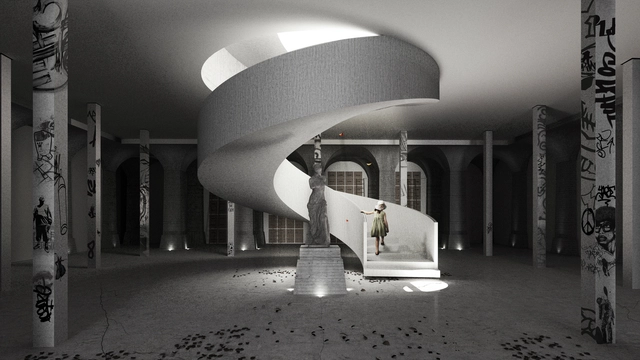
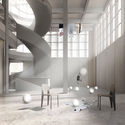
In their recently completed thesis project, Sebastian Siggard, Neemat Azizullah, and Thomas Ron propose the revitalization of a 19th century Parisian water reservoir into a new cultural hub. Addressing growing social issues and inequality across Europe, the project, titled “New Parisian Stories,” promotes social interaction in an effort to create a more integrated and cohesive society. Two primary questions motivate their design: With the 2024 Olympics games coming to Paris, what role can architecture play in capturing the opportunities and potential of such events? And how can architecture better the lives of those lowest in society while also creating social and sympathetic spaces for people of all languages, cultures and ages?






_HD_5.jpg?1567470642 "© WE ARE CONTENT(S)")
_HD_4.jpg?1567470556 "© WE ARE CONTENT(S)")
_HD_1.jpg?1567470207 "© WE ARE CONTENT(S)")
_HD_3.jpg?1567471080)