From CLOG. In many countries, architects assume that designing to meet the local building code assures that their buildings are safe for the public. But what if a building’s harm is not in the risk of the building falling down, but in the building performing as intended? If designed for the wrong purpose, can a building be a human rights violation, and if so, what should an architect do about it?
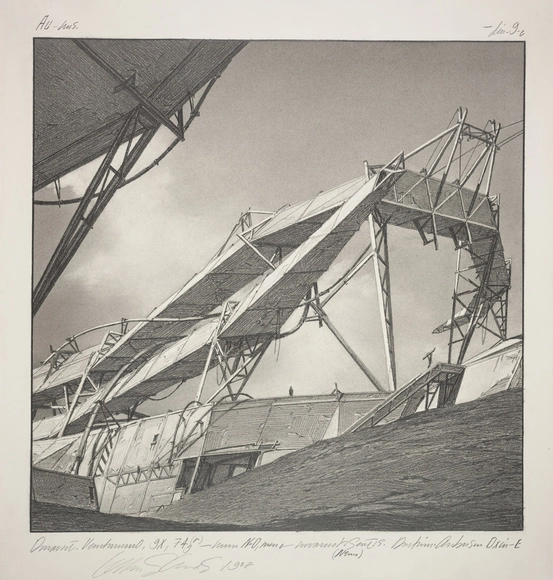
Unified Urban Field. Image Courtesy of Estate of Lebbeus Woods
This summer, the drawings, theories and works of architect Lebbeus Woods are headed to the city that Lebbeus considered home. After a five-month stay at SFMOMA, the exhibit "Lebbeus Woods - Architect" will be at the Drawing Center in SoHo, Manhattan until mid-June. The following story and overview of the exhibition, by Samuel Medina, originally appeared at Metropolis Magazine as “Coming Home".
It’s all too biblical an irony that Lebbeus Woods—architect of war, catastrophe, and apocalyptic doom—died as strong winds, rain, and waves barreled down on Manhattan, his home for some 40-odd years. Woods passed the morning after Hurricane Sandy flooded Lower Manhattan, almost as if the prophet had succumbed to one of his turbulent visions. But this apocryphal reading is just one way to view Woods’s work, which, as often as it was concerned with annihilation, always dared to build in the bleakest of circumstances.
In response to this criticism, I spoke to Rodrigo Nino, the founder of Prodigy Network, the company behind 17 John, who offered to counter my argument. Read on after the break for his take on the benefits of tapping into the 'wisdom of crowds.'
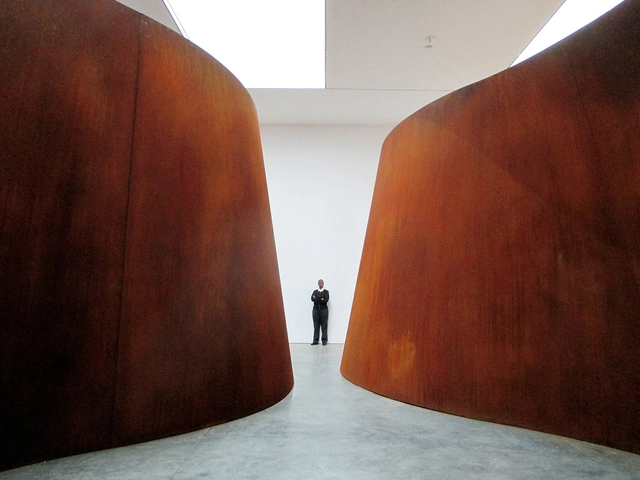
Richard Serra has been announced as the first artist to win the Architectural League of New York President’s Medal. Serra, an American sculptor known for his large-scale sheet metal installations, was honored for “contributions his work makes to the way we think about space, viewer and object, site, and materiality, concerns relevant to both architects and the artist.”
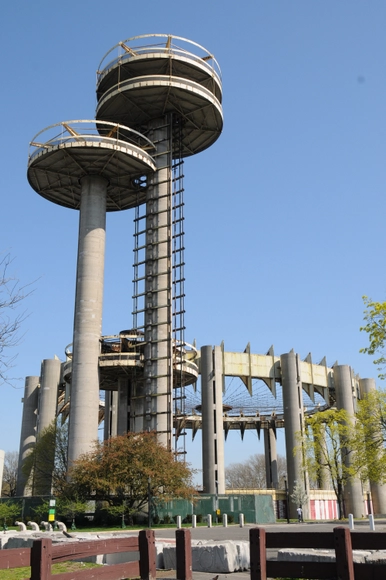
“In the last 50 years, Flushing Meadows Corona Park has grown from the site of the World’s Fair to the home of the World’s Park,” said Queens Parks Commissioner Dorothy Lewandowski. “As we celebrate this anniversary, it is just as important that we look to the next 50 years and plan for the Park’s future. I would like to thank the National Trust for Historic Preservation for honoring the New York State Pavilion as a ‘National Treasure’. This designation will highlight the importance of the Pavilion as a national icon, and help us to continue the conversation about how it can best serve Queens’ residents.”
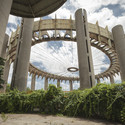
The Pavilion's "Tent of Tomorrow" photographed during the fair. Image via People for the Pavillion website. Image
For the first time in decades, Philip Johnson’s New York State Pavilion will open to the public tomorrow (April 22) in celebration of its 50th anniversary. Built for the 1964-65 World’s Fair, “the Pavilion represents a pivotal time in American history when the allure of putting a man on the moon inspired renowned architect Philip Johnson to create this emblem for Space Age enthusiasm,” described Stephanie Meeks, president of the National Trust for Historic Preservation.
Building resilient and sustainable urban centers. That's going to be the main issue that over 30 speakers will be addressing at the Cities for Tomorrow Conference next Tuesday, April 22 at TheTimesCenter, NY. The event, hosted by NY Times architecture critic Michael Kimmelman, will feature Shigeru Ban's first public appearance since winning the Pritzker Architecture Prize. His presentation will be on the eve of the conference, on Monday, April 21. Although the reception is invitation-only, we will be live-tweeting the presentation.
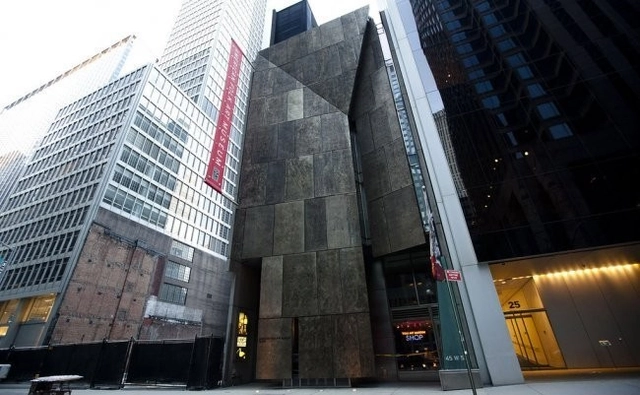
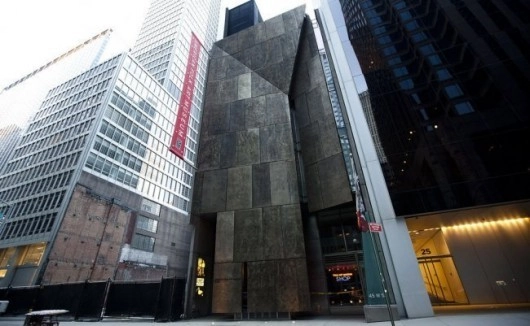
“Yes, all buildings one day will turn to dust, but this building could have been reused,” Tod Williams. “Unfortunately, the imagination and the will were not there.”
Though MoMA has promised to preserve the building’s iconic copper-bronze facade, Williams is concerned it will forever stay in storage.
Proposals are being suggested on how to resurrect the facade, as the New York Times reported, including a concept from Nina Libeskind, chief operating officer of Studio Daniel Libeskind, and AIA New York executive director Fredric M. Bell that will be presented to MoMA next week. However, Williams expressed disinterest at the idea of installing fragments of the building elsewhere.
Chad Kellogg and Matt Bowles of AMLGM have envisioned a new residential tower typology for New York that can connect and transform unused space surrounding various transportation hubs into a dense, mixed-use housing tower.
The proposal, dubbed Urban Alloy, which won first in Metropolis’ Living Cities Residential Tower Competition and received honorable mention in Evolo Skyscrapers 2014, is capable of responding to a number of unique spacial and environmental situations, providing a new way for the city to grow "organically" and provide adequate housing for the expanding population.
It is rare to find an architectural project whose history makes such strange bedfellows as the New York State Pavilion: a master architect and millions of exhibition patrons, roller skaters and rock stars, stray cats and Iron Man [1]. For three hours on April 22, in honor of the fifty year anniversary of the 1964-65 New York World’s Fair, the city of Queens will open the long shuttered gates to Philip Johnson’s most futuristic work.
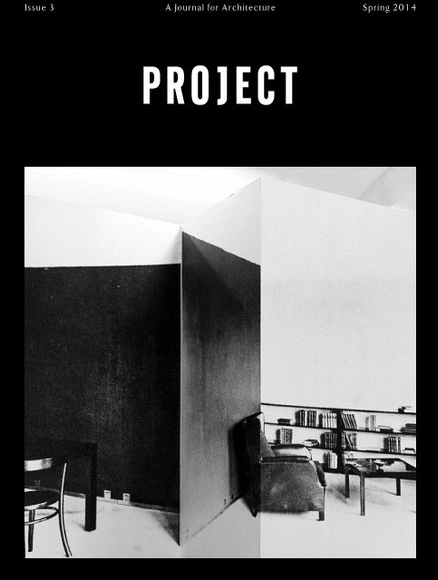
The editors of PROJECT invite you to celebrate the release of Issue Three at common room, 465 Grand St., New York, NY, this Wednesday, April 9 from 7pm to 9pm. PROJECT investigates the possibilities for developing a a critical position in contemporary architecture. Publishing both visual and written work, the goal of PROJECT is to provide a platform for disseminating ideas.
Developers Forest City Ratner Companies (FCRC) and Greenland Group have decided to realize SHoP Architects’ original plan to top Brooklyn’s Barclays Center with a 130,000 square foot green roof. Though the design was first disregarded due to budget cuts, the developers have deemed it necessary to enhance the marketability the Atlantic Yards’ three residential towers - the first is currently underway - and dampen the noise from loud concerts. Little details have been released about the green roof’s design, however rumor has it that it might not be open to the public as it was originally intended.