.jpg?1397802913&format=webp&width=640&height=580)
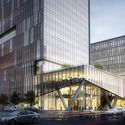
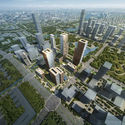
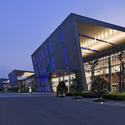
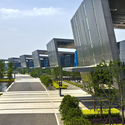
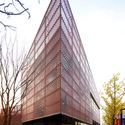
Construction has begun on the new Nanjing Jianye District office tower in China. Designed by UDG China, the multi-level complex will house hundreds of government workers throughout almost 100,000 square meters of office space.
.jpg?1397802913&format=webp&width=640&height=580)
Construction has begun on the new Nanjing Jianye District office tower in China. Designed by UDG China, the multi-level complex will house hundreds of government workers throughout almost 100,000 square meters of office space.
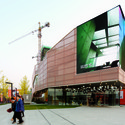

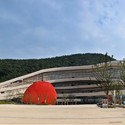
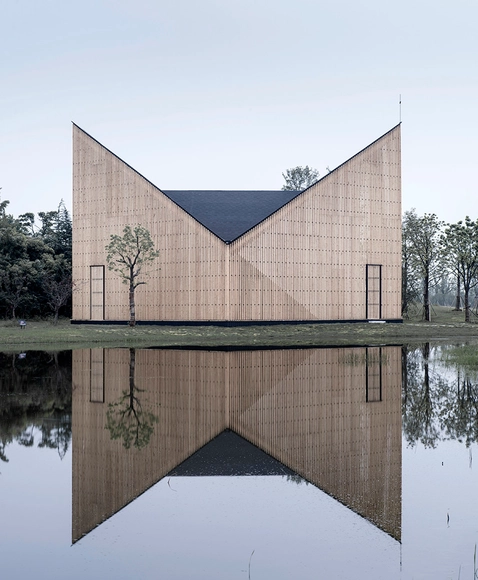
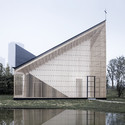
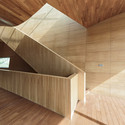
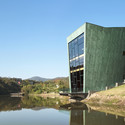
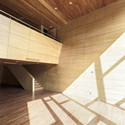
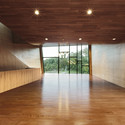
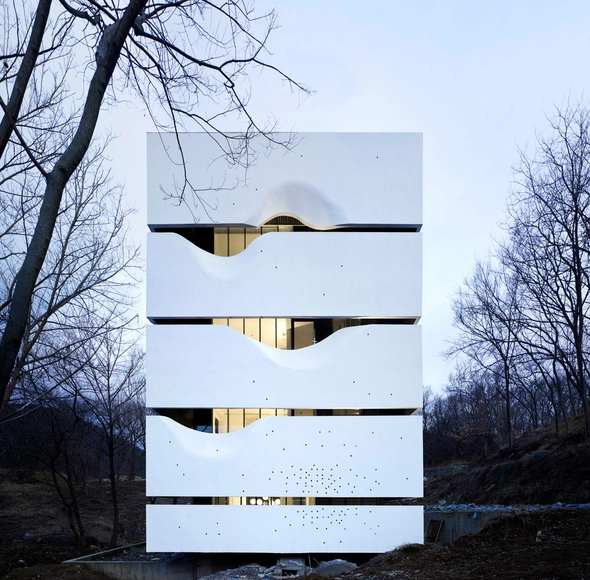
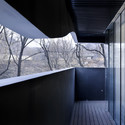
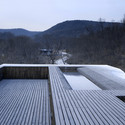
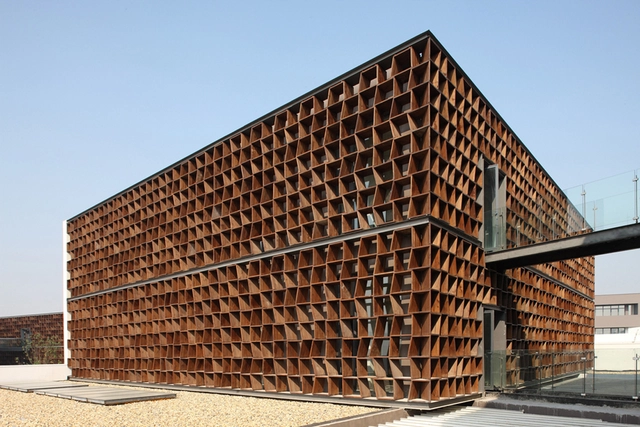
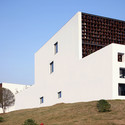
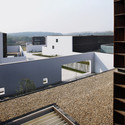
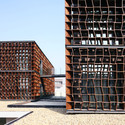
Steven Holl Architects has shared with us an impressive gallery of images of their recent project, Nanjing’s Sifang Art Museum. Rising above the lush landscape of the Pearl Spring, the new museum was designed as a physical manifestation of the parallel perspective, a technique prevalent in early Chinese paintings. From a subtly distorted courtyard with no vanishing points to an upper level gallery with calculated views and pristine light, the experience through the Sifang Art Museum is unlike any other.
See for yourself, after the break...
Steven Holl has, again, teamed up with Spirit of Space to produce two short films on the recently completed Sifang Art Museum. In the first video (above) Holl explains the project’s inspiration - the mysteries of parallel perspective seen in early Chinese paintings - and how the design subtly distorts any concept of a vanishing point at the ground level yet contrasts this notion in the upper galleries by framing the distant view of Nanjing. In the second video (after the break), Spirit of Space allows you to experience this space by revealing it from all perspectives and scales.
See the second video, after the break…

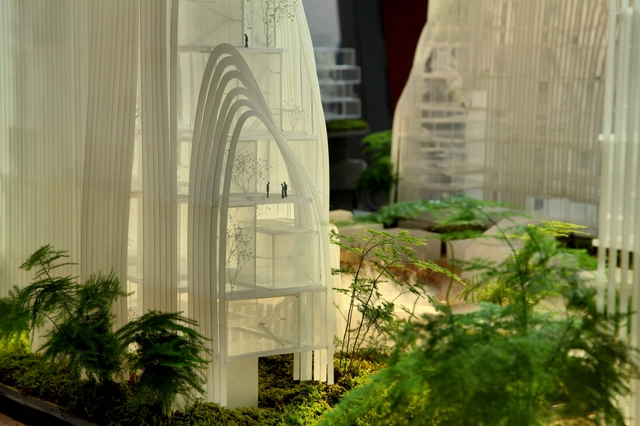
Ma Yansong of MAD recently presented a 600,000 square meter urban design proposal for the city of Nanjing titled, "Shanshui Experiment Complex," at the 2013 Bi-City Biennale of Urbanism / Architecture in Shenzhen, China. The concept takes into account the culture, nature and history of Nanjing while reconsidering the methodology in which Chinese cities are built.

Located on the Yangzi River to the north-east of Nanjing in Jiangsu Province, the proposal for the Nanjing ecological and technological island, by AAUPC Agence Patrick Chavannes + G.C.A. Design Consulting, consists of a development strategy for the Yangzi delta and Jiangsu province. The aim is to define a new image for the city of Nanjing, transforming it into an open economy, developing eco-technological industries and modern services, innovating with existing mechanisms and putting in place the local development strategy of ‘crossing the Yangzi River’. More images and architects’ description after the break.

HDR was recently chosen by Nanjing University to provide conceptual and schematic design services, as well as a masterplan, for its new College of Engineering and Applied Sciences building. The facility will house four academic departments (material science and engineering; quantum electronics and optical engineering; biomedical engineering; and energy science and engineering), six interdisciplinary research centers, a state-of-the-art conference center, as well as common areas for student and faculty gatherings. The building, which is expected to be completed in 2014, will be over 650,000 square feet and accommodate more than 1,600 students and faculty on a daily basis. More architects’ description after the break.

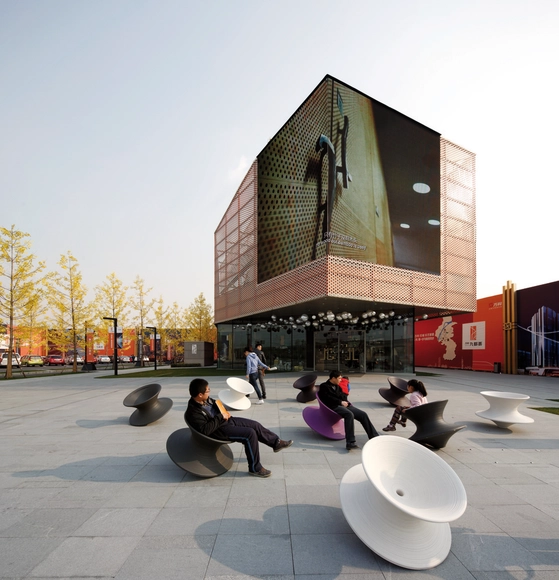
The main idea behind the design for the S.Deer Corporate Headquarters building was to create a world of fashion underlining the lifestyle the retail company stands for. As fashion is not just about clothing, the new S.Deer headquaters should not just be about administration. Inspired by S.Deer’s appearance design, Prechteck‘s proposal implemented rotated cubes as a formal element in their design. More images and architects’ description after the break.

Located in the Xiaguan District in Nanjing, China, W2Y2L was required to design a high rise complex which included entertaining, sport, commercial and official parts. Hence the major concern of the design was how to merge this “huge complex” into the existing circumstances and get a brilliantly transitional connection with the landscape there. The distribution of architectural volumes in this design follows the idea of traditional Chinese Gardens, which transforms the elements of water, stones, hills, bridges and flowers into significant urban shapes animating and vitalizing the daily life of the entire district. More images and architects’ description after the break.

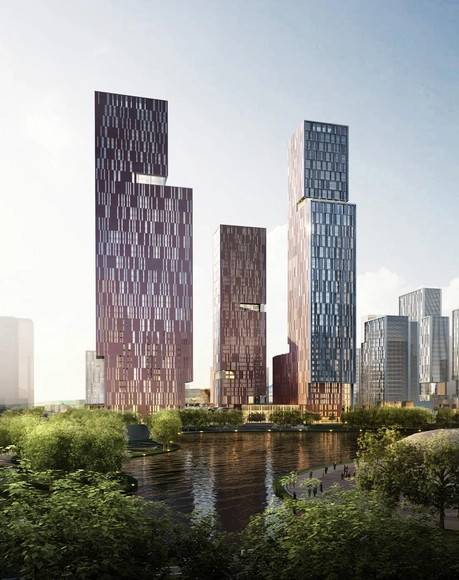
Modern urban living, commerce and tourism are a part of the new multi-district redevelopment plans for Nanjing’s Yangtze Redevelopment. Selected by Beijing based MCC Real Estate Company, SOM has imagined a scheme that will create a new area of neighborhoods, shopping districts and corporate skyscrapers embodying a new identity for Nanjing and a mixed-use cityscape for its people.
SOM Director Douglas Voigt said, “The core concept of the SOM plan for Nanjing Xiaguan is making connections. Connecting the city to the river. Connecting the best of urban living to nature. Connecting under–utilized land to value creation that will increase growth, tourism and prosperity. Connecting Nanjing’s rich heritage with China’s rising economy.”

A wall is a binary condition: in/out, old/new, here/there. Blurry Wall, a proposal for a culture complex in Nanjing, China is a project that confuses these distinctions through conflicting bodily sensations. The intention of team members, Yaohua Wang, Scott Chung, Qing Cao, and Lennard Ong, is to tune the architecture into an instrument that channels the different urban energies flowing through it, blurring the boundaries between them. More images and project description after the break.