

-
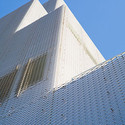
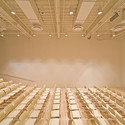
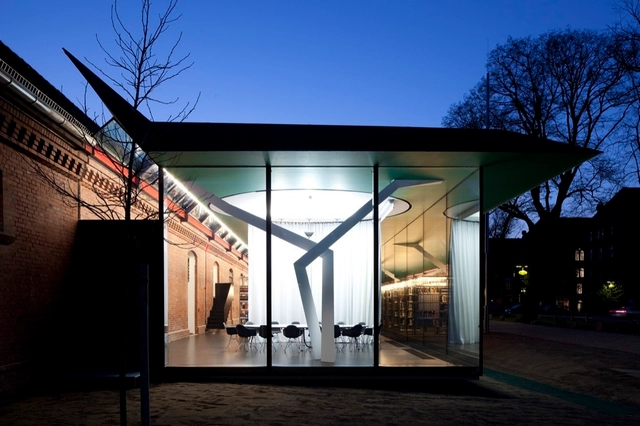
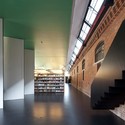
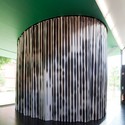
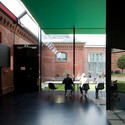
Architects: Zauberscho(e)n
- Area: 400 m²
- Year: 2010



Back in May, when American philanthropist, Eli Broad, announced his plans to build a new museum in downtown Los Angeles, six invited top architects competed for the commission ( Rem Koolhaas, Herzog and de Meuron, Christian de Portzamparc, Ryue Nishizawa and Kazuyo Sejima, Diller Scofidio + Renfro and Foreign Office Architects). Yesterday, Broad confirmed that Diller Scofidio + Renfro (one of just two invited firms who have not been awarded the Pritzker) will design the 120,000 sqf downtown museum.
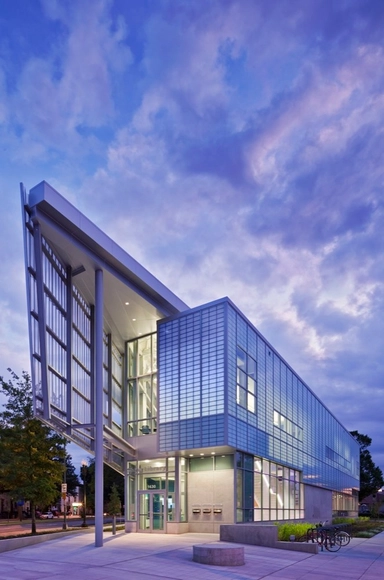
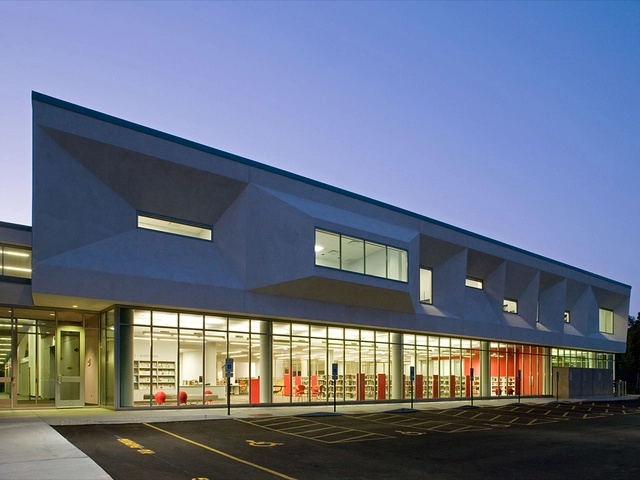

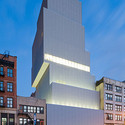
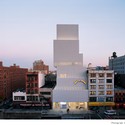
We took a few shots of Foster + Partners’ latest addition to the Bowery – a new gallery to house the Sperone Westwater’s growing collection from prominent artists of different nationalities and ages. Sitting a few steps away from SANAA’s musuem, this new gallery’s CNC milled glass facade elegantly responds to its neighboring art museum. According to Foster, the gallery is “both a response to the dynamic urban character of New York’s Bowery and a desire to rethink the way in which the public engages with art in the setting of a gallery.”
Check out some photos after the break.
Last week we presented you the current status of Salvador Dali’s Museum in St. Petersburg, FL.

Ten kilometer south from the Porsche Museum we featured last week, we find the Mercedes Benz Museum, designed by dutch architects UN Studio and photographed by Michael Schnell.
The 35,000sqm project designed by UN Studio between 2001-2006, includes also a restaurants, stores, offices and an auditorium.
The design is based on the geometry of a clover, with the spaces connected between two helical ascending ramps, around a central atrium.
According to Ben van Berkel, joint founder and director of UNStudio “The Mercedes‑Benz Museum sets up an interface for a series of radical spatial principles in order to create a completely new typology”.
And by this, he refers to how visitors experience the museum: They do not begin their visit to the exhibition at a conventional entrance at the base of the building. They are transported by lift to the top floor. Here they have the choice of two tours, during which they descend through the building. The paths of each tour meet on each floor, enabling visitors to switch between tours – the Collections tour and Legend tour – should they wish to do so.
After this project was completed, several tried to imitate it and these kind of circulations became a cliché among architects (and students).
You can see more details of the lift system at NotCot.
More photos by Michael Schnell after the break:

Danish architects ADEPT Architects, together with an impressive group of collaborators, have been awarded with the 1st prize on the competition for the Dalarna Library in Sweden. The team includes Sou Fujimoto (Japan, see all his projects previously featured on AD), Topotek1 (Germany), Rambøll A/S (Denmark) and Bosch & Fjord (Denmark).
The new library, placed centrally at the Dalarna university campus, is organized as a ”spiral of knowledge” (see diagram below). The sloping terrain continues in a ramp through the building. Wrapping itself the ramp creates a spiral-shaped space – the heart of the building for information seeking and easy orientation. This organization of program creates a various learning environment where students can take part in the vibrant life of the library as well as retreat into various study niches. The different sound levels and activities create a diverse and eventful library.

Charlotte Wilson, recently graduated from Leeds Metropolitan University, shared with us her Final Major Project, which tells the story of ‘Women at War’, whilst dealing with the re-modelling and re-animation of a 1960s underground cold war bunker.
Situated within a unique cliff side location in Bempton lies the RAF Bempton bunker. Disintegrating and of great historical interest, it is proposed the site will be sensitively renovated and reclaimed.

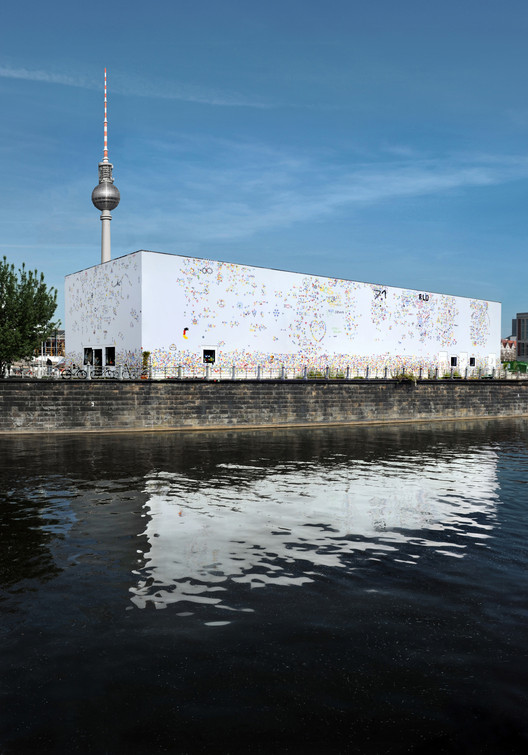
In the center of Berlin, an amazing institution known as the Temporäre Kunsthalle is a great venue for contemporary art as exhibits are housed not only within Adolf Krischanitz’s free plan interior, but also on the exterior. As each new artist brings his own personality to the building’s exterior, the 11 meter high building, which covers a ground surface of 20 by 56.25 meters, becomes the artist’s blank canvas, patiently waiting for its new treatment. The most recent exterior exhibition, autoR by Carsten Nicolai, is the third project to be realized on the façade.
More images and more about the exhibit after the break.

Earlier this week we presented you an interesting proposal for the Environment Museum Annex Competition and now we received an honorable mention winner, from Lompreta Nolte Arquitetos - Daniel Feldman and Elizabeth Añaños.
The Botanical Garden, one of the oldest institutions in all Brazil, is a space of great relevance for the city of Rio de Janeiro. With around 600 thousand visitants each year, it is an important touristic spot, orientated to environmental and scientific education as well as leisure, and recently also cultural program.

New York will be the recipient of another Steven Holl project – a new library at the Queens West Development at Hunters Point. Envisioned as a contemporary “urban forum”, the project will shape public space and create new connections across the Queens West Development, Hunter Points South, and the existing neighborhood of Hunters Point. Steven Holl states, “We are very pleased with this great commission for an addition to the growing community. We envision a building hovering and porous, open to the public park. A luminous form of opportunity for knowledge, standing on its own reflection in the east river.”
More about Holl’s new project after the break.

Each year UdK Berlin organizes a small competition among the students for the concept of a Bookshop inside the School. This year’s winning proposal for the shop was designed by Dalia Butvidaite, Leonard Steidle, Johannes Drechsler and the all participating students then helped manufacturing the structure.
Cardboard as the main material was chosen because of its flexibility in shape, stability, cheapness, temporary feeling, lightness, mobility and last but not least its recyclability.

Architecture photographer Michael Schnell shared with us his interior photos of the Porsche Museum in Stuttgart, Germany, designed by Austrian architects Delugan Meissl. The project was completed in 2008, after being awarded with the 1st prize in a 2-stage competition back in 2005.
The exhibition space we see on these photos in contained by a monolothic volume supported by a steel structure, which spans 5,600sqm to a dramatic effect as you can see on the above photo.
More photos after the break:

Antonio Pedro Coutinho shared with us the entry he designed with Estelle Dugachard, Fabiana Araújo, Nanda Eskes, Ricardo Caruana for the competition regarding the expansion of the Environment Museum in Rio de Janeiro, Brazil. The main challenge dealt in this competition was finding a way where the architecture would be inserted on the ecosystem where it was being planned; the magnificent Botanical Garden of the city of Rio de Janeiro.
More images and description after the break.