Apple's signature glass design has come with its fair share of mishaps - from errant snowblowers to, of course, dying birds. To determine the risk posed by Apple's latest approved store to San Francisco's protected bird population, Apple hired avian collision risk consultants (really) who determined that the risk is "acceptable" (for non-avian species at least). Read the full bird analysis here.
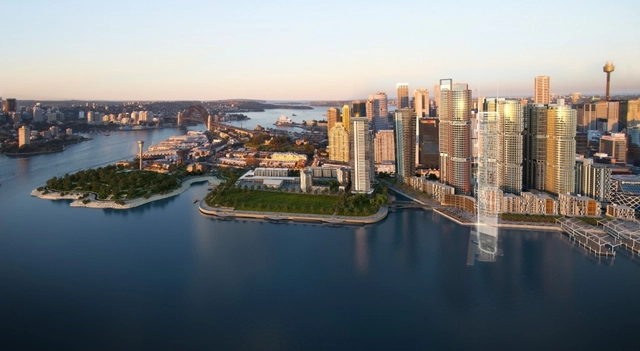
A recent, well-written article for The Guardian chronicles the story of Sydney's East Darling Harbour (also known as 'Barangaroo'), from the city's optimism in 2003 to the relative disappointment of today. David Shoebridge, a New South Wales Greens MP and the party's planning spokesperson, recounts the series of compromises and sellouts that have turned what was meant to be a "prime public space" into - to add insult to injury - the site for a casino.You can read this cautionary tale in full here.
The Blinspot Initiative: "Beyond competition, towards collaboration". Image Courtesy of Blindspot Initiative
Like many in architecture, the Blindspot Initiative has grown tired of "the exclusive, winner takes all mentality of competitions." Instead, they value collaboration and open access to design ideas, and so are renting a studio in East LA for an exhibition that will display the work of 10 fringe (blindspot) designers, "presenting work on a neutral ground to encourage conversations and practice which lives outside the conventions of typical design outputs and practices." Visit their kickstarter project to learn more and contribute to their cause (and check out their video, after the break).
https://www.archdaily.com/461713/kickstarter-campaign-the-blindspot-initiativeKatherine Allen
Still rebuilding after the catastrophic tsunami of 2011, Toyo Ito, Kazuyo Sejima, and other notable Japanese architects, have teamed up on the "Home for All" project to provide community-focused housing to disaster-stricken communities. While the architect-driven initiative seems to be a success, Edwin Heathcote of the Financial Times asks in this exquisitely well-written article: are a set of "starchitects" the right team for the job? (Spoiler: Yes)
https://www.archdaily.com/453967/reconstructing-space-reconstructing-community-in-japanKatherine Allen
In the wake of the destruction of Typhoon Haiyan, architects were asking: "couldn't we have avoided this?" Technically, yes. But while the opportunity to build better exists, such measures are often expensive - and in poverty-stricken areas like the Philippines - cost-prohibitive. A recently published article by Carey Dunne on Co.Design breaks down why disaster-proof construction is such a complex challenge.
https://www.archdaily.com/453969/the-challenges-of-post-disaster-designKatherine Allen
Crossrail, "the largest infrastructure project in Europe, costing more, for example, than the London Olympics", has been slowly winding it's way beneath London for years. Getting access to the labyrinthine collection of underground tunnels and volumes, Rowan Moore of The Observer says that - despite the superficial furore surrounding it - this £5 billion undertaking will eventually be worth it: alongside the tunnels and tracks will be three million square feet ("or about six Gherkins") of commercial development, and one million square feet of 'public realm'.
The Women in Architecture Survey, which is sponsored by UK magazine Architect's Journal, is open to both men and women and aims to track the perceptions of gender equality in the workplace. It's already yielded significant results - the survey last year revealed large pay gaps between male and female architects, as well as interesting perceptions of work/life balance of the different genders. Research goes towards the Architect's Journal's Women in Architecture campaign, whose goal it is to promote the status of women in the industry. You can find the survey here.
https://www.archdaily.com/452835/fill-out-the-women-in-architecture-surveyKatherine Allen
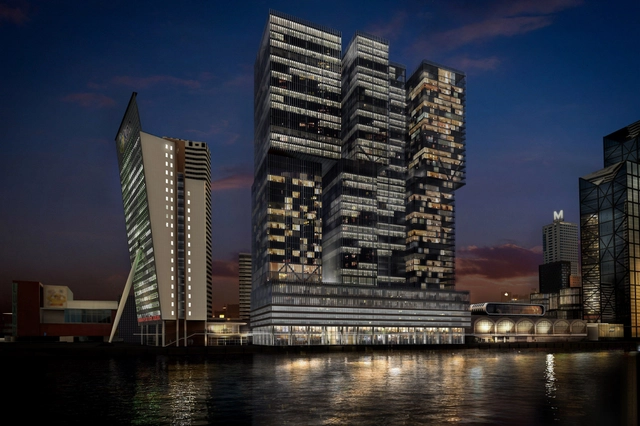
In the architectural stomping ground that is Rotterdam, it's no small task to design a building that actually stands out. But, according to The Guardian's Oliver Wainwright, the recently completed De Rotterdam building manages to. Although the Koolhaas-designed structure, which houses offices, apartments and even a boutique hotel, may at first seem simple (simplistic, even), Wainwright praises how the shifting masses cleverly play tricks on your perception. The building is undoubtedly impressive, but is the unconventional envelope enough to distract from a bland-at-best interior? Read the rest of Wainwright's critique here. evaluate
https://www.archdaily.com/450513/wainwright-weighs-in-on-rem-s-de-rotterdamKatherine Allen
According to LA Times architecture critic Christopher Hawthorne, buildings experience a pretty distinct mid-life crisis. After seeing the demise of mid-century gems such as the Houston AstroDome and the Prentice Women's Hospital in Chicago, it's difficult to disagree. But unfortunately architectural value isn't convincing enough an argument - if preservationists want to get serious about their cause, he suggests, they will have to pick their battles far more strategically.
https://www.archdaily.com/450516/how-to-get-a-building-through-its-mid-life-crisisKatherine Allen
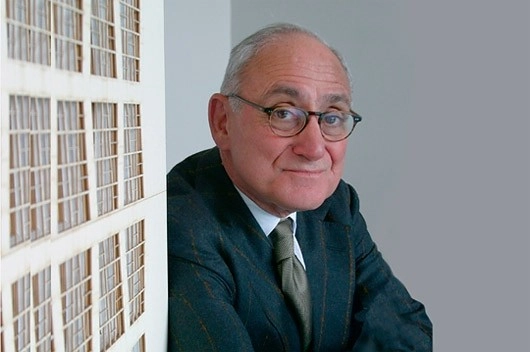
In the mutable world of architecture it's easy to get distracted by the trendy new thing, be it the tallest tower or the "blobbiest" form. Robert A. M. Stern (Dean of the Yale School of Architecture and a practicing architect in his own right), on the other hand, remains purposefully old-fashioned (to the point of becoming obsolete). In an exquisitely written article for the New York Magazine, Justin Davidson reports that, despite the mockery of his colleagues, Stern seems unfazed. If his architecture has the power to inspire, he says, then he's done his job. Read the full must-see article here.
https://www.archdaily.com/447823/robert-a-m-stern-old-fashioned-yet-unfazedKatherine Allen
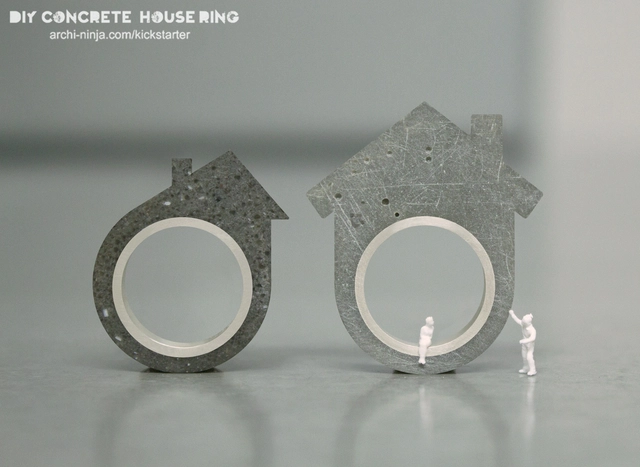
Dream of one day making your own home? Well, here's a fun mini alternative in the meantime. The "DIY Concrete House Ring" is a high quality silver and concrete ring that lets users experience the process of 'making'. The ring itself is made from a DIY compact kit, and comes in two familiar architectural silhouettes - gable roof or saltbox roof - and in either light or dark concrete. The project was developed by Linda Bennett, author of "10 Things They Don’t Teach You in Architecture School" and "Searching for a Job in Architecture? 10 Things You Need to Know…" via her blog, archi-ninja. Check out the project's debut on kickstarter (which offers fantastic perks for backers) for more information.
https://www.archdaily.com/448877/a-diy-concrete-house-travel-sizedKatherine Allen
The inaugural Dwell Vision Award, designed to "celebrate excellence in innovation and skill in the fields of architecture or interior design," has been awarded to New York based Amanda Schachter and Alexander Levi of SLO Architecture for "Harvest Dome 2.0". According to Dwell, "the gigantic Harvest Dome structure, made from recycled materials, captured the imagination of the judges by emphasizing the human connection to nature and New York’s waterways, often overlooked by the urban population."
The winners of the 2013 World Habitat Awards, a competition focused on addressing housing needs and issues across the globe, have just been announced. Picked from a pool of over 200 applicants, the two winning entries represent the most innovative and resilient proposals with potential for global use, taking on the rampant homelessness problem in the US (The 100,000 Homes Campaign) and exploring revitalisation opportunities for the Old City in Hebron (Hebron Old City Rehabilitation Programme). The winners will be honoured at a ceremony in Medellin, Colombia on October 17, 2014. To learn more about the competition and it's winners, click here.
The winners of the 2013 World Habitat Awards, a competition focused on addressing housing needs and issues across the globe, have just been announced. Picked from a pool of over 200 applicants, the two winning entries represent the most innovative and resilient proposals with potential for global use, taking on the rampant homelessness problem in the US (The 100,000 Homes Campaign) and exploring revitalisation opportunities for the Old City in Hebron (Hebron Old City Rehabilitation Programme).
https://www.archdaily.com/443636/winners-of-the-world-habitat-awards-announcedKatherine Allen
Courtesy of Truly Living Well Center for Natural Urban Agriculture
After the foreclosure crisis, hundreds of cities despaired at the downturn - but in Milwaukee, the HomeGr/own Initiative saw opportunity. The organization converts empty lots into urban farms, calling upon citizens to assist in this growing local food movement. But while other cities have tried similar projects (and failed), Fast.Co reports that the HomeGr/own Initiative seems suited to last. Learn why here.
https://www.archdaily.com/443632/milwaukee-urban-farm-movement-growsKatherine Allen
The simple concrete-hewn structures designed by Tatiana Bilbao acknowledge their context in a way that most buildings don't. In a recent interview with uncube Magazine, Bilbao explains how her outlook on design shifted after she realized that "the quality of architecture relies heavily on the people who build it and what techniques and materials they are used to." And it seems this novel approach hasn't gone unnoticed - she recently showed her work at Berlin's Architekturgalerie and is on a star-studded shortlist to design the Menil Drawing Institute. Read the full interview here.
https://www.archdaily.com/444493/redefining-context-with-tatiana-bilbaoKatherine Allen
Do we prefer straight lines or curves? According to Eric Jaffe's article on Fast Co.Design, it seems we subconsciously prefer the latter. Our brains, he claims, have evolved to perceive potential threat in sharp edges. "Square watches, pointy couches, and the like activate the amygdala. The part of the brain that processes fear." Thus, our feelings, buying habits and favorite buildings are subject to our affection of curves. Investigate for yourself and make sure to read the full article here, “Why Our Brains Love Curvy Architecture.”
https://www.archdaily.com/442283/straight-lines-or-curves-which-do-we-preferJose Luis Gabriel Cruz
Courtesy of Tod Williams Billie Tsien Architects / Dbox
After sitting derelict for years, the Kate Wollman Memorial Rink in Brooklyn's Prospect Park is poised for something of a rebirth. Tod Williams and Billie Tsien's plans for a sports complex, known as Lakeside, is expected to restore the rink's role as the park's chief attraction. Michael Kimmelman recently stopped by the site to explore the project as it nears completion - click here to read his thoughts on what he calls one of the last "parting gifts of the Bloomberg era to the city."
https://www.archdaily.com/443090/tod-williams-and-billie-tsien-architects-design-ice-rink-for-nycKatherine Allen