
UK entrepreneur Ehab Syed has developed a mushroom-based insulation with his company Biohm, embodying techniques that are “completely natural, biodegradable and vegan.”


UK entrepreneur Ehab Syed has developed a mushroom-based insulation with his company Biohm, embodying techniques that are “completely natural, biodegradable and vegan.”
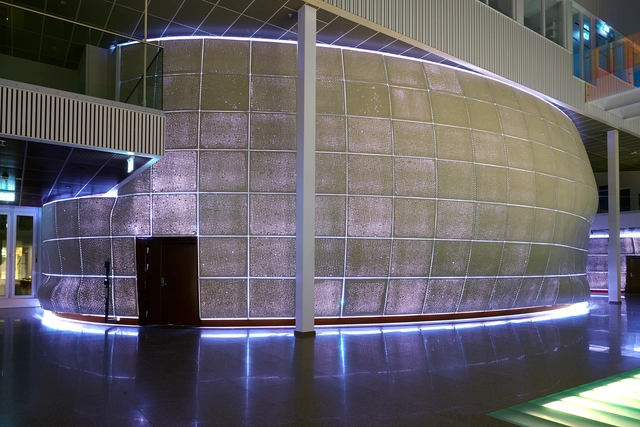
An installation at the Karolinska Institutet in Sweden is made entirely of translucent concrete panels. Composed of concrete and bubble wrap, the site blends both high and low technology processes. This high-tech lecture hall is an amorphous space with unique acoustic qualities.
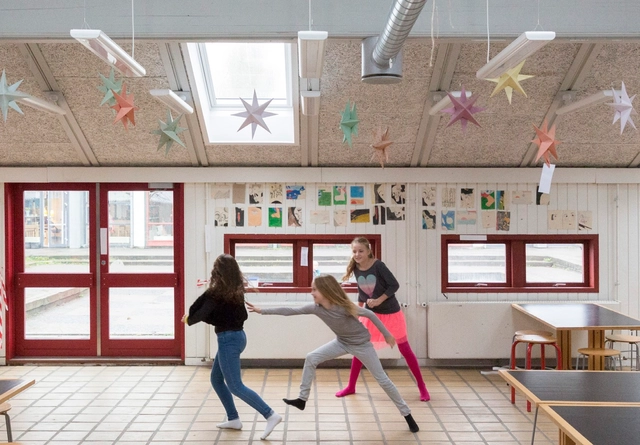
Did you know that 64 million European children spend more time at school than anywhere else other than their home? European children spend approximately 200 days each year at their primary schools. With this information, how do we go about designing healthier classrooms that create productive learning environments? This question is perhaps more important than ever, as this will be the first time since the 1970s that Europe and the UK will see a boom in the construction and renovation of schools. What a tremendous opportunity this is for both architects and educators to rethink what an educational facility should be and how the physical environment can be designed to have a positive impact on learning.

Recently, a new trend in architecture has emerged: Several of the latest projects highlighted by ArchDaily, including some winners in the Building of the Year Awards, are using permeable facades as an attractive option for their exterior finishes.
Better lighting, ventilation, and visibility are some of the advantages brought by this type of façades. Below is a selection of 15 images from prominent photographers such as Andrés Valbuena, Pedro Nuno Pacheco, and Koji Fuji Nacasa & Partners Inc.
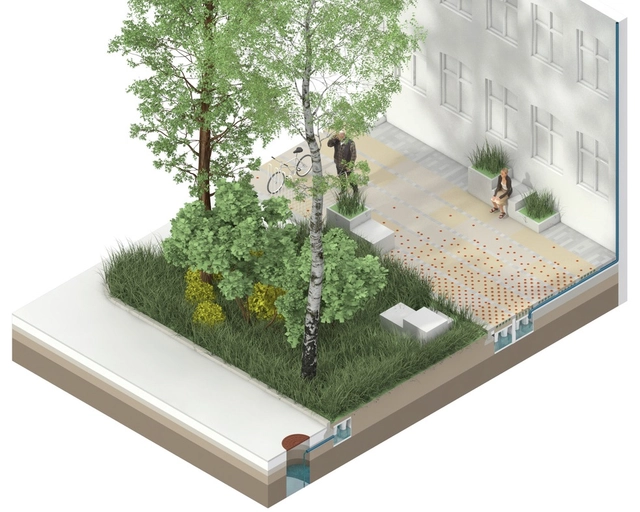
The Climate Tile is a pilot project designed to catch and redirect 30% of the projected extra rainwater coming due to climate change. Created by THIRD NATURE with IBF and ACO Nordic, the project will be inaugurated on a 50m pavement stretch at Nørrebro in Copenhagen. The first sidewalk was created as an innovative climate project that utilizes the Climate Tile to create a beautiful and adaptable cityscape. Aimed at densely populated cities, the tile handles water through a technical system that treats water as a valuable resource.
The Architects’ Journal’s new AJ Specification Awards celebrates successful collaborations between suppliers, manufacturers, and architects. The awards celebrate how exceptional working relationships between architects and suppliers and manufacturers lead to successful projects, showcasing standout examples of the creative use of products and materials in making great buildings.
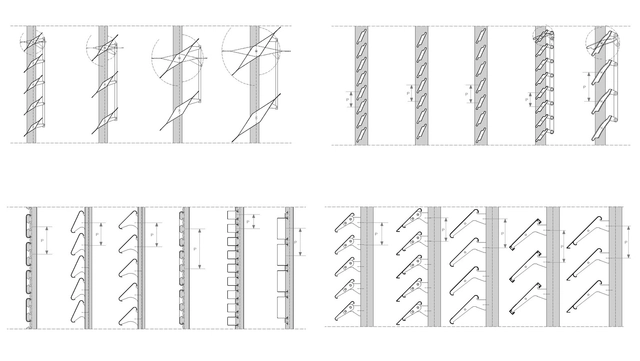
During warm summer months, buildings must maintain an adequate and comfortable temperature for the users of the space. Blinds or solar screens are an effective solution in projects that have large glazed surfaces, thus reducing the temperatures generated by direct sunlight.
Below, we have selected 6 Spanish projects that creatively use louvers and shutters in their facades.
.jpg?1543808237&format=webp&width=640&height=580)
In Le Corbusier's 5 points of architecture, he advocates the inclusion of flat roofs hosting roof gardens, providing valuable outdoor space for the inhabitants of the building in order to replace the ground lost to the construction of the building. But while this acknowledgement of outdoor space was important for people, Le Corbusier's sculptural concrete roof gardens were little consolation to the non-human flora and fauna that were displaced by his works.
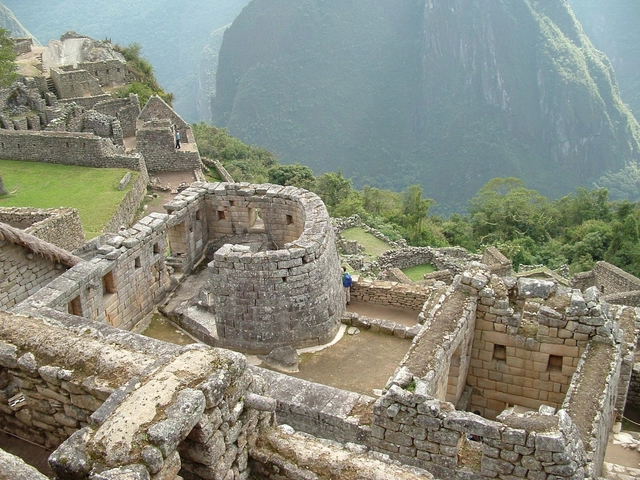
A collection of stones piled one on top of the other, dry stone is an iconic building method found just nearly everywhere in the world. Relying solely on an age-old craft to create sturdy, reliable structures and characterised by its rustic, interlocking shapes, the technique has deep roots that stretch back even before the invention of the wheel. Its principles are simple: stack the stones to create a unified, load-bearing wall. But the efficient, long-lasting results, coupled with the technique’s cultural significance, have lead to continued use and updated interpretations all the way to contemporary architecture today.
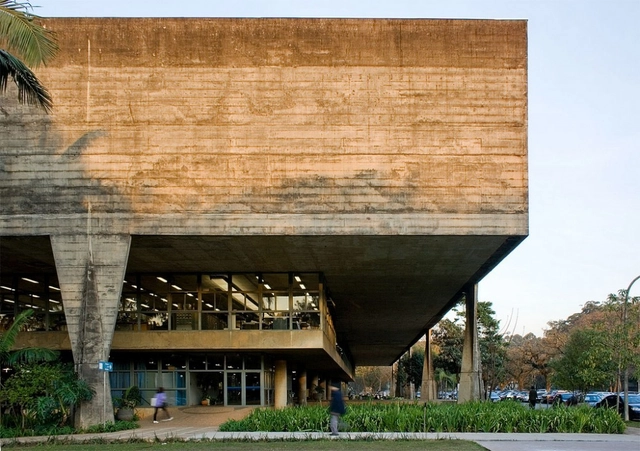
In the eyes of an architect, concrete is practically a fetish. Currently, it's used in a wide range of projects and buildings, from infrastructure to residential, and offers an architect a great deal of freedom in generating eye-catching results. To start, we will show you how to pre-dimension concrete structures and understand what cracks in concrete structures mean. Continue reading to get our tips on how to use concrete and get the best result possible.
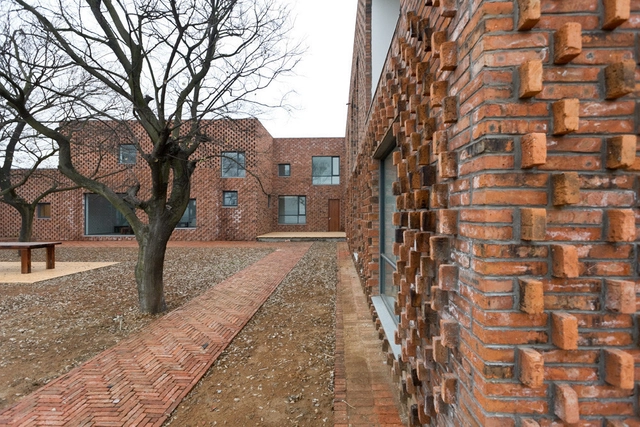
Bricks have historically been the cornerstone of a wide array of living spaces, providing everything from enclosure and protection to the framework for letting in sunlight. Whether it be for their economic or aesthetic aspects in both color and texture, the use of brick can be glimpsed in cities the world over.

Carrots cannot help you see in the dark, but they could make your buildings stronger, and more environmentally friendly. Engineers at Lancaster University in the UK have worked in collaboration with Cellucomp Ltd UK to study the effects of adding “nano platelets” extracted from the fibers of root vegetables to enhance the performance of concrete mixtures.
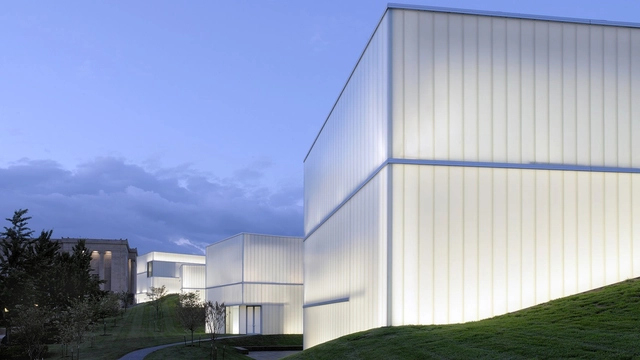
Recurrently we see how architects opt for translucent facades to create the envelopes of their buildings, promoting the entry of a large amount of natural light, while simultaneously controlling it during the day. Illuminated during the night, many of these projects can be seen in the dark, appearing as lanterns or lighthouses for their neighbors and community. Being exposed to changing conditions – day or night – to choose the right material, it's necessary to study in detail the orientation and location of the building, the pre-existing context, and the configuration of the interior spaces.

Anoma, headed by EDIDA-winning Indian artist Ruchika Grover, is a product design studio that explores the potential of natural stone. Its surfaces, sculptures, and installations, are created through a unique process, which combines digital manufacturing and traditional hand craftsmanship.
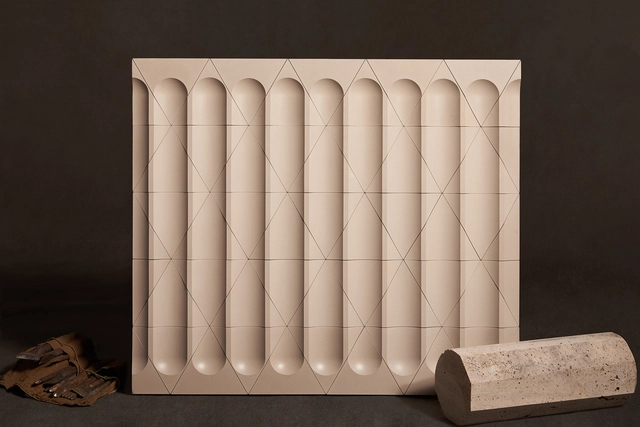
Inspired by two of the oldest techniques in architecture, fluting, and reeding, Brooklyn-based GRT Architects have developed a series of modular concrete pieces that update the Greek tradition, varying its classic composition.
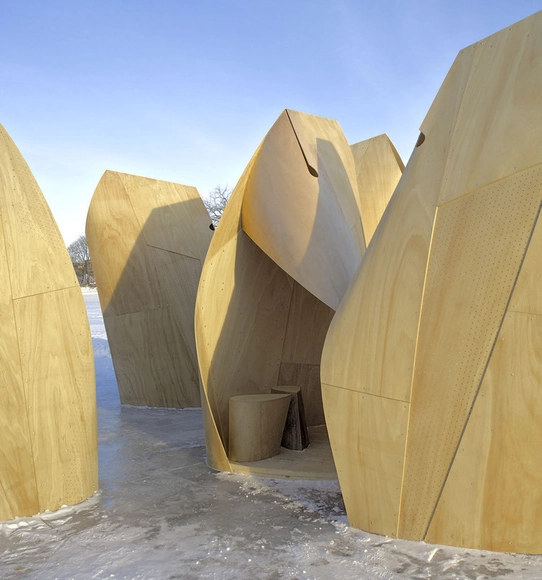
Sold in standard 4 foot wide sheets since 1928, plywood has been a staple of conventional construction for nearly a century. Dimensionally strong, easily cut, lightweight and capable of creating an effective barrier, plywood and other engineered panels like OSB, particle board, and MDF is ubiquitous, particularly for their use as sheathing material in balloon and timber frame construction systems. Boats, airplanes and even automobile frames have historically been built out of plywood, predating (or replacing) steel, aluminum, and fiberglass. As a simple material capable of being manipulated and shaped in a wide variety of ways, sheet ply was also favored in furniture and architectural designs by modernists including Charles and Ray Eames, Eero Saarinen, Alvar Aalto, and Marcel Breuer.
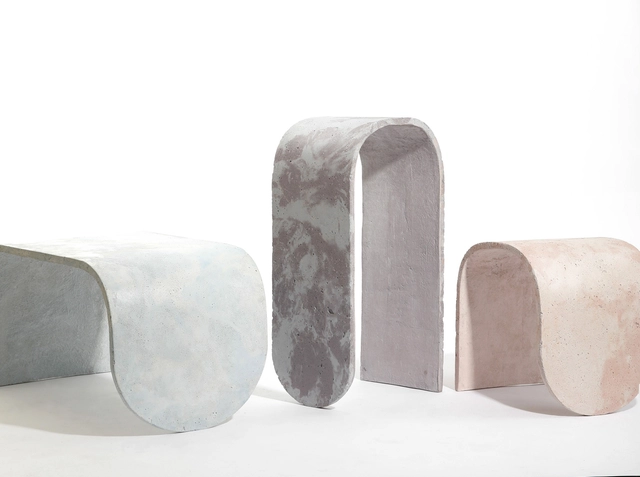
Architects and designers are turning into their very own version of Midas, everything they touch turns into concrete. With products like concrete coffee machines, concrete garden gnomes, and even concrete jewelry, designers are finding remarkable ways of experimenting with the material, proving that concrete is a lot more than just a bulky, building component.
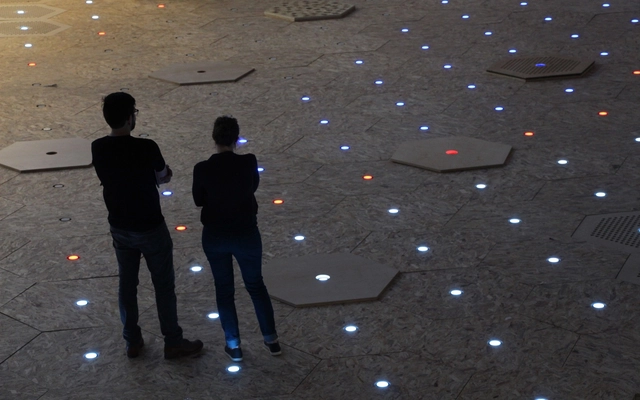
Carlo Ratti Associati, working in collaboration with Alphabet’s Sidewalk Labs, has unveiled their design for a modular paving system named “The Dynamic Street.” Intended to make streets “reconfigurable, safer, and more accessible to pedestrians, cyclists, and tomorrow’s self-driving vehicles,” the project will be on display at Sidewalk Lab’s office and experimentation space in Toronto throughout the summer of 2018.