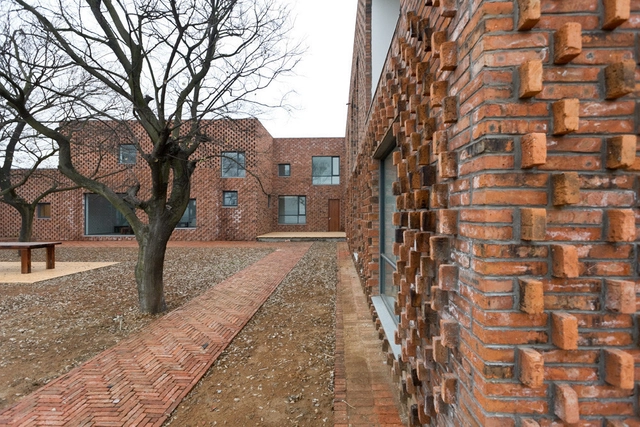
Bricks have historically been the cornerstone of a wide array of living spaces, providing everything from enclosure and protection to the framework for letting in sunlight. Whether it be for their economic or aesthetic aspects in both color and texture, the use of brick can be glimpsed in cities the world over.
Videos
via flickr user conchur licenced under CC BY 2.0
Carrots cannot help you see in the dark, but they could make your buildings stronger, and more environmentally friendly. Engineers at Lancaster University in the UK have worked in collaboration with Cellucomp Ltd UK to study the effects of adding “nano platelets” extracted from the fibers of root vegetables to enhance the performance of concrete mixtures.
https://www.archdaily.com/900003/could-carrots-make-concrete-stronger-and-greenerNiall Patrick Walsh
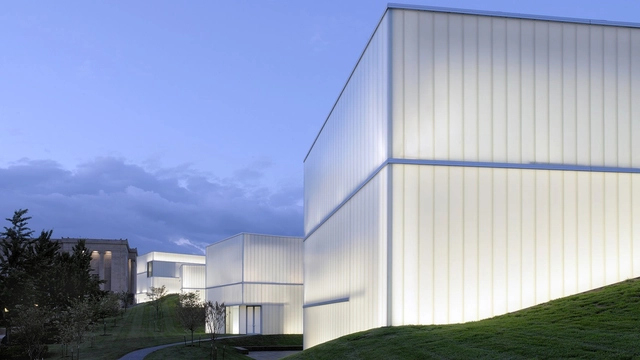
Recurrently we see how architects opt for translucent facades to create the envelopes of their buildings, promoting the entry of a large amount of natural light, while simultaneously controlling it during the day. Illuminated during the night, many of these projects can be seen in the dark, appearing as lanterns or lighthouses for their neighbors and community. Being exposed to changing conditions – day or night – to choose the right material, it's necessary to study in detail the orientation and location of the building, the pre-existing context, and the configuration of the interior spaces.
Anoma, headed by EDIDA-winning Indian artist Ruchika Grover, is a product design studio that explores the potential of natural stone. Its surfaces, sculptures, and installations, are created through a unique process, which combines digital manufacturing and traditional hand craftsmanship.
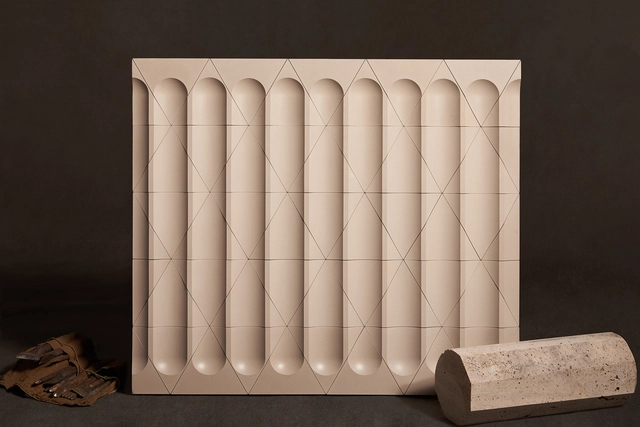
Inspired by two of the oldest techniques in architecture, fluting, and reeding, Brooklyn-based GRT Architects have developed a series of modular concrete pieces that update the Greek tradition, varying its classic composition.
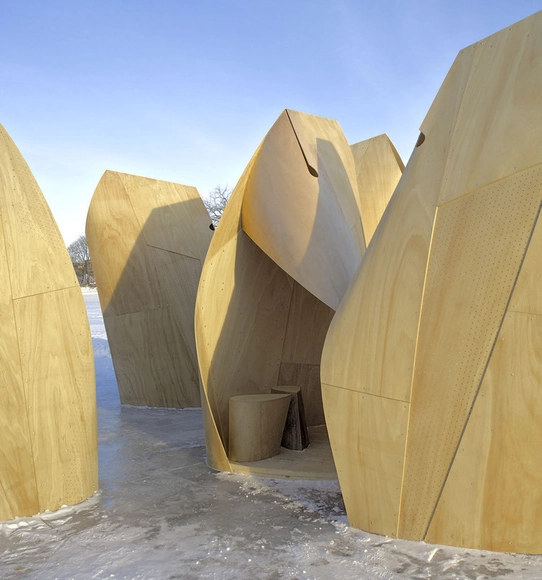
Sold in standard 4 foot wide sheets since 1928, plywood has been a staple of conventional construction for nearly a century. Dimensionally strong, easily cut, lightweight and capable of creating an effective barrier, plywood and other engineered panels like OSB, particle board, and MDF is ubiquitous, particularly for their use as sheathing material in balloon and timber frame construction systems. Boats, airplanes and even automobile frames have historically been built out of plywood, predating (or replacing) steel, aluminum, and fiberglass. As a simple material capable of being manipulated and shaped in a wide variety of ways, sheet ply was also favored in furniture and architectural designs by modernists including Charles and Ray Eames, Eero Saarinen, Alvar Aalto, and Marcel Breuer.
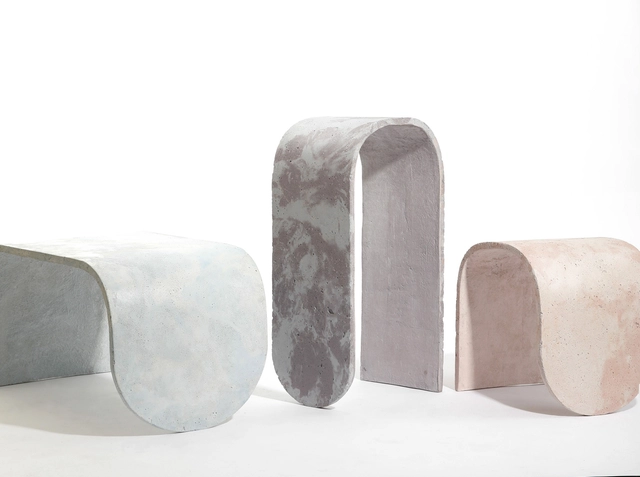
Architects and designers are turning into their very own version of Midas, everything they touch turns into concrete. With products like concrete coffee machines, concrete garden gnomes, and even concrete jewelry, designers are finding remarkable ways of experimenting with the material, proving that concrete is a lot more than just a bulky, building component.
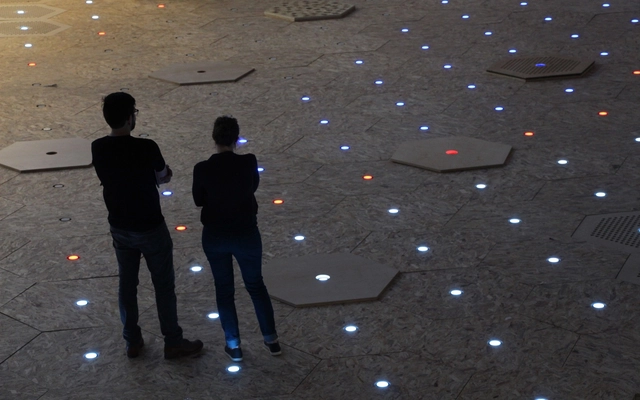
Carlo Ratti Associati, working in collaboration with Alphabet’s Sidewalk Labs, has unveiled their design for a modular paving system named “The Dynamic Street.” Intended to make streets “reconfigurable, safer, and more accessible to pedestrians, cyclists, and tomorrow’s self-driving vehicles,” the project will be on display at Sidewalk Lab’s office and experimentation space in Toronto throughout the summer of 2018.
https://www.archdaily.com/898471/carlo-ratti-associatis-latest-prototype-shows-how-the-design-of-streets-could-change-in-real-timeNiall Patrick Walsh
The installation of wood laminate flooring may seem basic or even alien to what we do as architectural designers, but that should not be the case. When we understand the characteristics of the materials we specify and their assembly processes, we can design in a more efficient manner, adjusting our proposals to the requirements of the project.
https://www.archdaily.com/880702/how-to-install-wood-laminate-flooring-without-any-toolsAD Editorial Team
Tradition and innovation. Those are the two pillars within which Bamboo U's workshop’s creative pendulum strives to swing. Following the practice of ancient Mongolian yurts, participants of Bamboo U, a build and design course in Bali, have created a bamboo yurt which can fold like an umbrella and can be deployed in an instant. Under the guidance of the German master-builder Jörg Stamm, students built the first retractable yurt prototype in Bali during Bamboo U’s last edition in April.
https://www.archdaily.com/897908/a-bamboo-yurt-you-can-fold-and-moveJules de Laage
Bridging the gap between the old and the new is never easy. Traditional building methods, where you often adjust to the unpredictability of a natural material, seem to contrast with the mechanical precision of modern construction. Sombra Verde - a bamboo gazebo developed by AIRLAB and Singapore University of Technology and Design (SUTD) as part of Singapore’s Urban Design Festival 2018 - bridges this gap. The traditional raw bamboo poles, used extensively throughout Southeast Asia, are combined with 3D printed connectors, utilizing a series of new technologies. The result is an iconic, lightweight structure in Singapore’s Duxton Plain Park that promotes the use of public space, sheltering the population from both the intense sun and heavy rain.
The requirements for the use of BIM files in architectural projects are getting increasingly stricter. Currently, there are mandates that will require the use of these tools for the development of public projects. It is also likely that these norms will also be replicated in private projects.
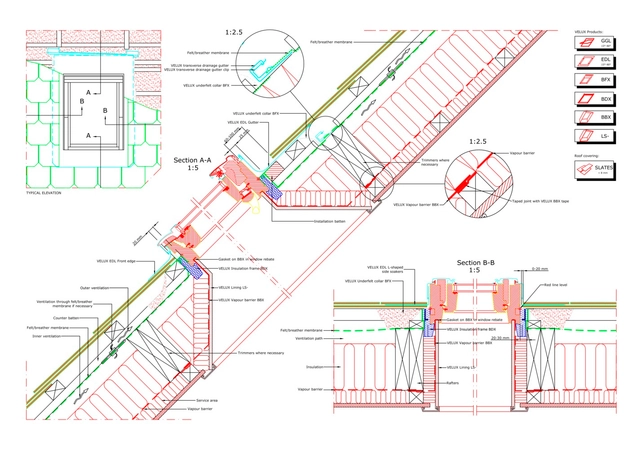
In the spirit of supporting our readers’ design work, the company Velux has shared a series of .DWG files with us of their different roofing windows models. The files can be downloaded directly from this article and include great amounts of detail and information.
https://www.archdaily.com/802109/16-cad-files-of-skylights-and-light-tubes-available-for-your-next-projectArchDaily Team
CI (Continuous Insulation System) is an insulated facade system for walls and ventilated slabs that works through the superposition of 5 skins: fixation, insulation, waterproofing (open to the diffusion of the vapor and resistant to impact), and an outer cladding layer.
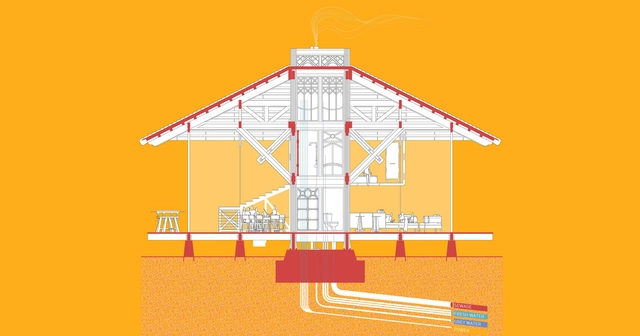
Solutions from the past can often provide practical answers for the problems of the future; as the London-based design and research firm, Space Popular demonstrate with their "Timber Hearth" concept. It is a building system that uses prefabrication to help DIY home-builders construct their own dwellings without needing to rely on professional or specialized labor. Presented as part of the ongoing 2018 Venice Biennale exhibition “Plots Prints Projections,” the concept takes inspiration from the ancient "hearth" tradition to explain how a system designed around a factory-built core can create new opportunities for the future of home construction.
Carefully designed or relegated to its mere functionality, lighting can be a determining factor in the quality of a space, influencing the way it is perceived and inhabited by the user.
Waterside Buddist Shrine / ARCHSTUDIO. Image Cortesia de ARCHSTUDIO
There is nothing more rational than taking advantage of natural lighting as a guarantee to improve the spatial quality of buildings, as well as saving energy. The awareness of the finitude of natural resources and the demands for reducing energy consumption has increasingly diminished the prominence of artificial lighting systems, forcing architects to seek more efficient design solutions. With this goal in mind, different operations have been adopted to capture natural light.
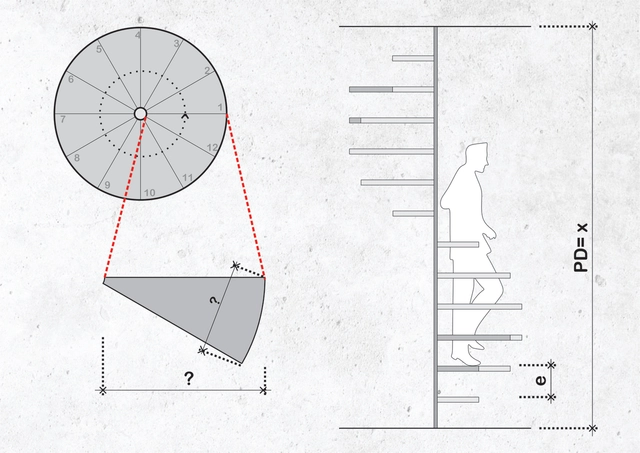
Spiral staircases save valuable square meters because they occupy a much smaller area than a conventional staircase. With daring shapes and diverse configurations, they can also be iconic objects in projects. However, the design of these staircases requires careful attention so that you can prevent an uncomfortable or dangerous outcome. Although BIM software simplifies this process, it's always important to understand the restrictions and the underlying concepts.