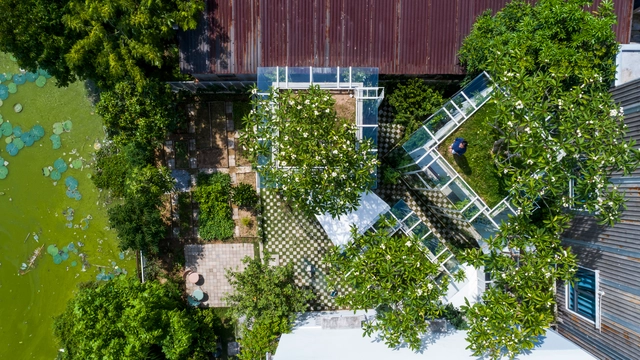
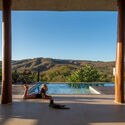
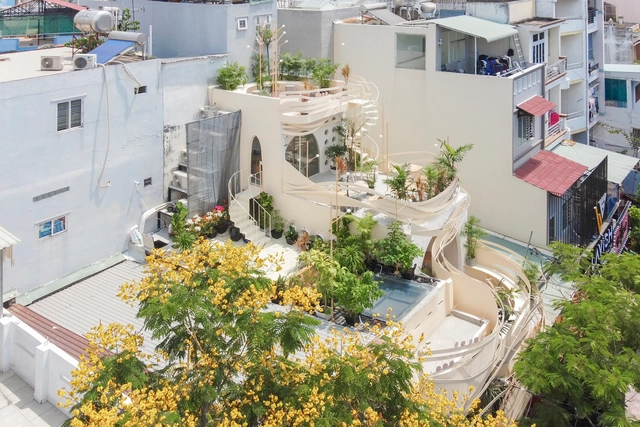
One of the first decisions to be made when designing a house is where to place it on the site. Whether it's a large or small plot, house placement impacts the architecture of the building itself and its relation with the neighborhood. Therefore, it must be carefully thought out and designed.
The Shape of the Land: Topography & Landscape Architecture—the first book to center on this subject—presents the contributions of thirteen well-known practitioners and academics who discuss the forms and ramifications of reconfiguring terrain.
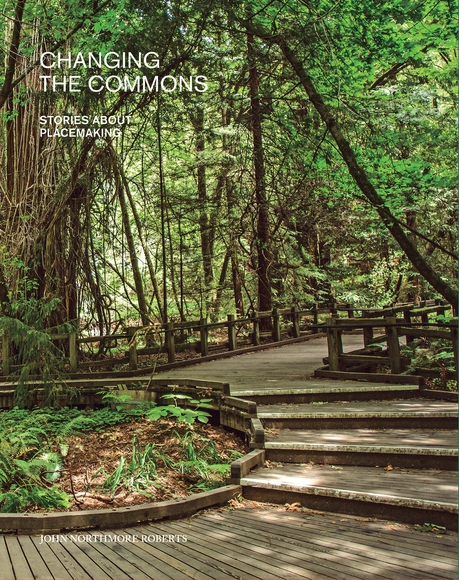
The intense social and environmental fervor that arose in the 1960s and 1970s in response to assaults on the planet’s life support systems, degradation of communities, and socio-economic inequality unleashed revolutionary change at all levels of society. Out of the turmoil of that era, community-based ecological design emerged as a powerful creative force for reshaping the commons, bringing people together, and forming ecologically sustainable relationships with the environment.
Way Beyond Bigness is a design-research project that studies the Mekong, Mississippi and Rhine river basins, with particular focus on multi-scaled, water-based infrastructural transformation. The book proposes a simple, adaptive framework that utilizes a three-part, integrative design-research methodology, structured as: Appreciate + Analyze, Speculate + Synthesize, and Collaborate + Catalyze. To do such, Way Beyond Bigness realigns watersheds and architecture across multiple: scales (site to river basin), disciplines (ecologists to economists), narratives (hyperbolic to pragmatic), and venues (academic to professional).
At a time when the world is being forced to rapidly adapt to climate change, the landscape comes into focus as a subject and medium of more importance than ever. Nowhere is this better known than at the Weitzman School of Design at The University of Pennsylvania, where the landscape architecture department has been leading the field for almost a century.
In a time of supra-national economic, political and social crises, the architectural profession is acknowledged as necessitating a fundamental restructuring in order to gain both renewed relevance as a discipline and sustainability as day-to-day practice.
Whether it is for a break, relaxation, or even free wifi, coffee shops tend to host a series of situations that involve more than just enjoying a cup of coffee. A quiet and pleasant place, which in addition to everything else offers a good hot drink, is a great attraction for those looking for a coffee shop to spend a few hours.
In this sense, a landscape project that integrates greenery into these environments can significantly increase the comfort of customers, by easing temperatures and offering a barrier against atmospheric, noise and visual pollution. In addition, after the restrictions imposed by the Covid-19 pandemic, open spaces, with natural ventilation and gardens became priorities for many projects, including coffee shops.
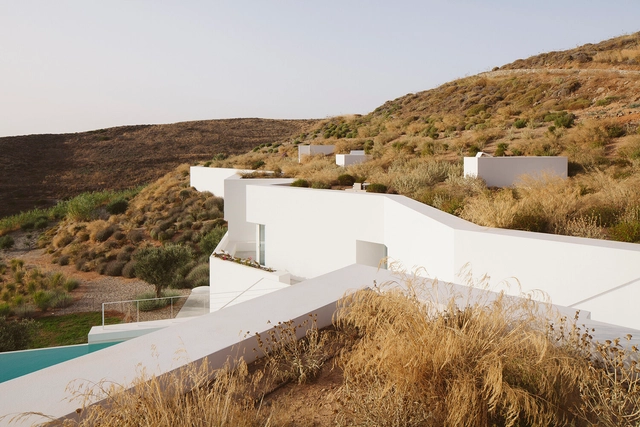
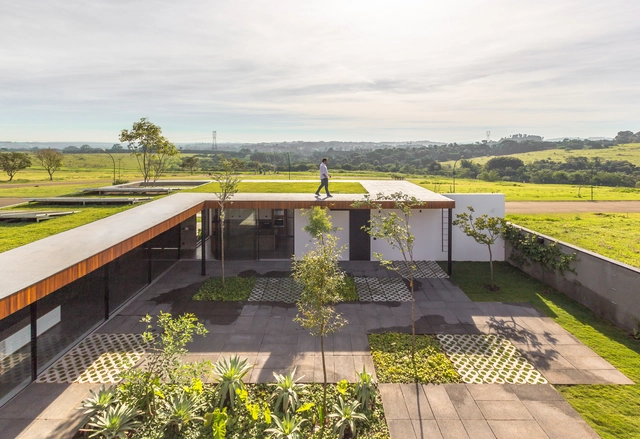
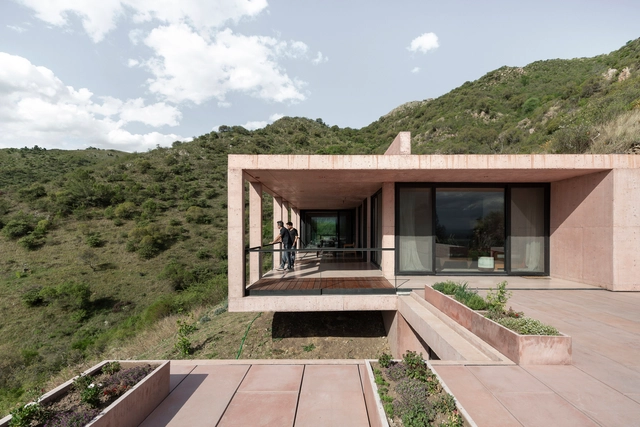
As a starting point for architectural projects, the terrain and its topography point out the directions that the distribution of the program can follow. Among them, one solution stands out for the continuity between topography and architecture: lowering the level of construction and advancing the land over the roof. From this roof garden created with the same characteristics as the surroundings, the result gives the impression of an almost non-existent intervention.
The incorporation of the land as an architectural element takes up, in a certain way, the concept of caves, reinforcing an idea of shelter and reception from a hybrid between the initial and natural configuration and the architectural intervention.
The advantages of a courtyard house are well known. In addition to bringing closer contact with the outside from the inside, it substantially improves comfort by providing more natural lighting and ventilation. This typology goes through time being reinvented from different ways of thinking not only its architecture, but also the landscaping of its external area. Therefore, we have gathered different ways of conceiving the garden and other elements that can make up that space.
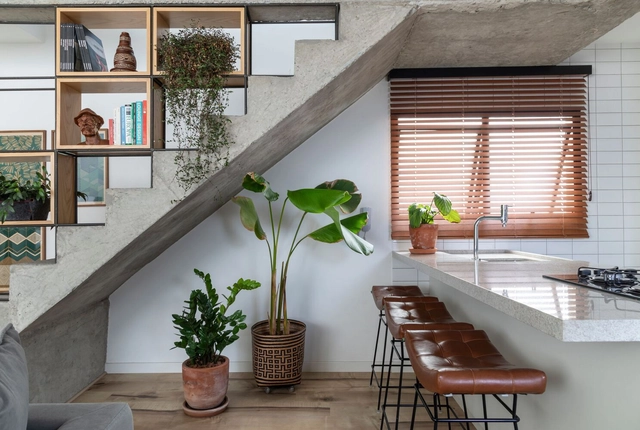
Vertical circulation may be just one of the functions of a ladder. Always occupying a reasonable area, this element can serve to bring some other uses when it is thought of in a more integrated way with the entire room, providing living spaces, storage and also a greater aesthetic appeal. That is why we have gathered some ideas on how to occupy the areas around a staircase in different projects: from home to industrial scale.
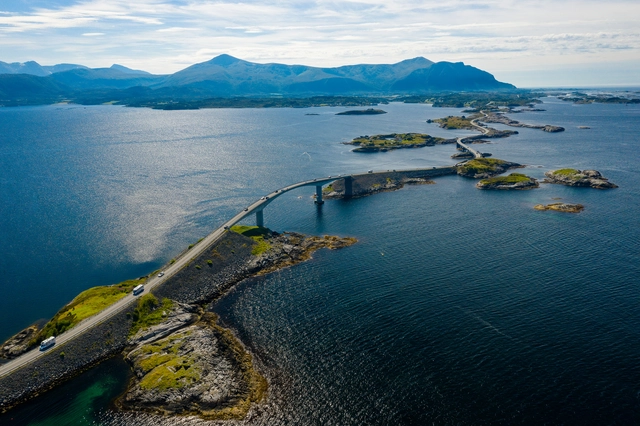
Along coasts and fjords, mountains, and waterfalls, Norway's National Tourist Routes traverse the country's most unique natural landscapes. They are 18 roads that are intended as alternative experiences to the main roads, with rest stops and remote viewpoints that were developed over nearly three decades by some 50 architecture and landscape offices.
One of the great challenges that architects have to face every day when designing begins with the conditions of the site where the architectural project is to be implemented. This involves the analysis and study of a series of factors ranging from sunlight, topography, surrounding vegetation, context, and others, all variables that are capable of guiding and/or defining the direction of the architecture to be developed.
Being a region characterized by its wide variety of landscapes, biodiversity and thermal floors, the design of interior patios in Colombian homes accompanies the living, resting, access, and circulation spaces, being, on many occasions, protagonists and a source of contact with the surrounding nature.
MVRDV has won a competition to design a mixed-use residential and commercial complex on the edge of Jiangbei New Area’s Financial District in Nanjing, China. Dubbed "Oasis Towers", the two 150-metre-tall towers are surrounded by lush landscapes, and will provide residents a green haven within a dense and rapidly developing part of the city.
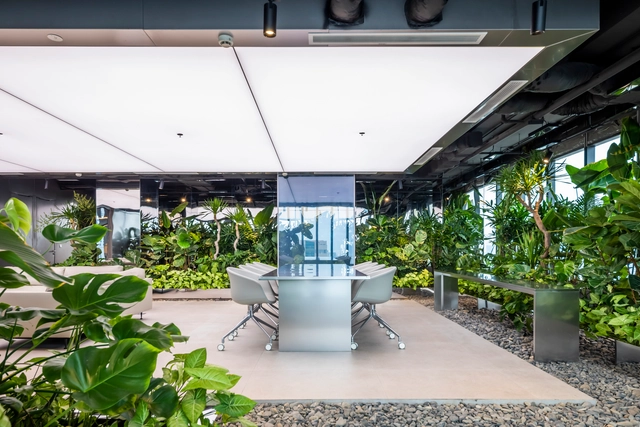
Biophilic design is capable of improving the well-being of those who use a space through reconnection with nature. When this practice is implemented in offices and workshops, this property translates into many benefits. After all, in addition to the emotional qualities that vegetation can bring, it has the ability to filter noise, lighting and allow for a milder climate, with results in team productivity and more optimized services.
Description via Amazon. Designed for the layman as well as the professional, this concise yet comprehensive guide provides both practical information and theoretical insights into the design of the Japanese garden.
Finnish architect Juhani Pallasmaa once said that "architecture is essentially an extension of nature into the man-made realm, providing the ground for perception and the horizon of experiencing and understanding the world."
In the constant hustle and bustle of the modern surroundings, it is more than needed to take a step back and listen to the sounds of something as calmly powerful as nature. Moreover, listening to the beautiful harmonies created by birds chirping and sound waves can make our inner voice louder as well.
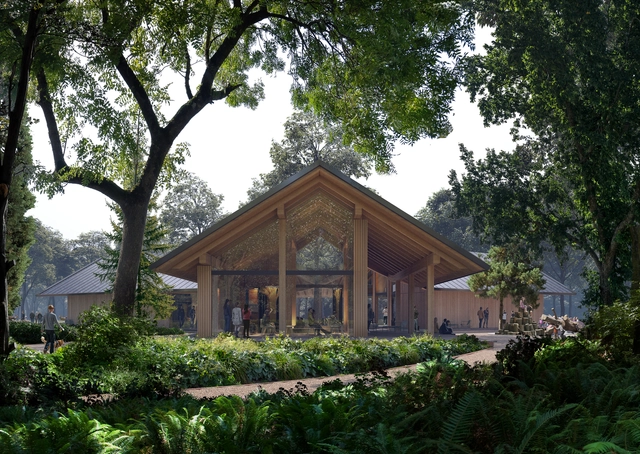
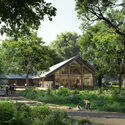
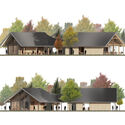
Powerhouse Company, in collaboration with landscape architecture office DELVA, has unveiled the design for a new visitor center for the Koekamp, which will play an essential role as a gateway to the new Hollandse Duinen national park. This intervention will open part of Koekamp, a green expanse near The Hague’s Central Station, to the public. The visitor center, commissioned by the Dutch forestry commission, is expected to be completed in 2024.