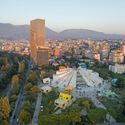
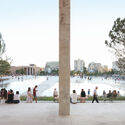
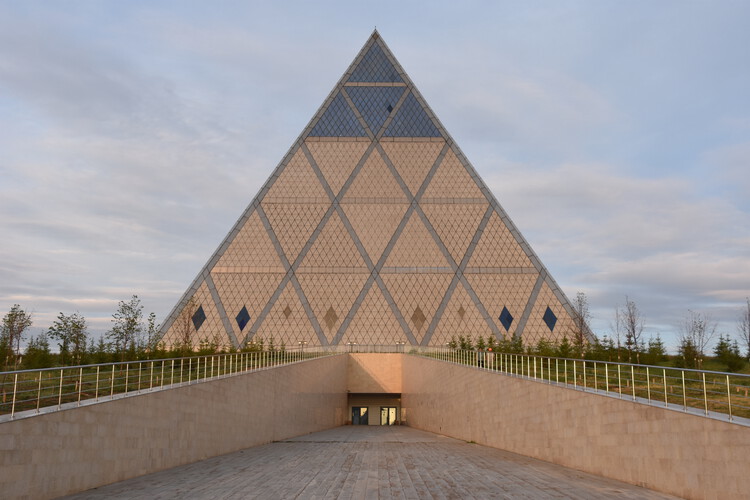
The Pyramid of Tirana opened as a museum to Enver Hoxha in October 1988, three years after his death and three years before the regime collapsed. In the decades that followed, it served as a radio station, a conference venue, a nightclub, and a base for NATO during the Kosovo war. In 2023, MVRDV reopened it as a park and technology school, adding steps to the façades so that the building could be walked over. The inauguration was timed to the Western Balkans Summit on 16 October, a date that some critics pointed out was Hoxha's birthday. Two projects of national self-definition, thirty-five years apart and built on opposite political premises, have used the same structure.
Modernism is often encountered through built form, photographed facades, canonical plans, concrete manifestos. For most people, its first encounter was far more immediate. It was a chair in an office, a shelf in a living room, a compact unit that reorganized how one sat, stored, or slept. Long before modern architecture could be widely commissioned, it was furniture that entered everyday space, carrying with it a new logic of living. Modernism's promise of transforming life was often delivered through these smaller, repeatable objects.
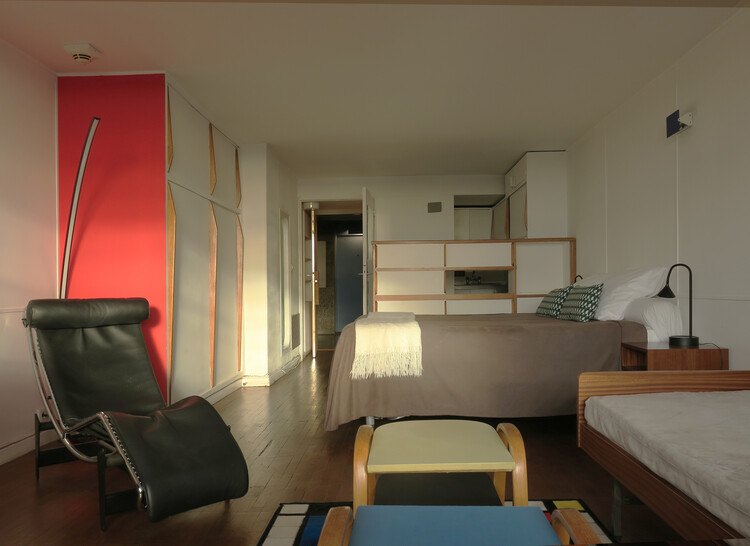
To understand this shift, furniture has to be read as a condensed form of architecture rather than decoration. Early twentieth-century designers treated it precisely this way. Le Corbusier described furniture as équipement de l'habitation (equipment of living), placing it within the operational system of the building rather than outside it. Similarly, the Bauhaus approached chairs and tables as industrial prototypes, embedding principles of standardization, efficiency, and mass production into their design. As architectural historian Beatriz Colomina has argued, modern architecture did not circulate only through buildings, but through media and objects that translated its ideas into everyday life. Furniture became architecture in miniature: portable, reproducible, and capable of reorganizing space without reconstructing it.
The 2025 Osaka Expo has captured widespread attention—not only for its architectural ambition and spectacle, but also for breaking records and generating controversy. Its most iconic feature, a monumental timber ring designed by Sou Fujimoto, has already made headlines as a Guinness World Record-breaking wooden structure. Built on the reclaimed island of Yumeshima, the site has attracted praise and critique in equal measure. Beyond its awe-inspiring 2-kilometer circumference—parts of which extend dramatically over the water—the structure has also drawn concerns, including questions about health & safety, extreme heat, and swarms of insects that may affect the visitor experience.
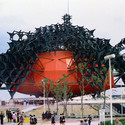
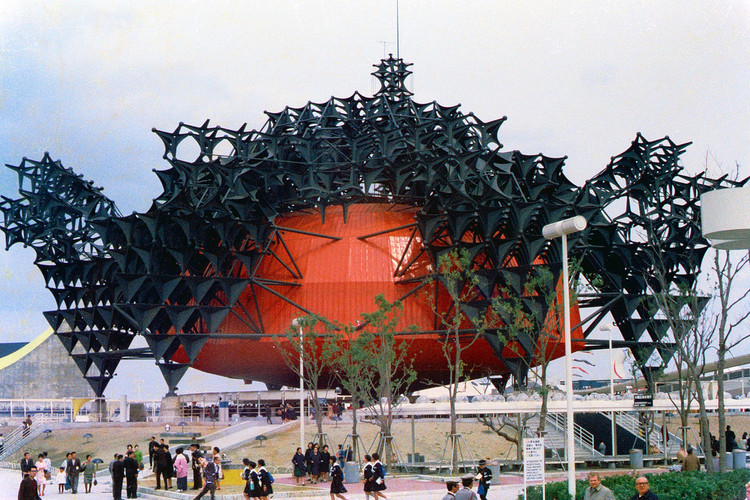
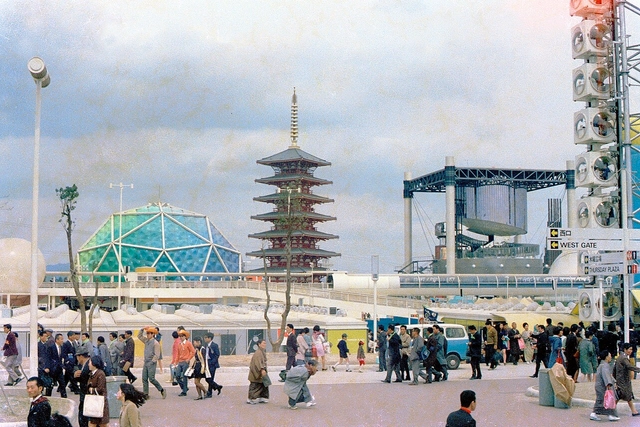
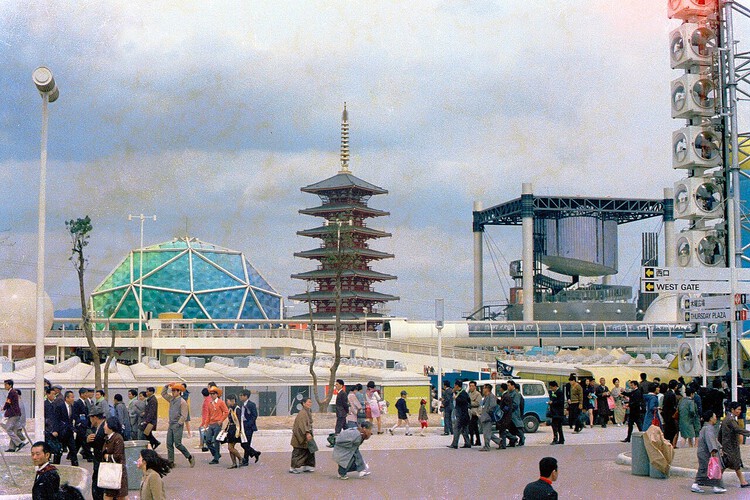
This year also marks a significant anniversary: the 55th year since the 1970 Osaka Expo, held under drastically different socio-economic conditions. Comparing these two expos—both hosted in the same city—offers a rare opportunity to reflect on how the rhetoric, curatorial themes, and architectural ambitions of world expos have evolved over time. From "Progress and Harmony for Mankind" in 1970 to "Designing Future Society for Our Lives" in 2025, the shift in thematic focus reveals changing global priorities. Meanwhile, the scale and nature of architectural involvement have also transformed, from the futuristic visions of Japanese Metabolism to a more internationally dispersed group of designers concerned with sustainability, technology, and civic engagement.
Tokyo is never-ending. It is a city made up of many cities, where everything is superlative and encounters with overwhelming scale are constant. For those visiting for the first time, the cultural shock is striking. Everything is extremely clean despite the absence of public trash bins, there's a strong impression of zero violence, and society seems to follow strict disciplinary codes to the letter. There’s a sense that human relationships and individual feelings are set aside in favor of the collective, with all the benefits and drawbacks that this way of life may bring.
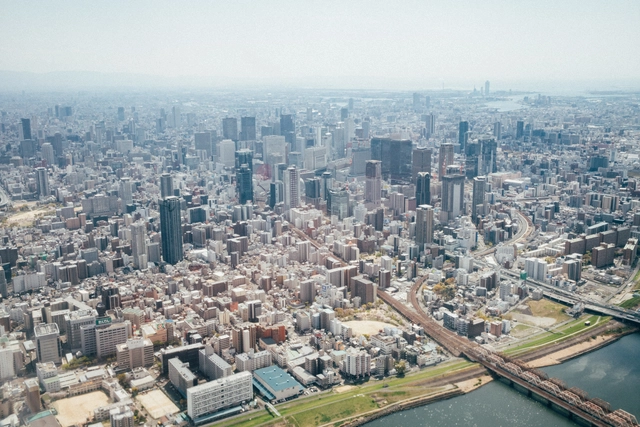
Osaka, Japan's third-largest city, is a vibrant blend of tradition and modernity, making it a compelling destination for architecture enthusiasts. Known historically as the "nation's kitchen" for its role as a mercantile hub, Osaka is also a city of cultural and architectural diversity. Its landmarks range from the historic Osaka Castle to striking contemporary developments, each reflecting Japan's evolving urban identity.
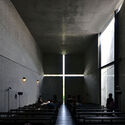
As the host city for the highly anticipated Expo 2025, Osaka is poised to showcase its architectural prowess on a global stage. The city's skyline features innovative works by renowned architects and urban planners, including cutting-edge cultural centers, transportation hubs, and waterfront redevelopments. With contributions from celebrated Japanese architects such as Tadao Ando, Kengo Kuma & Associates, and Takenaka Corporation, alongside international figures like Dominique Perrault, Renzo Piano Building Workshop, and Pelli Clarke & Partners, Osaka seamlessly blends modernity with tradition, creating a unique architectural identity that reflects its past while looking boldly to the future.
To convey the might and prestige of their empire, the Romans constructed enduring architecture as symbols of their long-lasting reign. Emperors employed grand public works as assertions of their status and reputation. Conversely, Japanese architecture has long embraced ideas of change and renewal, evident in the ritualistic rebuilding of Shinto shrines. A practice, known as shikinen sengu, is observed at Ise Jingu, where the shrine is purposefully dismantled and reconstructed every twenty years. Across the world, philosophies around permanence and impermanence pervaded architectural traditions. Amidst the climate crisis, how do these tenets apply to modern architectural design?
The rights to reconstructKisho Kurokawa's iconic Nakagin Capsule Tower are currently sold on one of the largest NFT sites. While the tower’s demolition has begun earlier this year, the auction sells the right to rebuild the structure, in both the metaverse and in real space. The idea of recreating the Metabolic building in a virtual space seems natural. It could allow a larger community to explore an iconic piece of architecture and encourage them to experiment with it, an initiative in line with Metabolist ideals. On the other hand, the idea of reconstructing a demolished historical building in the physical world raises a different set of conflicting emotions. Architectural replicas are not the norm, but their existence raises questions regarding the identity and authenticity of works of architecture.
Image created using AI under the prompt: A sober and captivating visual representation of an urban environment that flawlessly captures the essence of anime and architecture. Image via DALL·E 2
World War II left a profound influence on the evolution of society, introducing significant changes in the fields of urban planning and architecture. During the 1930s, the Congrès Internationaux d'Architecture Moderne (CIAM) promoted modernism on an international scale. After the war, this architectural movement became firmly established as the dominant one, driven by the imperative of reconstruction and technological advancements. Influential figures like Le Corbusier and Alvar Aalto spearheaded this movement.
In 1959, the same year as the final CIAM meeting, Japanese architects like Kenzō Tange, Kishō Kurokawa —the designer of the Nakagin Capsule Tower—, and Kiyonori Kikutake began to explore new approaches to urban design and architecture, known as the Metabolist movement. This exploration was particularly significant in the context of Tokyo's rapid repopulation after the war and the scarcity of resources for reconstruction. Innovative concepts such as Marine City, The City in the Air, and the 1960 plan for Tokyo emerged, which proposed the city as a constantly evolving organism and emphasized the relationship between humans and their built environment. These ideas shaped the concept of "megacities" and reflected Japan's creative response to its challenging postwar situation.
https://www.archdaily.com/1007021/textures-skyscrapers-and-urban-landscapes-when-anime-meets-architectureEnrique Tovar
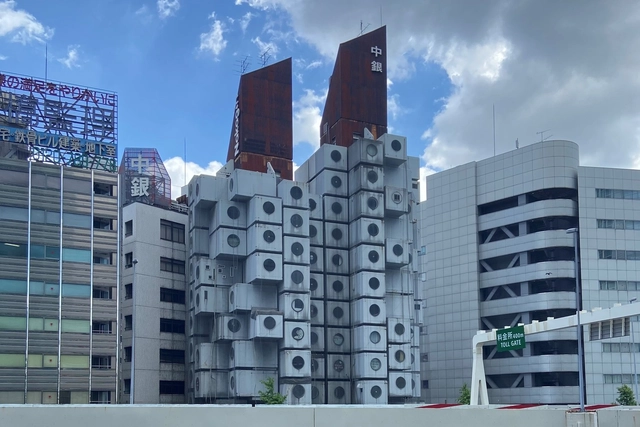
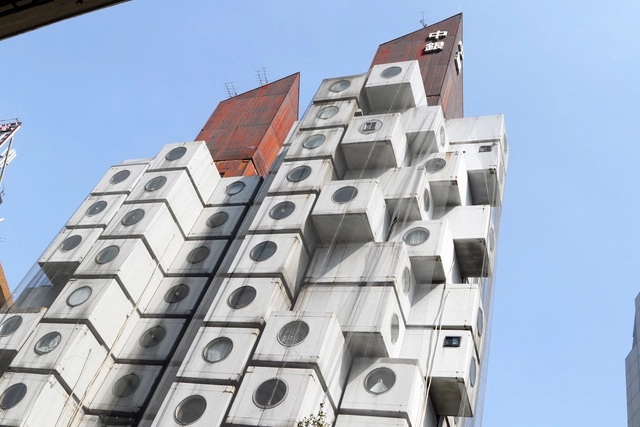
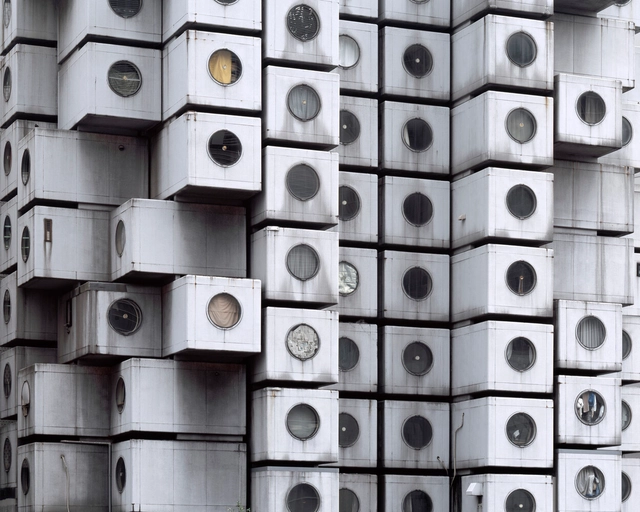
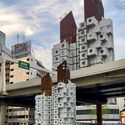
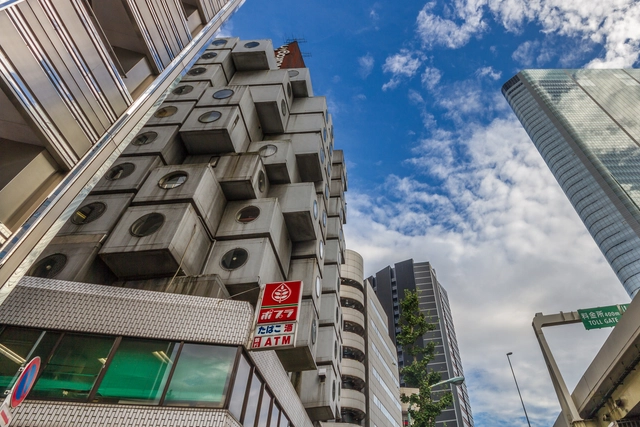
When Kisho Kurokawa designed his now iconic Nakagin Capsule Tower in 1972, the structure was meant to represent the core principles of Metabolism, experimenting with ideas of growth and change borrowed from biological processes. The emerging style in postwar Japan aimed to create buildings and megastructures that emulate living organisms that can evolve, expand, contract, and adapt to their changing conditions. Following this concept, the Nakagin tower was composed of 140 identical cell-like capsule units, each individually bolted to the two central shafts. The capsules were intended to be replaced and upgraded every 25 years, allowing for flexibility and mutation. The innovation proved to be impractical, however. Almost 50 years after its construction, the tower was demolished, but not in its entirety. A total of 23 capsules were saved and removed from the building to be given a new life. Now, the capsules are scattered around the world, continuing to represent Metabolist ideals in unexpected ways.
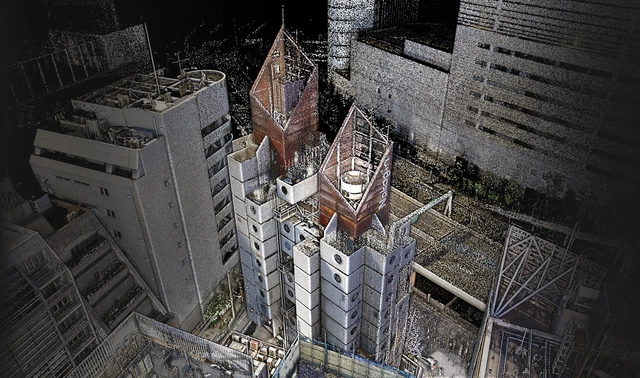
Japanese digital consultancy Gluon plans to preserve the Nakagin Capsule Tower Building in Tokyo, one of the most representative examples of Japanese Metabolism by Kisho Kurokawa. The “3D Digital Archive Project” is using a combination of measurement techniques to record the iconic building in three dimensions and recreate it in the metaverse. The tower is currently being demolished due to the structure's precarious state and incompatibility with current seismic standards, as well as the general state of decay and lack of maintenance.
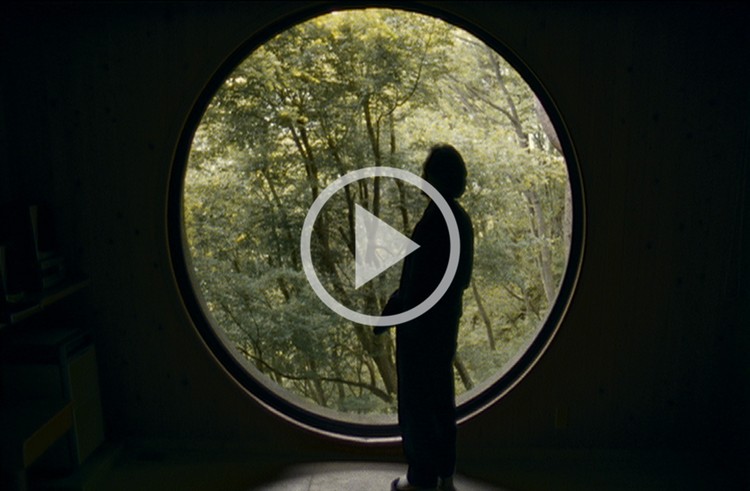
‘’In the background there is still invisible Japanese tradition’’, expresses Kisho Kurokawa, in an excerpt from the film ‘Kochuu’. He puts an emphasis on Japanese tradition, an architectural tradition that rejects symmetry despite the utilization of high-tech. He contemplates the Nakagin capsule tower (1972) a mixed-use residential and office tower located in Tokyo, Japan. The first of capsule architecture built for practical and permanent use.
Jesper Wachtmeister’s‘Kochuu’ is based upon the influence and origins of Modernist Japanese architecture. Through visions of the future, tradition and nature, it amplifies elements of Japanese tradition and its impact on Nordic design. The narrative tells us of how contemporary Japanese architects strive to unite the ways of modern man with old philosophies to create anew.
Following months of uncertainties and preservation attempts, Kisho Kurokawa's iconic Nakagin Capsule Tower will be demolished on April 12th of this year. Tatsuyuki Maeda, one of the current owners of the tower, explained that a team will try to preserve some of the capsules, and regenerate them as accommodation units and museum installations across the world.
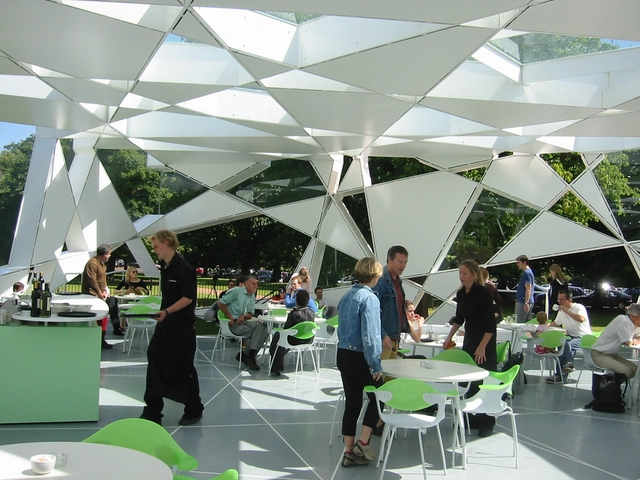
Serpentine Gallery Pavilion. Image Courtesy of Toyo Ito & Associates, Architects
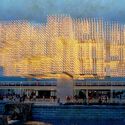
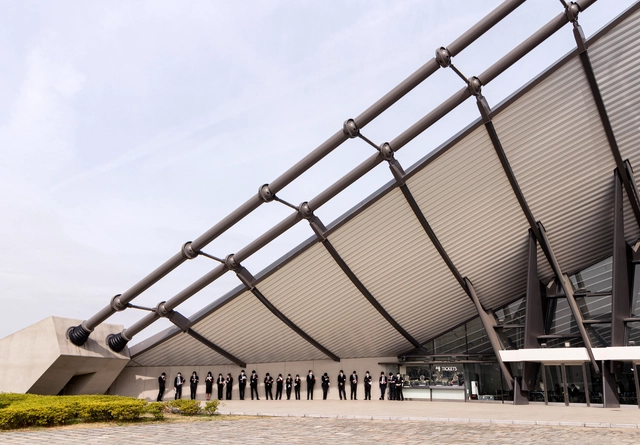
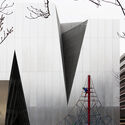
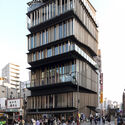
Examining the work of Tokyo architect Toyo Ito (b. 1941) – particularly his now seminal Sendai Mediatheque (1995-2001), Serpentine Gallery (London, 2002, with Cecil Balmond), TOD's Omotesando Building (Tokyo, 2004), Tama Art University Library (Tokyo, 2007), and National Taichung Theater (2009-16) – will immediately become apparent these buildings’ structural innovations and spatial, non-hierarchical organizations. Although these structures all seem to be quite diverse, there is one unifying theme – the architect’s consistent commitment to erasing fixed boundaries between inside and outside and relaxing spatial divisions between various programs within. There is continuity in how these buildings are explored. They are conceived as systems rather than objects and they never really end; one could imagine their formations and patterns to continue to evolve and expand pretty much endlessly.
After ongoing uncertainties about the future state of the The Nakagin Capsule Tower Building, Kisho Kurokawa Architects and Urban Design Office Chiyoda-ku, have decided to dismantle the iconic architecture and regenerate its capsules as accommodation units and museum installations across the world. The regeneration plan follows the initial concept of "Metabolism", re-configurating the elements instead of complete demolition.
One of the most iconic examples of Metabolist architecture, Kisho Kurokawa'sNakagin Capsule Tower, might be headed for demolition, as the building was sold by the management association to the landowner earlier this year, as reported by Japan Forward. The tower's demise has been intensely speculated in recent years due to the structure's precarious state and incompatibility with current seismic standards.
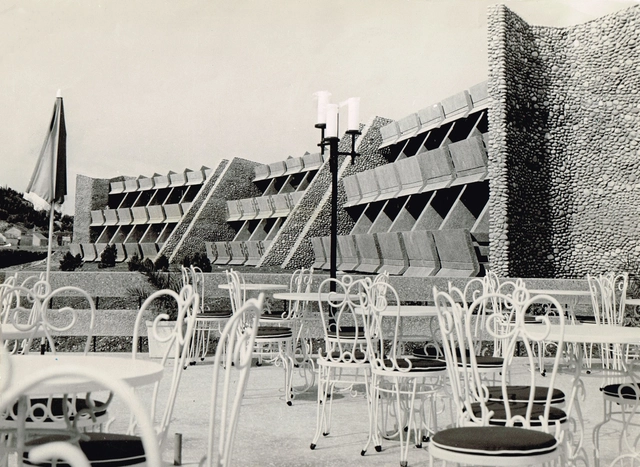
Hotel Podgorica, architect Svetlana Kana Radevic, unknown photographer, archive of Pobjeda. Image Courtesy of APSS Institute
Part of the Collateral Events of the 17th International Architecture Exhibition, the extensive built work of Yugoslav architect Svetlana Kana Radević (1937-2000) is brought to light from May 22 until November 21 at the Palazzo Palumbo Fossati. Entitled “Skirting the Center: Svetlana Kana Radević on the Periphery of Postwar Architecture”, the exhibition curated by Dijana Vucinic and Anna Kats, aims to highlight the architect’s work and expand her representation.
Kisho Kurokawa (April 8th 1934 – October 12th 2007) was one of Japan's leading architects of the 20th century, perhaps most well-known as one of the founders of the Metabolist movement of the 1960s. Throughout the course of his career, Kurokawa advocated a philosophical approach to understanding architecture that was manifest in his completed projects throughout his life.







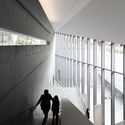


















Nacasa___Partners.jpg?1629103408 "Tod's Omotesando Building_interior. Image © Nacasa & Partners")


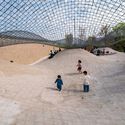
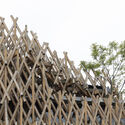
Kai_Nakamura.jpg?1629103497 "'Minna no Mori' Gifu Media Cosmos. Image © Kai Nakamura")