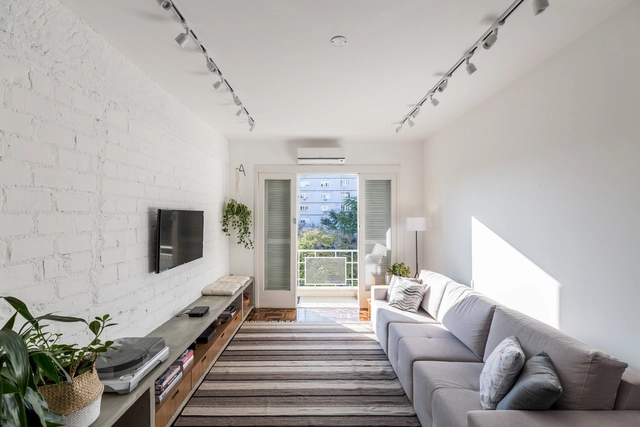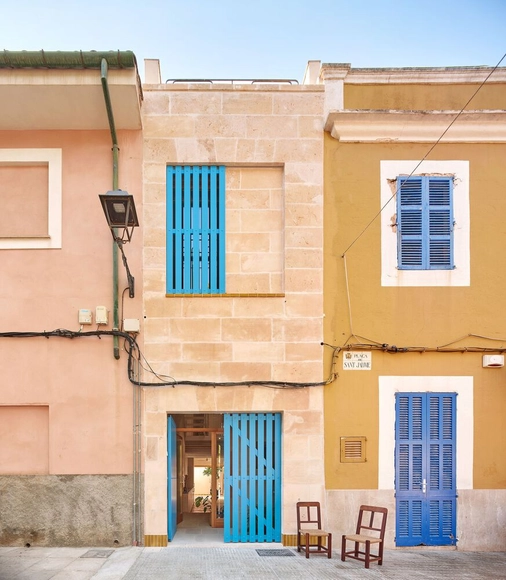
How narrow can a space become without losing its habitability? What are the minimum dimensions that a dwelling must have to ensure the comfort of its inhabitants and the correct performance of their daily activities?

How narrow can a space become without losing its habitability? What are the minimum dimensions that a dwelling must have to ensure the comfort of its inhabitants and the correct performance of their daily activities?

The first image that comes to mind when we think of an office is a place with a table and chair. But it was not always the case. In the Middle Ages, monasteries were the main places for study and knowledge, with private rooms designed to help monks concentrate when researching. However, records state that such spaces were uncomfortable since scholars remained standing most of the time.

Within various - if not all - architectural programs, there is a function that is an essential and common requirement: the bathroom. A residence, office, commercial space, theater, museum, religious space, park, or school can only be designed with it. In some countries, public toilets are part of urban infrastructure like public transport or waste collection. A fundamental human right, although denied to a considerable portion of the global population, the toilet follows a historical evolution. Modernity brought with it the separation between public and private, and the room became increasingly reserved in Western society.

As trivial as the act of flipping a switch and lighting up a room may seem, we've had to come a long way to have safe and reliable light sources. It is estimated that the first lamps were invented 70,000 years ago, consisting of hollowed out stones or shells filled with an absorbent material soaked with animal fat that could be ignited. The Egyptians, on the other hand, used decorated ceramic vessels filled with oil, which provided a constant flame. Candles were popularized during the Middle Ages, made of tallow (animal fat) or beeswax, and could be burned in simple candlesticks and chandeliers. It was in the late 19th century that Thomas Edison and his team invented an incandescent light bulb that could be mass manufactured and was economically viable, soon becoming the dominant form of lighting for much of the 20th century. Although it was a revolutionary invention at the time, we are now aware that these lightbulbs are not very efficient, and they were eventually replaced by fluorescent and, more recently, LED bulbs. But if we have already advanced so much in such a short time, what can we expect for the future of lighting, and more specifically, how will our interiors be lit in a few years or decades?
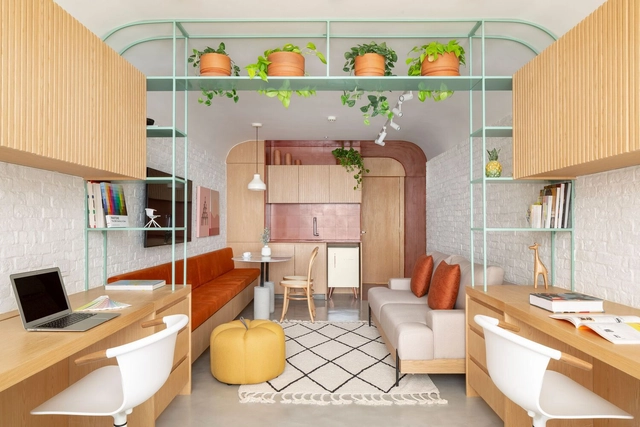
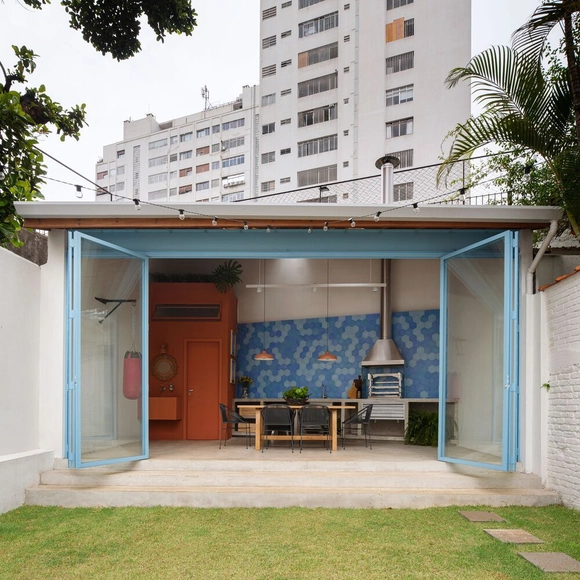
Over the last few years, we have explored different ways of taking advantage of small spaces in residential architecture. From efficient furniture to kitchens with transformable systems to adapting essential household appliances, architects have begun looking for effective ways of optimizing scarce floor space or making spaces more flexible in multifunctional and mixed-use typologies.
The bed, as an indispensable element, is an essential consideration in these experiments. Its functions can be fulfilled without completely losing the valuable space it occupies, and the bedroom experience can be enriched with careful thought. How can we reinvent and take advantage of the opportunities of the traditional bed?

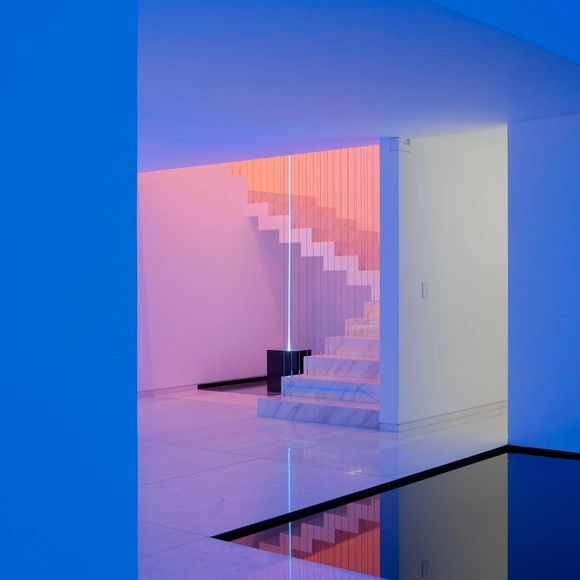
Lighting is often a numbers game — too much, and interiors lose their edge (literally), too little, and the dim atmosphere can make a space seem bland. Its importance in interior design cannot be overstated: done right, it not only accentuates a space's architectural features but also makes inhabitants feel at ease. As Carmelo Zappulla of Lighting Studio External Reference explains in a recent interview with Architonic, light is a crucial tool to add an emotional element and "animate a space." It follows that a lighting concept gone wrong can have catastrophic consequences for an otherwise perfectly designed room.

Every day, architects and designers tackle an ambitious task: crafting spaces that not only captivate the eye but that also nurture the health and well-being of those who inhabit them. A key part of this mission involves implementing design strategies that foster a pleasant indoor climate, as temperature, humidity and air quality all have a significant impact on users’ mood, productivity and overall health. Humans simply operate better if they are comfortable and content in their home or working environment. Although air-conditioning, ventilation and heating systems have conventionally served as popular solutions to regulate indoor climate, they often carry with them undesirable consequences –the presence of dust and bacteria, the need for regular maintenance and a cluttered, unappealing look. There is, however, an alternative solution.

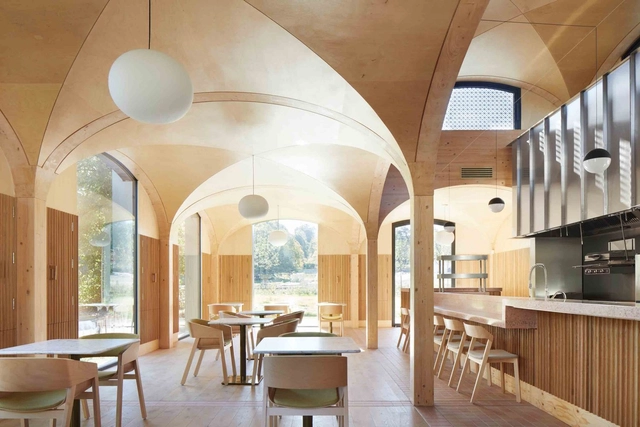
Ceilings were once a symbol of grandeur and opulence, adorning grand buildings, churches and palaces with their intricate and elaborate designs. We still find ourselves looking up in awe at these mesmerizing historical buildings, with our eyes drawn to their magnificent vaulted ceilings, remarkable truss structures or distinctive works of art depicting mythology, historical events and landscapes. Contemporary design, on the other hand, has shifted towards a sleek, minimalistic aesthetic; one where plain white ceilings have become the norm in most modern buildings. As Rasmus Wærn and Gert Wingårdh suggest in their book What is Architecture? And 100 Other Questions, “Ceilings have devolved from being the focal point of a room to being a zone for mechanical equipment.” And yet they have extraordinary creative potential.

When children first learn to draw a house, there are four basic components they illustrate: a wall, a pitched roof, a door and one or more windows. Along with the common structural elements, windows have always been considered to be indispensable architectural features for their multiple functions. While providing views, daylight and natural ventilation, these insulate from cold and heat, protect from external threats and enhance a facade’s appearance. They are also associated with a strong poetic or symbolic value; it is through them that we are able to connect with and enjoy our surroundings, be it a beautiful natural landscape or a dense urban environment. An expressive part of any building, windows serve as a visual bridge between the inside and outside, acting somewhat as a refreshing escape from our everyday routine.