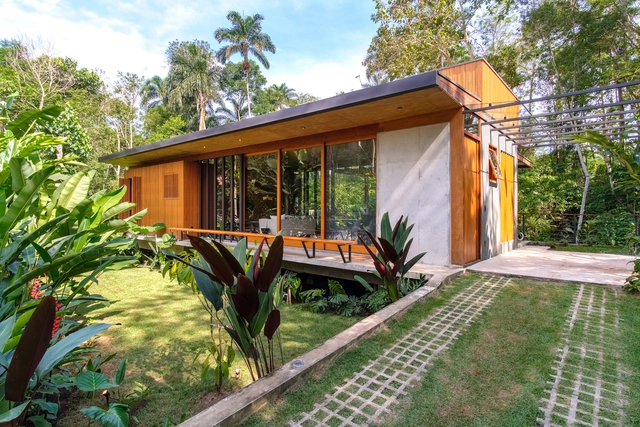
Now more than ever, architecture is in need of innovation. The pandemic has made us fundamentally rethink the functioning of our cities, public spaces, buildings, and homes. Meanwhile, the recent Black Lives Matter and racial justice protests have us questioning architecture’s complicity in broader socioeconomic issues. These challenges are pressing, and we cannot put off changing architecture any longer.
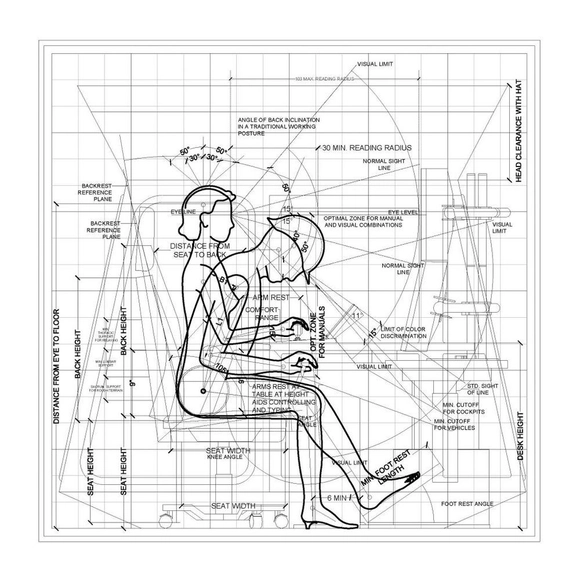
Anthropometric Data - Crane Cabin Operator vs Remote Control Operator. Drawing by Het Nieuwe Instituut 2017. Image Courtesy of Het Nieuwe Instituut
In 2013, Michael Osborne and Carl Benedikt Frey ranked 702 occupations according to their probability of computerisation in the near future, from least probable (“recreational therapist”) to most probable (“telemarketers”). "Architectural and Engineering Managers” was ranked seventy-third, and “architects” eighty-second, while “architectural and civil drafters” ranked three-hundred and fifth. Clearly, technological advancements in fields such as machine learning and robotics are rapidly confronting us with issues of changing professional demand and qualifications. In this essay, Maurizio Ferraris turns the table on us: what if what we should be concerned with is not maintaining the human element in labor as production, but rather recognising human labor as consumption? Expanding on the arguments of his 2012 book, “Lasciar tracce: documentalità e architettura,” the author sees in automation an extraordinary opportunity in defining a renewed centrality of the human element, as the production of value associated with digital exchange is read through the three concepts of invention, mobilization and consumption.
GIDA 2020 - Goldreed Industrial Design Award - is the new international design award sponsored by the Xiongan Future Industrial Design Institute, with the aim of promoting at international level the concept of “harmony” applied to design.
Drawing from the scientific-technological progress and from the social changes that are currently happening in our society, GIDA aims at using design as a way to suggest new lifestyles, in order to contribute to the balanced development between human and nature. The award sets for itself from the very beginning the objective of becoming a major reference in the international design field, by providing a
DI-2020 stands for Design and Innovation in 2020. The design competition is open to both concept projects, as well as realized projects by young design and tech professionals worldwide. International Talent Competition DI-2020 is about finding and celebrating talent that blurs boundaries between design, tech and business.
Requirements
Please submit your proposal on a single page (4962 x 4961 px) with 200-500 words text outlining:
1. What is your proposal? 2. What problem does it solve? 3. Why your solution is unique? 4. How do you see your solution being implemented now and in the span of the next 3-5 years? 5. Add 1-5 visuals
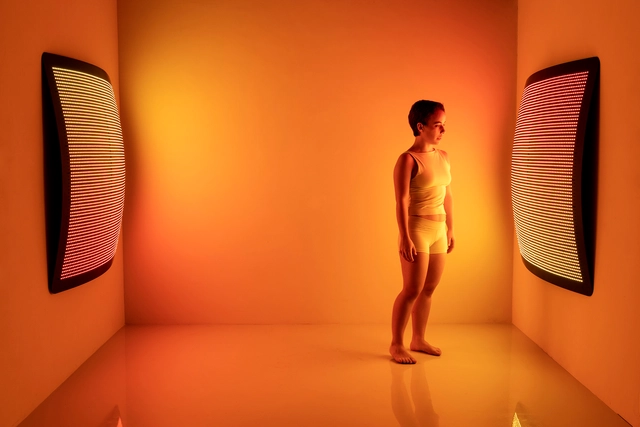
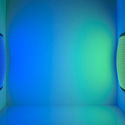
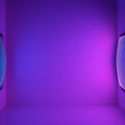
With the aim of creating immersive environmental experiences in interior spaces, the design studio Aqua Creations has developed Manta Ray Light, a lighting installation built with responsive RGB LED technology that mixes the colors red, green, and blue to generate more than 16 million light tones. By presetting its color spectrum, offering a range of brightness settings on a scale of 0.1 to 100%, and even loading images and videos into its internal memory, the system allows its user to add color and movement to expressive spaces, or deliver a feeling of warmth and concentration to intimate and private rooms.
The global climate crisis is not only forcing us to rethink architectural design and the way we live, but also the materials and products that shape our built environment, starting from its origins and manufacture. Toward this end, wood has become an efficient alternative to steel and concrete – materials with high levels of embodied energy – and has led to some important architectural innovations that may culminate in its more widespread use worldwide.
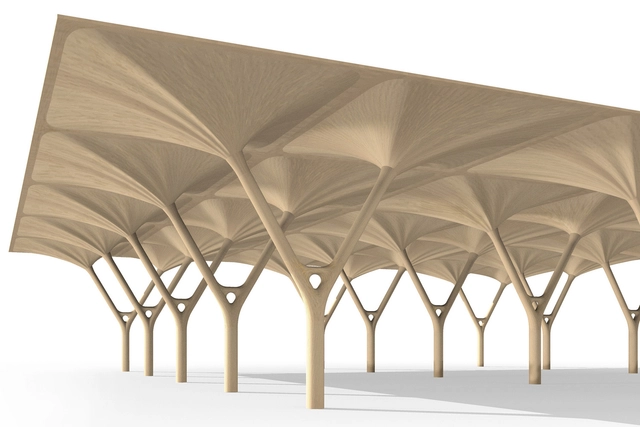
Inspired by the efficiency of nature, Strong By Form has developed Woodflow, a technology that generates wood panels of high structural performance, "combining the optimization of their shape, the orientation of their fibers in relation to the direction of stressors, and the variation in their density for better compression or traction," as explained by its creators. In addition, all of their products are developed in a controlled process through parametric software, integrated into BIM platforms and CNC manufacturing systems.
We talked with Jorge Christie, CTO of Strong By Form, to learn more about this new technology.
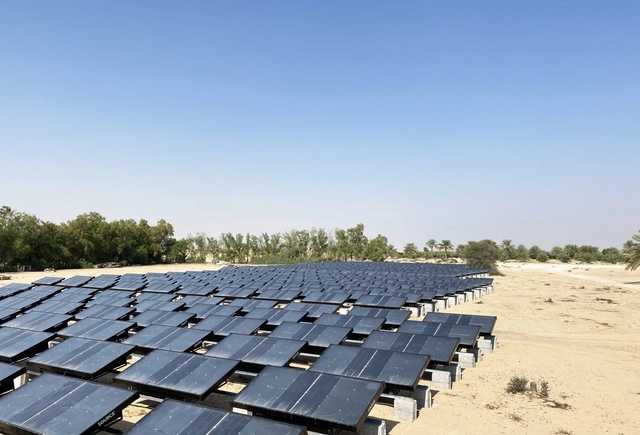
As the climate crisis continues to unfold, professionals in architecture, engineering, and sustainable design have relentlessly searched for new ways to mitigate the negative effects of modern industrial production. One group of such innovators, Zero Mass Water, have contributed to this effort through their creation of ‘the world’s first and only hydropanel’ - an apparatus called SOURCE.
https://www.archdaily.com/932519/generating-water-from-air-humidity-to-face-global-droughtLilly Cao
DETAIL is awarding the international DETAIL Prize 2020, and in doing so once again recognising the importance of innovative details for the overall design concept.
The DETAIL Prize is awarded for future-oriented, innovative and authoritative projects with outstanding architectural and technical qualities. From 2 March to 30 April 2020, planners can submit projects realised anywhere in the world for all building types that are characterised by special details within a coherent overall concept at www.detail-online.com/detailprize. In addition to the main prize, for the first time a prize will be awarded for an outstanding project built by a school of architecture.
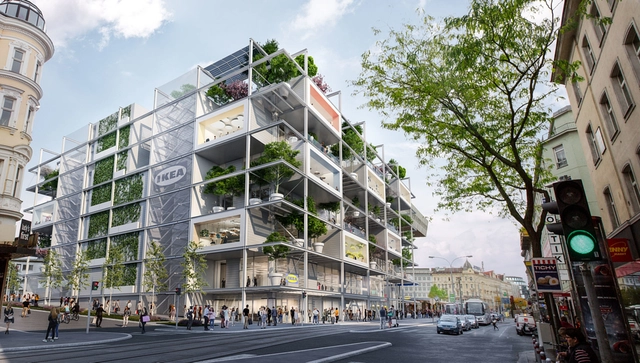
IKEA Austria is establishing a car-free city center store, in the heart of Vienna. Addressing global issues, IKEA’s newest building will cater to the changes in customer and mobility behaviors.
Pragmatic Award - Director's Choice. Image Courtesy of HOME Competition 2019
The HOME competition 2019, organized by architectural initiative arch out loud, has released its winning projects. The annual challenge that pushed the limits of adaptability and innovation, asked designers “What is the future of HOME?”
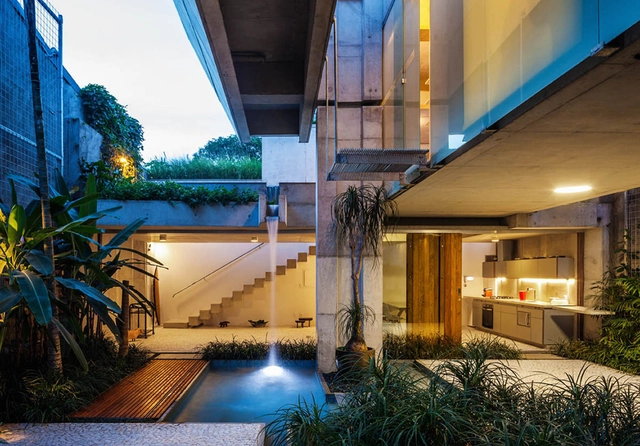
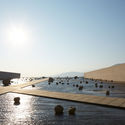
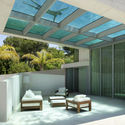
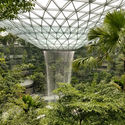
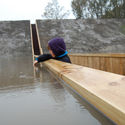
From playful indoor pools to tranquil exterior fountains to soaring waterfalls and grand lakes of enormous proportions, architecture throughout the centuries has engaged with water in endlessly innovative ways. Sometimes serving aesthetic purposes, but just as often acting as centers of activity or promoting sustainability, water features can take countless different forms and serve multiple different purposes. Below, we synthesize a series of water features espoused by innovative contemporary architectural projects, ranging from single-family residential homes to vast commercial complexes.
Designing well, creating beautiful buildings as well as boosting revenue and making your firm profitable rank highly among the goals of architects around the world today. What are the most effective tools architects need to achieve those goals? At a recent Technology and Architecture panel, successful architects discussed answers to that very question. When you watch this panel discussion, recorded live at the prestigious Pritzker Military Museum and Library, you will hear inspiring approaches to design, coordination and project management - rooted in BIM and enabled by the design flexibility found in ARCHICAD.
Being up to date with new technologies, understanding the best solutions for each project, and knowing the products present in the market and those that will be used in the future. We have observed that these themes arouse great interest in the architects, students, and architecture lovers who visit our site every day. In 2019, ArchDaily began to focus more on materials, covering products, construction techniques, and raw materials in general. The year is coming to an end, so we have compiled the most viewed articles on these topics, trying to understand what they imply for the present and where they will take us in the coming years.
There has been a lot of talk about how automation will affect the way we do architecture, and what our role will be when technologies reach our own desks and work tables. In recent years, while we have seen how robotics and advanced technology are gaining ground in construction and manufacturing, new tools are emerging that promise to automate the design process itself. These would allow us to quickly and easily configure living spaces and their dimensions in the initial stages of a project, using simulations and artificial intelligence.
Will this automation be the future of architectural design? We talked with Jesper Wallgren, architect and founder of Finch 3D, to better understand this tool and its possible scope.
Automation is rapidly becoming a normalized part of many people’s daily lives and careers, a trend which has by no means evaded the construction industry. While this increasingly pervasive technology is often considered a symptom of the contemporary 21st century, however, one automated construction technology may have a history stretching as far back as the 1960s. This technology, the bricklaying robot, has transformed dramatically since its limited realization over 50 years ago, splintering into newer, more technologically advanced variations today.
https://www.archdaily.com/928440/the-evolution-of-bricklaying-robots-changing-the-rules-of-traditional-constructionLilly Cao
Materials, products, and construction systems are constantly evolving and following new technologies, discoveries, and market trends. Today, within the framework of our Monthly Topic “Innovation” we wonder: what products or materials could we use so that our projects make relevant contributions to the way we are inhabiting our planet?
Videos
Gerbert Rappaport. Director. Image from the movie Cherry Town (Cheryomushki) 1963.
Flying Panels - How Concrete Panels Changed the World is a new ArkDes exhibition designed by Note Design Studio and curated by Pedro Ignacio Alonso and Hugo Palmarola - authors of the Monolith Controversies exhibition, the winner of the Silver Lion award at the 14th Venice Architecture Biennale in 2014.
It brings together a series models and material as posters, paintings, films, toys, cartoons and opera sets are gathered to reflect on how concrete panels influenced culture for the construction of a new society.
Sustainability in architecture is an issue that may bring to light too general proposals and there are a lot of possibilities concerning the application of their concepts in design process. Sustainable strategies are essential so that the project development reconcile the economic and ecologic pillars and, above all, consider the well-being impact for those who are going to use the built space. Thinking about this, we have gathered four projects of different typologies that applied innovative methods in the conception of the buildings that stand out for their sustainable practices. Read on for the projects:









.jpg?1577975601&format=webp&width=640&height=580)
.jpg?1577975466 "Adaptability Award - Winner. Image Courtesy of HOME Competition 2019")
.jpg?1577975388 "Adaptability Award - Honorable Mention. Image Courtesy of HOME Competition 2019")
.jpg?1577975601)



_1963..jpg?1571935874&format=webp&width=640&height=580)