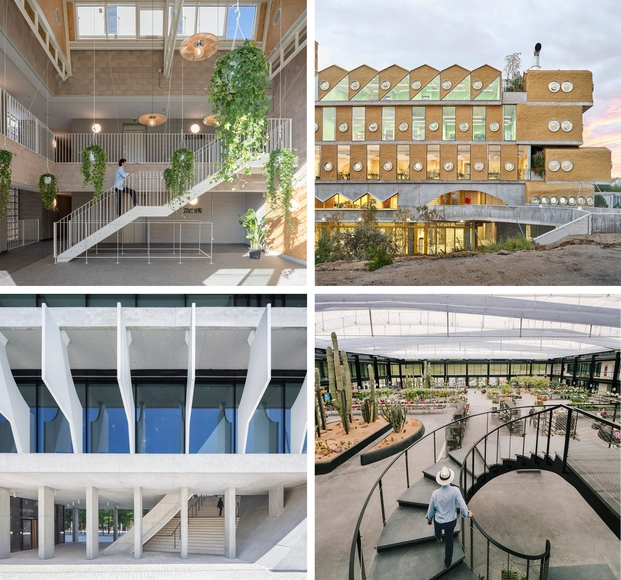
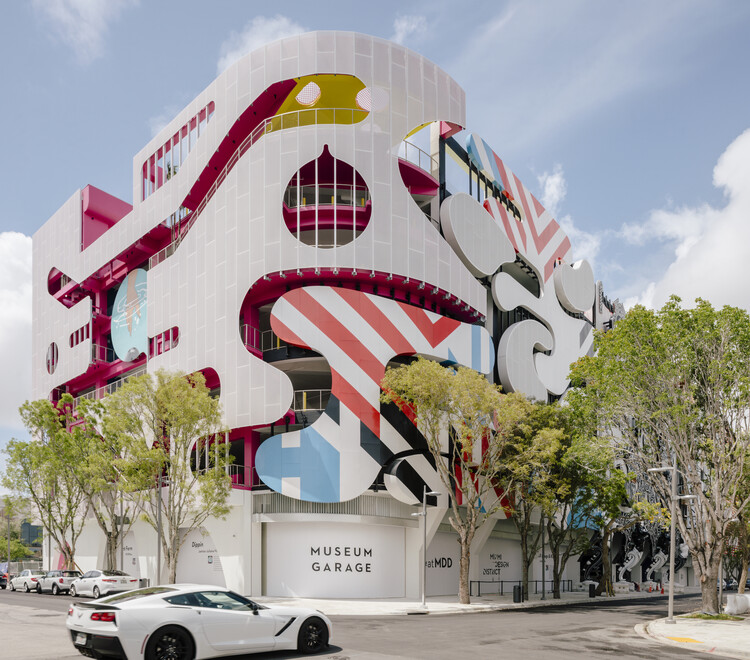
WORKac is a New York-based firm founded in 2003 by Amale Andraos and Dan Wood. The firm has always believed in "the power of architecture and design to engage in environmental and social concerns, and to create new possibilities for the future." In that sense, the firm's principals define their approach to architecture as a constant evolution. For them, it is a continuous process of learning, questioning, and relearning, which is nurtured through the firm's engagement in local culture, climates, and histories, as well as discourse in the fields of ecology, landscape, and urbanism. In this way, they are able to bring these topics together with a focus on public, cultural, and civic projects that aim to reinvent how people live, work, and experience the world.
Specificity has re-emerged as a central language in architectural discourse. In an increasingly globalized field, where projects often follow familiar models regardless of context, architects are now turning toward approaches rooted in the particularities of each site. This renewed attention to context reflects broader social, climatic, and political pressures: cities are facing extreme heat, ecological challenges, shifting demographics, and new forms of collective life that demand responses grounded in their immediate conditions.
Situated architecture describes this shift. It refers to design approaches in which form, program, and materiality emerge from the specific environment that produces them: its microclimates, cultural structures, and everyday rituals. Rather than beginning with universal templates, these practices start with observation, prototyping, and direct engagement with local dynamics. This logic is visible in the climatic and material experiments of TAKK in Spain, such as Portable Garden and 10k House, which operate as lightweight prototypes tuned to thermal and ecological gradients; in Studio Ossidiana's Art Pavilion M, shaped by layered soils and ecological cycles in the Netherlands; in Izaskun Chinchilla's reinterpretations of vernacular objects and her later experiments with 100 Sillas and 3 Salones Urbanos; in the narrative-driven domestic spaces explored by Common Accounts; and in Raumlabor's urban interventions that respond directly to the specificities of post-industrial Berlin.
Stretching along the Atlantic coast at the southern tip of Florida, Miami is often introduced through postcard views of beaches, palm trees, and glass towers facing the water. Yet, behind this familiar image lies a city shaped by migration, tourism, and real estate cycles, where architecture has repeatedly been used to project new identities and reinvent the urban landscape. From early resort hotels and the Art Deco façades of South Beach to experimental high-rises and cultural institutions on the bay, the built environment offers a way to read how Miami negotiates climate, economy, and everyday life.
Over the past century, the city has grown through successive layers of development that remain visible in its streets and skylines. The streamlined geometry and pastel colors of the historic Art Deco District coexist with the exuberant forms of Miami Modern (MiMo) motels and postwar infrastructure along Biscayne Boulevard. Downtown and Brickell have transformed from low-rise business districts into dense clusters of residential and office towers, many designed by international firms working alongside local practices. At the same time, neighborhoods such as Little Havana, Allapattah, and Wynwood reveal how diasporic communities, industrial heritage, and creative industries occupy and adapt existing fabrics, often in contrast with the image-driven waterfront.
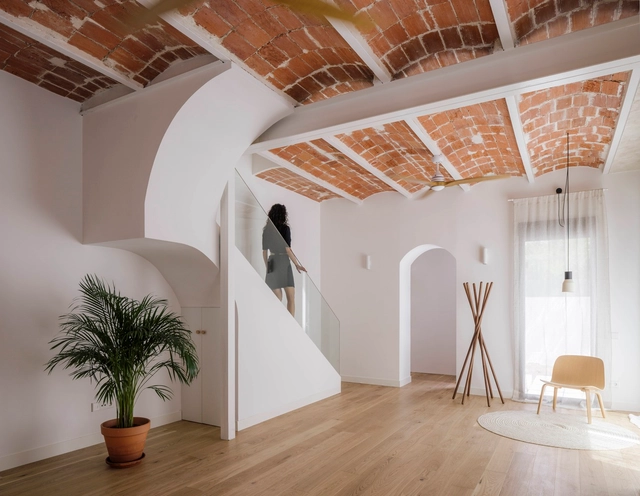
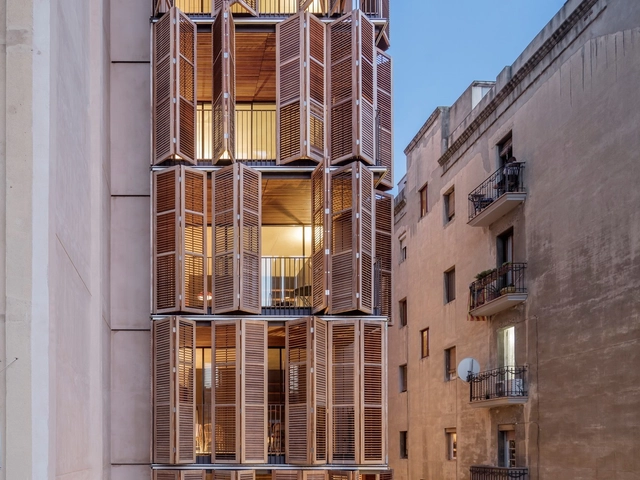
Renovation of a Village House / unparelld’arquitectes. Image
Perhaps one of the most common phrases you'll hear when talking about interior renovations is "whatever you initially planned on spending, double it, and double the time with it". Renovations, regardless of their scale, can be very time consuming and costly, especially when unexpected changes pop up last minute. However, we are often met with situations where the interior layout is no longer efficient or we feel that the interior design is a little outdated and its time for a change.
Giving your space an upgrade does not necessarily mean spending all your savings, and spending less does not necessarily mean low quality work. From doing the construction work yourself, to giving furniture pieces completely new functions, here are different ways you can renovate residential and commercial interior spaces without breaking the bank.
Hotels are a hub for commerce, transportation and culture. Today, interior designers are redefining hospitality spaces to accommodate new forms of travel, communication and rest. From historic renovations to contemporary ground-up hotels, these projects center around leisure and memorable guest experiences. In turn, they express brand identity to rethink what interior design and hospitality will be in the future.
When talking about energy efficiency in buildings, it is inevitable to mention thermal insulation. We rarely see it in a finished building and, even in the technical drawings, the insulating layer appears as a thin hatch. But this is an element that is of vital importance, as it acts as a barrier to the flow of heat, hindering the exchange of energy between the interior and the exterior, reducing the amount of heat that escapes in winter and the thermal energy that enters in the summer. In a building with good thermal insulation, there is less need for heating to keep the house at a pleasant temperature, also reducing its carbon footprint. Currently, there are many countries that require a minimum level of thermal insulation for buildings, with increasingly strict parameters. But how should this issue be dealt with in the near future, with the worrying climate crisis forecast?
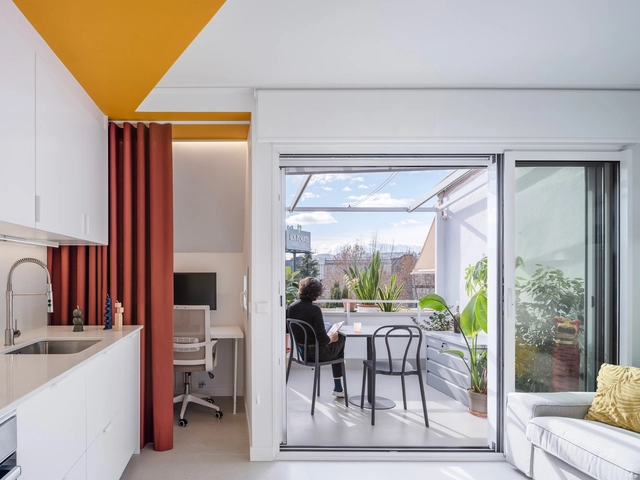
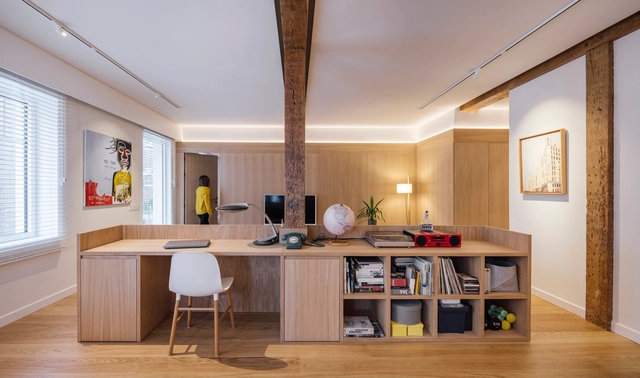
It's not uncommon to see housing complexes integrate commercial spaces at the ground level, but the challenge of mediating between the private and public realm on a smaller scale, especially with the rise of the home office, has forced architects to explore all aspects of the structure, from the topography it sits on, to the direction of light and wind, to the design and organization the domestic space. This interior focus explores different design solutions that show how architects and interior designers transformed their projects from a living space into a mixed-use typology, taking into account privacy, flexibility, functionality, and predefined spatial requirements.